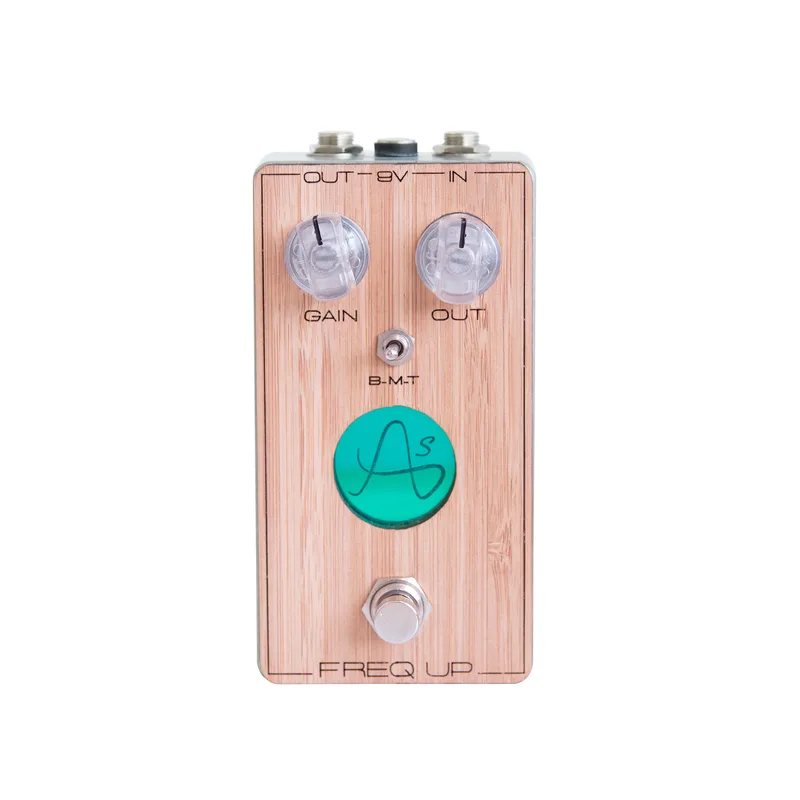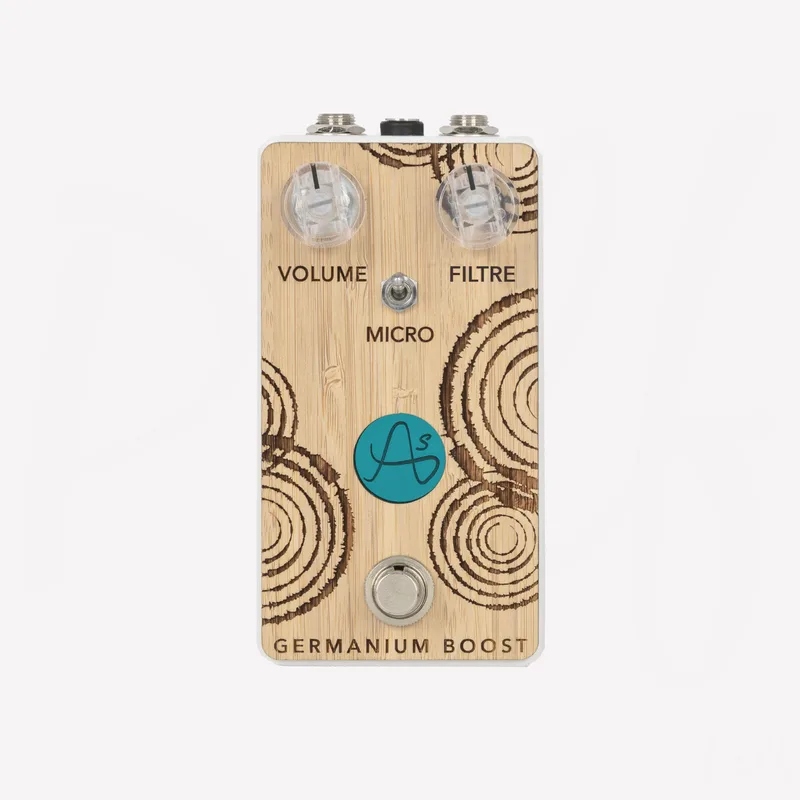


The Anasounds Germanium Boost is a handmade boutique boost pedal from French builder Anasounds. It uses a NOS germanium transistor circuit, the same class of parts that powered the treble boosters of the 1960s, to deliver what RockBoard's PedalPedia describes as "a warm, vintage-character boost"1. Unlike a clean silicon boost, a germanium treble booster colors the signal: it pushes the highs and upper mids forward, which is why players have long used this type of pedal to make a dark amp or a neck pickup cut through.
What sets this pedal apart from a straight vintage reissue is that Anasounds reworked the circuit for modern pedalboards. The company explains that it based the pedal on "a germanium treble booster with positive ground circuit" and then added an integrated pickup impedance simulator, so the booster can sit anywhere in your chain rather than only in the first position2.
A boost built on germanium transistors
Germanium transistors were the standard in early effects pedals before silicon took over, and they behave differently: they clip asymmetrically, they are sensitive to temperature, and they have a lower input impedance that interacts with the guitar in a particular way. A germanium treble booster expects to see a pickup at its input, and much of its character comes from that interaction.
Anasounds describes the design problem directly. In the company's own technical explanation of vintage-style pedals, it states:
"This is why we implemented this circuit in our Germanium Boost, based on a germanium treble booster with positive ground circuit"2
and notes that the integrated simulator allows "to place the treble booster anywhere" in the chain2.
For a player, that means the Germanium Boost can go after overdrives, fuzzes or other pedals and still behave the way a vintage treble booster would when plugged straight into a guitar. The trade-off, which applies to any pickup simulator, is that the simulated pickup is not the same as your actual guitar's controls being directly in the circuit, so the pedal responds a little less to rolling back your guitar's volume and tone knobs than a first-in-chain booster would23.
The pedal is fully analog, with no digital conversion in the signal path1.
The controls
The control set is small, in keeping with the vintage circuit it comes from, but the two knobs that are there do real work.
| Control | What it does |
|---|---|
| Volume | Sets the output volume of the boost1 |
| Bass cut | Rolls off bass, with multiple frequency options, so you can tune how much low end reaches the germanium stage1 |
The bass cut is the more interesting of the two for a treble booster. Classic units of this type rolled off a fixed amount of low end before the transistor, because germanium stages overload quickly when bass hits them. Having selectable cut frequencies means you can keep more low end for a fuller push into a clean amp, or cut deeper for the focused, cutting character the original boosters were known for1.
Alongside the two knobs, the pickup impedance simulator acts as a third control point, letting you manage how the pedal interacts with different guitars and with different positions in your chain1.
Power and placement
The Germanium Boost runs on 9V DC from a center negative supply and draws 15.3mA, which is modest by modern standards and easy on a pedalboard power supply1. It uses true bypass switching, so the circuit is fully out of the path when disengaged1.
The circuit is based on a positive ground design, a heritage of the original PNP germanium boosters. Check the pedal's documentation for grounding details before combining it with other pedals on a shared power supply.
Where it came from and who makes it
Anasounds is the maker of the Germanium Boost. The pedal draws 15.3mA1.
How it compares with other germanium boosts
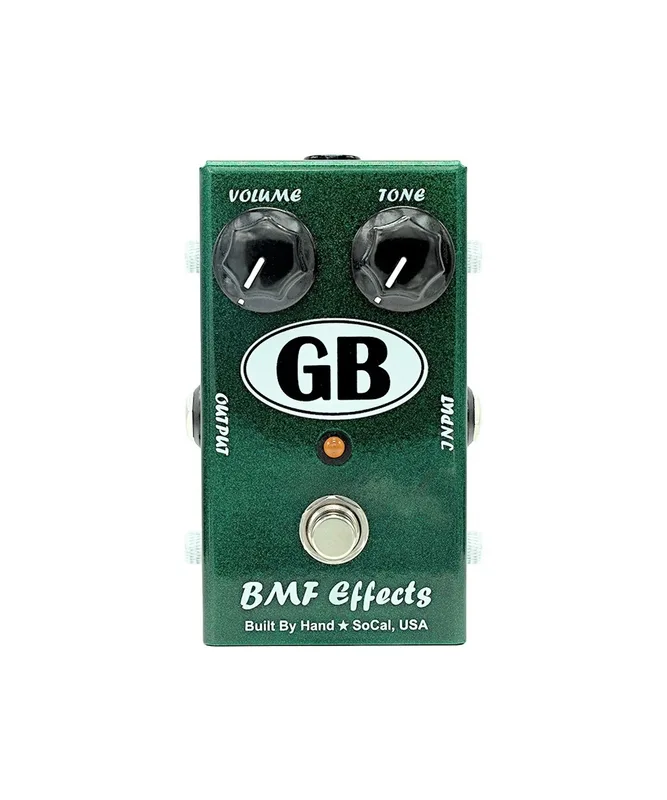
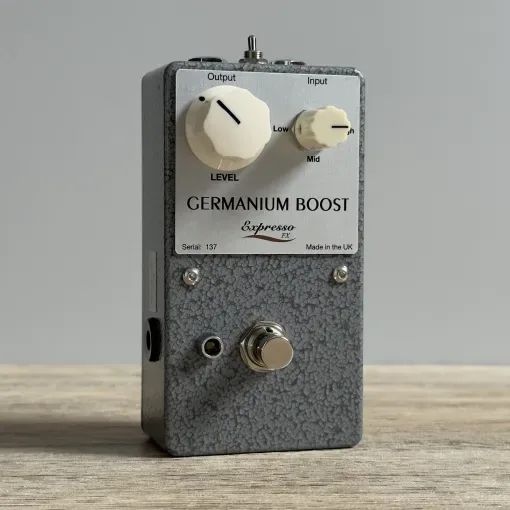
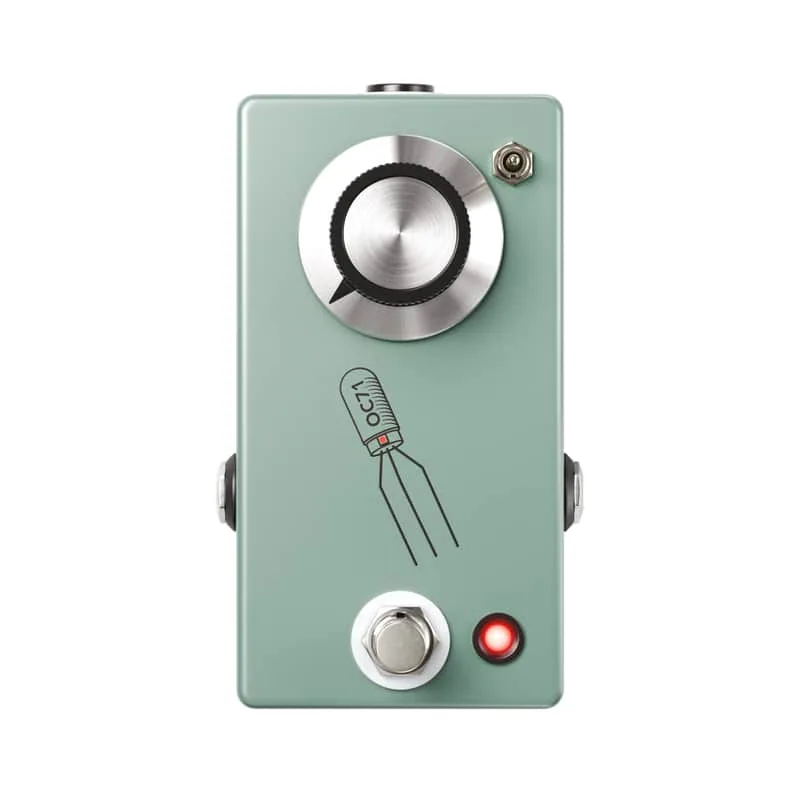
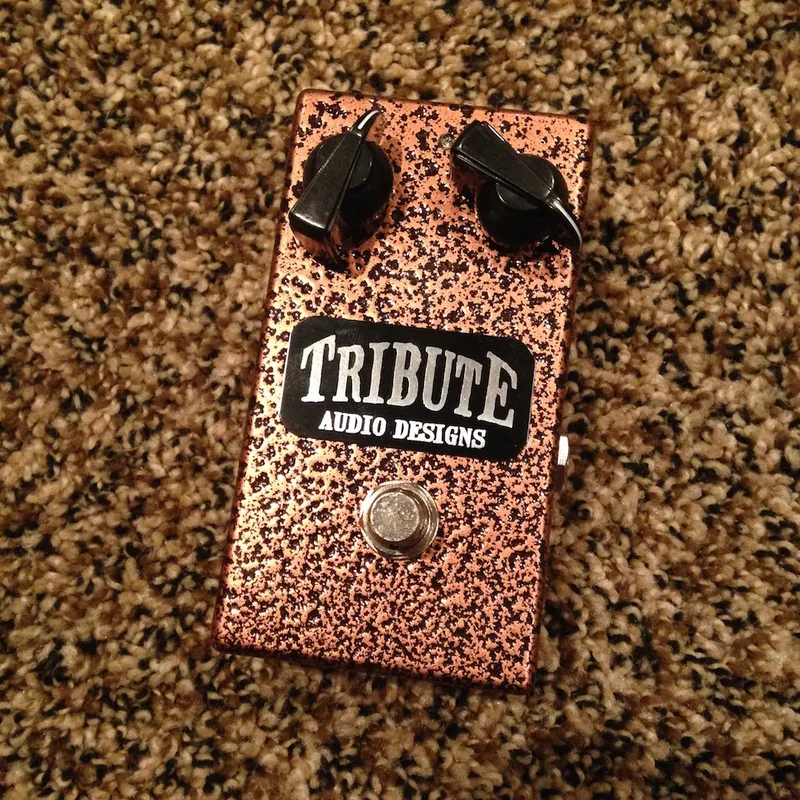
Germanium boosts are a small but active category. The BMF Effects GB Boost Germanium Booster also starts from the classic germanium treble boost design but adds a tone knob instead of a selectable bass cut, and offers NPN and PNP transistor options. The Expresso FX Germanium Boost Mini is a compact version of a similar idea, and the JHS Germanium Boost and Tribute Audio Designs Dirty Bastard Germanium Boost take the same class of transistor in different directions. The Anasounds stands out for its pickup impedance simulator, a feature aimed squarely at players who want vintage germanium character without the placement restrictions of the originals12.
Videos
Palf
Kevin ROCHE 🎸
Questions
Is the Anasounds Germanium Boost true bypass?
Yes. The pedal uses true bypass switching, so when it is disengaged the signal passes through without the circuit in the path. Like any true bypass pedal, long cable runs after it can still cost some high end, which is worth thinking about when you place it on a large board.
What power does the Anasounds Germanium Boost need?
It runs on 9V DC from a center negative power supply and draws 15.3mA. That is a low enough draw to share an isolated output or a daisy chain with other standard 9V pedals, as long as the supply's polarity and total current budget are respected.
What does the pickup impedance simulator do?
Germanium treble boosters were designed to see a guitar pickup at their input, and behave differently when another pedal feeds them instead. The Germanium Boost includes a circuit that simulates a pickup's impedance, so the booster can be placed anywhere in the chain, not just first, and still interact with your pickups as intended.
Is the Anasounds Germanium Boost analog?
Yes. The circuit is fully analog and built around a NOS (new old stock) germanium transistor, following the classic germanium treble booster design with a positive ground circuit. There is no digital processing anywhere in the signal path.
Where is the Anasounds Germanium Boost made?
It is made in France. Anasounds is a French builder of handmade boutique guitar pedals, and the Germanium Boost is built in their workshop rather than mass produced.
Sources (3)
- Germanium Boost by Anasounds, RockBoard (www.rockboard.de), 2026
- Vintage pedals: how to connect and use them correctly?, Anasounds, 2023-02-08
- Proteus Germanium Fuzz / Dallas-Arbiter Fuzz Face - Aion FX, Aion FX, 2020-07-03