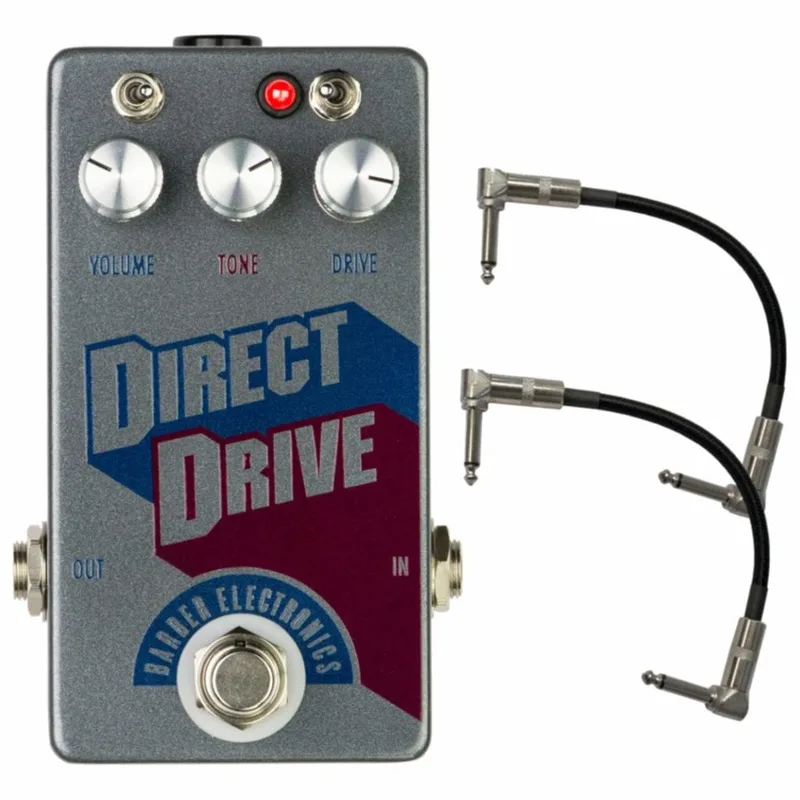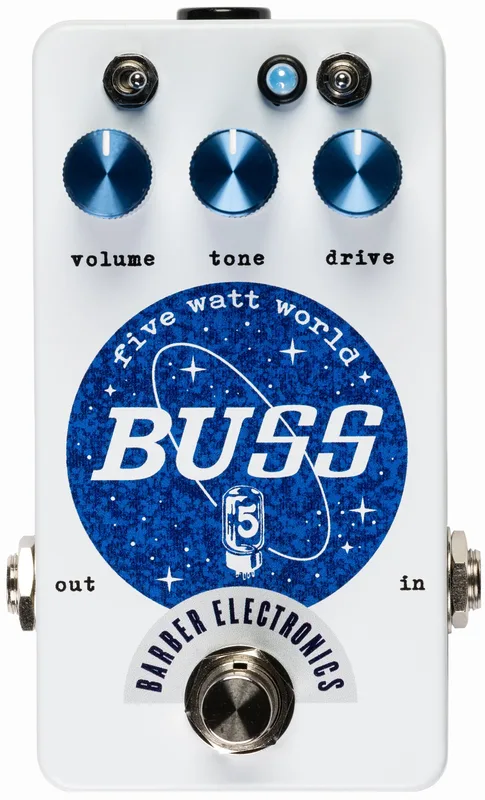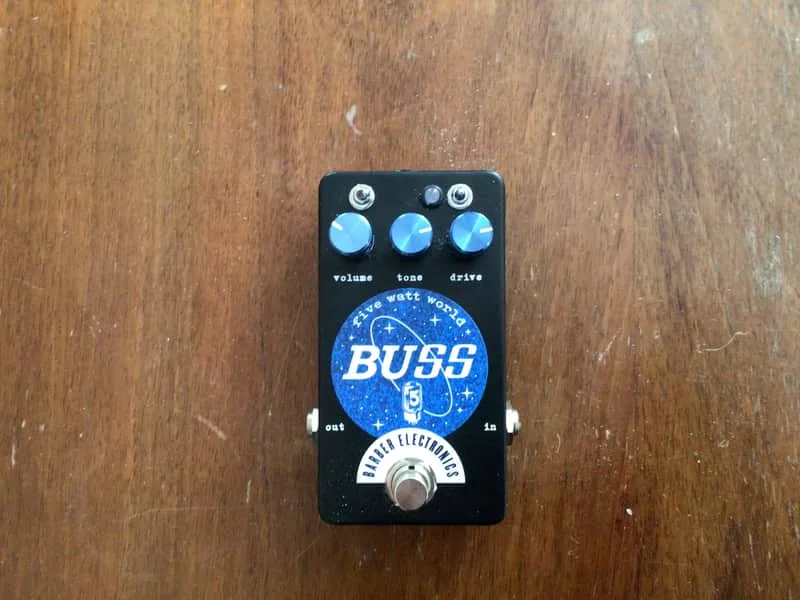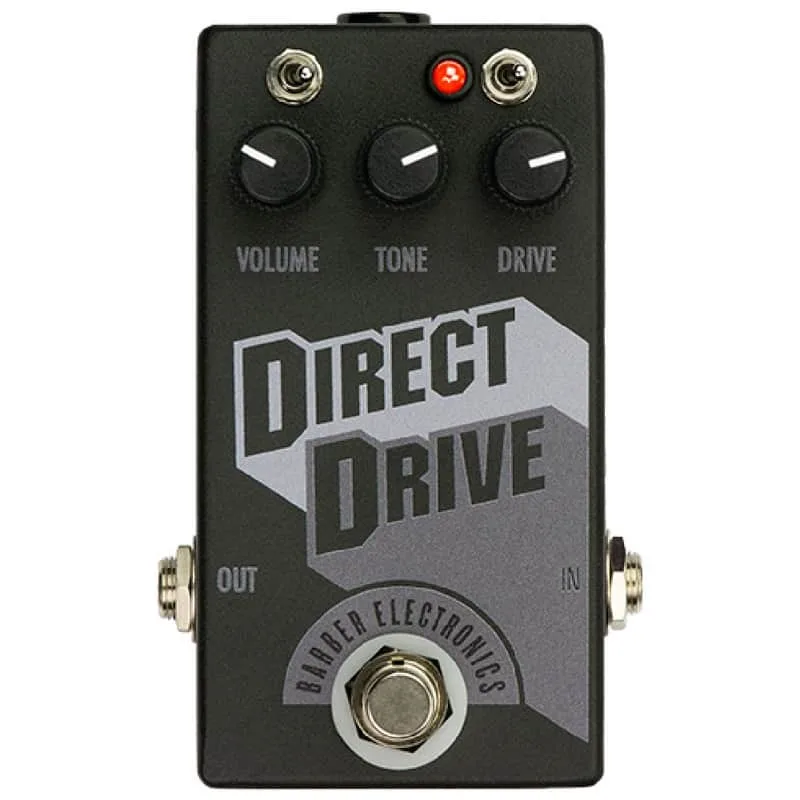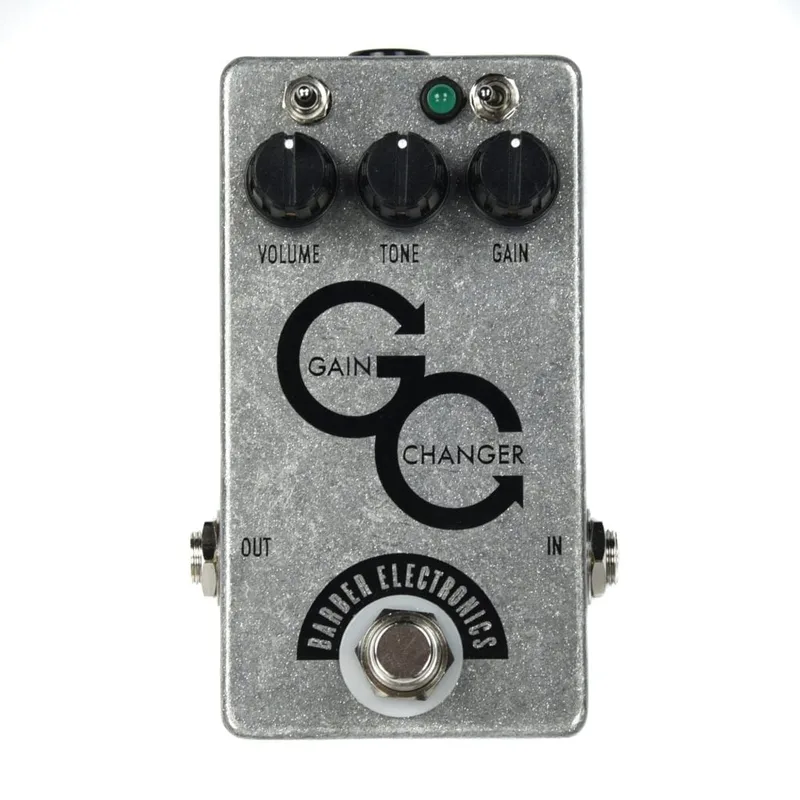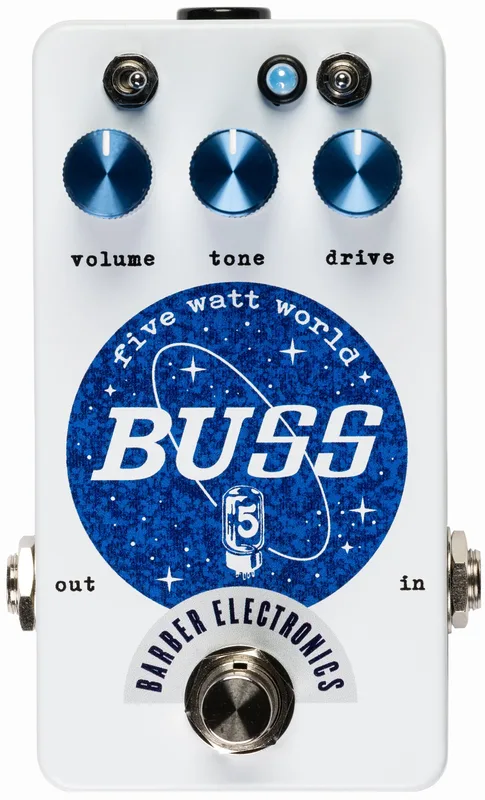


The Barber Electronics FWW BUSS is a dual tone overdrive pedal that puts two of Barber Electronics' circuits in one compact analog box: the Burn Unit and the Direct Drive Super Sport. Barber describes it as a "five watt world" edition, built around Keith from five watt world's two favorite classic overdrive tones, and says it is designed to help you get the "most music from the least gear"1.
The two circuits were chosen to celebrate two historic tones: Eric Clapton's JTM-45 sound from the "Beano" album, and the tones created by Alexander Dumble's Overdrive Special #391. The pedal is available in white1.
Two overdrives in one pedal
The FWW BUSS is derived from the circuits of the Burn Unit and the Direct Drive Super Sport, two of Barber's established overdrive designs1. Rather than stacking two separate pedals, the BUSS gives you both voicings in a single compact pedal, selected from the front panel1.
The two modes are aimed at different ends of the classic overdrive spectrum. Barber says the edition celebrates Eric Clapton's JTM-45 tone from the "Beano" album on one side and Alexander Dumble's Overdrive Special #39 on the other1.
The controls
The pedal's controls fall into two groups: a left toggle that selects between the two circuit voicings, and a harmonics and dynamics switch that shapes how the pedal responds to your guitar and amp1.
Left toggle: Super Sport and Burn Unit modes
| Toggle position | Mode | What Barber says it does |
|---|---|---|
| Left | Super Sport mode | Classic British and high-powered tweed sounds1 |
| Right | Burn Unit mode | Louder and punchy, with Dumble-like thickness1 |
Barber describes Burn Unit mode as "a louder and punchy setting that gives Dumble-like thickness to your bridge pickup (bucker or single coil) and can push a neck pickup to warm flute-like textures"1.
Harmonics and dynamics switch
Alongside the mode toggle there is a three way harmonics and dynamics switch that helps you adjust the pedal to match your guitar output and amplifier1. This is the matching control that lets one voicing work with anything from a low-output single coil guitar into a clean amp to a hot humbucker into an already breaking-up amplifier.
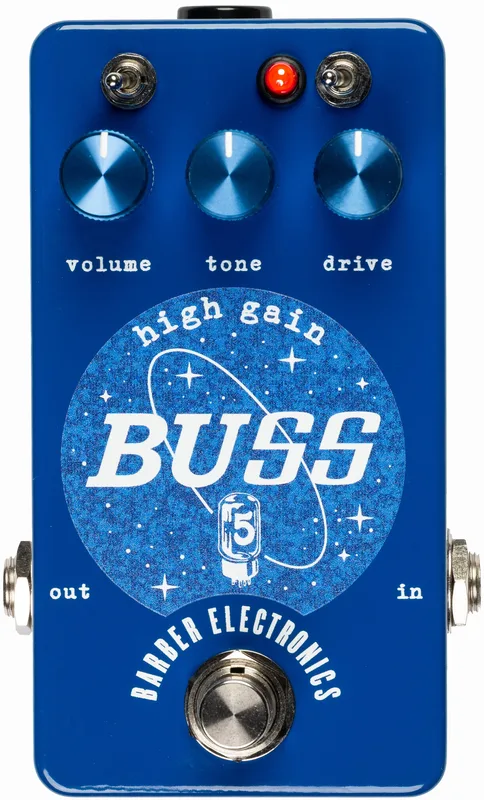
The high gain version: FWW BUSS HG
Barber also makes a higher gain sibling, the FWW BUSS HG, a high gain overdrive/distortion pedal built on the circuits of the B-Custom Super Sport and the Barber Burn Unit3. It carries the same $219.95 list price4.
The HG's controls are documented in its manual:
- Drive control: sets the amount of sustain and gain4
- Tone control: an adjustable high-end roll-off; Barber suggests a starting point of 2 to 3 o'clock for Super Sport mode and 12:30 to 1 o'clock for Burn Unit mode4
- Left toggle: Super Sport mode, with a classic British sound that can get aggressive when combined with the high harmonics setting; Barber notes it is normal for this toggle to pop when switched4
- Right toggle: a two position "high harmonics and ultra dynamics" switch3
On that right toggle, Barber describes the two positions this way:
- Left, high harmonics mode: extra harmonics with a certain amount of sponginess reminiscent of vintage amps3
- Right, ultra dynamics mode: a little bit louder, more open, with lots of articulation, and string definition retained at higher gain levels, particularly with single coil guitars4
The HG edition celebrates a higher range of gain than the original FWW BUSS. Barber describes it as "deeper into Modded Marshalls with a touch of cranked Vox and higher gain Dumble tones, think 'Talk to Your Daughter' era Ford"4.
Power and setup
The FWW BUSS runs on 9V DC with a center negative plug, drawing about 50mA2. The BUSS HG accepts a wider 9 to 18 volt DC range, and its manual is specific about polarity:
"Make sure you use a 9-18 volt DC adaptor, it must be negative tip (center)."
The BUSS HG's 9 to 18 volt DC range means it can run at higher voltages than the standard FWW BUSS, but both require a negative tip (center) supply. Check your power supply's polarity before plugging in.
Barber's manual for the HG also gives a support contact for questions: david@barberelectronics.com3.
Videos
Barber Electronics
Barber Electronics
Barber Electronics
Questions
What does the Burn Unit mode on the FWW BUSS sound like?
Barber describes Burn Unit mode as a louder and punchy setting that gives Dumble-like thickness to your bridge pickup, whether humbucker or single coil, and can push a neck pickup to warm flute-like textures. It is one of two modes on the left toggle, the other being Super Sport mode with classic British and high-powered tweed sounds.
What power supply does the Barber FWW BUSS need?
The FWW BUSS runs on 9V DC with a center negative plug, drawing about 50mA. The high gain BUSS HG version accepts a wider 9 to 18 volt DC range, also with a negative tip (center) adaptor.
Is the FWW BUSS a limited edition?
It is a "five watt world" edition, a collaboration built around Keith from five watt world's two favorite classic overdrive tones. Barber says the edition uses its Burn Unit and Direct Drive Super Sport circuits to celebrate two historic tones, and it is available in white.
How much does the Barber FWW BUSS cost?
The list price is $219.95, as listed by Barber Electronics in October 2026. The high gain BUSS HG version carries the same $219.95 list price.
Sources (4)
- FWW BUSS, Barber Electronics
- FWW BUSS by Barber Electronics, RockBoard PedalPedia, 2026
- FWW_BUSS HG BLUE.docx, Barber Electronics
- FWW BUSS HG, Barber Electronics