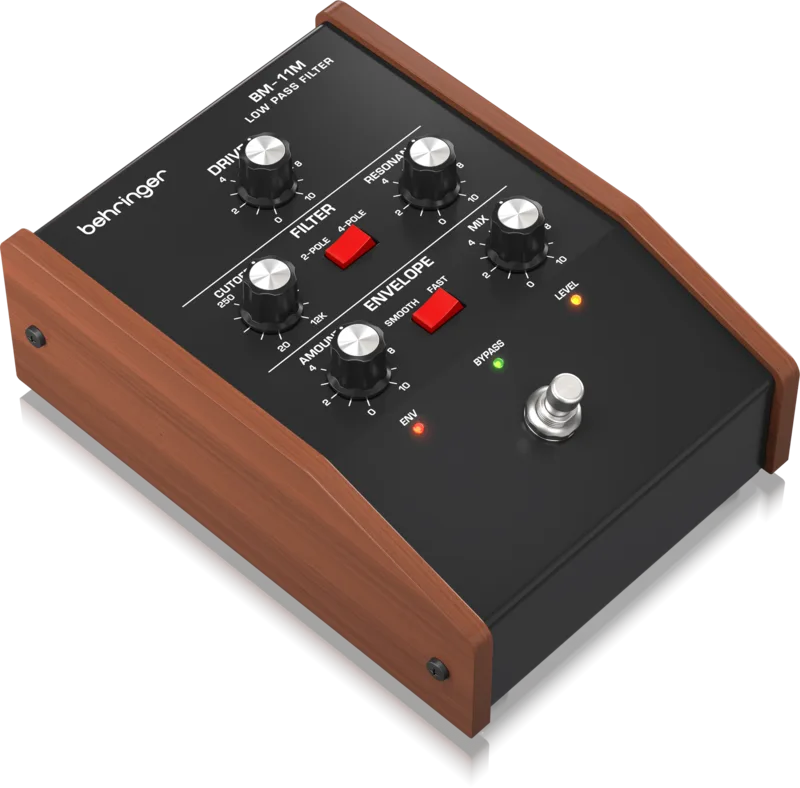


The Behringer BM-11M is a vintage-style analog low-pass filter pedal. A low-pass filter lets the frequencies below a chosen cutoff point through and rolls off the ones above it, which is what gives filtered guitar and bass parts their dark, vocal, synth-like character. Behringer describes the pedal as delivering "warm, resonant filtering to your pedalboard or studio rig with an unmistakable analog character"1.
At the heart of the pedal is an envelope follower, a circuit that tracks the level of your input signal and moves the filter cutoff in response to how hard you play. Behringer says it "reacts to your playing dynamics and input signal in real time"1. The pedal is not limited to guitar: Behringer says it works with "a guitar, bass, synth or a drum machine"1.
Controls and how it shapes the sound
The front panel gives you five controls, each handling one part of the filtered sound1:
| Control | What it does |
|---|---|
| Cutoff | Sets the frequency where the filter starts rolling off highs |
| Resonance | Adds emphasis at the cutoff point, from smooth to pronounced |
| Envelope Amount | Sets how strongly your playing dynamics move the cutoff |
| Drive | Input gain control, setting how hard the filter is hit2 |
| Mix | Blends the filtered signal with the dry signal |
The Envelope Amount control is the one that makes the pedal feel alive under your fingers: turn it up and the cutoff sweeps with every note you dig into, turn it down and the filter sits where you set it with Cutoff. The Mix control lets you keep some clean signal in the blend, which is useful for bass players who want the filter effect without losing their low end1.
The filter itself is selectable between 2-pole and 4-pole operation, with a resonance control2. A 2-pole filter rolls highs off gently, keeping more of the source tone above the cutoff; a 4-pole filter rolls off twice as steeply for a darker, more dramatic filtered sound. Being able to switch between the two on one pedal covers both the subtle and the extreme ends of filter playing.
Behringer says the internal circuitry offers "studio-grade headroom and thick harmonic response"1.
Connectivity: MIDI, USB-C and expression
The BM-11M goes beyond the usual pedalboard connections. RockBoard's listing specifies both USB-C and MIDI control for integration with other gear2, and Behringer's own product page lists the pedal with USB/MIDI control1. That puts it in reach of players running MIDI pedals or computer-controlled rigs, where the filter can be automated or synced rather than only moved by hand or by envelope.
There are also expression pedal inputs for real-time control over parameters2. Behringer frames the expression inputs as making the pedal "ready for pedalboards and modular rigs"1, so a player with an expression pedal on their board can sweep the cutoff by foot the way a wah player works their pedal.
Build and power
The pedal sits in a rugged metal chassis with vintage-inspired wood panels, a look RockBoard describes as providing "a classic look and durability"2.
The BM-11M draws 400mA at 9V DC, center negative2. That is a heavy draw for a filter pedal, so plan on a high-current output or a dedicated supply.
Where it sits in Behringer's filter line
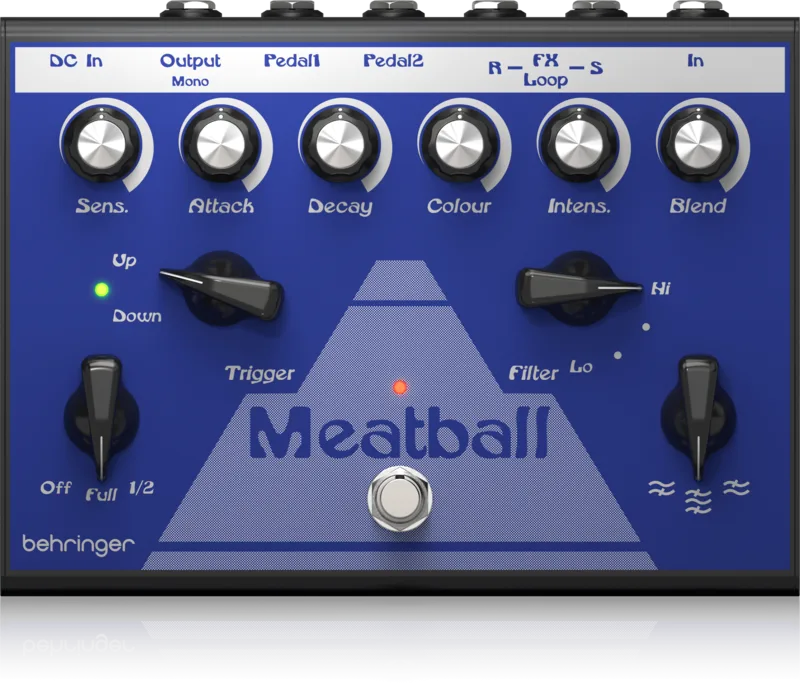
The BM-11M sits in Behringer's filter pedal line as a low pass filter aimed at players who want more than a stompbox. It works with guitar, bass, synth or a drum machine1, and its expression pedal inputs make it ready for pedalboards and modular rigs alike12. Behringer describes the internal circuitry as offering studio-grade headroom and thick harmonic response1. At a list price of $95.00 USD3, it carries the same price point as the Meatball, another filter pedal in the range, while its drive control for input gain2 and real-time expression control over various parameters2 give it a more integration-oriented feature set.
Videos
Behringer
Starsky Carr
Adam Husk
Questions
Is the Behringer BM-11M analog or digital?
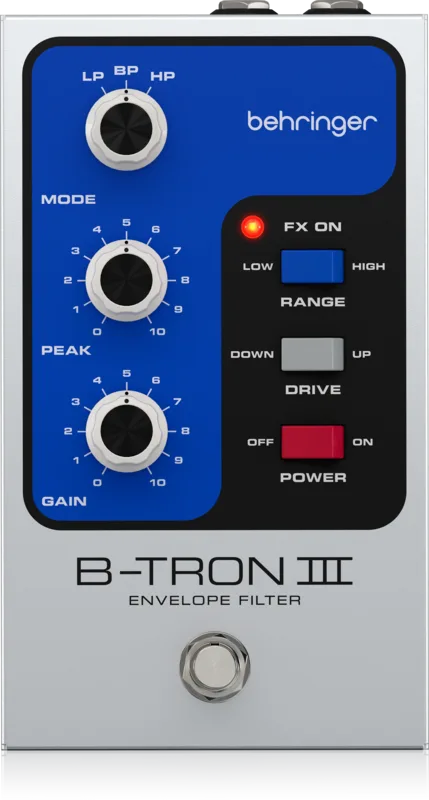
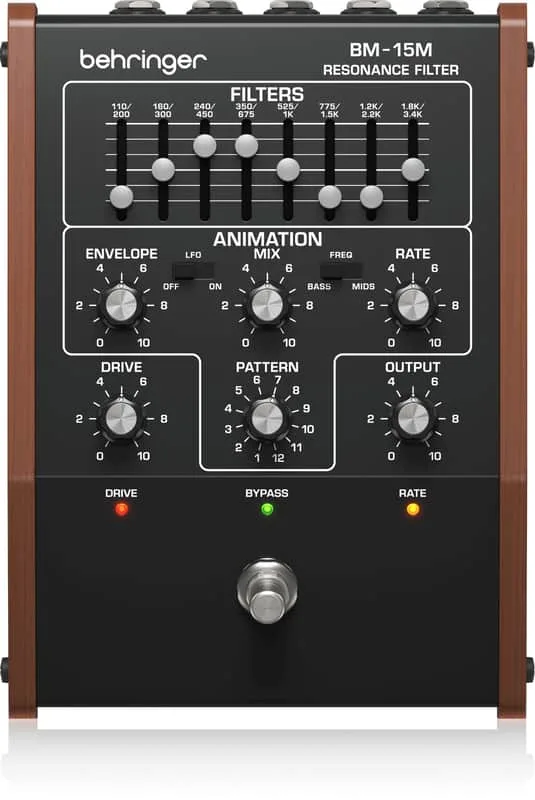
Yes, it is analog. Behringer describes the BM-11M as a vintage-style low-pass filter with an unmistakable analog character, and RockBoard's PedalPedia lists its circuit type as analog. It sits in Behringer's line of vintage-inspired filter pedals alongside models like the B-Tron III and the BM-15M Murf Box.
What power supply does the BM-11M need?
It runs on 9V DC, center negative, and draws 400mA. That current draw is high for a filter pedal, so a dedicated 9V supply with enough headroom is the practical choice, and a small daisy chain may not keep up.
Is the BM-11M center negative?
Yes. The pedal takes 9V DC with a center negative plug, the standard polarity for most modern effects pedals and isolated power supplies.
Does the BM-11M have MIDI?
Yes. Behringer lists the BM-11M with USB/MIDI control, and RockBoard's listing specifies both USB-C and MIDI control for integration with other gear. It also has expression pedal inputs for real-time control over parameters.
What is the difference between a 2-pole and a 4-pole low-pass filter?
A pole is one stage of filtering. A 2-pole filter rolls off high frequencies more gently, so more of the signal's character survives above the cutoff point. A 4-pole filter rolls off twice as steeply, giving a darker, more pronounced filtered sound. The BM-11M lets you switch between the two.
Sources (3)
- BM-11M LOW PASS FILTER, Behringer
- BM-11M by Behringer, RockBoard PedalPedia, 2026
- Behringer BM-14M: Analog Bucket Brigade Delay is Back in Stock, gearnews.com, 2026-07-01