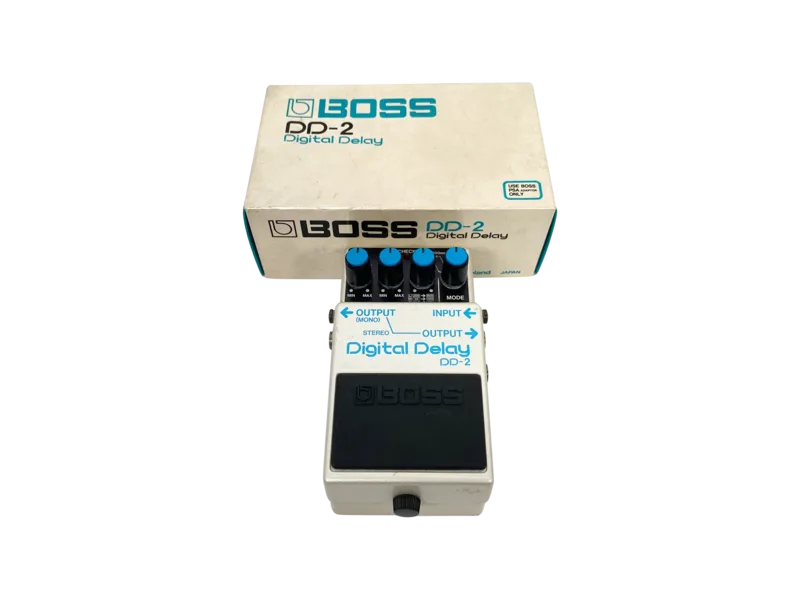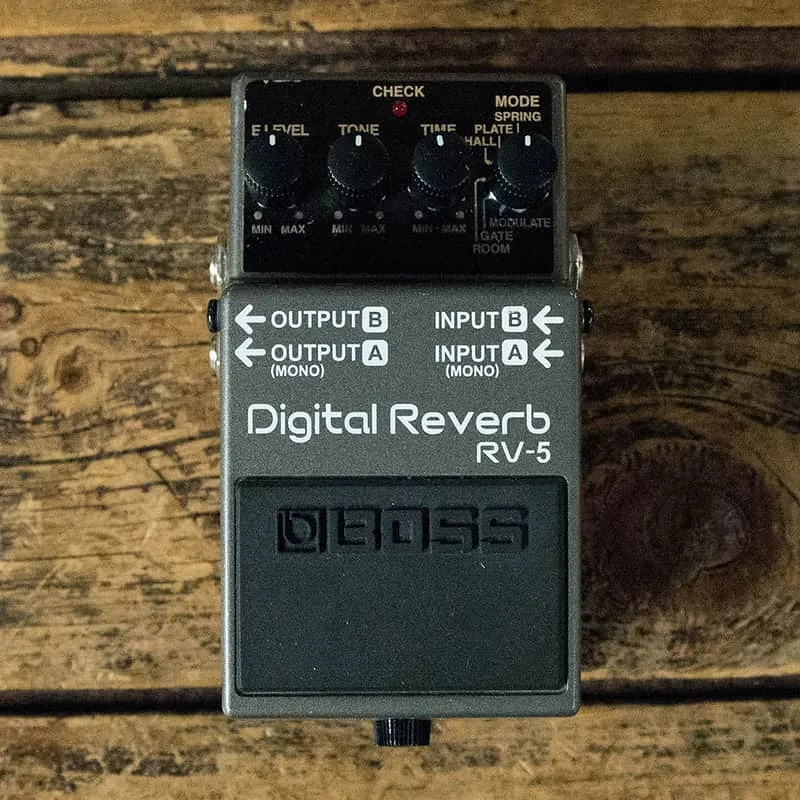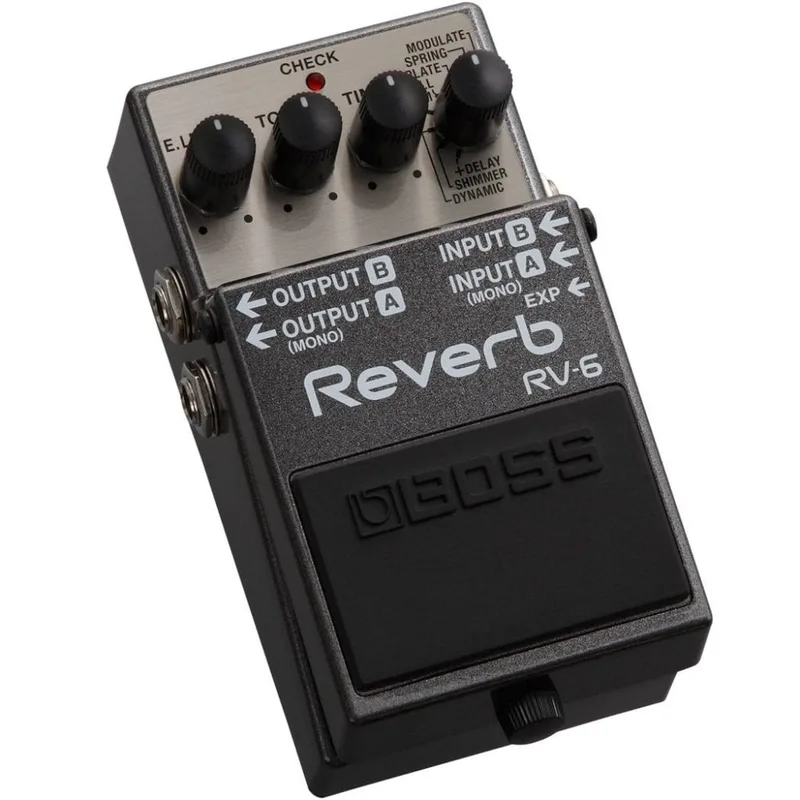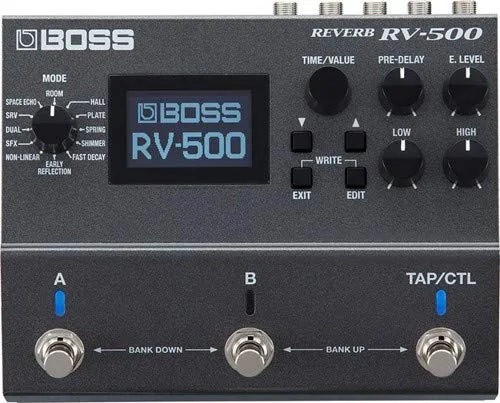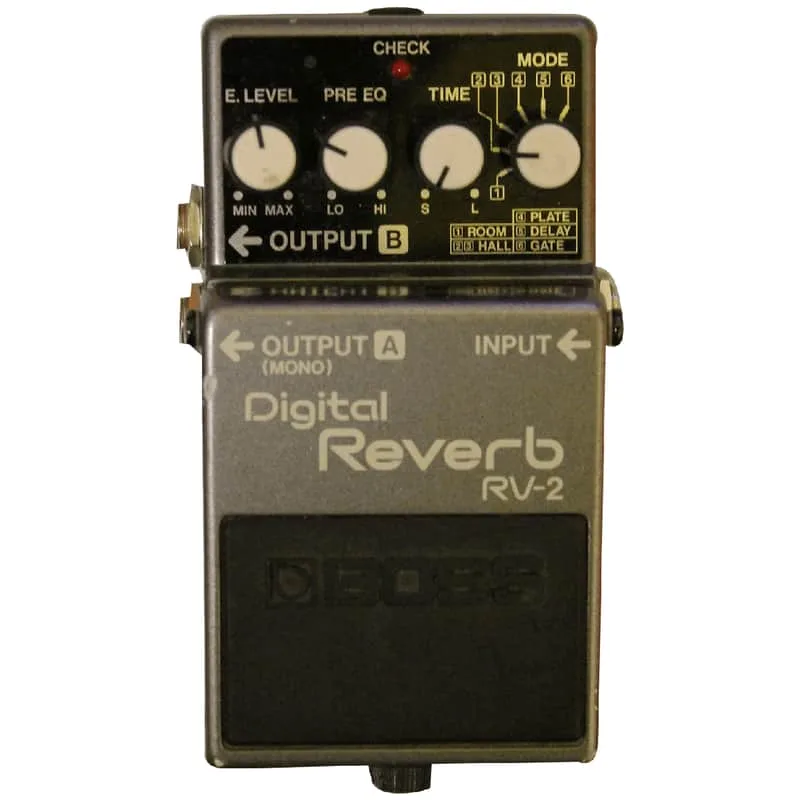


The Boss RV-2 Digital Reverb, released in 1987, was the world's first digital reverb pedal. Boss's own history of its delay line calls it "another milestone for the industry," and notes that it carried delay functionality as one of its sound modes as well as reverb12. In Boss's timeline it sits alongside the DD-2 Digital Delay of 1983 as a pedal that set a template for what followed2.
Where it came from
The RV-2 was built on an all-new custom DSP chip developed by Boss, a chip initially designed for the RRV-10 Digital Reverb in the company's Micro Rack series1. Putting that processing into a stompbox format was the step that made it the first of its kind: Premier Guitar, reviewing a later reverb pedal, noted that "though Boss' RV-2 might have been first" among digital reverb stomps4.
One point needs flagging. Boss's history article describes the RV-2 as a digital pedal built on a custom DSP chip1, while RockBoard's PedalPedia entry lists its circuit type as analog3. The two sources disagree on this, and both positions are given here as stated.
The delay mode
Alongside its reverb sounds, the RV-2 offers delay as one of its modes. In stereo, that delay behaves differently from a mono delay: Boss's Jim Bybee writes that "when used in stereo, the RV-2's Delay mode functions as a panning or 'ping-pong' delay," with the repeats alternating between the left and right outputs1. For a player with a stereo rig, that turns a single mode into a spatial effect without a separate delay pedal.
Power and practical notes
The RV-2 runs on 9V DC, center negative, and draws 130mA3. That draw is high for a compact pedal, so it is worth checking your supply's per-output rating before sharing a daisy chain with it.
At 130mA3, the RV-2 exceeds what many low-current daisy chain outputs provide. A dedicated supply output is the safer pairing.
The RV-2 and Boss's reverb line
The RV-2 started a line that Boss has continued across decades.
For more on the effect it pioneered, see the reverb pedals type page.
Videos
pedal partners
Stian Lerstad Johansen
TheColdNorthWind
Questions
What power supply does the Boss RV-2 use?
The RV-2 runs on 9V DC, center negative, and draws 130mA. That current draw is high for a compact pedal, so a daisy chain shared with several other pedals may not be enough on its own; a dedicated supply output rated for the draw is the safer pairing.
Does the Boss RV-2 have a delay mode?
Yes. Alongside its reverb sounds, the RV-2 offers delay as one of its sound modes. Boss's own history of its delay pedals describes the pedal as the world's first digital reverb pedal, with delay functionality included among its modes.
How does the RV-2 delay work in stereo?
In stereo use, the delay mode works as a panning or ping-pong delay: the repeats alternate between the left and right outputs rather than stacking in one channel. That gives the repeats a side-to-side movement across the stereo field.
How much current does the Boss RV-2 draw?
The RV-2 draws 130mA at 9V DC, center negative, according to RockBoard's PedalPedia listing for the pedal. That is worth checking against your power supply's per-output rating before adding it to a board.
Where can I find the Boss RV-2 manual?
The English owner's manual for the RV-2 is available as a PDF from Roland's document library at cdn.roland.com, linked from RockBoard's PedalPedia entry for the pedal.
Sources (4)
- Echoes in Time: The History of BOSS Delay Pedals, BOSS (articles.boss.info), 2024-01-10
- Shifting With the Times: The History of BOSS Pitch Pedals, articles.boss.info, 2025-12-17
- RV-2 Digital Reverb by BOSS, RockBoard (rockboard.de PedalPedia), 2026
- Electro-Harmonix Oceans 11 Review, Premier Guitar, 2018-09-10