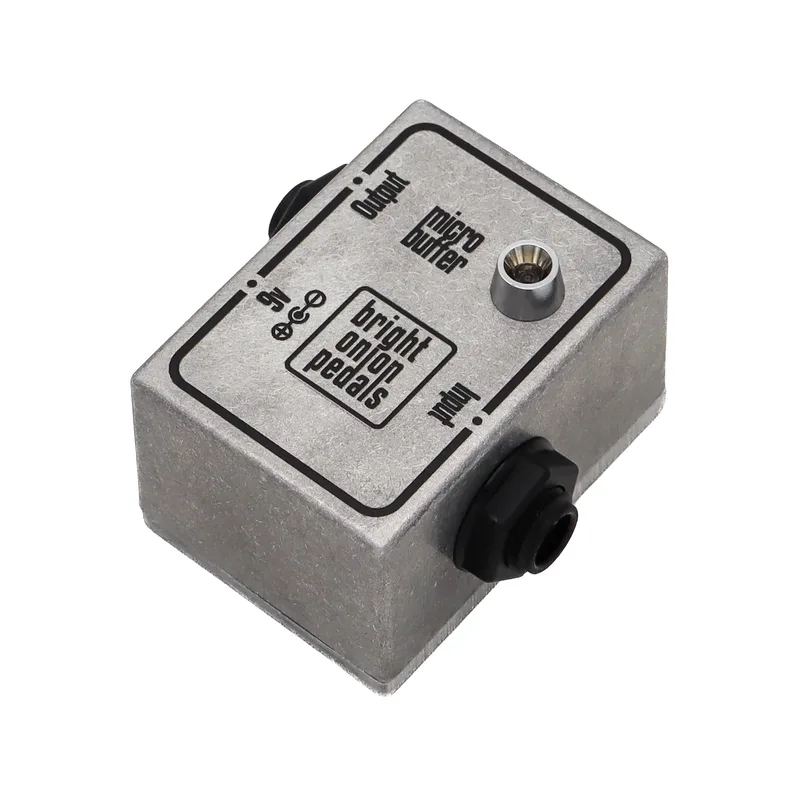
The Bright Onion Micro Buffer Pedal is a compact buffer pedal from Bright Onion Pedals, a UK maker. A buffer does not change your tone on purpose: it sits in the chain and preserves the signal, countering the treble loss and dulling that come from long cable runs and long pedalboards. Bright Onion describes it as a pedal for players "looking for a buffer to liven up your pedalboard".1
What it does and how it is built
The buffer is built using the TL072 op-amp, a common and inexpensive JFET-input op-amp widely used in audio circuits. Bright Onion Pedals says of the design1:
"The buffer is built using the TL072 op-amp which gives great results in maintaining your signal integrity1."
Bright Onion Pedals, product page1
The impedance figures are what matter to a player: a 1M input impedance presents a light load to a guitar's pickups, and a 1K output impedance lets the signal drive the rest of the chain and the cable to the amp without further loss. The pedal uses Neutrik plug sockets for its jacks and houses the circuit in an aluminum enclosure measuring 52x38x31mm, small enough to tuck into a crowded board.1
Power
The Micro Buffer runs from a 2.1mm center negative 9V DC socket and draws 20mA. There is no battery option: Bright Onion states plainly that "Our products contain no batteries or lead."1
With no battery compartment, the pedal only works with a 9V DC center negative supply or power supply output. At 20mA it is a light load, but it still needs its own connection rather than running passive.
The maker also notes that no user maintenance is required, and that servicing should be referred to Bright Onion Pedals Limited.1
Where it sits among other buffers
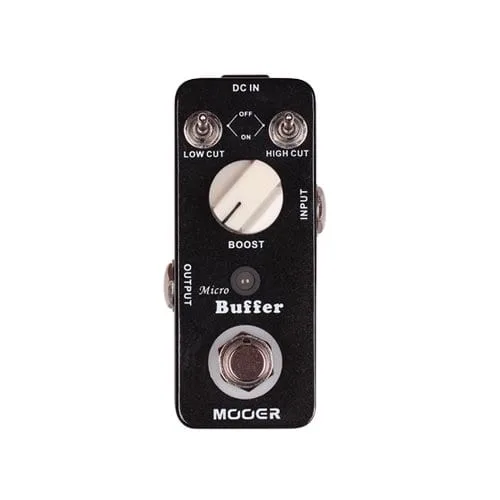
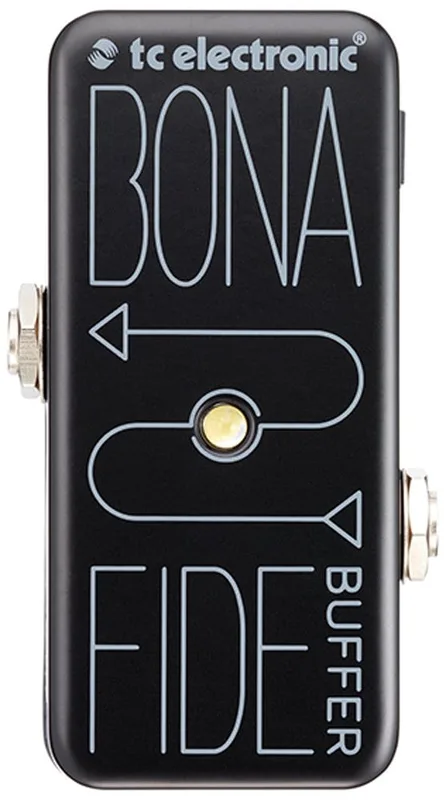
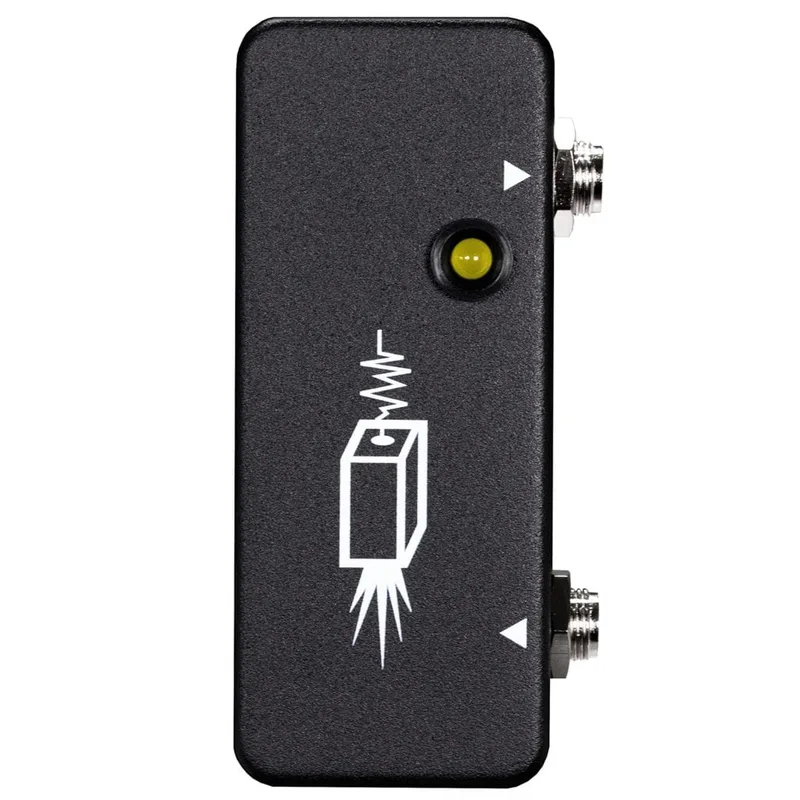
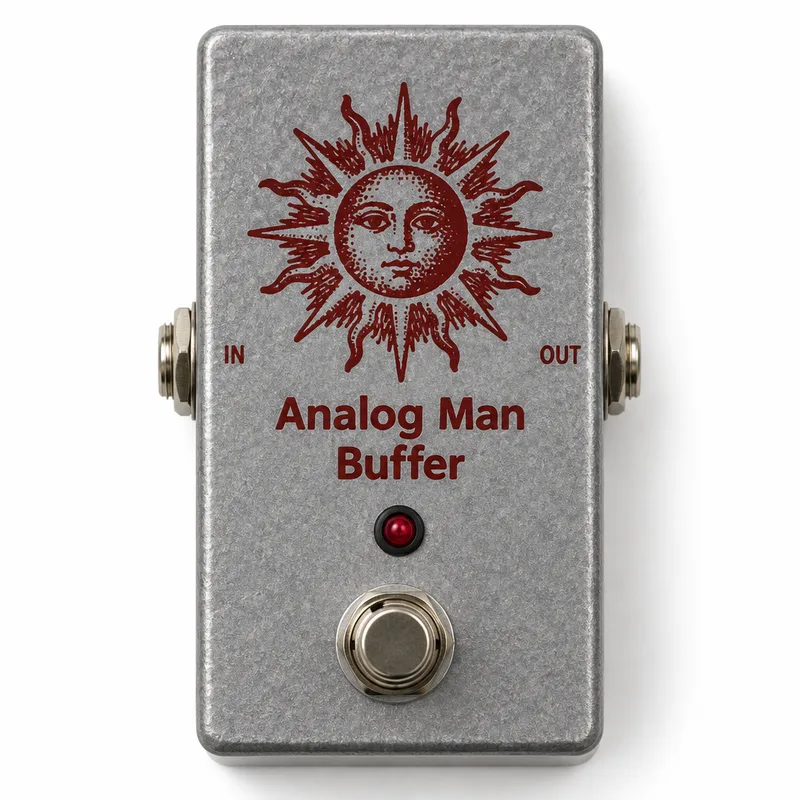
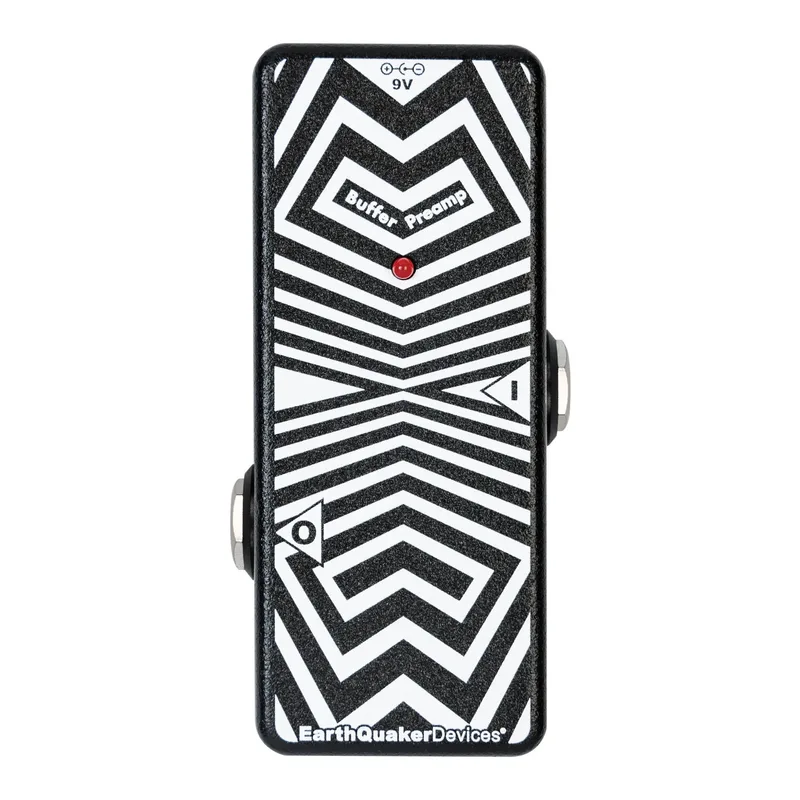
The buffer market includes many compact options with similar aims, among them the Mooer Microbuffer, the TC Electronic Bonafide Buffer, the JHS Pedals Little Black Buffer, the Analog Man Buffer and the EarthQuaker Devices Buffer/Preamp. What sets the Micro Buffer apart on paper is its TL072-based circuit, its 1M/1K impedance figures, its Neutrik jacks and its very small 52x38x31mm footprint.1
Questions
Does the Bright Onion Micro Buffer take a battery?
No. Bright Onion Pedals states that its products contain no batteries or lead, so the Micro Buffer runs only from an external DC supply. You will need a 9V DC centre negative adapter or a pedalboard power supply output rated for at least 20mA, using the standard 2.1mm centre negative socket on the pedal.
What power supply does the Bright Onion Micro Buffer need?
The pedal uses a 2.1mm centre negative 9V DC socket and draws 20mA. Any standard 9V DC pedal adapter or isolated output on a pedalboard power supply with that polarity and enough current will run it. Because there is no battery compartment, a DC supply is the only way to power it.
What op-amp does the Bright Onion Micro Buffer use?
The buffer is built around the TL072 op-amp. Bright Onion Pedals says the TL072 gives great results in maintaining signal integrity, which is the job of a buffer: preserving the high end and dynamics of the guitar signal as it passes through long cable runs and pedal chains.
What is the input impedance of the Bright Onion Micro Buffer?
The Micro Buffer has a 1M (one megohm) input impedance and a 1K output impedance, according to Bright Onion Pedals. A high input impedance like that keeps a guitar's pickups from being loaded down, which is what a buffer is for.
How big is the Bright Onion Micro Buffer pedal?
Bright Onion Pedals lists the enclosure at 52x38x31mm, an aluminium box in a compact pedal format. That is small enough to fit into tight pedalboard spaces, which suits a pedal that is meant to sit in a chain and simply pass signal.
Sources (1)
- Micro Buffer Pedal, Bright Onion Pedals