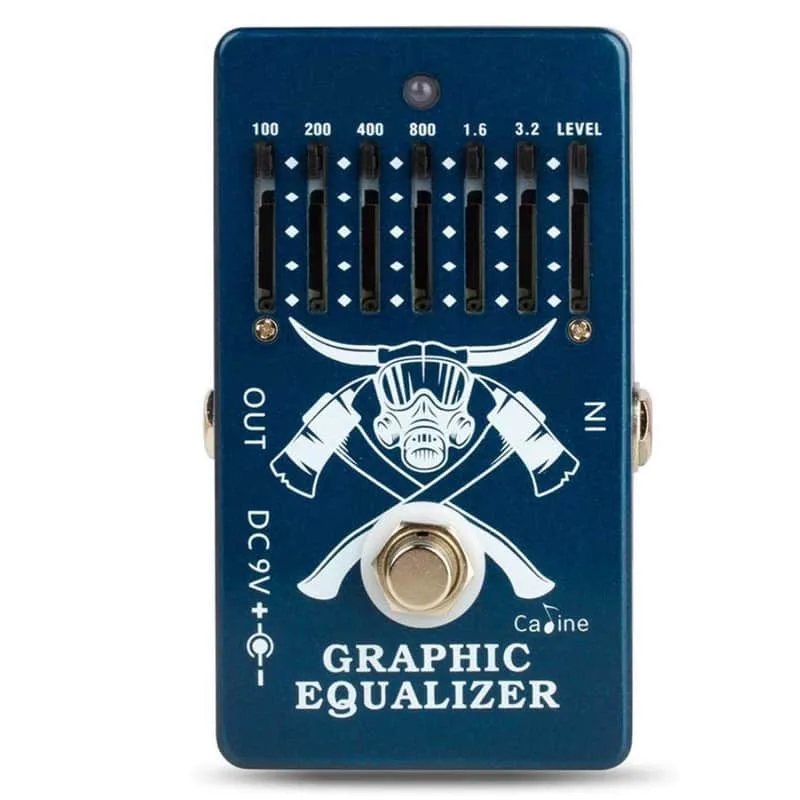
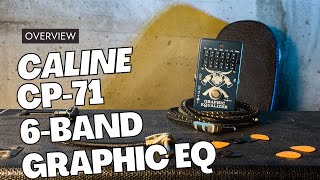


The Caline CP-71 6 Band EQ is a graphic equalization pedal: six sliders, each controlling one slice of the guitar's frequency range, so you can cut problem frequencies or boost the ones you want to hear more of. Delicious Audio describes it as covering "all the essential guitar frequencies," with each band delivering a range of ±18dB to help you find your favorite tone1. That is a wide swing per band, enough to shape a tone noticeably or to use the pedal as a clean boost by leaving the bands flat and lifting one or two.
What the six bands do
A graphic EQ works by splitting your signal into fixed frequency bands, each with its own slider. Cutting a band removes a range of frequencies, which is how players tame harshness or boxiness; boosting a band lifts that range, which can add bite, body or air. On the CP-71, each of the six sliders reaches ±18dB, a generous amount of control for a compact pedal1.
In practice, that per-band range opens up a few common uses:
- Cutting a band to tame a harsh or boxy frequency range
- Boosting a band to add bite, body or air to a flat-sounding amp or pedal
- Leaving the sliders flat and lifting one or two to use the pedal as a clean boost
Where it sits in Caline's range
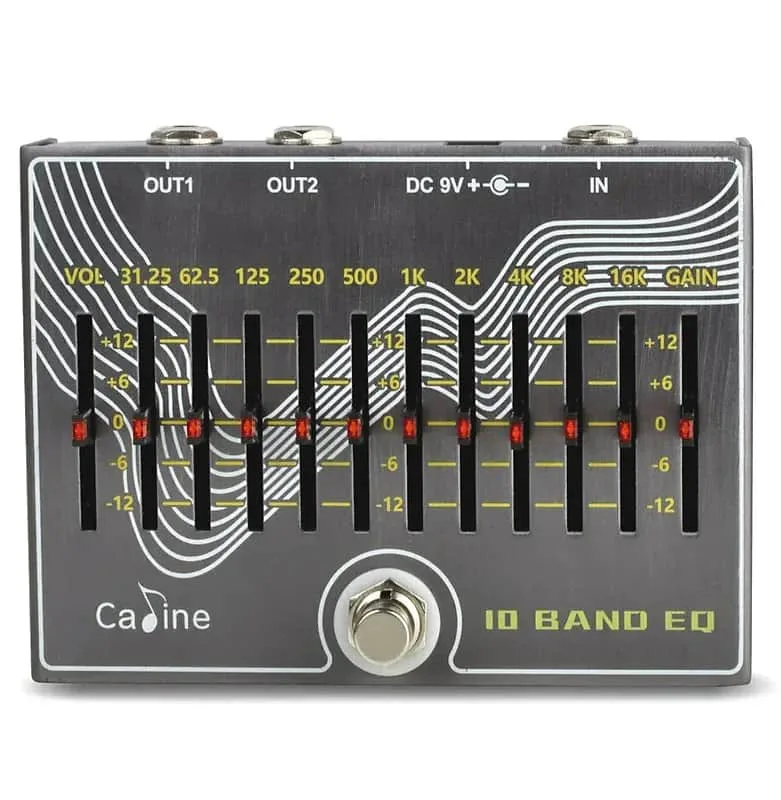
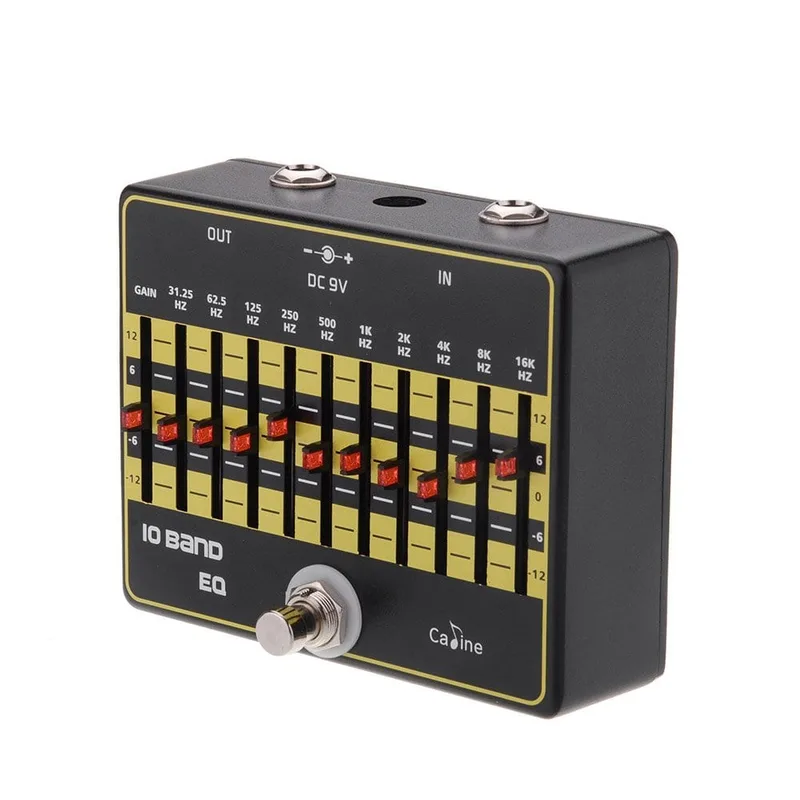
Caline makes several EQ pedals. The CP-71's six bands cover the core guitar frequencies, while the Caline CP-81 10 Band EQ doubles the number of bands for finer control, and the Caline 10 Band EQ is a related ten-band option.
If you want EQ built alongside another effect, the CP-71's EQ circuit also appears on the EQ side of the Caline Easy Driver, a pedal that pairs this six-band graphic EQ with a distortion circuit1.
The same six-band EQ circuit is used in the Caline Easy Driver distortion, so the EQ side of that pedal behaves like the CP-711.
For a broader look at how pedals like this work, see Equalization Pedals.
Videos
DanGuitarSE
DanGuitarDK
DanMusikk.no
Sources (1)
- Caline Easy Driver Distortion + Graphic EQ, Delicious Audio, 2021-09-07