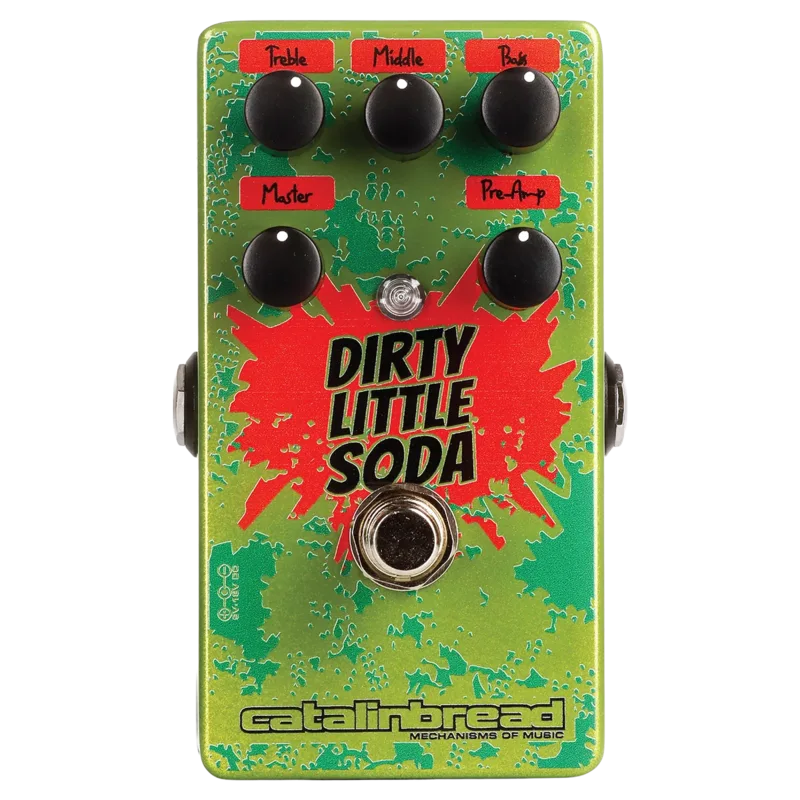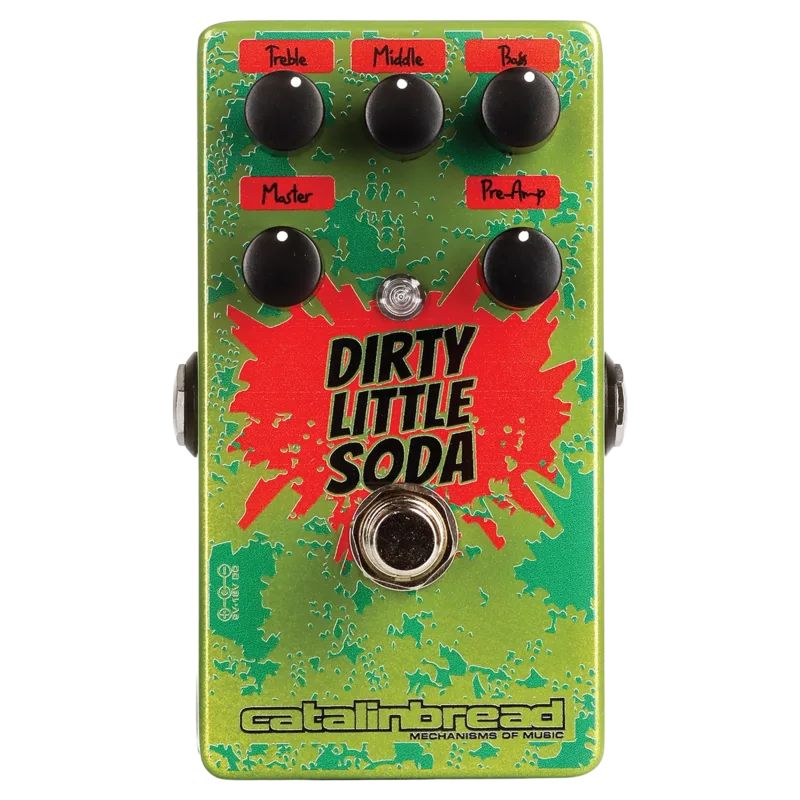
The Catalinbread Dirty Little Soda, also sold as the DLS Red, is an overdrive pedal built to bring the sound and response of a classic Marshall amplifier to a pedalboard. Catalinbread describes it as a "foundation" pedal: an always-on pedal that forms the core of your guitar sound, which you can then enhance with boosters, fuzzes, filters and other overdrives placed in front of it1.
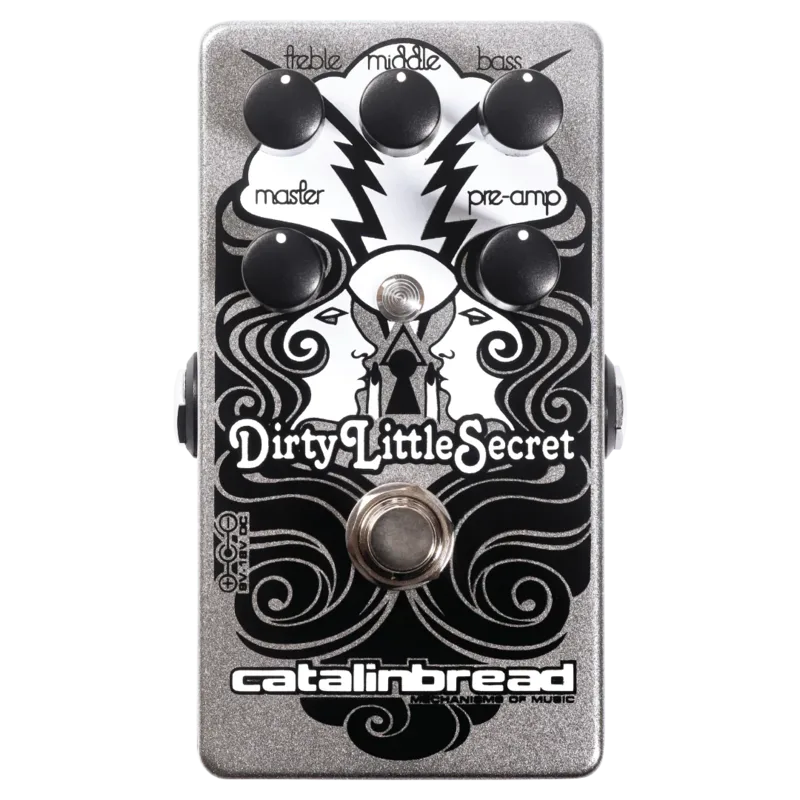
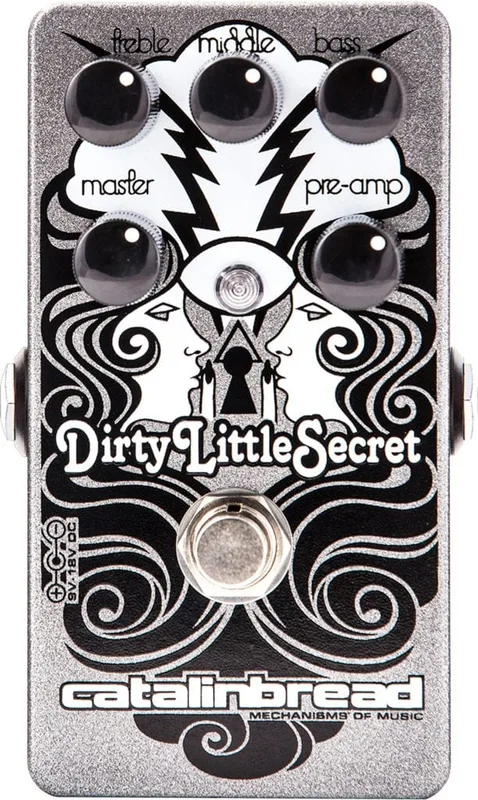
The pedal belongs to Catalinbread's Dirty Little Secret family, a line of Marshall-in-a-box overdrives that the press has covered since the original circuit appeared. Premier Guitar described the DLS Red as "an updated, hot-rodded version of their beloved Dirty Little Secret, plexi-style overdrive"2. Like its siblings, it is a limited release: Catalinbread's product page states "ONLY 40 AVAILABLE. SHIPS MID-SEPTEMBER."1
A Marshall-style foundation overdrive
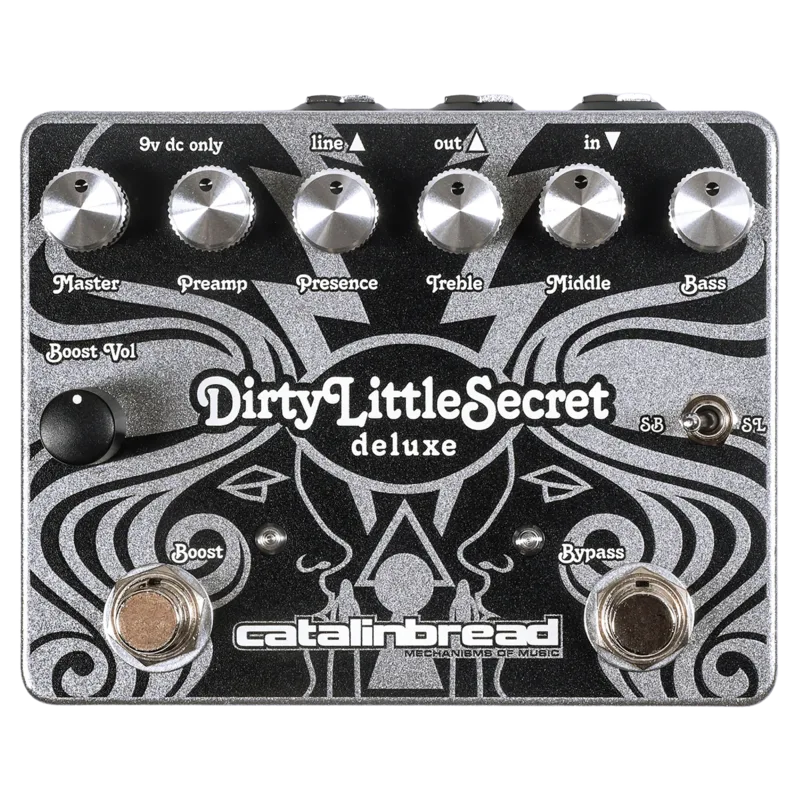
The Dirty Little Soda sits in a circuit lineage that Catalinbread has been refining for over a decade. The Dirty Little Secret itself went through several versions, with the Mk. II replaced by the Mk. III in 20133, and the line later expanding into the Dirty Little Secret Deluxe, which grew out of what Catalinbread says started as a fourth version of the flagship circuit4.
The Red concept first appeared in 2019 as the Limited Edition Dirty Little Secret Red Mod, a run of 100 units worldwide5. Catalinbread described that pedal as a hot-rodded version of the DLS MkIII, with gain stages designed to cut through the low-mids of the original and bring more punch and clarity6. Gearnews characterized the modified circuitry as "more of everything you love about the original pedal, think a Plexi Plus"5. The Dirty Little Soda carries this Red treatment forward in the same red enclosure tradition.
The foundation idea is central to how the pedal is meant to be used. Rather than acting as a boost or a solo stomp switched on and off, it stays on and defines your base tone, with other effects stacked into it1.
The controls
The control set is deliberately simple, with three knobs on top and two adjustments inside1.
| Control | What it does |
|---|---|
| MASTER | Overall volume of the pedal. Clockwise for more, counter-clockwise for less.1 |
| PRE-AMP | How much gain or overdrive. Clockwise for more, counter-clockwise for less.1 |
| TREBLE | Controls the higher frequencies, clockwise for more. Acts like a mixer control between the treble side and the middle/bass side.1 |
Inside the pedal are two further adjustments:
- SL/SB mode switch: an internal slider switch that selects between the two distinct voicings, "Super Lead" and "Super Bass"1.
- Presence trimpot: an internal trimmer, accessible by removing the bottom plate, that fine-tunes the amount of presence or high treble frequencies the pedal produces. Catalinbread says it is factory set to provide the best tone in most circumstances1.
The Super Lead and Super Bass names refer to the Marshall amps the circuit family emulates. On the Dirty Little Secret Deluxe, Catalinbread describes Super Lead mode as a cutting, upper-midrange-heavy tone and Super Bass mode as a smoother, smokier tone with a lower midrange emphasis4. The internal slider approach goes back through the line: the production Dirty Little Secret used the same internal slide switch for its Super Lead and Super Bass modes7, and players noticed it long before the Deluxe moved the switch to the outside. In a 2015 Strymon pedalboard feature, Dave Depper's Dirty Little Secret was noted as having "a both a Super Lead and a Super Bass mode, selectable via an internal slider switch"8.
Power: 9 to 18 volts
The Dirty Little Soda runs on a negative tip (center negative) DC supply from 9 to 18 volts1. The voltage choice changes the character of the pedal, and Catalinbread explains the difference in amp terms:
"A nine-volt power supply will have a slightly softer sound that saturates more easily, it's sort of like the difference between a 50 watt and 100 watt amp!"
At the top of the range, the maker says running an 18-volt supply gives more volume, headroom and percussive attack1. Players who want the pedal to stay cleaner and louder at the front of a board can use the higher voltage; those who want it to saturate sooner can stay at 9 volts.
The pedal accepts 9 to 18 volts, so a standard 9V center-negative supply works, but the supply must not exceed 18 volts. The presence trimpot and the Super Lead/Super Bass switch are both inside the enclosure and require removing the bottom plate to adjust1.
The Red Mod limited edition
The Dirty Little Soda continues Catalinbread's pattern of small Red runs. The 2019 Limited Edition Dirty Little Secret Red Mod was capped at 100 units worldwide5, and the Dirty Little Soda is smaller still at 40 units1. Guitar.com's Daniel Ong described the Red Mod's tonal character as "A Balanced, Marshall-like tonal flavour"6, and its gain stages were reported as designed to cut through low-mids with extended punch and clarity5.
Compared with the standard Dirty Little Secret, the Red versions trade the original's fuller low-mids for a more focused, cutting voice. Compared with the Dirty Little Secret Deluxe, the Dirty Little Soda keeps the simpler three-knob control set and internal switching, where the Deluxe adds external Treble, Middle, Bass and Presence knobs plus an external Super Lead/Super Bass toggle9101.
Questions
What do the Super Lead and Super Bass settings do on the Dirty Little Soda?
They are two distinct voicings, switchable via an internal slider switch. The names come from the Marshall amps the Dirty Little Secret circuit family emulates: Super Lead and Super Bass. On the related Dirty Little Secret Deluxe, Catalinbread describes Super Lead as a cutting, upper-midrange-heavy tone and Super Bass as a smoother, smokier tone with a lower midrange emphasis.
Where is the presence trimpot on the Dirty Little Soda?
Inside the pedal. Catalinbread says the trimpot is accessible by removing the bottom plate, and it lets you fine-tune the amount of presence or high treble frequencies the pedal produces. It is factory set to provide the best tone in most circumstances, so most players can leave it alone.
Is the Dirty Little Soda polarity center negative?
Yes. Catalinbread specifies a negative tip DC power supply, which is the same as center negative, running from 9 to 18 volts. A standard 9V center-negative pedal power supply works, and an 18-volt supply is an option for more volume and headroom.
How is the Dirty Little Soda different from the Dirty Little Secret?
The Dirty Little Soda, also called the DLS Red, is a limited-edition hot-rodded take on Catalinbread's flagship Dirty Little Secret, a Marshall-in-a-box overdrive. The Red versions carry modified circuitry with more refined gain stages designed to cut through the low-mids of the original, bringing more punch and clarity, in a red enclosure.
Sources (10)
- Dirty Little Soda (DLS Red), Catalinbread Effects
- Catalinbread Unveils New Dirty Little Secret Red Pedal, Premier Guitar, 2019-11-28
- Triton Preamp Drive Mk. II / Catalinbread DLS V2, Aion FX, 2020-11-23
- Dirty Little Secret Deluxe, Catalinbread Effects
- Catalinbread Limited Edition Dirty Little Secret Red Mod, gearnews.com, 2019-07-03
- Catalinbread’s Dirty Little Secret gets a limited-edition mod, Guitar.com, 2019-07-03
- Triton Preamp Drive Mk. III / Catalinbread DLS V3, Aion FX, 2020-11-27
- Pedalboard Feature: Dave Depper, Strymon, 2015-10-05
- Catalinbread Dirty Little Secret Deluxe, gearnews.com, 2023-09-07
- Catalinbread Dirty Little Secret Deluxe, Premier Guitar, 2023-09-06