
The pedal is currently listed as sold out on Darkglass's product page1. MusicRadar's review lists it at $4992; Darkglass's own page lists it at £380.00 GBP1.
What it is and what it does
The Kaamos puts two circuits in one box: a distortion channel taken from the Darkglass Alpha Omicron drive pedal, and an octave-down engine with three selectable types43. Darkglass describes it as combining "the signature tones of the Alpha Omicron pedal with a roaring octave-down effect"3. Guitar World's buying guide characterizes the drive side as "a growling distortion circuit plucked directly from the well-liked Alpha Omicron drive pedal"4.
The three octave modes are1:
| Mode | Type |
|---|---|
| Sublime | Monophonic mute-type octaver |
| Sublemon | Monophonic flip-type octaver |
| Subcitri | Polyphonic octaver |
Guitar World notes that the three modes "offer three different voices, the latter being a polyphonic setting"4. In practice, the two monophonic modes are for single-note playing, while Subcitri tracks chords.
The controls and push-button knobs
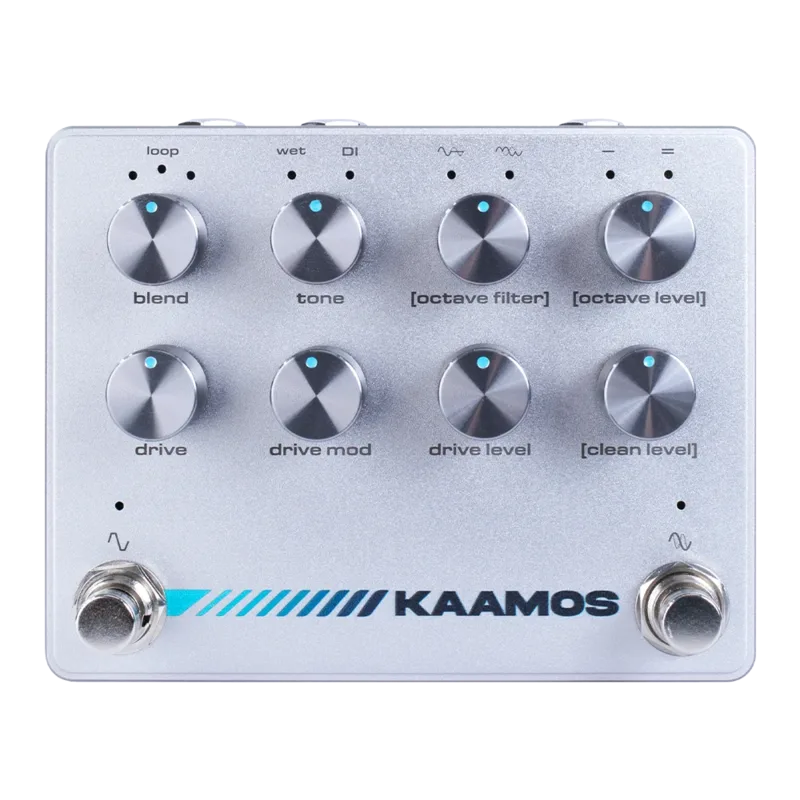
Each knob on the upper row is also a push-button, controlling additional functions2. The overdrive side has five controls: Blend, Drive, Tone, Drive Mod and Drive Level2.
| Control | What it does | Push function |
|---|---|---|
| Blend | Adjusts how much of the overdriven signal is mixed in12 | Cycles between three settings that determine where the inbuilt effects loop sits in the circuit2 |
| Drive | Sets the amount of drive in the overdrive circuit2 | |
| Tone | Shapes the overdrive's tone2 | Selects whether wet or dry signal goes to the XLR output2 |
| Drive Mod | Modifies the drive character2 | |
| Drive Level | Sets the overdrive output level2 | |
| Octave Level | Sets the octave signal's level2 | Determines whether the octave signal is in series or parallel with the driven signal2 |
The series/parallel choice on the Octave Level knob is a meaningful voicing decision: MusicRadar's reviewer describes series as "doom-laden growl" and parallel as "a cleaner, more defined sound"2.
The pedal has two soft-touch footswitches, overdrive on the left and octave on the right, plus a ground/lift toggle for the XLR out2.
Power and connections
The Kaamos runs on a regulated 9V DC adapter with a center-negative plug only, and has a current draw of 400mA1. Darkglass warns that unregulated power supplies and higher voltages may result in suboptimal noise performance, damage the unit, and may void the warranty1.
At 400mA, the Kaamos draws more current than a typical analog pedal and more than many small power supplies can deliver on a single output. Darkglass specifies a regulated 9V DC center-negative adapter, and higher voltages may void the warranty1.
- 1/4" mono instrument input, for your instrument or pedalboard output1
- 1/4" output jack, to connect to your amplifier or another effects pedal1
- 1/4" dedicated sub-octave output1
- 1/4" effects Send and Return24
- XLR DI output with a ground/lift toggle2
The sub output carries the octave-down signal on its own, separate from the main output, so the sub-octave can be routed to its own destination1. Pressing the overdrive Tone control selects whether the wet or dry signal is sent to the XLR output, which means the Kaamos can serve as a clean DI when needed2.
History and the name
Darkglass announced the Kaamos on 24 January 2025, describing it as a distortion and octaver pedal with additional features, developed with input from Amos Heller5. Darkglass's product page says the pedal was "designed in collaboration with legendary bassist and producer Amos Heller"1.
The name itself is disputed. Gearnews reported that "the Darkglass Kaamos is named after renowned bassist and producer Amos Heller"5, while a commenter on that article countered that kaamos is a Finnish word, the term for the polar night that falls over far northern Finland in winter. Darkglass's own pages do not address the origin of the name.
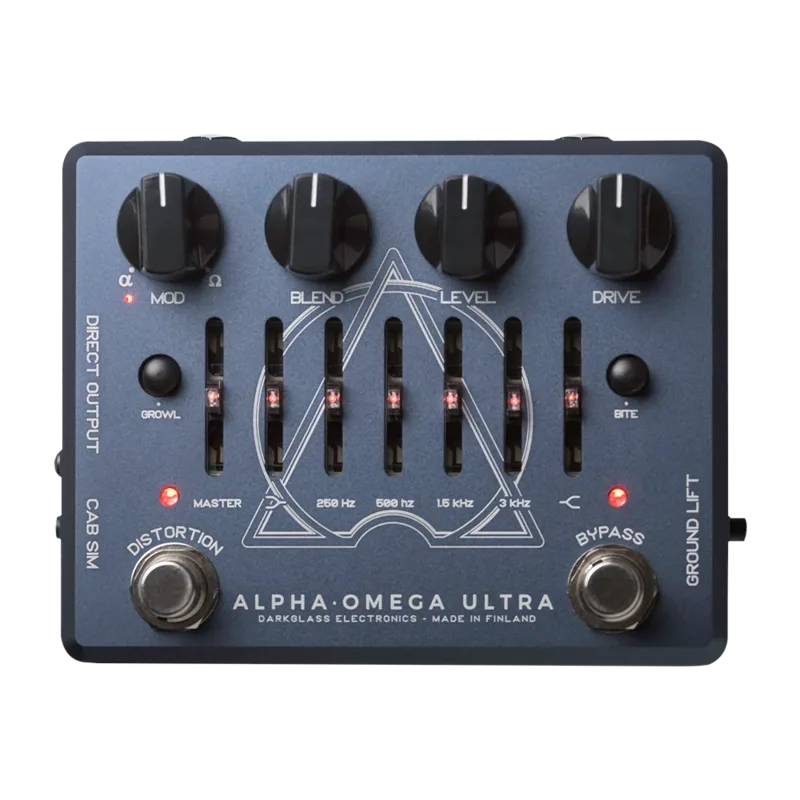
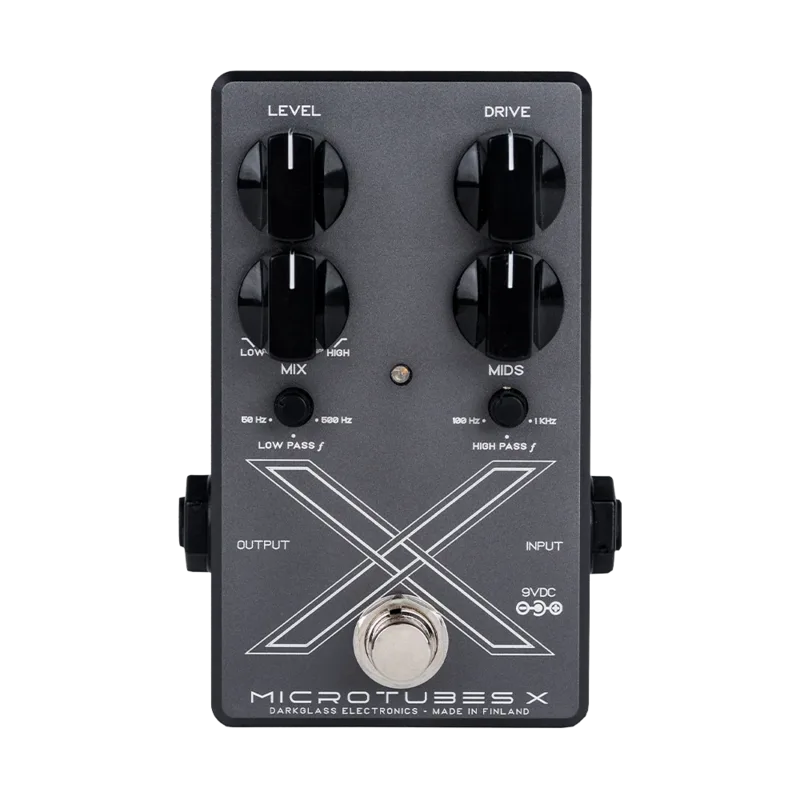
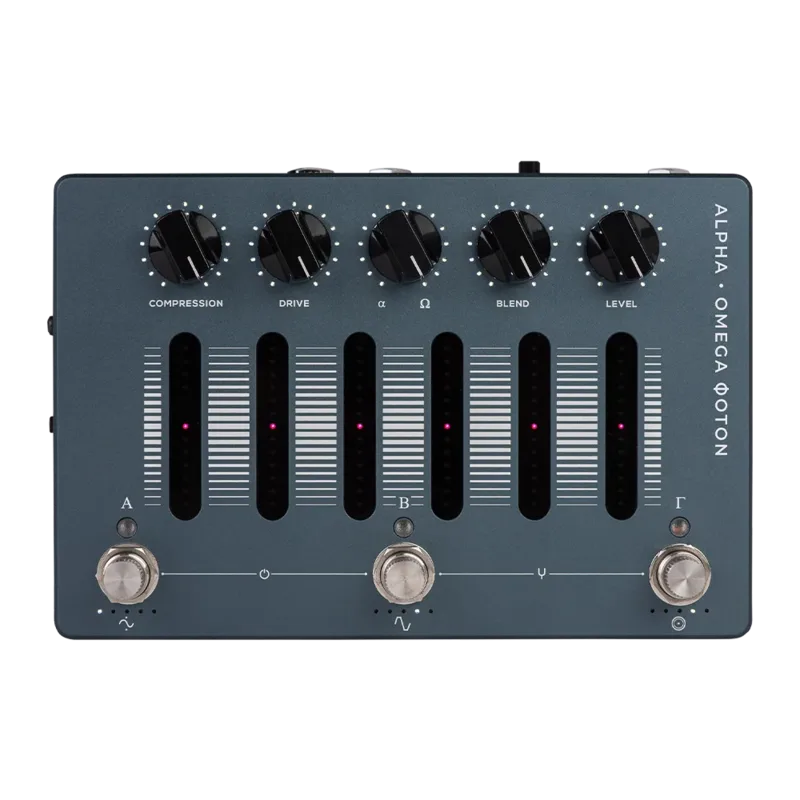
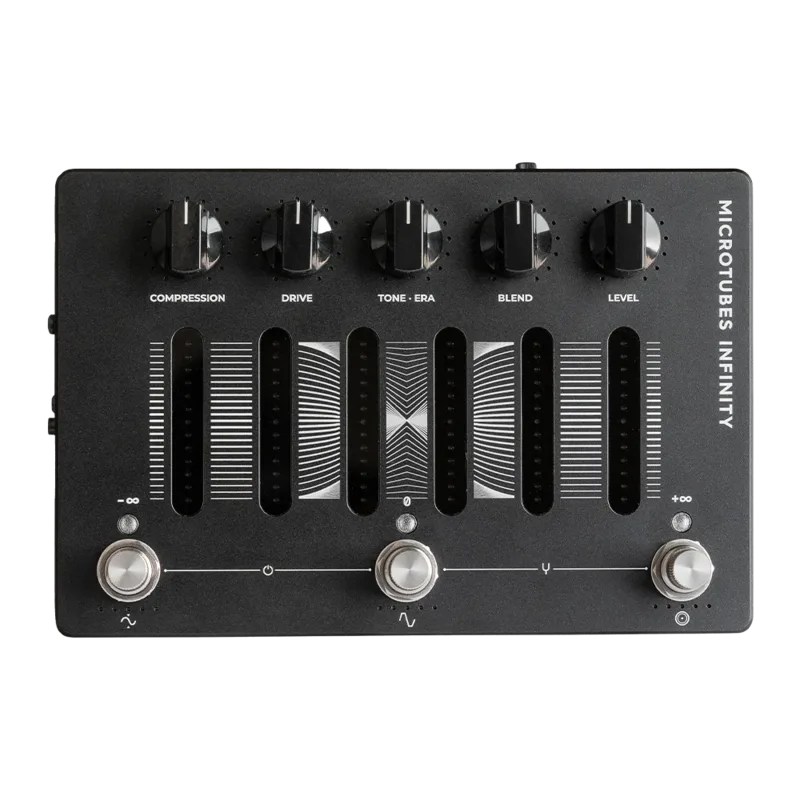
The Kaamos sits in the Ultra series alongside pedals like the Microtubes X Ultra, and its drive circuit traces back to the Alpha Omicron, which Darkglass launched in September 2017 as a downsized version of the Alpha Omega.
What reviewers said
MusicRadar's review, by Connor Flys, rated the build quality five stars, finding the Kaamos "not wanting for material quality" with knobs that turn with "a reassuring, well-damped weight," housed in "a sturdy enclosure with an understated, premium aesthetic"2.
"This is warmer, more amp-like, albeit with a shedload of gain on tap for those who want it."
On the octave circuit, the reviewer found it versatile: "It can be clear and defined, it can be a growling rock sound to fill out space in a mix, or it can turn into a fuzzy, synth-like wall of sound," with "superb tracking and tonal quality"2. The reviewer tested the pedal with a P-style 1983 Ibanez Roadstar, a Yamaha BB and a five-string Warwick Thumb, into a Line 6 HX Stomp-based board and directly into a full-range monitor via the XLR output2.
Guitar World's guide to octave pedals for bass includes the Kaamos, highlighting its three octave voices and its polyphonic Subcitri setting4.
Videos
Premier Guitar
Andertons Music Co
Darkglass Electronics
Questions
Is the Darkglass Kaamos octave polyphonic?
It depends on the mode. The Kaamos offers three octave types: Sublime, a monophonic mute-type octaver; Sublemon, a monophonic flip-type octaver; and Subcitri, which is polyphonic. Subcitri is the setting to use if you want the octave-down effect to track chords and more than one note at a time.
Does the Kaamos have an effects loop?
Yes. The pedal has an inbuilt effects loop with quarter-inch Send and Return jacks. Pressing the Blend knob cycles between three settings that determine where that loop sits in the circuit, so other pedals can be placed before, after or inside the drive and octave paths.
What does the sub output on the Kaamos do?
The Kaamos has a dedicated sub-octave output on a quarter-inch jack, separate from the main amp output. It carries the octave-down signal on its own, so the sub-octave can be routed to a separate amp, a bass rig or a mixing desk input independently of the main output.
Can the Kaamos send a dry signal to the XLR output?
Yes. Pressing the overdrive Tone control selects whether the wet or the dry signal is sent to the XLR output. With dry selected, the Kaamos works as a clean DI, which is useful for sending an unaffected signal to the front of house while the effected signal goes to an amp.
Where does the name Kaamos come from?
Gearnews reported that the Kaamos is named after bassist and producer Amos Heller, who developed the pedal with Darkglass. A commenter on that article countered that kaamos is a Finnish word, referring to the polar night of the far north. Darkglass itself has not settled the question on its product page.
Where is the Darkglass Kaamos made?
MusicRadar's review lists the Kaamos as made in Finland, which is where Darkglass Electronics is based. The company was acquired by Korg in 2022, but the Kaamos is still listed as a Finnish-made product.
Sources (5)
- KAAMOS - Darkglass, Darkglass
- “A versatile overdrive and a high-quality octaver, MusicRadar, 2025-07-11
- KAAMOS - Darkglass, Darkglass
- Best octave pedals for bass 2026: Pitch-shift your playing with our pick of essential pedalboard additions, Guitar World, 2026-06-03
- Darkglass Kaamos: Distortion and Octaver for Taylor Swift's Bassist, gearnews.com, 2025-01-24