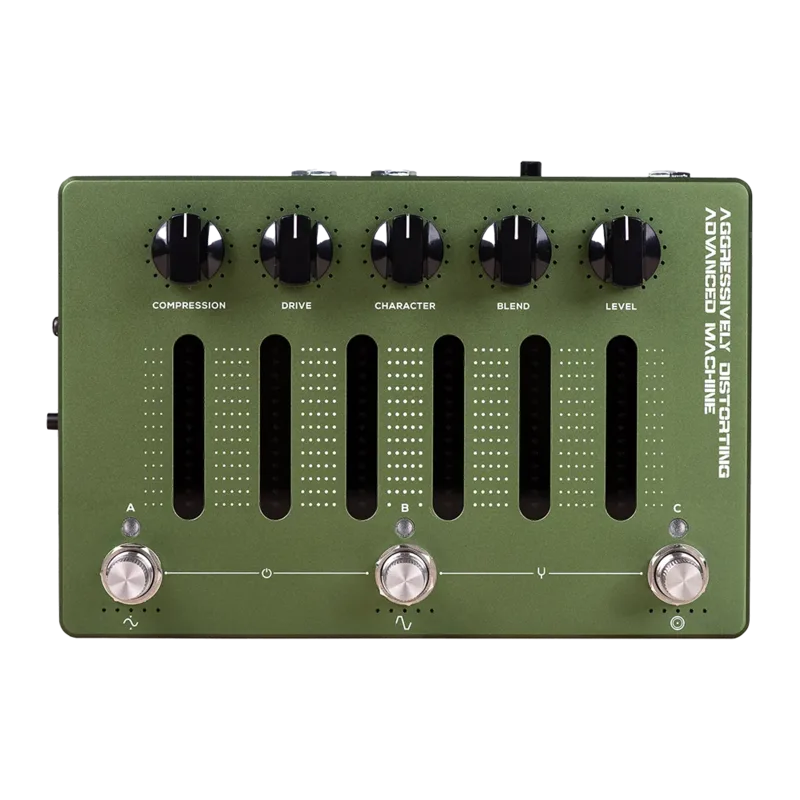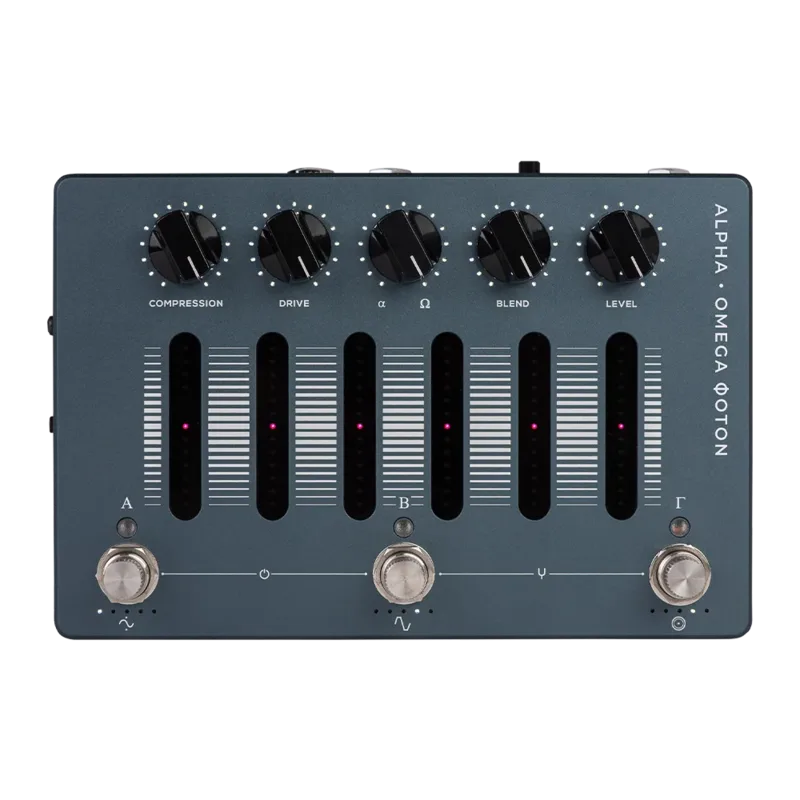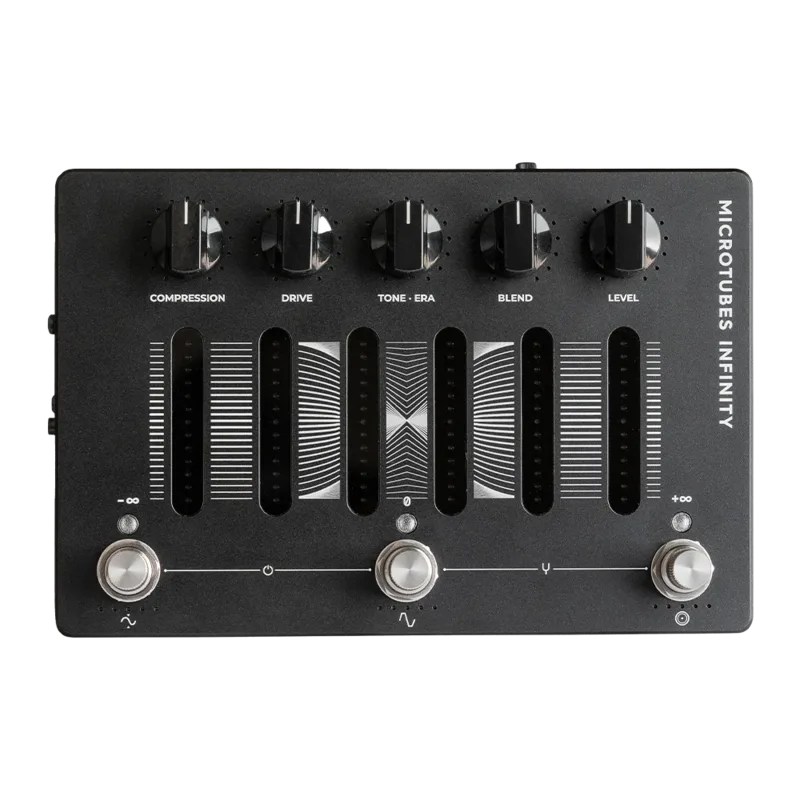


The Darkglass Microtubes Infinity is a bass preamp and distortion pedal that puts the company's three Microtubes distortions, B3K, Vintage and X, in one box, alongside a multiband compressor, a six-band graphic EQ and cabinet impulse responses1. Darkglass announced it on 9 September 2022, and it was available immediately at $5992. Guitar World described it as a unit that "combines all three Microtubes distortions and multiband compression into one all-powerful stompbox"2.
It is also a USB audio interface and a tuner, which sets it apart from the single-voiced Microtubes pedals that came before it. The pedal is currently listed as sold out on Darkglass's product page3.
Distortion, compressor, EQ and cabinet IRs
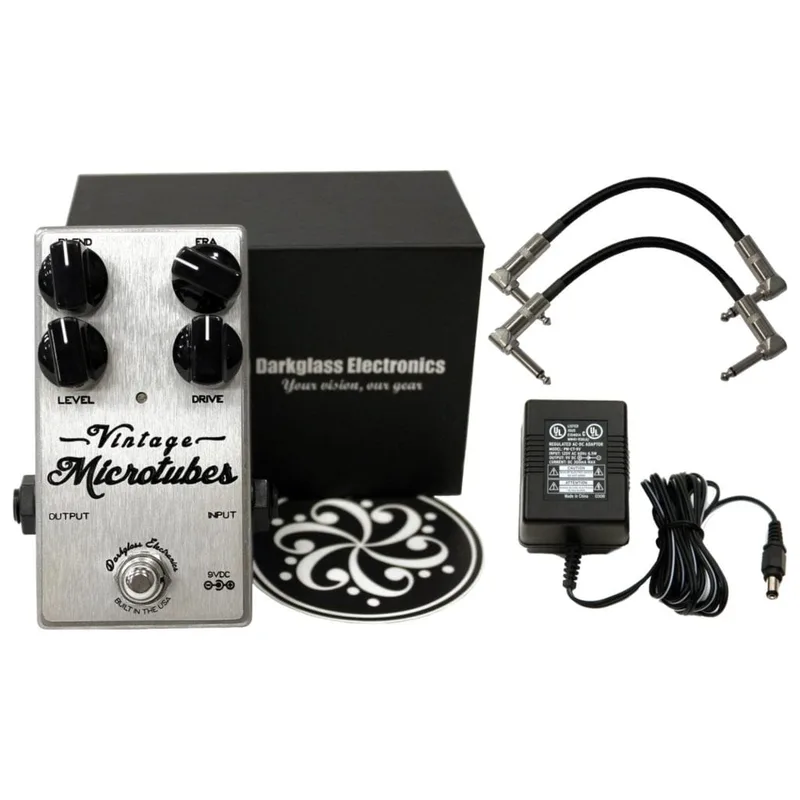
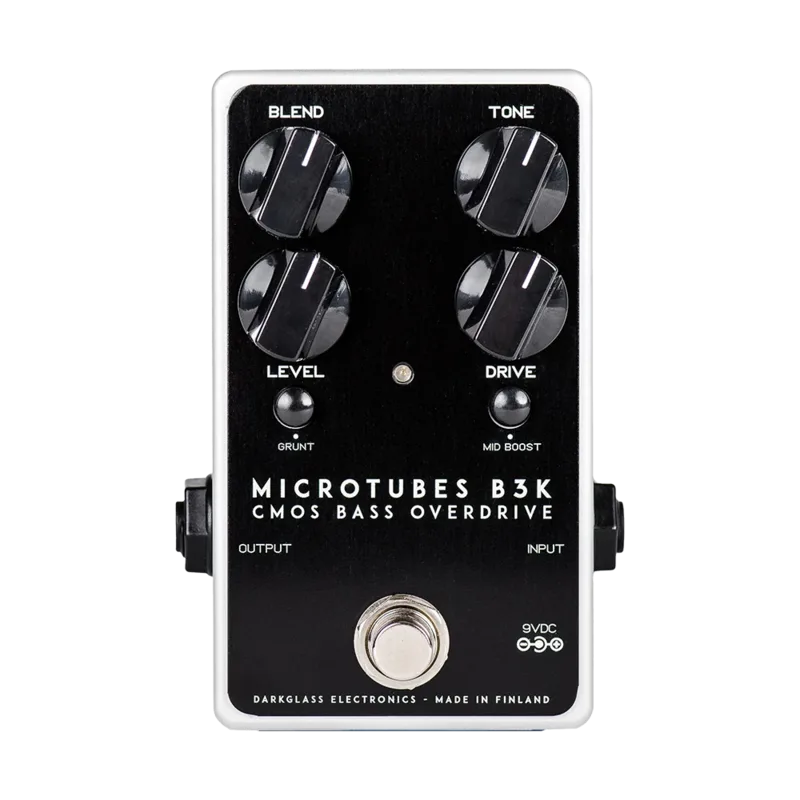
The Infinity has five preamp modes: a clean multi-band tube preamp, plus the Microtubes B3K and Vintage Microtubes distortions in both normal and multi-band modes1. Premier Guitar noted it is "packed with the three legendary Microtubes distortions: B3K, Vintage and X"5. The Drive control adds distortion and drive in the distortion modes, or blends in the tube preamp emulation in the clean mode, while the Tone/Era control goes from dull to crisp, with the ERA function on the Vintage modes covering different decades of classic bass tones3.
The compressor has an input gain control with an intelligent make-up gain algorithm and five ratios: 4:1, 8:1, 12:1, 20:1 and ALL IN1. The Blend control mixes the distorted or preamp signal with a clean sidechain signal, which is full-band or low-band depending on the mode6.
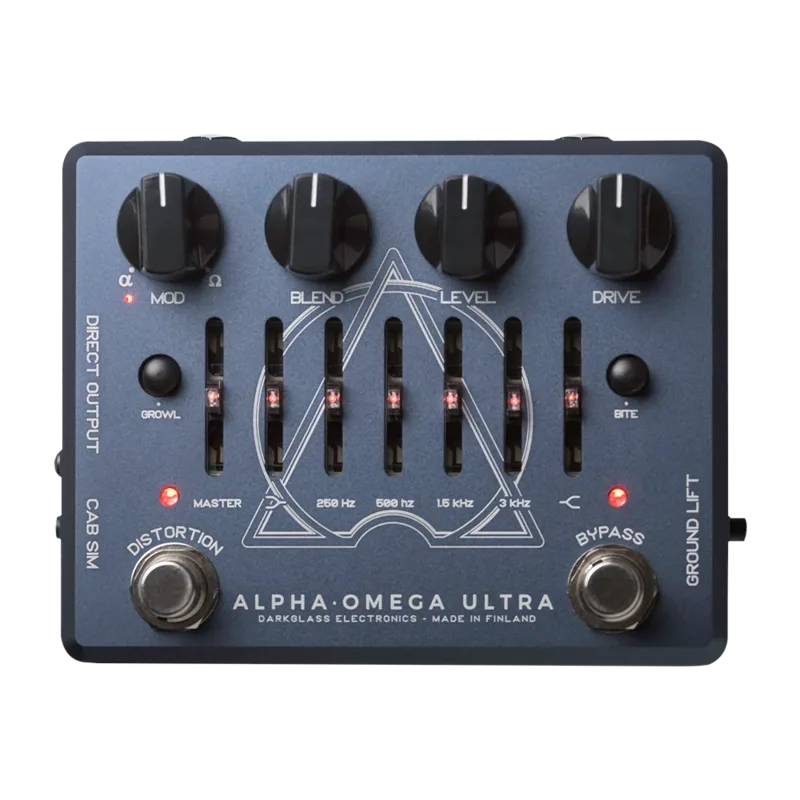
Last in the signal chain is a programmable six-band graphic EQ controlled by touch-sensitive sliders, each with a -12 dB to 12 dB range1. The default bands, left to right, are a low shelf, 250 Hz, 500 Hz, 1.5 kHz, 3 kHz and a high shelf, and they can be changed to 100 Hz, 200 Hz, 400 Hz, 800 Hz, 1.6 kHz and 3.2 kHz in the Darkglass Suite1.
| Section | What it does |
|---|---|
| Preamp modes | Clean multi-band tube preamp, B3K and Vintage distortions in normal and multi-band modes1 |
| Compressor | Input gain with intelligent make-up gain; ratios 4:1, 8:1, 12:1, 20:1, ALL IN1 |
| Blend | Mixes distorted/preamp signal with clean sidechain (full-band or low-band)6 |
| Six-band EQ | Touch sliders, -12 dB to 12 dB per band, at the end of the signal chain1 |
| Cabinet IRs | 5 cabinet slots on board; defaults chosen by the Darkglass Team; new IRs assignable via the Darkglass Suite6 |
The pedal supports Impulse Response cabinet simulations with five cabinet slots on board, and the default IRs were selected by the Darkglass Team6. MusicRadar reported that the $599 pedal features the same six-band graphic EQ found on the Darkglass Element4.
Controls, presets and footswitches
Below the touch sliders are three rotary footswitch encoders, named -∞, 0 and +∞, which can be pressed or rotated1. Pressing A, B or C switches to the preset stored in that footswitch: the pedal is pre-programmed with three presets, and three additional presets can be accessed via MIDI or the Darkglass Suite1. The smart potentiometers store their positions in each preset, with the stored position indicated by the ring of LEDs surrounding each knob1.
Pressing -∞ and 0 simultaneously enters bypass mode, which passes the unprocessed input signal through to the outputs with no processing and all LEDs off1. Pressing 0 and +∞ simultaneously enters the tuner1.
When the pedal is not bypassed, the Level potentiometer controls the instrument input volume at all four outputs and has no effect on USB, Aux or Bluetooth audio. When bypassed, it has no effect1.
Power and connections
The Infinity runs on a 9V DC center negative supply rated at a minimum of 500 mA, with a current consumption of about 500 mA1. That is a heavy draw compared with the original Microtubes B3K, which Darkglass lists at about 17 mA on the same 9V center negative format7.
Darkglass warns that unregulated power supplies and/or higher voltages may result in suboptimal noise performance and even damage the unit, voiding the warranty3.
Connections include a 1/4" mono instrument input, a 1/8" stereo Aux In for backing tracks, two balanced 1/4" TRS outputs (Tip +, Ring -, Sleeve GND), an XLR direct output with a ground lift switch for a mixing desk or external audio interface, and a 1/8" stereo headphone output with its own level potentiometer that handles headphones from 16 to 600 ohms1. MIDI In is a standard 1/8" TRS (Type B) jack for an external MIDI controller, and USB MIDI is also supported1. Bluetooth pairing is done by pressing and holding an encoder while rotating it; the device appears as "Microtubes Infinity"1.
USB audio interface and recording routing
The USB-C port unlocks the pedal's USB audio interface capabilities and enables interaction with the Darkglass Suite desktop app, allowing software updates and access to the Darkglass IR library, which contains hundreds of cabinet simulations3. It supports 48 kHz and 44.1 kHz sample rates1.
On a Mac, no additional drivers are required to use it as an audio interface; on Windows, the latest USB audio drivers from the Darkglass website are needed1.
The USB routing is fixed by the manual1:
| USB channel | Signal |
|---|---|
| Input 1 | Processed signal |
| Input 2 | Unprocessed raw signal |
| Input 3 | Aux left + Bluetooth left |
| Input 4 | Aux right + Bluetooth right |
| Output 1 | Balanced left + Headphone left |
| Output 2 | Balanced right + Headphone right |
| Output 3 | Balanced left |
| Output 4 | Balanced right |
| Output 5 | XLR DI (mono) |
That routing means you can record your processed signal to one track and simultaneously record an unprocessed copy to another track, with a stereo track from the Aux input also possible1. The two balanced outputs add routing versatility and the option of using the Infinity as a fully equipped audio interface3.
Where it came from
Videos
Darkglass Electronics
Darkglass Electronics
Darkglass Electronics
Questions
How much current does the Darkglass Microtubes Infinity need?
The Microtubes Infinity draws about 500 mA, and Darkglass specifies a 9V DC center negative power supply rated at a minimum of 500 mA. That is far more than a standard 9V battery or a low-current daisy chain output can deliver, so it needs a dedicated output on a pedalboard power supply.
Can the Microtubes Infinity be used as an audio interface?
Yes. Its USB-C port unlocks USB audio interface capabilities, and the two balanced 1/4 inch TRS outputs plus XLR direct output add routing versatility. It supports 48 kHz and 44.1 kHz sample rates, and you can record your processed signal to one track while simultaneously recording an unprocessed copy to another.
Does the Microtubes Infinity have a built-in tuner?
Yes. It features a five-octave chromatic tuner that can tune any note between A0 and A#5, derived from A4 at 440 Hz. It tunes one note at a time, is entered by pressing the 0 and +∞ footswitches simultaneously, and produces no audio output while tuning.
Does the Microtubes Infinity need drivers on Windows?
On a Mac, no additional drivers are required to use the Microtubes Infinity as an audio interface. On Windows, you need the latest USB audio drivers from the Darkglass website.
How many presets does the Microtubes Infinity store?
It comes pre-programmed with three presets, A, B and C, selectable via the dedicated footswitches. Three additional presets can also be accessed via MIDI or the Darkglass Suite, for six in total. Smart potentiometer positions are stored in each preset, shown by the ring of LEDs around each knob.
Can I plug headphones into the Microtubes Infinity?
Yes. It has a 1/8 inch stereo headphone jack with a dedicated level potentiometer, and it can handle headphones with an impedance of 16 to 600 ohms. You can also connect a phone or laptop to the 1/8 inch Aux In to play backing tracks while practicing.
Sources (7)
- Microtubes Infinity Manual, Darkglass
- Has Darkglass just announced the ultimate overdrive pedal for bass guitarists?, Guitar World, 2022-09-09
- Microtubes Infinity, Darkglass
- The Darkglass Microtubes Infinity pedal combines four effects in one, MusicRadar, 2022-09-08
- Darkglass Unveils Microtubes Infinity: A Deep Dive, Premier Guitar, 2022-09-08
- Microtubes Infinity Manual, Darkglass
- Microtubes B3K Manual, Darkglass