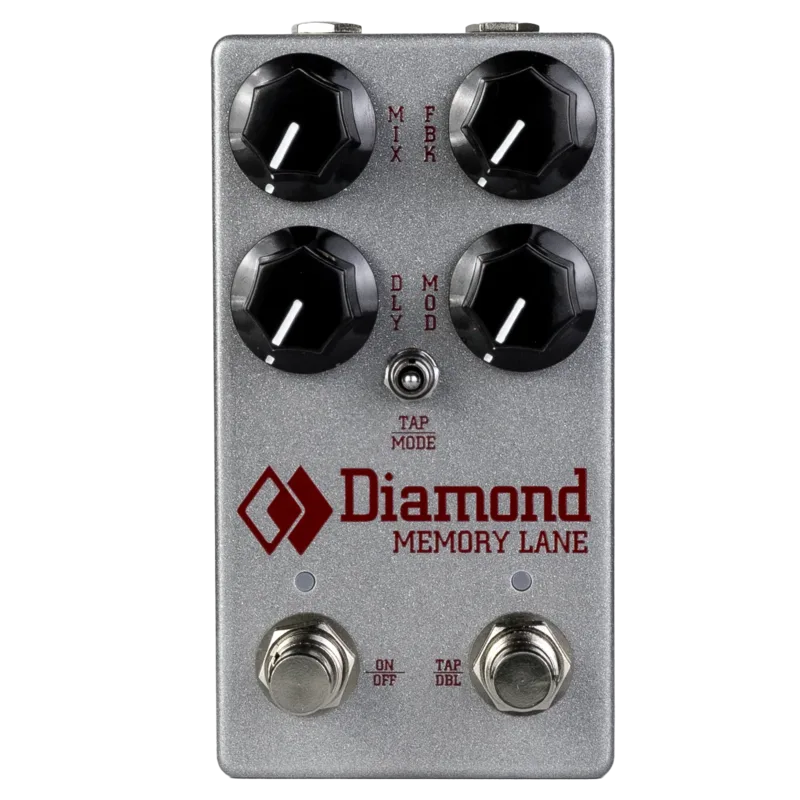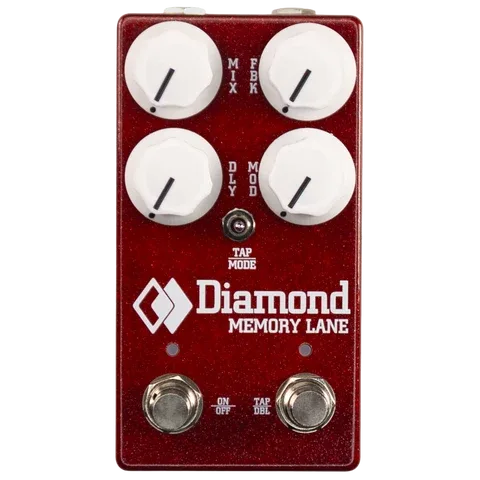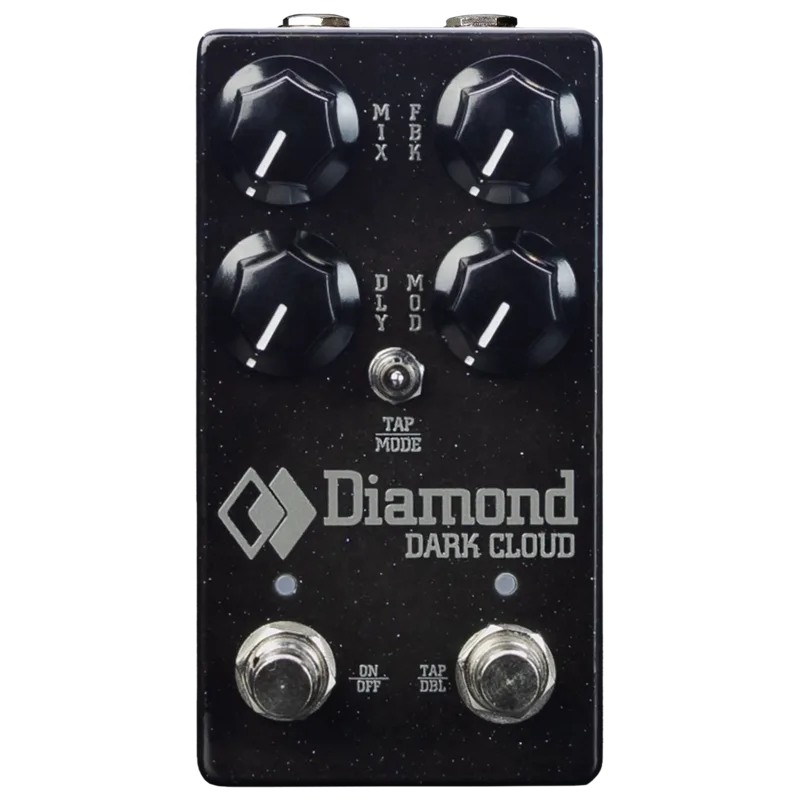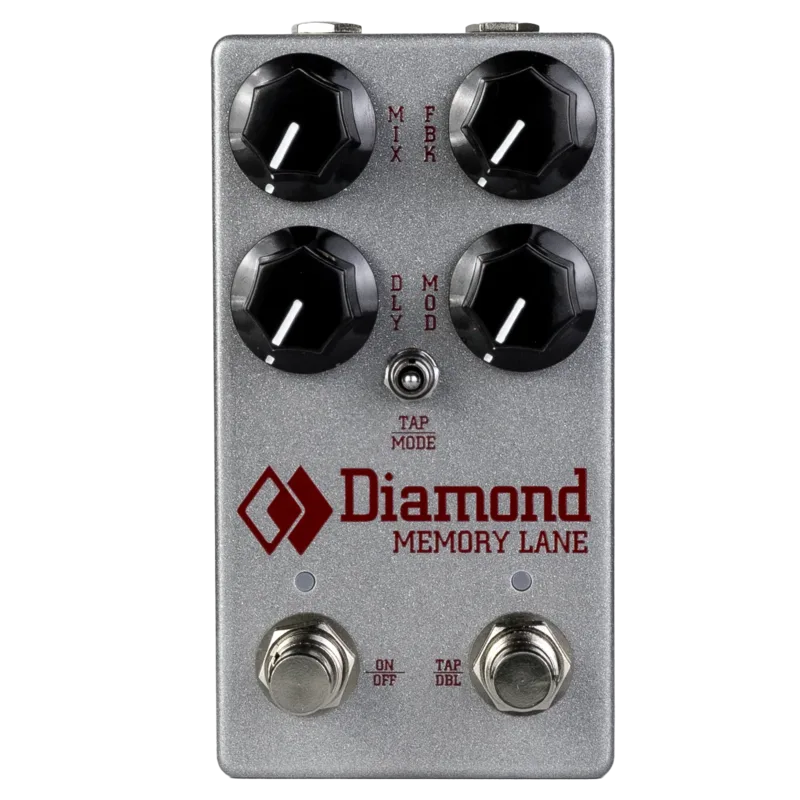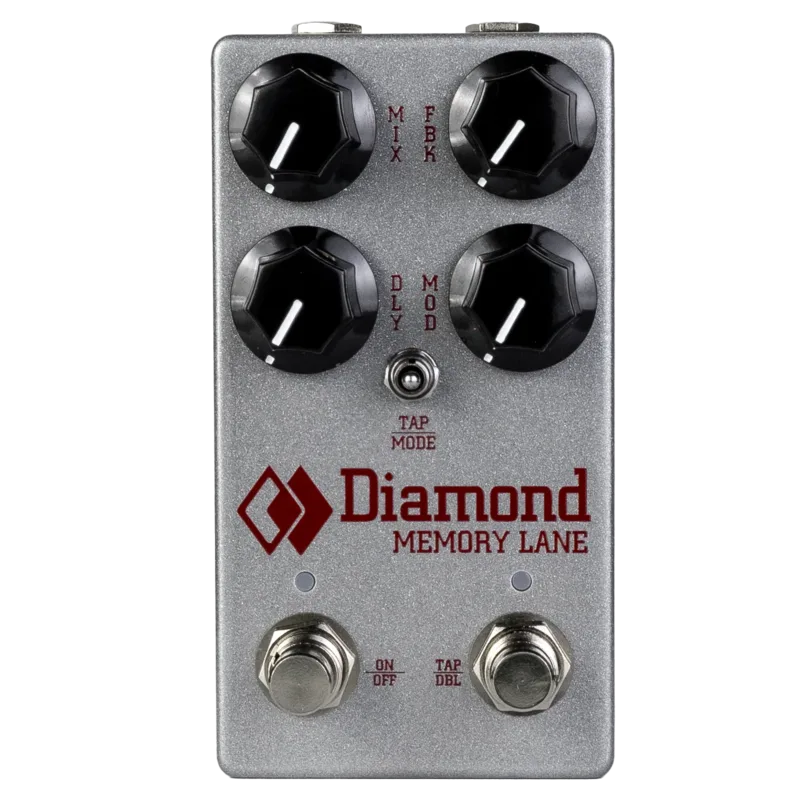


The Diamond Memory Lane is a compact delay pedal with modulation on the repeats, built by Diamond and designed around the company's dBBD (digital Bucket Brigade Delay) architecture. Instead of a literal bucket brigade chip, an embedded system running on an STM32 ARM Cortex processor acts as a drop-in replacement for one, passing copies through RAM with an internal clock defining the sampling rate, surrounded by custom companding and anti-aliasing circuit similar to the original analog pedal12. Diamond says the compandor adds slight compression and softness so the delay sits behind your playing, while the anti-aliasing filters create warmth1.
The current version offers up to 2.4 seconds of delay time, four modes, tap tempo with three subdivisions, and buffered bypass with trails. It sells for $249.00 on Diamond's site as of October 20261; at its October 2025 launch, gearnews reported it priced at $2943.
A BBD-voiced delay with modulation
The pedal's character comes from Diamond's attempt to recreate what a bucket brigade device (BBD, the chip at the heart of classic analog delays) actually does. The original analog Memory Lane used a BBD and a compandor; the new pedal keeps that surrounding analog circuitry but swaps the chip itself for a digital replica5. Guitar Pedal X described the result as "very much still a BBD-style Delay, but now loaded with a superior fidelity STM32 Arm Processor," bringing extended delay range, lower noise and more headroom4.
The controls are simple: Mix, Feedback, Delay (up to 2400ms), Modulation, and a Tap/Mode switch, plus a dedicated tap tempo footswitch and an on/off footswitch43. The Mod knob sets the depth of the modulation on the repeats, the effect that gives BBD and tape echoes their movement.
The four modes on the STM32 version
Four modes are selectable through the Tap/Mode switch3. Each is a variation on the core dBBD sound:
| Mode | What it does |
|---|---|
| MLjr | Classic fixed-rate delay with silent tempo changes, true to the Memory Lane Jr2 |
| Vintage | Warm, saturated repeats that capture the soul of vintage analog delays2 |
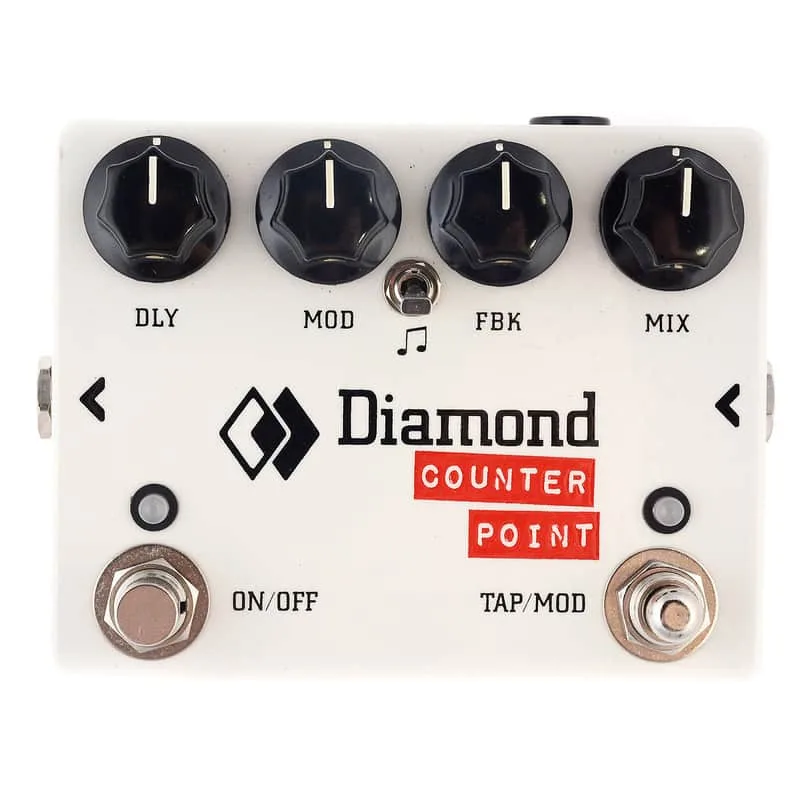
| Galloping 2-Head | A rhythmic, dual-head pattern inspired by the Counterpoint delay2 |
| Ambient 3-Head | Expansive, cascading repeats for layered soundscapes2 |
Tap tempo offers three subdivisions: quarter note (green LED), dotted eighth note (yellow LED) and half note (red LED)2. The earlier revival-phase version had only three modes (Modern, Warm, Vintage); the STM32 edition replaced them with these four, keeping only Vintage4.
From analog original to STM32
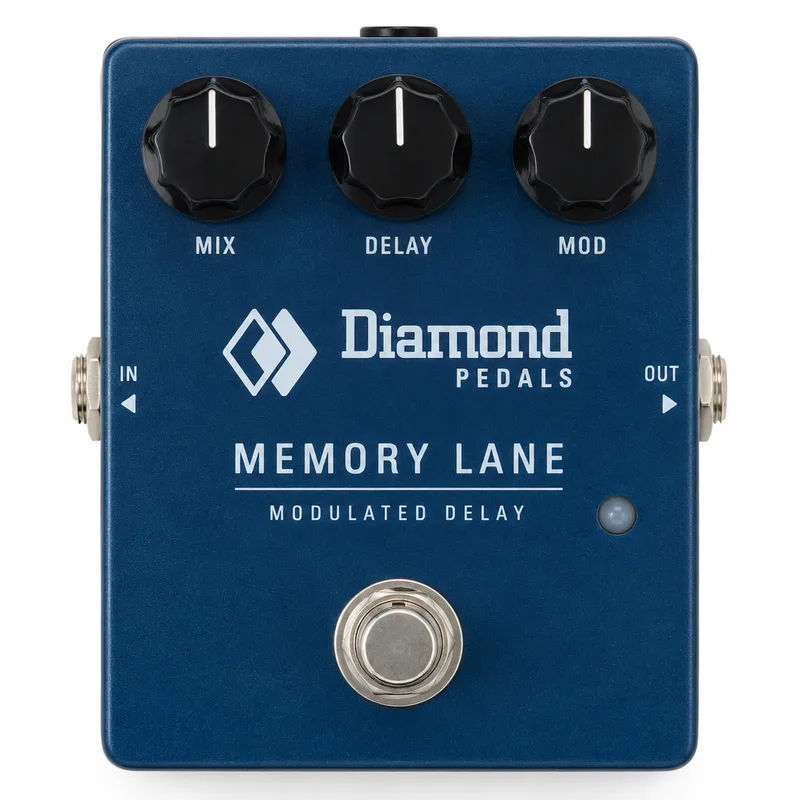
The original Diamond Memory Lane went down in history as the first analog delay with tap tempo6. It was a big pedal, and it was built on a chip that went out of production, which forced a premature retirement6. It had shorter delay times than later versions and no subdivisions, offering three modes: Modern, Warm and Vintage6.
Those three modes each worked differently. Modern used a fixed sampling rate with a 50 to 1200 ms delay time, Warm gave darker repeats with a variable sampling rate and a 150 to 1200 ms delay time, and Vintage used a variable sampling rate with a 65 to 550 ms delay time and automatically halved tap tempo divisions76. Later versions of the pedal added subdivisions and longer delay times6.
The Memory Lane V2 is the latest iteration, coming after the company's acquisition by Montreal's SolidGoldFx, and it is fully compact, digital but analog-voiced6. It offers three playback modes: Vintage Mode, with warm, saturated repeats that capture the soul of vintage analog delays; Galloping 2-Head, a rhythmic, dual-head pattern inspired by the Counterpoint delay; and Ambient 3-Head, with expansive, cascading repeats for layered soundscapes6. It also features a momentary footswitch affecting delay or modulation, Trails mode, and a Geezer mode offering the classic operation of the vintage unit without a secondary footswitch, plus a Burr-Brown equipped buffered bypass with optional trails6.
What reviewers said
Reviews of the Memory Lane family have been consistently positive. The new compact reissues of the Memory Lane have been very well received, using an analog signal path with digital controls to great effect8. Stefan Karlsson called the STM32 edition "a further interesting advance and evolution of the recent Compact Memory Lane reissue," noting the new chip and new algorithms and playback modes9. gearnews found the pedal "has a lot of great-sounding delays with a low noise floor and lots of controls," calling it perfect for musicians in the studio and playing live3.
Earlier versions drew similar praise. Pedal of the Day said of the Memory Lane Jr that "it makes up for it ten-fold in sound quality and production"10, and of the Deluxe Delay that "the functionality is fantastic, the delays are warm and rich" in a perfectly sized enclosure11. Delicious Audio's review of the Jr called it "an intelligently designed boutique delay, a class act for the masses," while noting it "doesn't do anything too exciting or outlandish"12. On That Pedal Show, the presenters called the original Memory Lane "an absolute classic" despite being four times the size, and praised Diamond's ears more broadly13.
Warranty and support
Diamond pedals purchased through the site or authorized dealers carry a three-year warranty against defective parts and faulty workmanship, for the original owner only and non-transferable. Repair is free of charge with the owner paying shipping both ways; the warranty is voided by tampering, modification, abuse, unauthorized repair, or use of an improper power supply1.
Videos
Pedalboard of the Day
Mike Allen
The Pedal Zone
Questions
Is the Diamond Memory Lane analog or digital?
The current Memory Lane is digital with analog circuitry around it. Diamond's dBBD architecture uses an embedded system running on an STM32 ARM Cortex processor as a drop-in replacement for a bucket brigade chip, surrounded by the same kind of companding and anti-aliasing circuit as the original all-analog pedal. The original Memory Lane and Memory Lane 2 were fully analog.
What is the maximum delay time on the Memory Lane STM32?
Up to 2.4 seconds, with an overall delay range of 25ms to 2.4s. That is double the 1200ms of the Memory Lane Jr circuit the MLjr mode is based on, and far beyond the 550/600ms ceiling of the original analog versions.
Why was the original Memory Lane discontinued?
The original analog Memory Lane was built around a chip that went out of production, and its parts became nearly impossible to find, which forced Diamond to retire the pedal after version 2. It was replaced starting in 2011 by the digital, analog-voiced Memory Lane Jr.
What is MLjr mode on the Memory Lane?
MLjr mode is a classic fixed-rate delay with silent tempo changes, voiced to be true to the Memory Lane Jr, the compact digital successor to the original analog pedal. It is one of four modes selectable through the Tap/Mode switch, alongside Vintage, Galloping 2-Head and Ambient 3-Head.
Does the Memory Lane STM32 have tap tempo subdivisions?
Yes. Tap tempo offers three subdivisions: quarter note (green LED), dotted eighth note (yellow LED) and half note (red LED). The original analog Memory Lane had no subdivisions at all.
Can the Memory Lane STM32 run at 18V?
No. The power requirement is 9 to 15V DC, negative tip, on a 2.1mm barrel jack, with a current draw of 50mA at 9V. Anything above 15V is outside the maker's stated range and would also void the warranty.
Sources (13)
- Memory Lane STM32, Diamond Pedals
- Memory Lane STM32, Diamond Pedals
- Diamond Pedals Memory Lane: dBBD Delay, gearnews.com, 2025-10-22
- Guitar Pedal X, Guitar Pedal X, 2025-10-21
- Memory Lane STM32, Diamond Pedals
- Updated Pedal: Diamond Memory Lane V2 Delay, Delicious Audio, 2025-10-24
- Diamond Memory Lane DLX Delay, Delicious Audio, 2020-07-08
- Guitar Pedal X, Guitar Pedal X, 2024-09-26
- Guitar Pedal X, Guitar Pedal X, 2025-12-10
- Diamond Pedals Memory Lane Jr. Delay, Pedal of the Day, 2014-12-11
- Diamond Pedals Memory Lane Deluxe Delay, Pedal of the Day, 2020-09-10
- Pedal Review: Diamond's Memory Lane Jr., Delicious Audio, 2013-05-30
- Boss EQ-200, JHS Cheese Ball, JAM Ripply Fall, Diamond Memory Lane Jr, That Pedal Show (YouTube), 2019-10-29