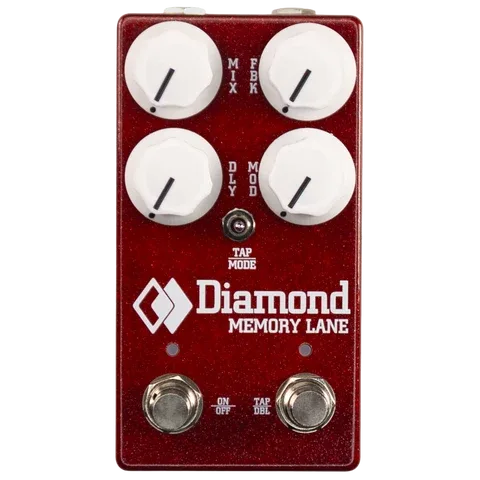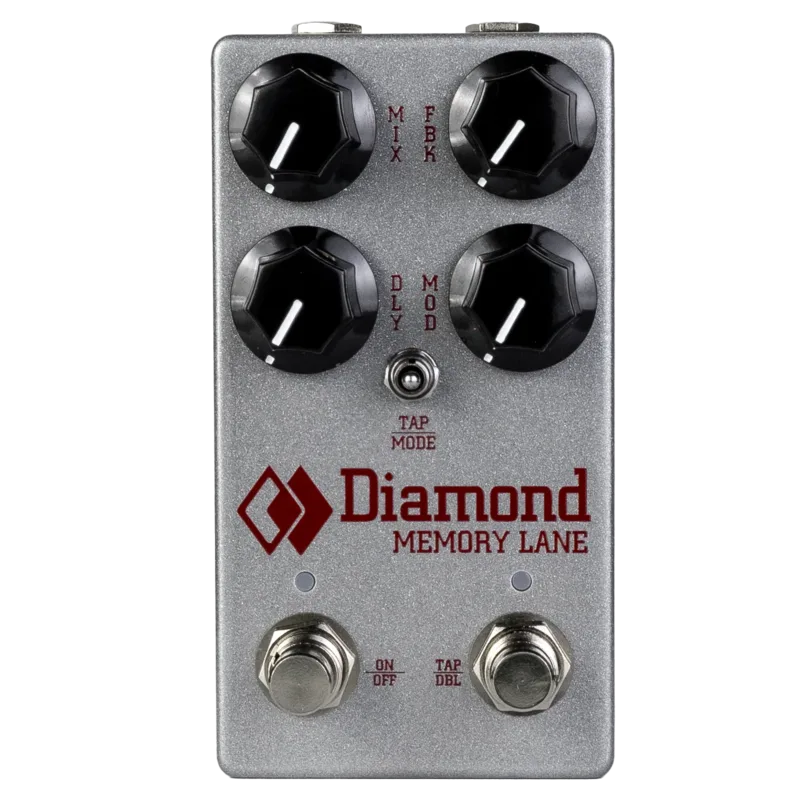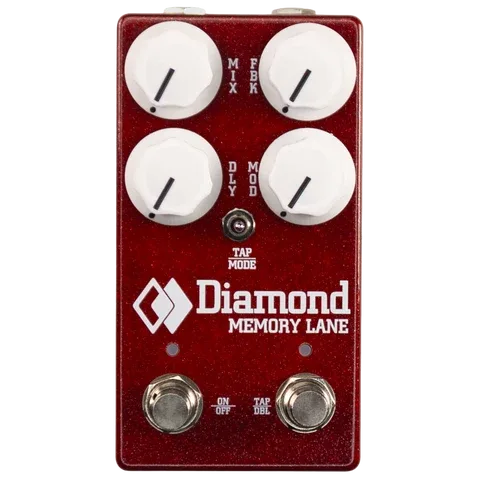

The Diamond Pedals Memory Lane Modulated Delay (STM32 edition) is a reboot of Diamond Pedals' modulated delay pedal, announced in October 2025. It keeps the character of the earlier Memory Lane but moves the delay engine onto an STM32 Arm processor, which extends the delay time to 2.4 seconds, lowers the noise floor, and adds headroom, all in the same compact enclosure12.
At its core is what Diamond calls its digital Bucket Brigade Delay (dBBD) architecture: a system that blends analog companding, precision filtering, and a custom-voiced delay line2. Guitar Pedal X describes it as a BBD-style circuit using three distinct delay lines paired with analog companding and anti-aliasing and reconstruction filters, so it is "very much still a BBD-style Delay, but now loaded with a superior fidelity STM32 Arm Processor"1. Diamond positions it as a pedal that "captures the lush warmth of classic analog delays with the clarity, control, and reliability of modern digital design"2.
A BBD-style delay on an STM32 processor
A traditional bucket brigade delay (BBD) chip passes your signal along a chain of capacitors, one step at a time, which is what gives classic analog delays their warm, darkening repeats. The Memory Lane STM32 edition recreates that behavior digitally: the STM32 Arm Cortex processor runs the delay line, while the surrounding circuit keeps analog companding (compressing the signal on the way in and expanding it on the way out, a technique real BBD pedals use to manage noise) plus anti-aliasing and reconstruction filters13.
Diamond describes the result as a system blending "analog companding, precision filtering, and a custom-voiced delay line"2. Gearnews characterizes the pedal as built with industrial-grade converters, warm analog circuitry, and robust protection against electrical mistakes, and says it is voiced to sit musically behind your playing3.
The delay range spans 25ms to 2.4 seconds2, with what Guitar Pedal X calls "lush, modulated repeats" at the long end1.
The four modes
The Tap/Mode control selects between four delay modes13:
| Mode | What it does |
|---|---|
| MLjr | Classic fixed-rate delay with silent tempo changes, true to the Memory Lane Jr.2 |
| Vintage | Warm, saturated repeats that capture the soul of vintage analog delays1 |
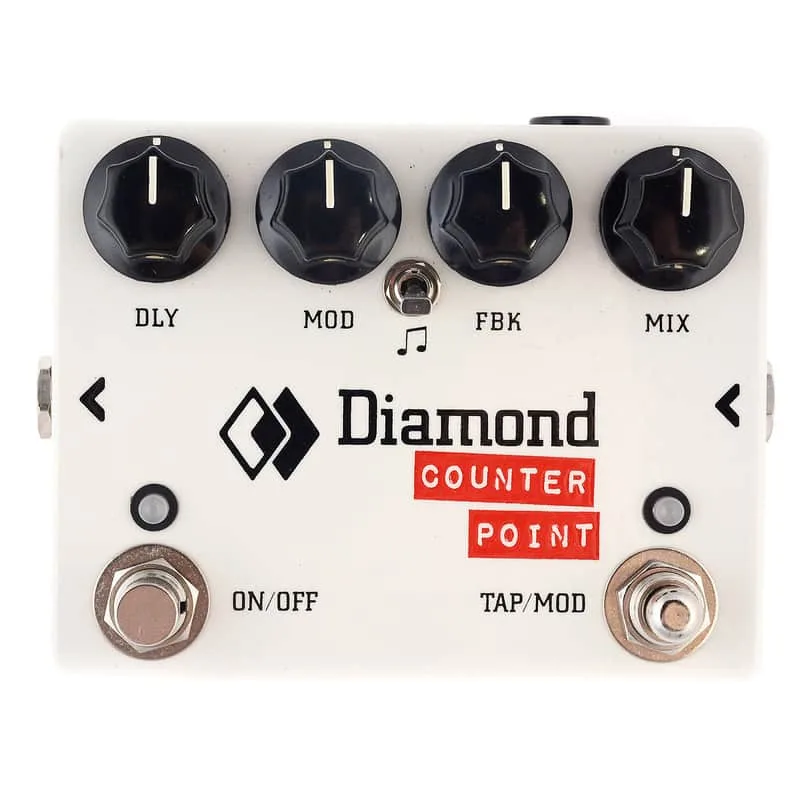
| Galloping 2-Head | A rhythmic, dual-head pattern inspired by the Counterpoint delay1 |
| Ambient 3-Head | The fourth mode, completing the set of four delay textures3 |
The earlier revival-phase Memory Lane carried three modes (Modern, Warm, and Vintage); the STM32 edition replaces them with these four, keeping only Vintage1.
Two further behaviors shape how the modes work in practice:
- Auto Div: automatically doubles or halves a tapped-in delay tempo if it falls outside the current mode's time range1.
- Doubler feature: allows instant doubling of the delay tempo1.
There is also a Geezer Mode, which mimics classic Memory Lane operation by turning off the secondary footswitch functions, for players who want the pedal to behave like the original1.
The controls and footswitches
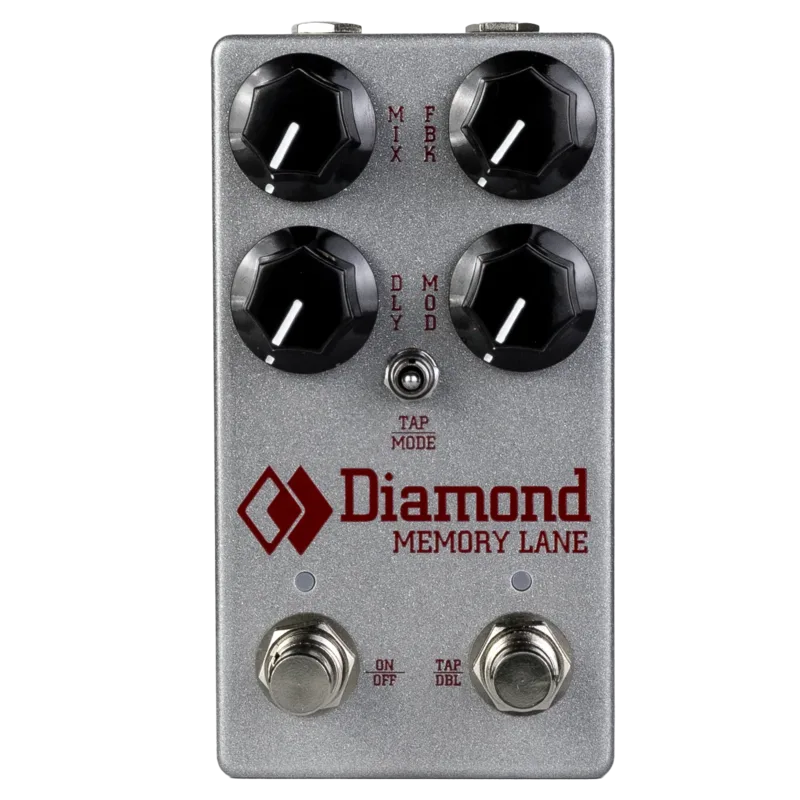
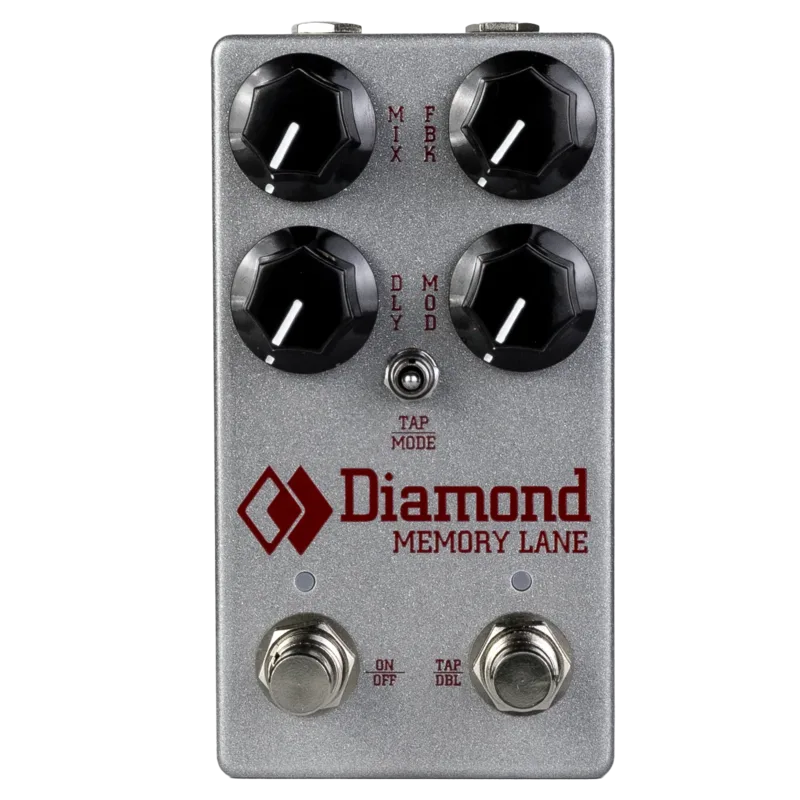
The front panel keeps the Memory Lane layout: Mix, Feedback, Delay (up to 2400ms), and Modulation knobs control the primary delay functions, with the Tap/Mode control for mode selection13.
| Control | Function |
|---|---|
| Mix | Sets the delay level1 |
| Feedback | Sets the number of repeats1 |
| Delay | Sets delay time, up to 2400ms1 |
| Modulation | Sets the modulation on the repeats1 |
| Tap [Mode] | Selects MLjr / Vintage / Galloping 2-Head / Ambient 3-Head1 |
Two footswitches handle the rest: an On/Off footswitch and a Tap / Double footswitch, the latter giving you a dedicated tap tempo switch13. A Momentary/Latching mode offers momentary or latching switching for both the delay modulation and the Doubler feature, so you can, for example, hold a switch to engage an effect only while your foot is on it1.
How it differs from the earlier Memory Lane
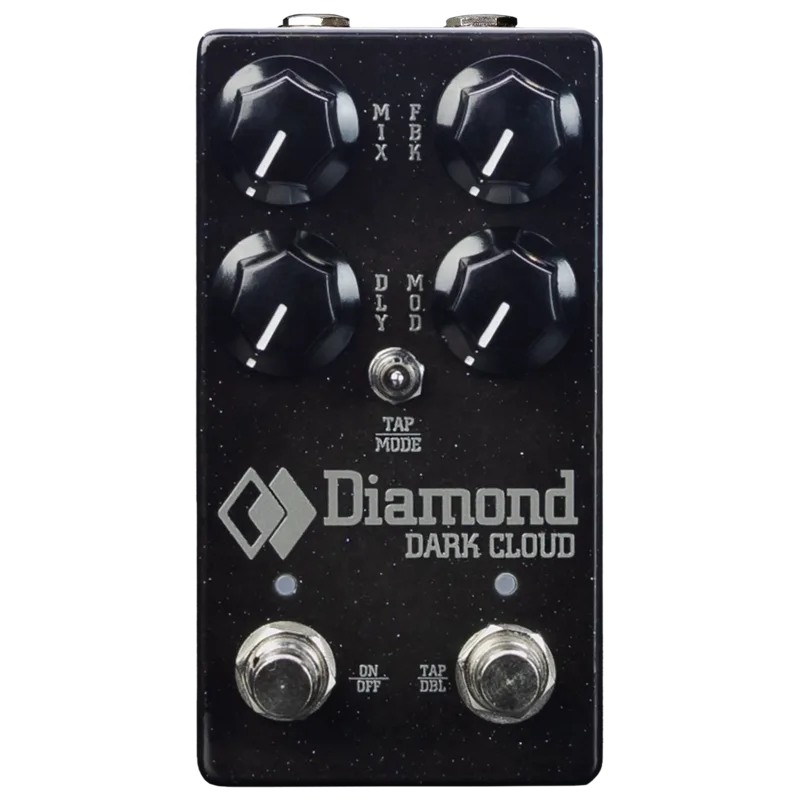
Superficially the STM32 edition looks like its predecessor, with a burgundy accent color in place of the old black one1. Inside, the changes are functional rather than cosmetic:
- An STM32 Arm processor replaces the earlier engine, for extended delay range, lower noise, and more headroom1
- Four delay modes instead of the previous three1
- The same compact, pedalboard-friendly format as the revival-phase version4
Guitar Pedal X's verdict on the update: "In short an already great modulated vintage sounding delay is now significantly better."1
"In short an already great modulated vintage sounding delay is now significantly better."
Power and build
The pedal runs on a regular 9V DC power supply, center negative, 2.1mm, drawing about 50mA12. Diamond's specification allows 9 to 15V DC, negative tip, through a 2.1mm barrel jack2.
The 2.1mm barrel jack and negative-tip polarity mean it takes a standard pedalboard power supply. No battery option is given in the specifications.
All Diamond pedals are designed and built entirely in the company's own shop in Montreal, Quebec, Canada2, which Guitar Pedal X describes as hand-made in Montreal1. The STM32 edition was priced at $259 when announced in October 2025, with orders open direct and international dealer availability to follow1. A Limited Maple Leaf Edition of the same circuit shares these specifications4.
Videos
The Pedal Zone
Questions
What is Geezer Mode on the Memory Lane?
Geezer Mode mimics the operation of the classic Memory Lane by disabling the secondary footswitch functions. The pedal behaves like the older design instead of using the Tap/Double footswitch for tap tempo and the Doubler feature. It sits alongside the four delay modes selected through the Tap/Mode control.
How long is the delay on the Memory Lane STM32?
The delay range runs from 25ms to 2.4 seconds (2400ms). An Auto Div feature automatically doubles or halves a tapped-in tempo if it falls outside the current mode's time range, and a Doubler feature allows instant doubling of the delay tempo.
How is the STM32 Memory Lane different from the old one?
The STM32 edition moves to an STM32 Arm processor, which brings an extended delay range, a lower noise floor, and more headroom. It also adds a fourth delay mode where the earlier revival-phase version had three, and it wears a burgundy accent color instead of black.
Is the Diamond Memory Lane analog or digital?
It is a hybrid. The delay line runs on an STM32 Arm processor using Diamond's digital Bucket Brigade Delay (dBBD) architecture, but the signal path includes analog companding and anti-aliasing and reconstruction filtering. Diamond describes it as capturing classic analog delay warmth with modern digital clarity.
Where is the Diamond Memory Lane made?
All Diamond pedals are designed and built entirely in the company's own shop in Montreal, Quebec, Canada. Guitar Pedal X likewise describes the Memory Lane STM32 edition as hand-made in Montreal.
Sources (4)
- Guitar Pedal X, Guitar Pedal X, 2025-10-21
- Memory Lane STM32, Diamond Pedals
- Diamond Pedals Memory Lane: dBBD Delay, gearnews.com, 2025-10-22
- Memory Lane STM32, Diamond Pedals