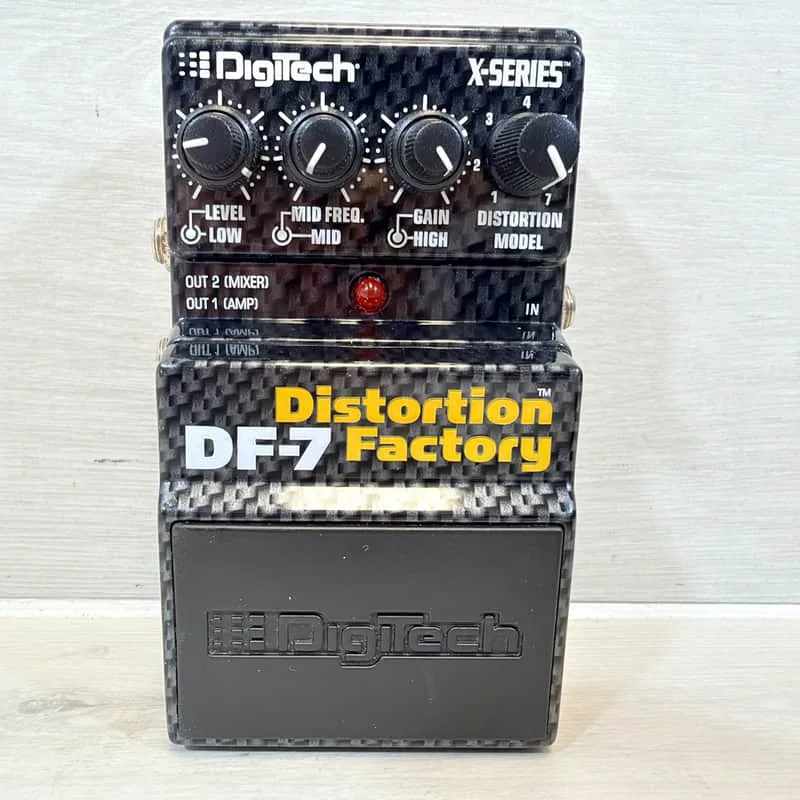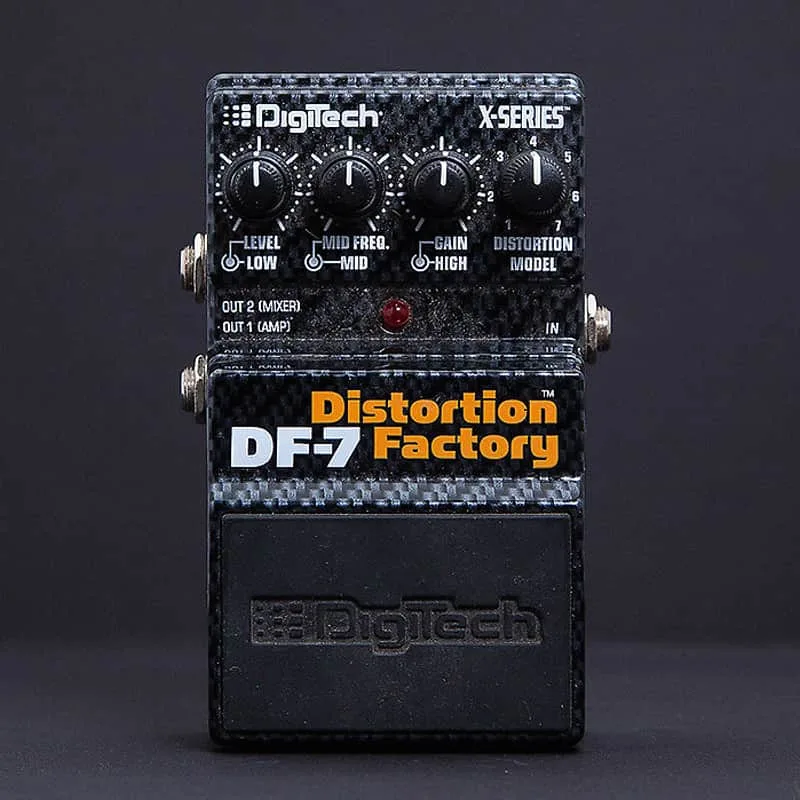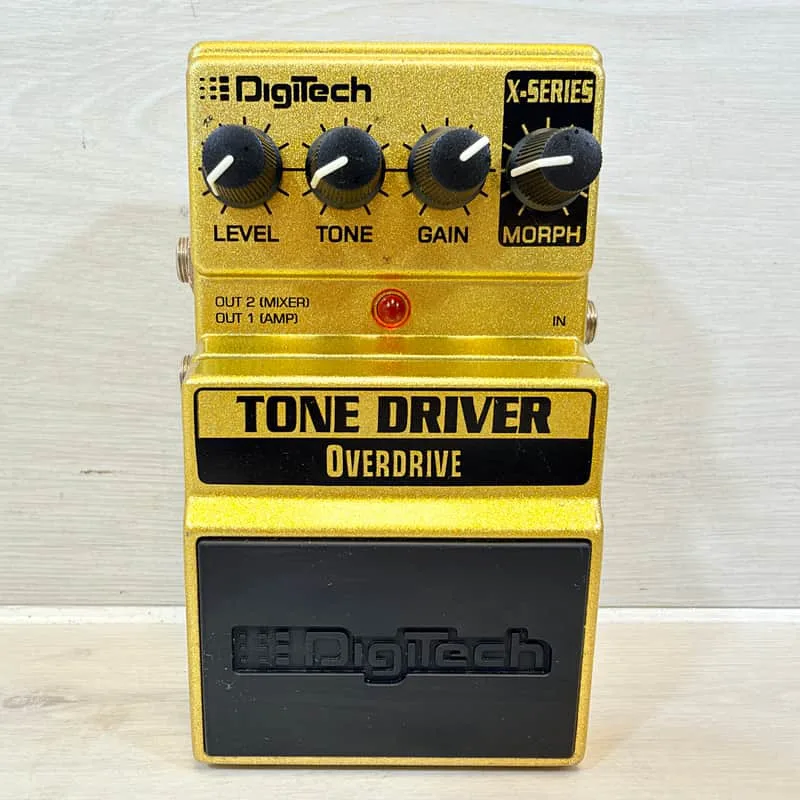


The DigiTech X-Series Tone Driver is an effect pedal that covers overdrive and distortion territory in one box. RockBoard's PedalPedia describes it as using multi-distortion technology to create a range of different overdrive pedal sounds, which puts it in the company of other X-Series pedals that model more than one drive character, such as the DigiTech X-Series DF-7 Distortion Factory.1
Unlike a conventional analog overdrive, the Tone Driver is a digital pedal. That matters most for power: it draws 500mA, far more than a typical analog drive pedal, so it needs a supply that can keep up.1
What it does
The Tone Driver's premise is flexibility: rather than committing to a single clipping circuit, it uses multi-distortion technology to produce a range of different overdrive pedal sounds from one unit. DigiTech lists its effect type as overdrive and distortion, so it can sit in the low-gain slot on a board or be pushed into heavier territory. For a broader view of where it lands, see Overdrive Pedals and Distortion Pedals.1
The controls
The pedal keeps things simple with three knobs:
| Control | What it does |
|---|---|
| Level | Determines how much the pedal affects the sound |
| Tone | Controls how much the high frequencies are attenuated and boosted |
| Gain | Controls the amount of distortion |
The Gain knob sets how hard the circuit drives, the Tone knob shapes the top end both ways, cutting or boosting high frequencies, and the Level knob sets the overall effect of the pedal on your sound. That three-knob layout matches what most players expect from a drive pedal, with the multi-distortion engine doing the work of several circuits behind it1.
Power and supply notes
The Tone Driver runs on 9V DC with a center negative plug, the standard for compact pedals. The 500mA current draw is the figure to watch: many daisy-chain supplies and battery-adapter setups cannot deliver that on a single output, so a dedicated output rated for at least 500mA is the practical choice.1
With a 500mA draw, the Tone Driver is not a pedal to hang off a shared low-current output. Give it its own supply output rated for the full draw.1
Manual
The English manual for the Tone Driver is available as a PDF download, linked from the pedal's RockBoard PedalPedia page, and covers the controls, connections and power requirements in detail.1
Videos
gearmanndude
Austin Bazaar
Sam's Guitars & Gear
Questions
Is the DigiTech X-Series Tone Driver analog or digital?
It is a digital pedal. DigiTech's X-Series Tone Driver uses multi-distortion technology, a digital approach, to create a range of different overdrive pedal sounds rather than relying on an analog clipping circuit.
What power supply does the DigiTech X-Series Tone Driver need?
The Tone Driver runs on a 9V DC power supply with a center negative plug. Because it is a digital pedal with a relatively high current draw, a dedicated supply or a supply with enough spare current is the safe way to power it.
How much current does the DigiTech X-Series Tone Driver draw?
The pedal draws 500mA, a high figure compared with typical compact overdrive pedals. Check that your power supply can deliver that current on the output you plug it into, and avoid sharing it with other pedals on a low-current output.
Where can I find the DigiTech X-Series Tone Driver manual?
The English manual is available as a PDF download, linked from the RockBoard PedalPedia page for the Tone Driver. It covers the pedal's controls, connections and power requirements in full.
Sources (1)
- X-Series Tone Driver by DigiTech, RockBoard PedalPedia, 2026