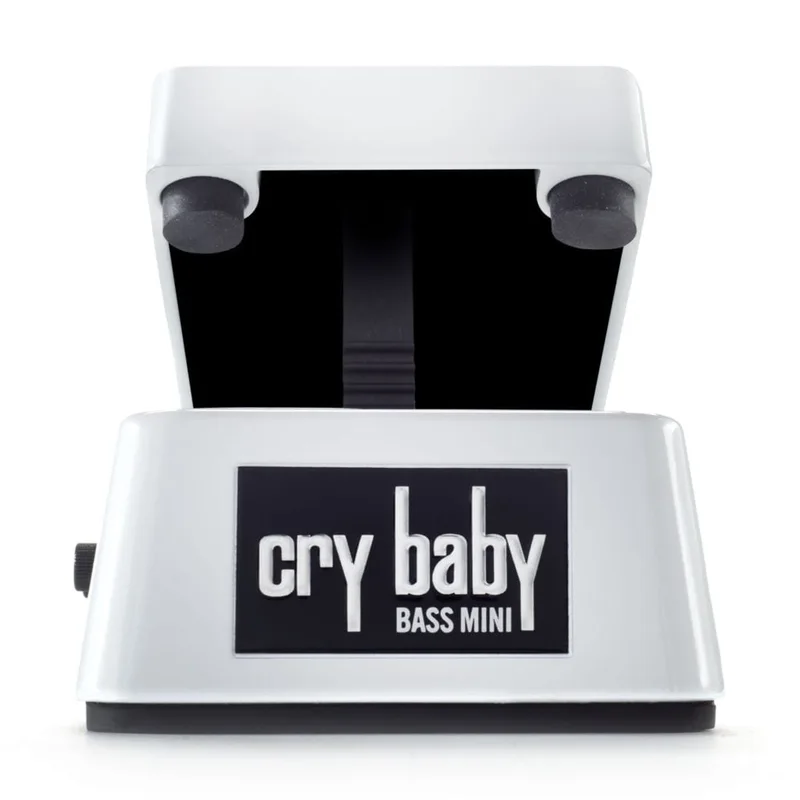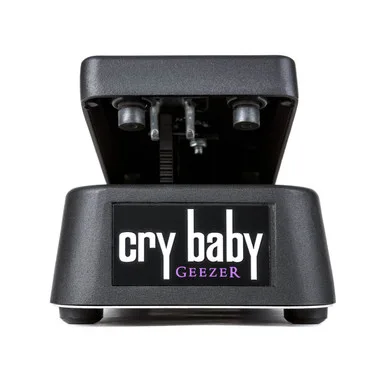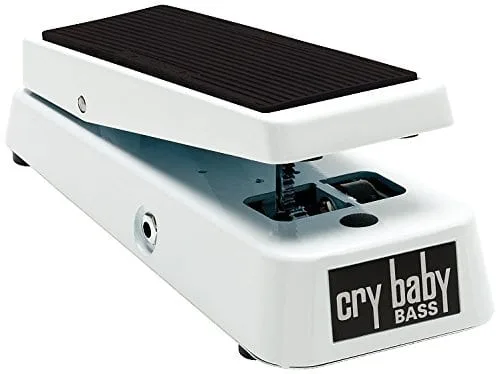


The Dunlop Cry Baby Bass is a wah pedal voiced for bass, made by Dunlop. Where a standard wah sweeps the whole signal and can hollow out the bottom end, the Cry Baby Bass applies the wah effect to the mids and highs only, leaving a strong fundamental so the low end stays undisturbed during solos or fills1. Dunlop calls it "the first wah pedal designed by bass players for bass players"1.
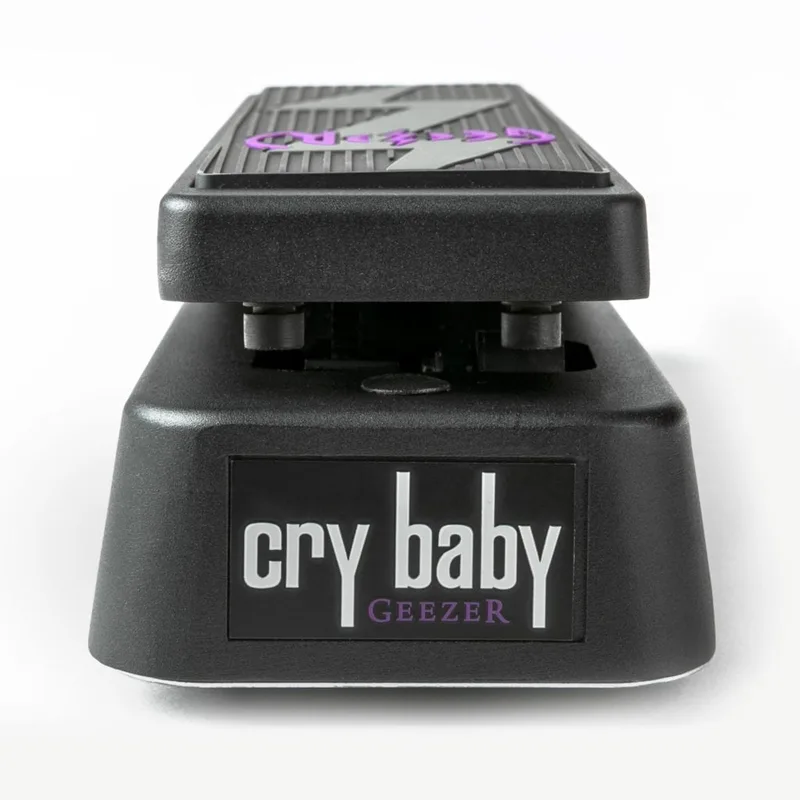
The design dates to 1999, when Dunlop released the 105Q Cry Baby Bass Wah2, and the line has since grown to include the compact Cry Baby Mini Bass Wah and signature models such as the Geezer Butler Cry Baby23.
A wah that keeps the low end
The core idea of the Cry Baby Bass is frequency separation. Dunlop's product page puts it plainly:
"The Cry Baby Bass Wah applies the wah effect to the mids and highs only, leaving a strong fundamental to hold down the bottom so you can take solos or throw in fills without ever disturbing your low end."
To do this, the 105Q incorporates a proprietary potentiometer and custom EQ circuitry specifically optimized for bass frequencies1. Dunlop's buying guide also notes the 105Q uses an envelope filter circuit in place of the inductor found in a standard Cry Baby7. The sweep runs from 180 Hz at heel down to 1800 Hz at toe down, with gain at the center frequency of +25 dB heel down and +32 dB toe down4.
Auto-return switching
Both the 105Q and the Mini Bass Wah use auto-return switching rather than a conventional bypass footswitch. You engage the wah by stepping on the rocker, and silent auto-off switching puts the pedal into bypass mode when you lift your foot off the rocker24. Dunlop's history article describes the result: stepping on the rocker engages the effect automatically, so you can step in and out with ease2.
Controls on the 105Q
| Control | What it does |
|---|---|
| VARIABLE Q knob | Adjusts the frequency range of the wah effect; clockwise for a narrower range emphasizing higher-end harmonics, counterclockwise for a wider bandpass4 |
| VOLUME knob | Controls the amount of gain added by the BOOST switch, up to 20 dB4 |
| BOOST switch | Increases output as set by the VOLUME knob4 |
Dunlop's buying guide summarizes the Q control as setting the effect response from sharp to smooth, with an adjustable boost of up to +16 dB7.
Power: 9V, about 4mA
The 105Q runs on 9 volts DC and draws 3.5 mA4. Power options are one 9-volt battery accessed via the bottom of the pedal, an AC adapter such as the Dunlop ECB003 or ECB003E, or a DC Brick power supply4. The Mini Bass Wah draws slightly more at 6.7 mA, and takes the same battery (installed by removing the bottom plate), the ECB003 or ECB003EU adapter, or DC Brick and Iso-Brick supplies5.
Neither pedal's product page lists a battery among what is included: Dunlop notes the adapter and power supplies are "not included"16. Input impedance is 1 MΩ and output impedance is 1 kΩ on the 105Q4.
The 105Q and the Mini Bass version
The Cry Baby Mini Bass Wah delivers the same sound and functionality as the popular 105Q at half the size, in a lightweight aluminum housing6. Dunlop's product page for the 105Q describes it as having been the most popular bass wah for years, used by top bass players to add groove and texture to their bass lines6. The Mini keeps the thick sound, wide range, Q and boost controls, auto-return switching and low-end retention of the larger version7.
| 105Q | CBM105Q Mini Bass Wah | |
|---|---|---|
| Housing | Standard Cry Baby enclosure | Lightweight aluminum, half the size76 |
| Current draw | 3.5 mA4 | 6.7 mA5 |
| Resonant frequency | 180 Hz heel down, 1800 Hz toe down4 | 180 Hz heel down, 1800 Hz toe down5 |
| Maximum level | Not stated | +7.5 dBV5 |
| Volume control | Sets boost gain up to 20 dB4 | 0 dB to -21 dB5 |
| Q control | Adjusts frequency range of the effect4 | Adjusts wah frequency width5 |
The Mini's small footprint means it fits nicely on a downsized travel board6, and Dunlop says it has been carefully designed to retain and complement your low end, with Volume and Q controls to fine-tune the wah sound6.
How it differs from a regular Cry Baby
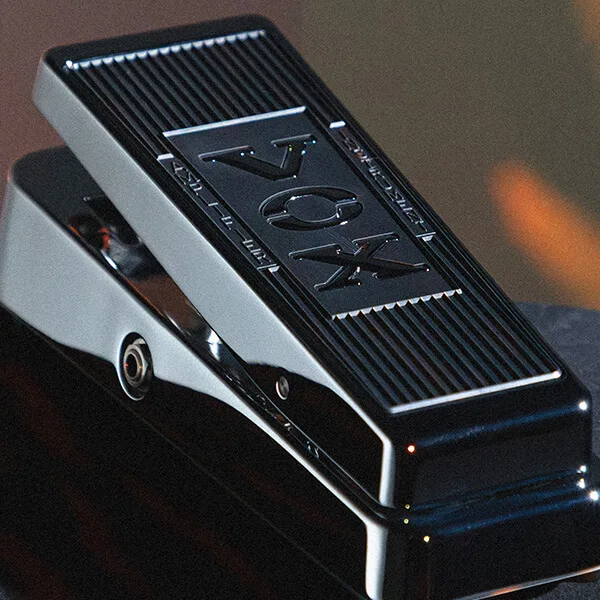
A regular Cry Baby such as the GCB95 is described by Dunlop as a modern take on the original Cry Baby sound, a no-frills wah for cutting through the mix7. A technical analysis of the GCB-95 circuit notes it has slightly less bass content than the VOX V847 because the input buffer filters part of the bass content8, which is part of why a guitar wah can disappoint on bass. The Cry Baby Bass instead splits the signal, wah-ing only the high and midrange frequencies and leaving the low end intact2. Other Cry Babies address frequency range differently: the Classic Wah re-tunes the standard circuit to a lower frequency center and a more subtle effect9, and the JH-1 Hendrix Signature model has a deeper range than a standard Cry Baby10.
Related bass wahs from Dunlop
In 2017 Dunlop unveiled its first signature Cry Baby Bass Wah, designed with Geezer Butler of Black Sabbath and described as specially designed to retain low end frequencies while allowing an aggressive midrange to cut through the mix, with auto-return switching3. Dunlop's buying guide notes the 105Q line was later joined by the Mini Bass Wah within the wider Cry Baby range2.
What reviewers said
Guitar World reviewed the CBM105Q Mini Bass Wah in August 2016 and awarded it the magazine's Gold Award, at a street price of $119.99 (Guitar World, 2016). Guitar.com reviewed the same pedal in October 2017, presenting it as Dunlop's compact solution for bassists who want a wah on a crowded pedalboard (Guitar.com, 2017).
Videos
jimdunlopusa
BassTheWorld.com
The Bass Channel
Questions
What is the difference between the Cry Baby Bass and a regular Cry Baby?
A regular Cry Baby sweeps the whole signal, which can thin a bass tone; its input buffer even filters some bass content8. The Cry Baby Bass applies the wah only to the mids and highs, leaving the low end fundamental intact12.
Does the Cry Baby Bass Wah use auto-return switching?
Yes. The 105Q engages when you step on the rocker and silently switches to bypass when you lift your foot42. The Mini Bass Wah uses the same auto-return switching6.
Can the Cry Baby Bass run on a battery?
Yes. The 105Q takes one 9-volt battery accessed via the bottom of the pedal4, and the Mini takes one 9-volt battery installed by removing the bottom plate5.
What is the model number of the Cry Baby Bass Wah?
The full-size model is the 105Q4, and the compact model is the CBM105Q5.
Does the Dunlop 105Q take a 9V battery?
Yes, one 9-volt battery, or the Dunlop ECB003/ECB003E adapter or a DC Brick supply, at 9 volts DC and 3.5 mA4.
What is the difference between the 105Q and the Cry Baby Mini Bass Wah?
The Mini gives the same sound and functionality at half the size in a lighter aluminum housing6, drawing 6.7 mA against the 105Q's 3.5 mA54.
Sources (10)
- CRY BABY® BASS WAH, Dunlop (www.jimdunlop.com)
- Evolution of the Cry Baby Wah at Dunlop, Dunlop (lifestyle.jimdunlop.com), 2017-04-27
- GEEZER BUTLER CRY BABY® WAH, Dunlop (www.jimdunlop.com)
- 105Q.pdf, Dunlop Manufacturing, Inc., 2019
- CBM105Q.pdf, Jim Dunlop, 2019
- CRY BABY® MINI BASS WAH, Dunlop (jimdunlop.com)
- RANGE OF EXPRESSION: FIND YOUR CRY BABY® WAH, Dunlop (lifestyle.jimdunlop.com), 2021-10-08
- Dunlop CryBaby GCB-95 Cicuit Analysis, GuitarPCB
- CRY BABY® CLASSIC WAH, Dunlop (www.jimdunlop.com)
- The Meters Man Sounds Off, Dunlop Lifestyle (lifestyle.jimdunlop.com), 2022-02-01