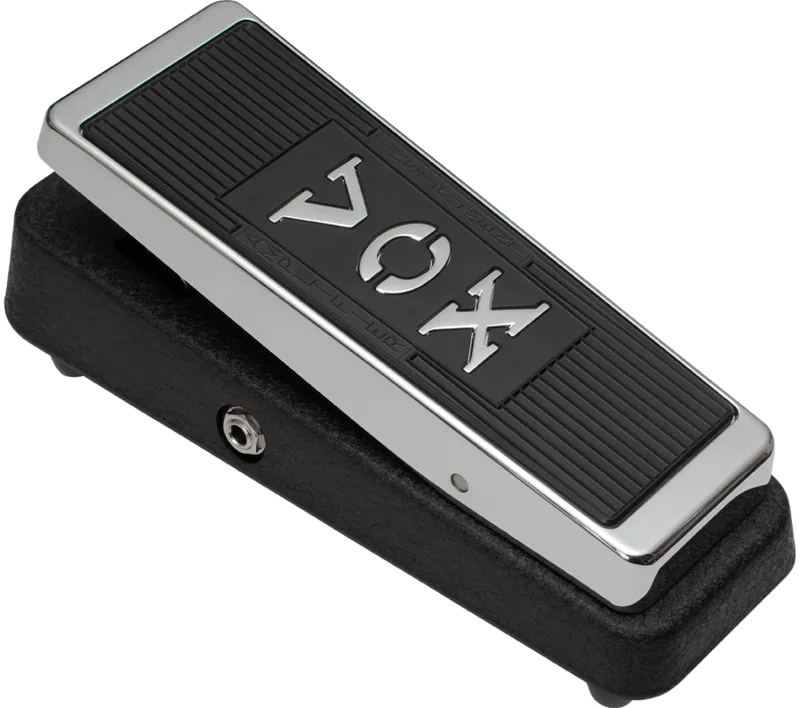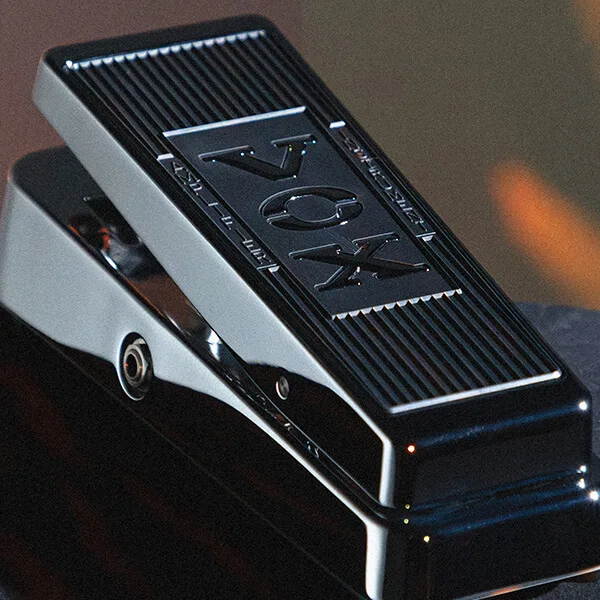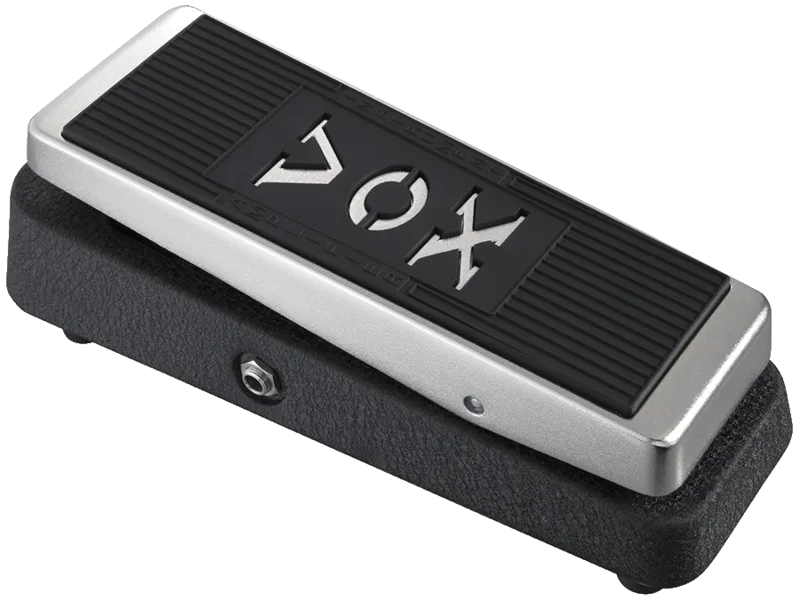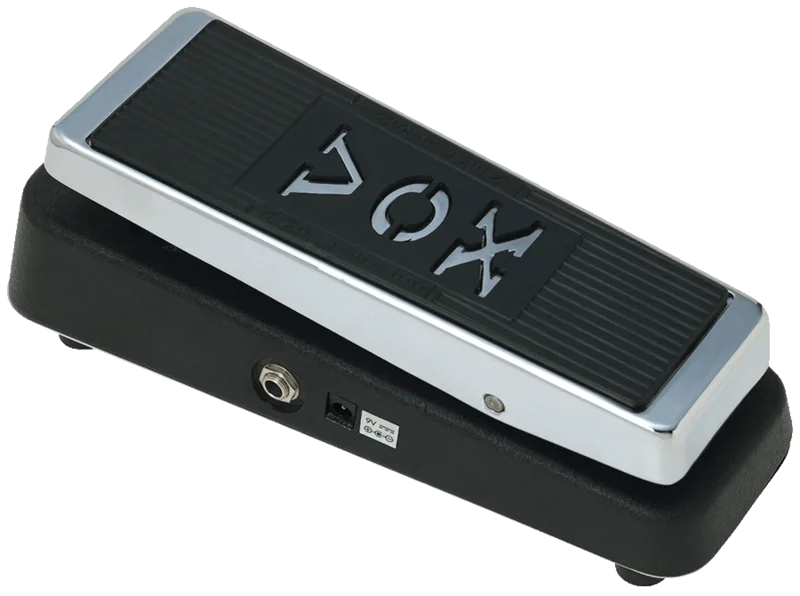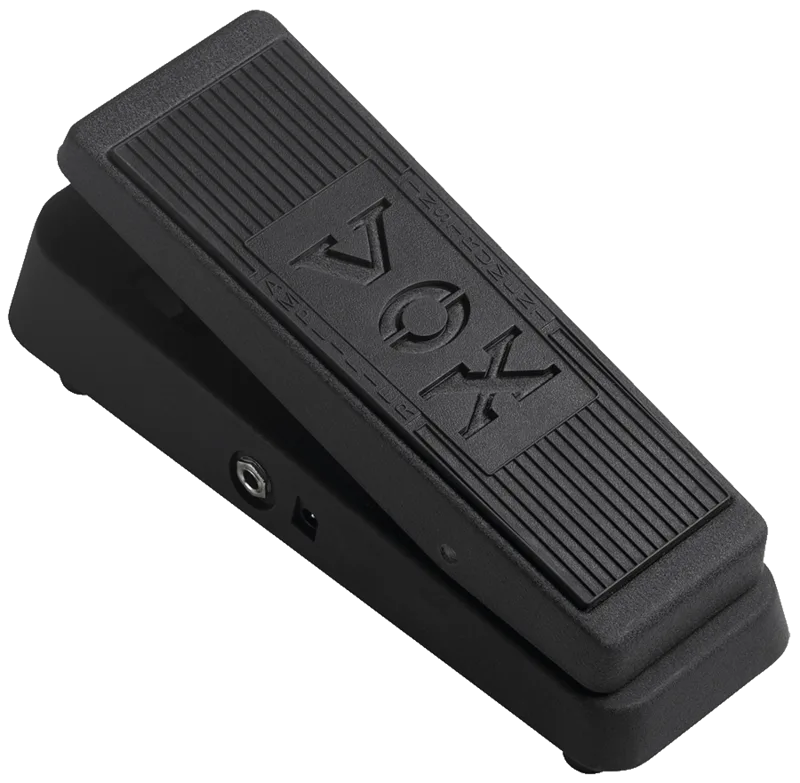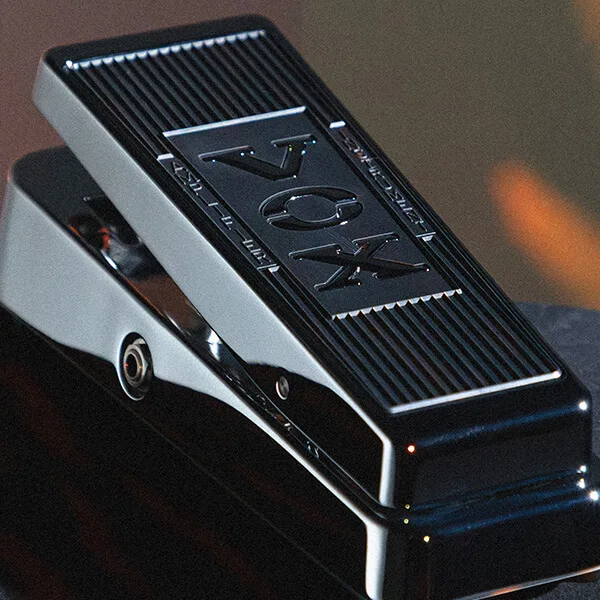
The Vox wah wah pedal is a foot-controlled filter effect that sweeps a resonant peak through the guitar's frequency range, producing the vocal "wah" sound heard on countless late-1960s recordings. Vox introduced it in 1967, and the pedal grew out of a midrange boost circuit from a Vox amplifier design, housed in a Vox organ volume pedal enclosure12. It became, in the words of one independent reference site, one of the benchmark pedals for generations of players3.
A Super Beatle tone circuit in an organ pedal
The wah was an accident of amplifier engineering. In 1965 and 1966, Brad Plunkett, then a young engineer at Thomas Organ, was reworking a Vox amp to make it cheaper to produce. While replacing the amp's midrange boost (MRB) switch with a potentiometer, he discovered that sweeping the frequency created a dramatic "wah" tone74. Vox's own history describes the pedal's creation as "an accident, discovered during the design of the VOX Super Beatle amplifier in 1966"4.
The circuit itself came from the mid control of the Vox Super Beatle amp, a design credited to Dick Denney8. Guitar.com's Huw Price explains the topology plainly:
"The wah pedal is, first and foremost, a band-pass filter that rolls off the treble and the bass and creates a resonance peak at the low-pass filter frequency point."8
The enclosure was borrowed too. Del Casher, a session guitarist working with Vox, suggested using a Vox organ volume pedal instead of a control knob so guitarists could use the effect while playing8. As JHS Pedals' history puts it, "they take a Vox Continental Organ volume control pedal, they take that mid control circuit out of the amp, and they put" the two together5. The first wah pedal was invented in 1966, and Vox produced it as a product in 19675.
Why Vox first aimed it at trumpet players
Vox's executives initially believed the wah was a product for trumpet players, an idea JHS's history calls "a horrible idea"5. The Continental Organ Company thought the pedal might work better if marketed for woodwind instruments, which is why Clyde McCoy, a famous jazz trumpet player, was used for the marketing4. The pedal was designed to help guitar players sound something like a trumpet player manipulating a mute on their horn, as Vintage Guitar's reviewer Phil Feser recalled9.
The first units were made in Italy by Jen Elettronica as an OEM manufacturer and called the Clyde McCoy Wah-Wah, after the famous trumpet player6. The company even paid McCoy for the use of his name and face5.
Guitar players were slow to catch on. As of 1967 the wah still wasn't a hit with them, so Del Casher cut a demonstration record, made of cardboard and plastic-coated, with session drummer Jimmy Troxell to show how the effect works on guitar5. The gamble paid off: an unintended but music-changing use with electric guitar turned the wah into a vital tool for renowned artists such as Jimi Hendrix and Eric Clapton10.
Whose picture is on the bottom of a Vox wah
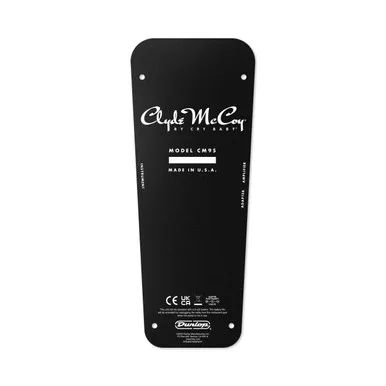
The earliest Vox Clyde McCoy wahs, made around 1967, carried Clyde McCoy's picture on the bottom plate. Vintage Guitar's review distinguishes two versions2118:
| Version | Bottom plate |
|---|---|
| ca. 1967 "picture" wah | Clyde's picture on the bottom211 |
| 1968 "signature" wah | No picture, Clyde's name in italics2 |
Guitar.com's history confirms the pattern: the earliest US-manufactured Vox wah carried McCoy's likeness on the baseplate, while later "signature" wahs had just an inscription8. Vox's own history notes the pedal was released in 1967 with an image of Clyde McCoy on the bottom of the pedal4.
Modern Vox recreations carry the detail forward. The Real McCoy and V846 Vintage wahs have a body molded from a 3D scan of the vintage model, with details down to the screws and font on the underside12. Guitar World's review of both pedals notes they are "3D-scanned to recreate the exact body mold (even the parts you can't see)"13.
Vintage-style and modern Vox wah versions
Vox's current line mixes faithful recreations of the 1967 originals with modern reimaginings4. The main models:
| Model | What it is |
|---|---|
| Vox Real McCoy Wah | Recreation of the original 1967 Clyde McCoy wah, with a replicated Halo inductor10 |
| Vox V846 Vintage | Recreation of the original 1967 V846 wah12 |
| Vox V847 | Wah based on the specifications of the original 1960s pedal, with a redesigned inductor closer to vintage spec1415 |
| Vox V845 | The same wah tone in a sturdy, affordable design16 |
| Vox Big Bad Wah | Dual-mode wah with two distinct wah sounds in one pedal17 |
Guitar World's Paul Riario reviewed the V846 Vintage and Real McCoy side by side and found real differences between them13:
"the V846 Vintage is a more refined wah that's smoother-sounding with a more expressive sweep that shapes the honking frequencies powerfully rather than quacking its way through like the Real McCoy"13
He added that most hard rock and metal players will find the V846 Vintage the more appealing choice, and might even want to park the wah as a cocked-wah bandpass lead tone13. The Real McCoy, by contrast, he counted a near-exact replica of a classic Vox wah13.
The wider wah market also leans on the Vox originals. The Musician Sound Design Automagic Classic 20th Anniversary wah's first mode replicates the sound of the vintage 1967 Vox wah, and Morley's M2 Wah is a vintage-voiced wah. Third-party builders such as Chase Tone offer limited-production replicas of vintage Vox wahs, and JHS Pedals sells a Super Wah mod that loads the Vox wah down41819.
Which guitarists made the Vox wah famous
Jimi Hendrix and Eric Clapton are the names most often attached to the early Vox wah, credited with driving now-legendary performances and songs1. Vintage Guitar's review widens the list: the Clyde McCoy wahs "were widely used during live performances and on legendary recordings by players such as Jimi Hendrix, Eric Clapton," Jimmy Page, and Jeff Beck in the late 1960s2.
The influence carried forward. Dunlop's history of the Cry Baby, the wah's American cousin, notes that those sounds "would profoundly influence subsequent generations of guitarists like Stevie Ray Vaughan, Slash, and many, many others"20.
Questions
Who designed the original Vox wah?
The wah circuit was created by Brad Plunkett, a young engineer at Thomas Organ, working with Lester Kushner at Warwick Electronics. Plunkett discovered the wah tone while reworking a Vox amp's midrange boost circuit, and Del Casher suggested putting the circuit into a Vox organ volume pedal so guitarists could use it while playing. Vox produced it as a product in 1967.
What is the difference between the Vox V846 and V847 wah pedals?
The V846 Vintage is a 2024 recreation of the original 1967 V846, with a body molded from a 3D scan of a vintage model. The V847 is a wah based on the specifications of the original 1960s pedal, with a redesigned inductor closer to vintage spec for improved dynamics and tone. Guitar World's reviewer found the V846 Vintage smoother and more expressive than the Real McCoy.
Whose picture is on the bottom of a Vox wah?
The first production Vox wahs, made around 1967, carried a picture of trumpet player Clyde McCoy on the bottom plate, because the pedal was named after and marketed around him. Later 1968 signature models dropped the picture and carried McCoy's name in italics instead. Modern recreations reproduce the original underside details down to the screws and font.
Which guitarists made the Vox wah famous?
Jimi Hendrix and Eric Clapton were the best known early users, and Vintage Guitar also names Jimmy Page and Jeff Beck playing the Clyde McCoy wah on live performances and legendary recordings in the late 1960s. The wah's sounds went on to influence later generations of players like Stevie Ray Vaughan and Slash.
Sources (20)
- VOX Real McCoy Limited Edition Wah Pedal, Vox Amps (voxamps.com), 2025-09-30
- Fulltone Clyde Wah, Vintage Guitar magazine, 2004-01-13
- TONEHOME, TONEHOME
- The VOX Amps Wah Wah Pedal Story, Vox Amps (voxamps.com), 2023-01-18
- HISTORY OF THE WAH PEDAL, JHS Pedals, 1966
- Vox V847 Wah-Wah Analysis, GuitarPCB
- The Best Wah Wah Pedals for Iconic Guitar Tones: Cry Baby and Beyond, gearnews.com, 2025-08-18
- All About… Wah, Guitar.com, 2015-11-30
- Arteffect Bonnie Wah, Vintage Guitar magazine, 2010-05-12
- VOX Real McCoy Wah Pedal, Vox Amps (voxamps.com), 2025-09-30
- Wah-Wah Pedals, Vintage Guitar magazine, 2001-06-05
- VOX V846 Vintage Wah Pedal, Vox Amps (voxamps.com), 2025-09-30
- Vox V846 Vintage and Real McCoy Wah review, Guitar World, 2024-09-10
- V847 Wah Pedal, Vox Amps (voxamps.com), 2025-09-30
- NOS Axis Wah, vertexeffects.com
- V845 Wah Pedal, Vox Amps, 2025-09-30
- Joe Satriani Talks About the Vox Big Bad Wah, Premier Guitar, 2009-06-30
- [AUTOMAGIC CLASSIC WAH
- Morley launches new pedals | MusicRadar, MusicRadar, 2014-03-25
- Celebrating Fifty Years of Cry Baby, Dunlop (lifestyle.jimdunlop.com), 2017-03-14
 Jimmy Page
 Del Casher