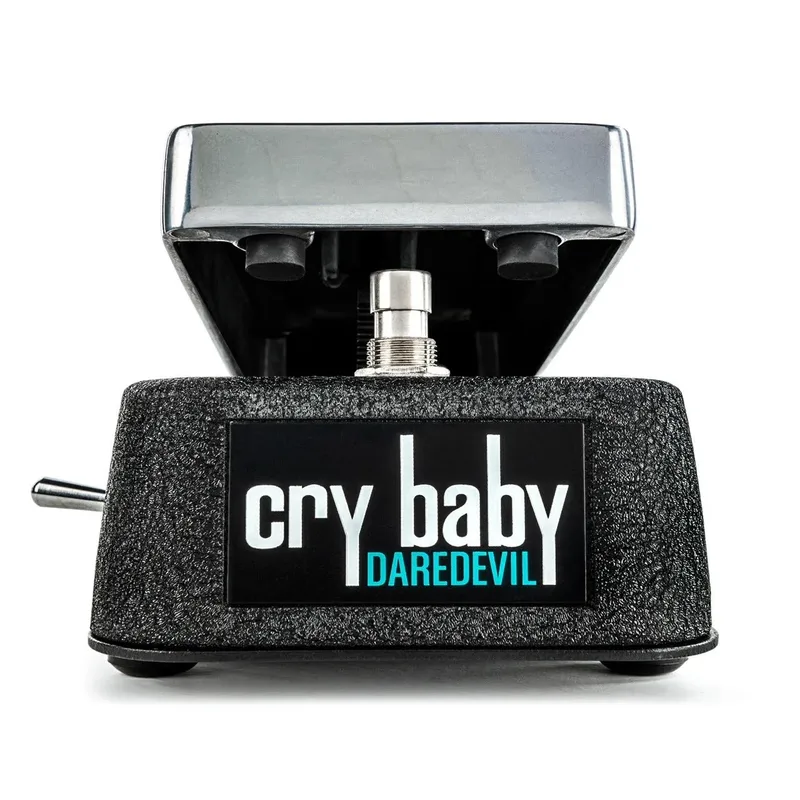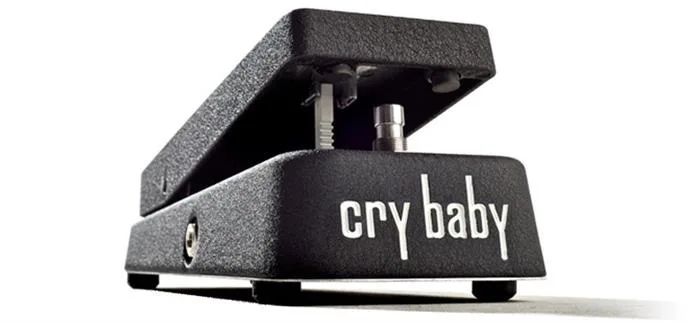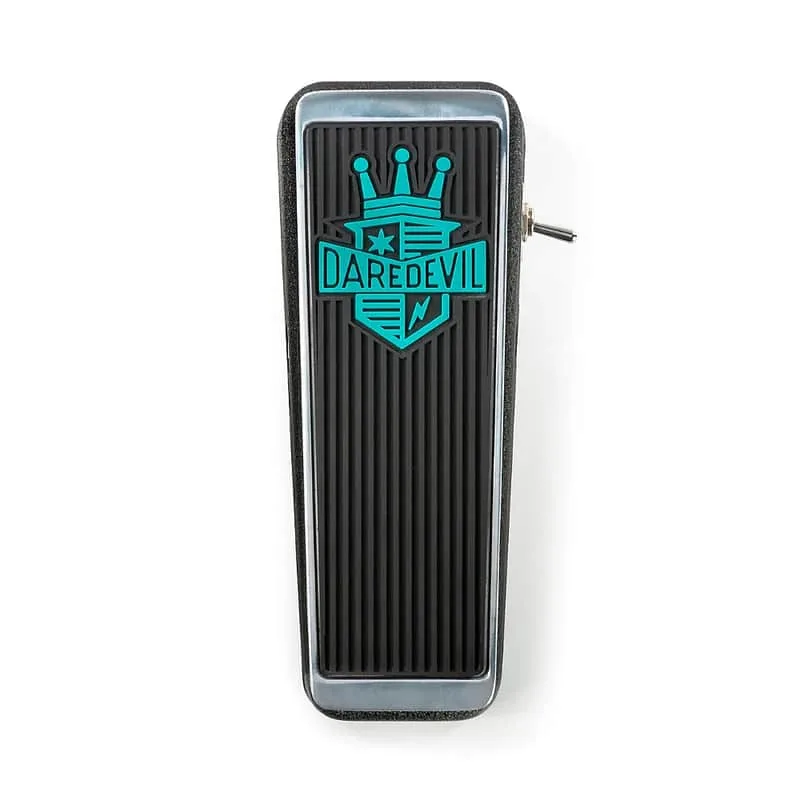

The Dunlop DD95FW Cry Baby Daredevil Fuzz Wah is a fuzz wah pedal that puts a custom fuzz circuit inside a modded Cry Baby wah treadle. Rock your foot on the rocker and you get the vocal, expressive sweep the Cry Baby is known for; flip a switch and the fuzz joins the wah in one signal path, with enough gain on tap for lead tones12.
The pedal is a Dunlop product that grew out of Daredevil proprietor and builder Johnny Wator's love for classic vintage circuits, and he brought it to Dunlop for consideration as a new addition to the lineup1. It is an analog fuzz wah pedal, the DD95FW Daredevil Cry Baby Fuzz Wah12.
A Cry Baby wah with a built-in fuzz
The DD95FW fuses a modded Cry Baby wah circuit with a custom fuzz circuit, and Dunlop describes the result as packed with old school tones and enough power to fill a room12. Each pedal is hand built with thru-hole components and true bypass switching, and it comes in a special housing with a vintage crinkle finish base, a polished aluminum rocker top, and a custom design tread1.
For a player, the appeal is the classic fuzz-into-wah combination in one box: instead of running a separate fuzz pedal into a wah, the DD95FW gives you both under one foot, with the option to use either the wah alone or the two together21.
The controls
Externally the pedal is deliberately simple. The only external control is a heavy-duty baseball bat switch that toggles the fuzz on and off1. The manual calls it the WAH/FUZZ WAH switch: flip it to WAH to use the wah effect by itself, or to FUZZ WAH to engage the fuzz wah effect2.
| Control | Location | What it does |
|---|---|---|
| WAH/FUZZ WAH switch | External, baseball bat style | Toggles the fuzz effect on and off; WAH position is wah only, FUZZ WAH engages the fuzz wah12 |
| FUZZ OUTPUT knob | Internal, under the bottom plate | Adjusts pedal volume when fuzz wah mode is engaged2 |
| GAIN knob | Internal, under the bottom plate | Adjusts the intensity of the fuzz effect2 |
To access the internal controls, you remove the bottom plate2. Dunlop's framing for the two trimmers is practical: one sets the pedal's output when the fuzz is engaged, the other dials in your preferred level of fuzz nastiness1. The company also suggests the pairing as a lead boost: raise both the output and gain and, in one step, you are ready to rip1.
The wah itself switches on and off the standard Cry Baby way: push the toe of the pedal down until you feel a click2.
Power and connections
Setup is straightforward. Run a cable from your guitar to the DD95FW's INSTRUMENT jack, then another cable from the AMPLIFIER jack to your amplifier2.
The pedal runs on one 9-volt battery, accessed via the underside of the pedal, or on the Dunlop ECB003 9-volt adapter. It is also compatible with Dunlop's DC Brick, Iso-Brick, and Mini Iso-Brick power supplies2. The external supply is 9V DC, center negative, drawing about 1 mA1, so it is an easy pedal to fit on a powered board.
Sweep, gain and noise figures
The manual publishes full measurements for both modes, which is useful when comparing the DD95FW against other fuzz wahs. The wah sweep runs from a 375 Hz resonant frequency at heel down to 2.1 kHz at toe down, the same in both modes2.
| Measurement | WAH only | FUZZ WAH |
|---|---|---|
| Resonant frequency, heel down | 375 Hz | 375 Hz |
| Resonant frequency, toe down | 2.1 kHz | 2.1 kHz |
| Max gain, heel down | +17.2 dB | +55 dB |
| Max gain, toe down | +23.5 dB | +63 dB |
| Noise floor, heel down | -98 dBu | -86 dBu |
| Noise floor, toe down | -86 dBu | -70 dBu |
| Max output level | +11.5 dBu | +11.5 dBu |
| Input impedance | 55 kΩ | > 17 kΩ |
| Output impedance | 1 kΩ | > 2.5 kΩ |
All figures from the Dunlop manual2.
The numbers tell the story of the two modes. In wah-only mode the pedal behaves like a conventional wah, with modest gain and a low noise floor. Engage the fuzz and the gain climbs dramatically, up to +63 dB at toe down, while the noise floor rises accordingly, from -98 dBu to -86 dBu at heel down. The input impedance also drops from 55 kΩ to above 17 kΩ with the fuzz on, which is worth knowing if you place other pedals in front of it. Current draw is under 1 mA in both modes2.
Made with Daredevil Pedals
The DD95FW is not an in-house Dunlop design from the ground up. Daredevil proprietor and builder Johnny Wator, whose work is rooted in a love for classic vintage circuits, brought the pedal to Dunlop for consideration as a new addition to the lineup1. Dunlop manufactures it as the DD95FW Daredevil Cry Baby Fuzz Wah, an analog fuzz wah pedal12.
Within Dunlop's own catalog, the DD95FW stands apart as a fuzz wah pedal, combining the two effects in one treadle-based unit rather than pairing separate wah and fuzz boxes2. Its wah section delivers the vocal, expressive tones the Cry Baby Wah is famous for when you rock your foot back and forth on the pedal2.
Videos
The Pedal Picassos
Jake and Suzette Reviews
Questions
Does the Dunlop Daredevil Fuzz Wah take a battery?
Yes. The DD95FW runs on one 9-volt battery, accessed through the underside of the pedal. It can also be powered by the Dunlop ECB003 9-volt adapter or Dunlop's DC Brick, Iso-Brick, and Mini Iso-Brick power supplies.
Is the Cry Baby Daredevil Fuzz Wah true bypass?
Yes. The manual lists the bypass as true hardwire, and the pedal is described as hand built with thru-hole components and true bypass switching, so your clean signal passes through untouched when the pedal is off.
How do you adjust the fuzz on the Daredevil Cry Baby?
Remove the bottom plate to reach two internal controls: the GAIN knob, which adjusts the intensity of the fuzz effect, and the FUZZ OUTPUT knob, which sets the pedal's volume when the fuzz wah mode is engaged.
Can you use the Daredevil Fuzz Wah as a regular wah?
Yes. Flip the external WAH/FUZZ WAH switch to its WAH position and the pedal works as a wah on its own, with no fuzz in the signal. Flip it to FUZZ WAH to bring the fuzz circuit in.
Sources (2)
- DD95FW Cry Baby Daredevil Fuzz Wah by Dunlop, RockBoard PedalPedia, 2026
- DD95FW.pdf, Jim Dunlop, 2023