

Controls and the Pre-Gain switch
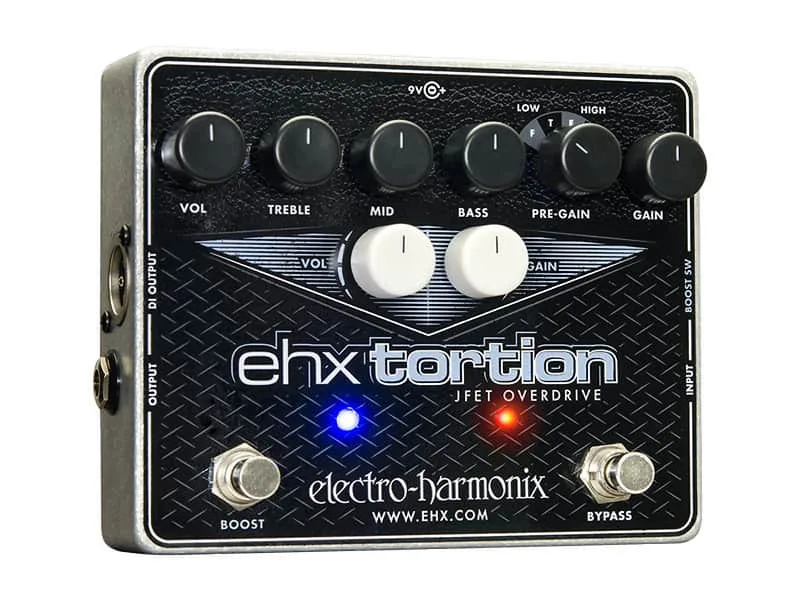
The heart of the Tortion is a four-way Pre-Gain switch that controls the level and tone of the initial input signal. Vintage Guitar describes how the two ends of the switch behave: "The Pre-Gain taps lower input level, for vintage plexi tones, and higher gain for a hotter metallic sound"1.
Each Pre-Gain setting also has two tone selections, F and T, for full and tight, which shape the bass distortion. In practice, F leaves more low end in the distorted signal and T tightens it, so the switch gives four starting points and each of those a bass character choice1.
Alongside the Pre-Gain switch, the normal channel has a Gain knob that controls the amount of input gain1.
The boost channel
The Tortion carries a second footswitch, and Vintage Guitar summed it up plainly: "The Tortion's Boost footswitch takes things to another level"1. The boost settings get the signal hotter and more compressed while, in the reviewer's words, "it still sounds like it's coming from the same amplif[ier]"1.
Importantly for players who use a boost as a separate stage, the boost Volume and Gain knobs are completely independent of the normal settings, so the boost can be dialed in on its own and engaged without disturbing the main sound1.
What reviewers said
Vintage Guitar's January 2015 review ended with a strong verdict:
"It may be one of the most versatile, best-sounding OD and distortion pedals available."
Where it sits in the Electro-Harmonix dirt range
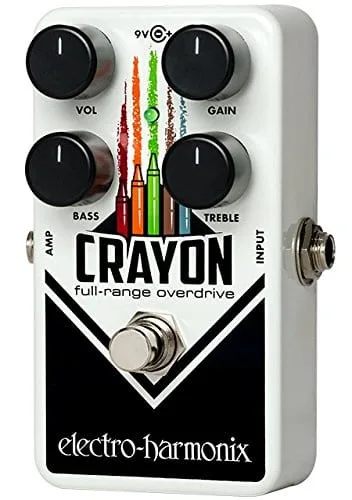
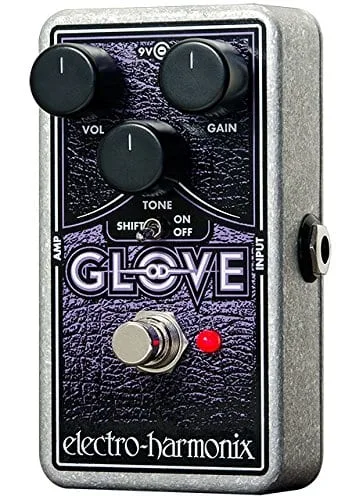
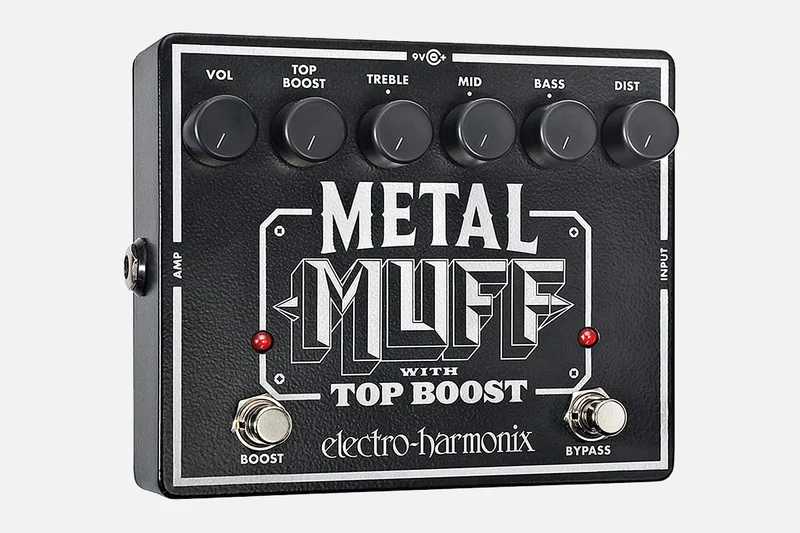
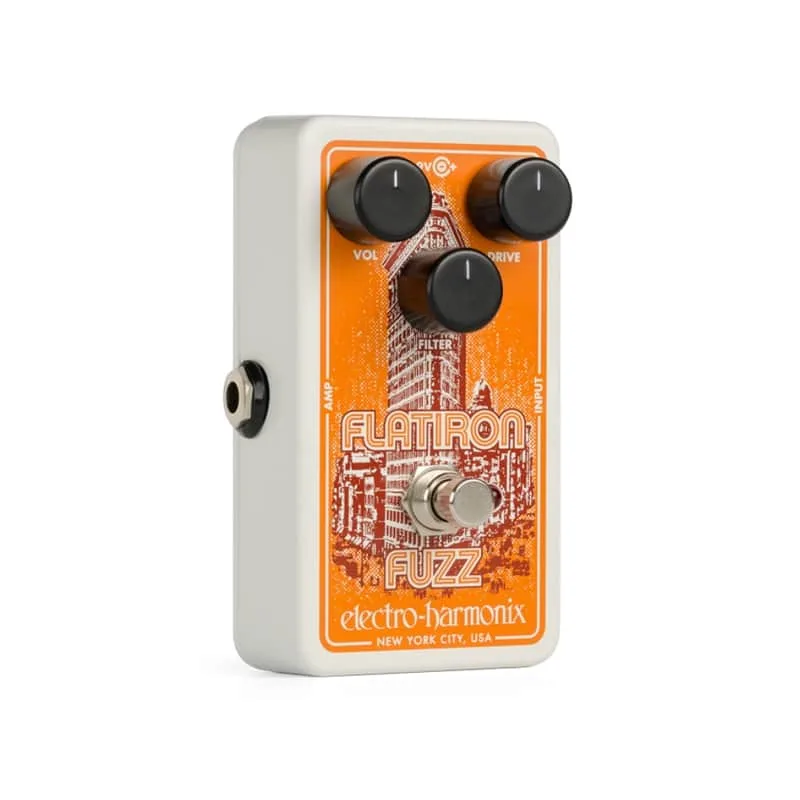
The Tortion was Electro-Harmonix's flagship distortion at the time of its review1. The company's dirt lineup spans a wide range, from the Electro-Harmonix CRAYON 69 Full Range Overdrive and the OD Glove to the Metal Muff with Top Boost and the Big Muff family of fuzzes. For a broader look at how circuits like this shape a signal, see the site's pages on overdrive pedals and distortion pedals.
Videos
ProGuitarShopDemos
EHX
studiocarreri
Questions
Is the Electro-Harmonix Tortion analog?
Yes. Vintage Guitar's review notes that Electro-Harmonix uses JFET analog technology in the Tortion, aiming to reproduce the overdriven and distorted character of a tube amplifier rather than model it digitally. The pedal is an analog overdrive and distortion design throughout.
Does the Tortion JFET Overdrive have true bypass?
No. According to Vintage Guitar's review, the Tortion has a buffered Bypass stomp switch. A buffered bypass leaves a small circuit in the signal path when the pedal is off, which can help preserve signal strength on long cable runs.
What do the F and T settings do on the Tortion?
Each Pre-Gain setting on the Tortion has two tone selections, F and T, standing for full and tight. Vintage Guitar describes them as shaping the bass distortion, so F keeps more low end in the distorted signal while T tightens it up.
Is the Electro-Harmonix Tortion discontinued?
Yes. Electro-Harmonix's product page marks the Tortion as discontinued as of 2025. When it was reviewed by Vintage Guitar in January 2015 it was described as the company's flagship distortion pedal.
Can the boost on the Tortion be set separately from the normal channel?
Yes. Vintage Guitar's review states that the boost Volume and Gain knobs are completely independent of the normal settings, so the boost can be dialed in on its own and engaged with its own footswitch.
Sources (2)
- EHX Tortion JFET Overdrive, Vintage Guitar magazine, 2016-01-25
- EHX Tortion, Electro-Harmonix