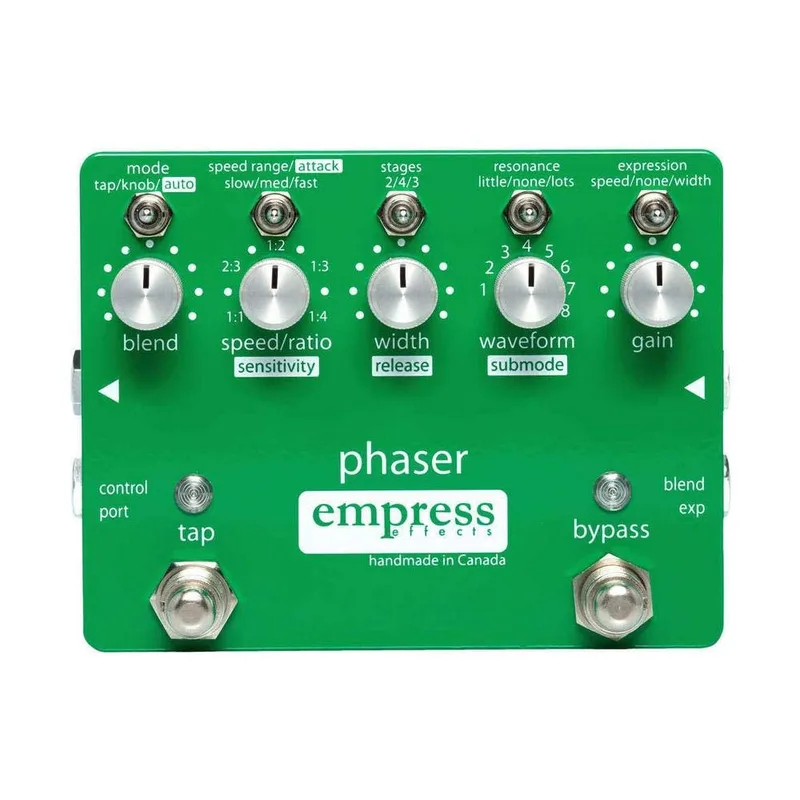
The Empress Effects Phaser is a phaser pedal from Canadian maker Empress Effects, housed in a lime green enclosure and built around an unusual design: an all-analog signal path controlled by a microprocessor. That combination gives what No Treble described as "analog tone with digital control," meaning the phase shifting happens in analog circuitry while a digital brain handles tap tempo, auto modes and MIDI synchronization1.
What sets it apart from most phasers is adjustability. MusicRadar's reviewer called it "possibly the most comprehensively adjustable pedal delivering a single modulation effect we've seen"2. It offers a choice of two-, three- and four-stage phasing, eight waveforms, eight auto modes and five rhythms, along with tap tempo, MIDI control and an expression input for controlling parameters in real time2.
How the phasing works
A phaser mixes two identical signals together: one stays dry while the other passes through a series of all-pass filters, called stages, whose positions are moved by an LFO (low-frequency oscillator). The interaction between the two signals produces the swirling effect players recognize as phasing5.
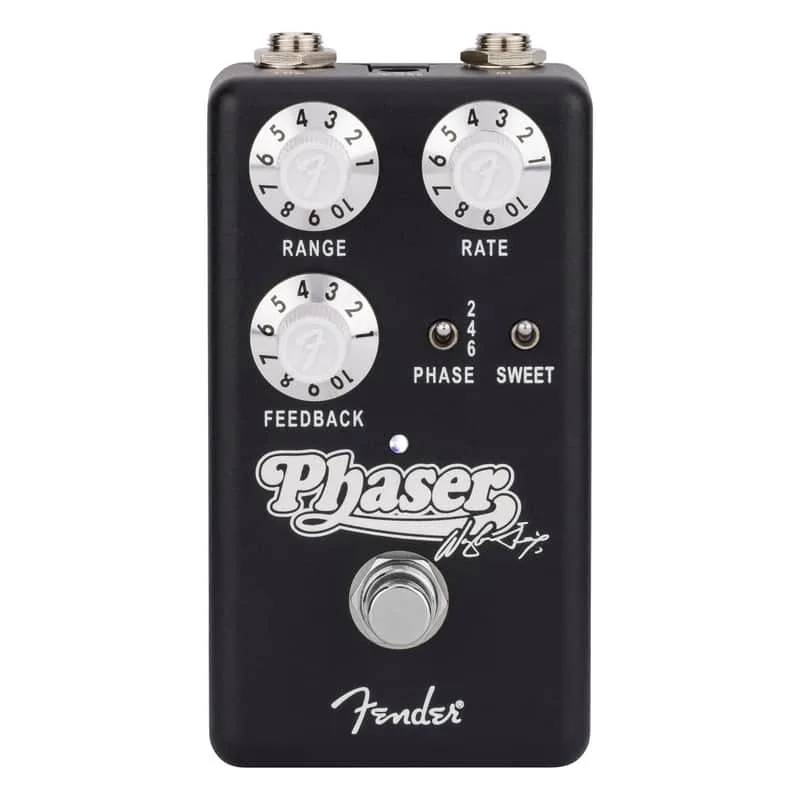
Most classic phaser pedals are fixed at four stages. The Empress Phaser offers a choice of two- and three-stage phasing besides the more standard four-stage, which changes the character of the sweep: fewer stages give a subtler, less pronounced phase, while four stages deliver the fuller, more familiar swirl2. The Fender Waylon Jennings Phaser, by comparison, switches between 2, 4 and 6 stages, so the Empress covers the common ground while leaving off the six-stage option.
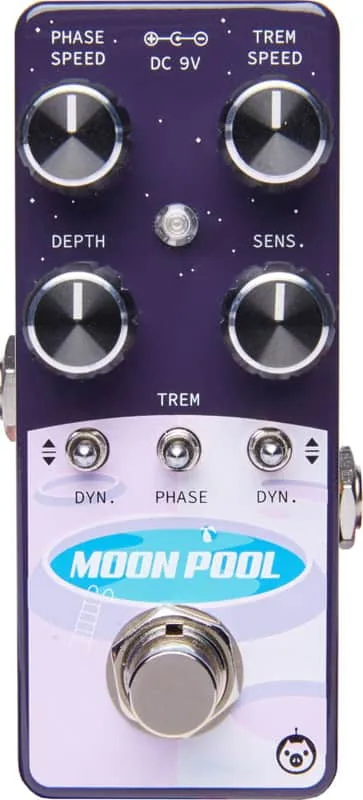
The pedal's phase shifting is VCA-based, a circuit approach Function f(x) lists it alongside the Pigtronix Moon Pool as a commercial example of6. It also carries a 104 dB signal-to-noise ratio, a figure No Treble highlighted at launch1.
The controls: five knobs and five three-way switches
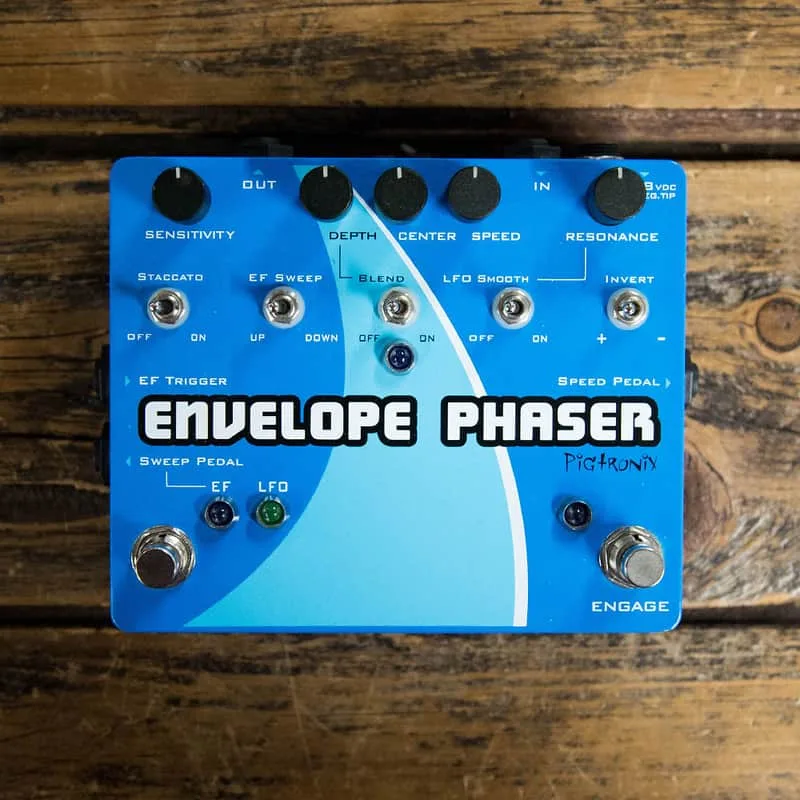
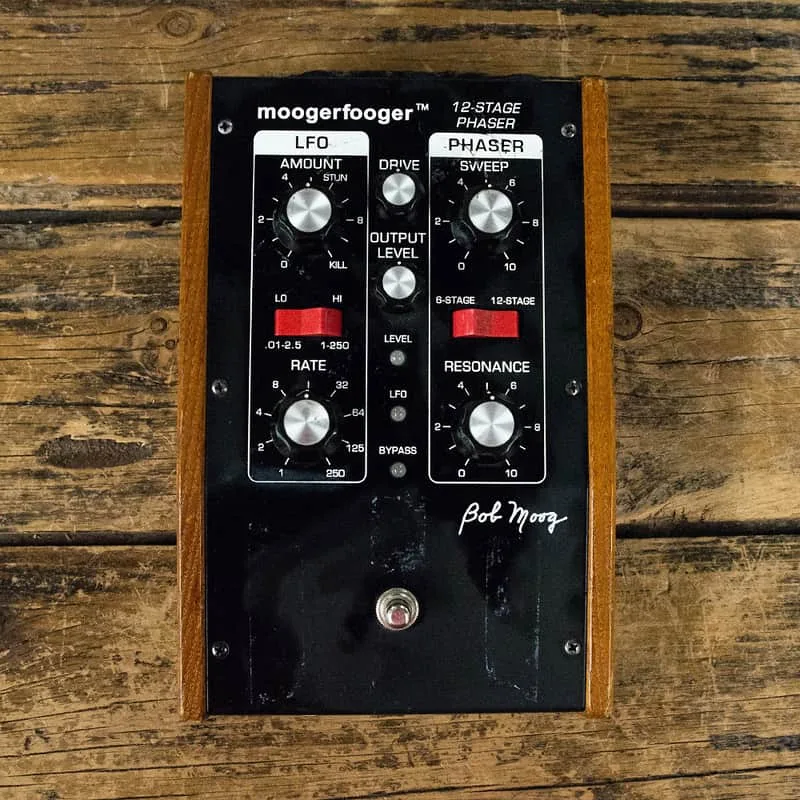
The front panel carries five knobs and five three-way switches, plus tap tempo, MIDI control and an expression input2. That is a denser control set than most phasers: the Pigtronix EP2 Envelope Phaser, for instance, uses five mini switches for Staccato, EF Sweep, Blend, LFO Smooth and Invert, while the Moog MF-103 keeps things to four main knobs for LFO Rate, LFO Amount, Phaser Sweep and Phaser Resonance.
Among the switching options is a resonance control. MusicRadar's reviewer found the pedal produces "plenty of phaser flavours here, from really subtle to the more obvious, with a defined 'wow' switched in with the resonance switch"2.
The tap tempo footswitch enables manual input of a tempo, and the Speed/Ratio knob then multiplies that tapped rate, so you can set a base tempo with your foot and push the sweep faster or slower from there3.
Auto modes, waveforms and rhythms
The microprocessor control is what makes the pedal's deeper features possible. Beyond the standard LFO sweep, the pedal includes12:
- 8 auto modes: envelope follower, center & speed, speed (sine), speed (square), audio sweep trigger, random level trigger, rhythms, and direct control1
- 8 waveforms: described by MusicRadar as offering "more angular options than the normal rounded sweep"2
- 5 rhythms: patterned phase movement rather than a continuous sweep1
The envelope follower mode makes the phase sweep respond to your playing dynamics, while the trigger modes react to the audio itself, and the rhythm modes move the phasing in set patterns like a sequenced effect rather than a smooth up-and-down sweep1.
MIDI and sync
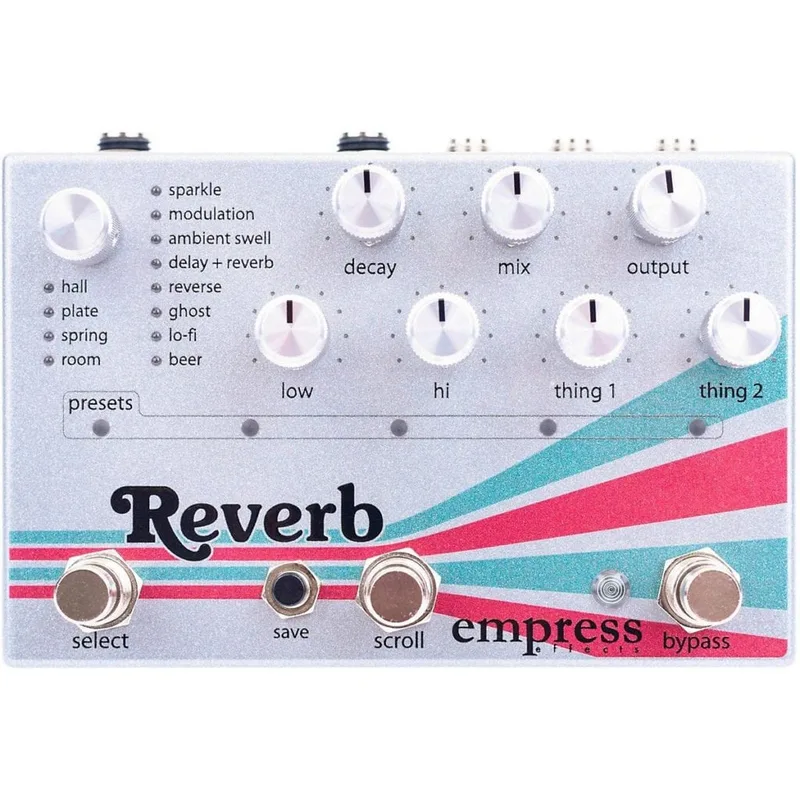
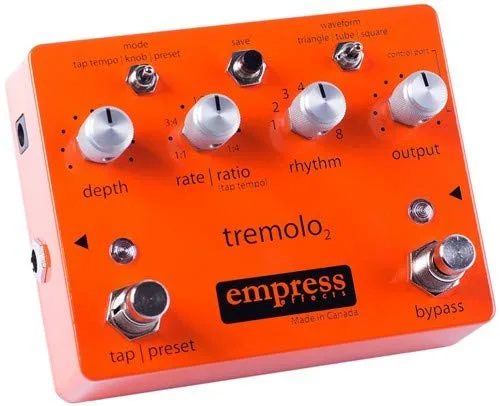
The Empress Phaser belongs to the class of pedals that can synchronize to MIDI Clock, something Molten Voltage noted as a growing capability among cutting-edge effect makers4. It can also sync with other tempo-capable pedals through its Tap Input Jack using CTL-Sync, a method Molten Voltage described for pedals that can lock together even though they don't use MIDI Clock7. For players building a board around synchronized modulation, the Phaser sits alongside other Empress MIDI-capable pedals like the Empress Effects Reverb and Empress Effects Tremolo2, and it fits into the broader world of MIDI pedals.
Where it came from
The Phaser was announced in October 2010, available at launch for $3491. Jason Fee was Chief Designer on the project1. The pedal remains part of the Empress lineup, with Premier Guitar reviewing it in 2021 at a street price of $3493.
Empress Effects lists Andrew Whiteman among the artists who use the Phaser8.
What reviewers said
MusicRadar's reviewer, Trevor Curwen, found the pedal's range its defining trait:
"Possibly the most comprehensively adjustable pedal delivering a single modulation effect we've seen2."
MusicRadar, 20262
Premier Guitar's 2021 review focused on "the multitude of tones that its lime green enclosure had hidden within"3.
Questions
Is the Empress Phaser analog or digital?
It is both. The signal path is all-analog, but a microprocessor controls it, which is what allows the pedal's digital features like tap tempo, presets of auto modes and MIDI synchronization while keeping an analog tone path.
Does the Empress Phaser sync to MIDI clock?
Yes. The pedal is capable of synchronizing to MIDI Clock, and it can also sync with other pedals through its Tap Input Jack using CTL-Sync, so it can lock its rate to other tempo-capable effects on a board.
Is the Empress Phaser true bypass?
Yes, the Empress Phaser uses true bypass switching, so when the effect is off the guitar signal passes through without the phaser circuit coloring the tone.
Does the Empress Phaser have tap tempo?
Yes. A dedicated tap tempo footswitch lets you enter a tempo manually with your foot, and the Speed/Ratio knob can then multiply that tapped rate for faster or slower phase sweeps.
Who has used the Empress Phaser?
Empress Effects lists Andrew Whiteman among the artists who use the Phaser. The pedal has also been reviewed by MusicRadar and Premier Guitar, with MusicRadar calling it possibly the most comprehensively adjustable single-modulation pedal they had seen.
Sources (8)
- Gear Watch: Empress Phaser Pedal, No Treble, 2010-10-11
- Empress Phaser review, MusicRadar, 2015-02-22
- Empress Phaser Pedal Review, Premier Guitar, 2010-11-23
- MIDI PedalBoard Devices: MIDI PedalBoards are finally a reality, Molten Voltage (blog.moltenvoltage.com), 2013-05-07
- 5 Reasons Everyone Needs a Phaser, EarthQuaker Devices, 2023-02-21
- Guitar Phaser Pedal Types: JFET, Optical, OTA, and Others, Function f(x), 2022-03-18
- MIDI PedalBoard Devices: 28 Effects that can sync to MIDI Clock with CTL-Sync, Molten Voltage (blog.moltenvoltage.com), 2014-06-12
- Joff Oddie, Empress Effects Inc.