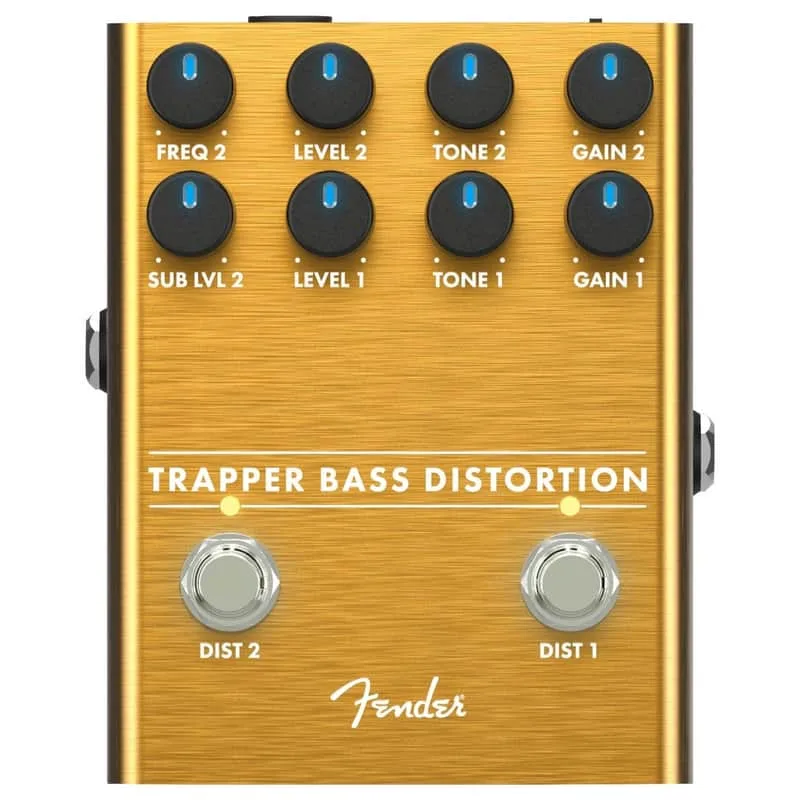


The Fender Trapper Bass Distortion is a bass distortion pedal from Fender that packs two separate bass distortion circuits into one housing, with the option of stacking them or using them individually1. Released on 10 November 20202, it takes after Fender's six-string Trapper fuzz pedal, which likewise put two circuits in one box3. It is an all-analog, all-original Fender design, and Fender describes its character as "clarity and punch"1.
The two circuits, labeled Dist 1 and Dist 2, each have an independent footswitch, so you can bring them in separately or run both at once1. Dist 1 carries the pedal's crossover blend circuit for keeping your low end under distortion, while Dist 2, which MusicRadar calls the "solo distortion" circuit, offers extra oomph1. Guitar World's news coverage describes the same division of labor: channel 1 retains the low frequencies through its crossover blend, while channel 2 acts as a solo channel for extra gain4.
Two stackable distortion circuits for bass
The core idea of the Trapper Bass is that you get two distortion voices in one enclosure, and you choose how to combine them. Each channel has its own footswitch, so a player can set one channel as a light grind for verses, the second as a heavier voice for choruses or solos, and then stack both for the fullest sound the pedal offers13. Premier Guitar found the two channels stackable in exactly this way, noting that running both gives more control over the pedal's gain structure and tone5.
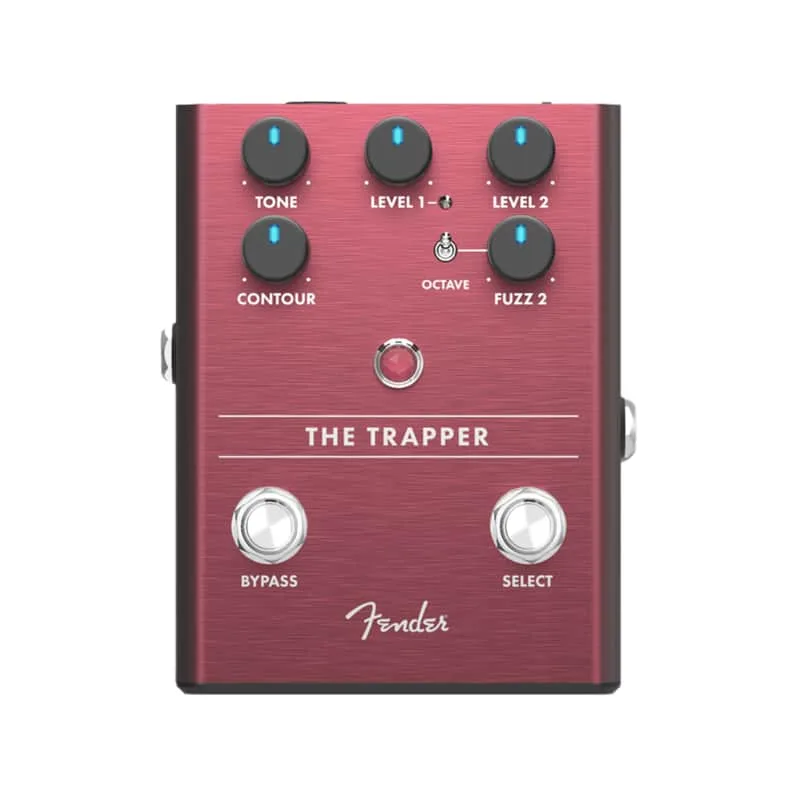
The design follows the pattern Fender set with its original Trapper, a dual distortion pedal for guitar. Guitar.com reported at the pedal's announcement that the Trapper Bass "takes after it's six-string-focused kin, in that it has two separate distortion circuits," with the two circuits stackable and an independent footswitch for each3. Fender describes the pedal as an all-original design packing two bass distortion circuits into one housing, with the two channels usable individually or stacked1.
For bass players, the difference from a single-channel distortion is flexibility: instead of one gain voice and one set of controls, you get two complete circuits you can layer. Guitar World's buying guide for bass distortion pedals includes the Trapper on that basis, noting its "two separate and stackable distortion channels" help add serious grit to a bass tone6.
The controls
Each of the two circuits has its own dials for Level, Tone and Gain, and MusicRadar lists the full control set as "Gain, Tone, Level for both circuits, Sub-Bass and Freq controls"1. The enclosure follows Fender's house style, with light-up LED controls on an anodized aluminum housing1.
| Control | Where | What it does |
|---|---|---|
| Gain | Each circuit | Sets the amount of distortion per channel1 |
| Tone | Each circuit | Shapes the brightness of each channel1 |
| Level | Each circuit | Sets the output volume of each channel1 |
| Sub-Bass | Crossover blend | Sets how much low end is blended back in14 |
| Freq | Crossover blend | Sets the crossover frequency for the low-end blend14 |
| Footswitches | Dist 1 and Dist 2 | Engages each channel independently1 |
The Sub-Bass and Freq controls belong to the crossover blend circuit on channel 1. MusicRadar describes it as "a crossover blend circuit that has frequency and sub-level controls that allows you to tidy up" the low end1, and Guitar World's news piece explains that channel 1 uses this circuit to retain the low frequencies while channel 2 carries Frequency and Sub Level knobs to tweak the overall tone4. Premier Guitar adds that channel 2's pair of dials manages the low-pass frequency and clean-output volume from the low-pass5.
Premier Guitar also found the gain controls well behaved, noting in its review that the "Gain dials have balanced/even sweep"5.
How it sounds and what reviewers said
Reviews of the Trapper Bass have been positive across the press. MusicRadar's overall verdict reads715:
"The Trapper Bass Distortion combines too all-original Fender circuits to great effect, with a performance that could see" it become a pedalboard staple for adding heat and thunder in the lower registers1
Premier Guitar's reviewer spent time with both channels. On channel 2 with gain and tone around noon, the reviewer found "It's a smooth and tight distortion with good response"5. Pushing the gain higher, the reviewer "was steadily rewarded with a modern-leaning, pretty fierce crunch"5. Even with the gain maxed, the tone held up: "While leaner with the gain maxed, wide open was still a very usable tone and not a soupy, suffocated mess"5.
On the low-end question, Premier Guitar found that at the pedal's higher-gain settings, "the sub-level and frequency controls are there for fine-tuning the central sound" and maintaining clarity and depth5. The second channel also earned praise as a solo tool, with the reviewer calling it "an apt tool for those occasions we're granted a solo, or for more aggressive sections of a so" ng5.
Guitar World's Joel McIver reviewed the pedal under the name Fender Trapper and summed it up as7:
"A top-quality dual distortion that offers bass players a wide range of dirt tones and won't break the bank."7
Power, price and where it fits
The Trapper Bass runs on a 9V DC power supply, which is not included with the pedal18. It is true bypass, so your clean signal passes untouched when both channels are off1. MusicRadar lists it as made in China1, as does Guitar World's review of the guitar-side Trapper17.
At launch, Guitar World reported the Trapper Bass Distortion and the companion Acoustic Preverb both "clock in at $169, and are available now" (August 2022)4. The pedal went on sale from 10 November 2020 alongside the Acoustic Preverb, Tread-Light Wah and Tread-Light Volume/Expression pedals2.
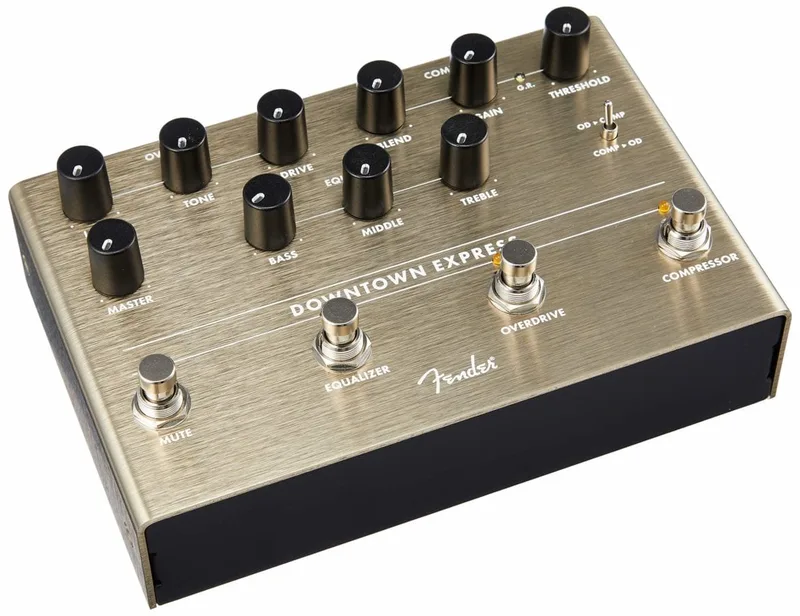
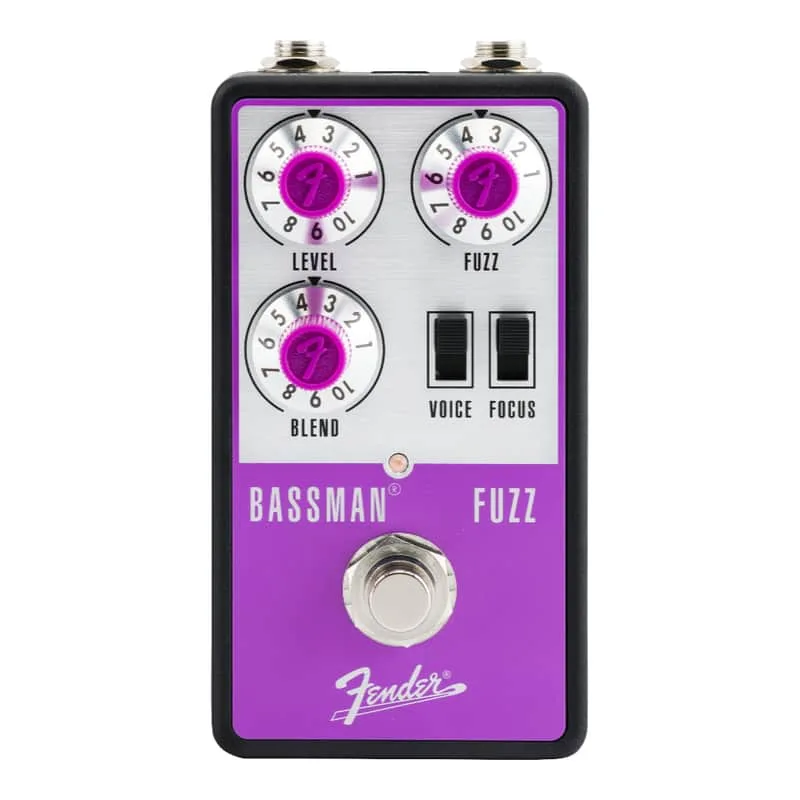
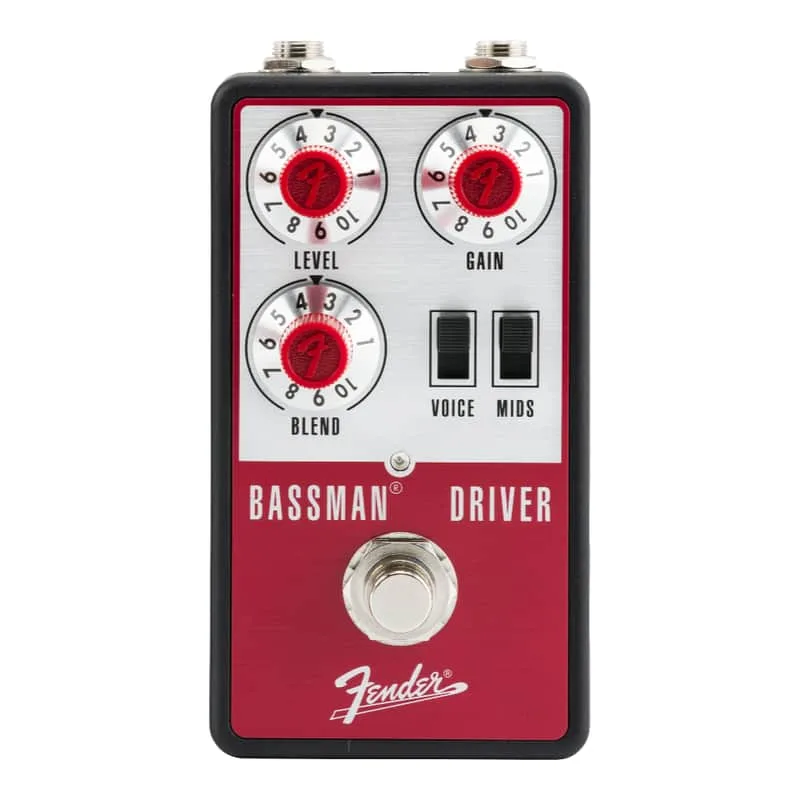
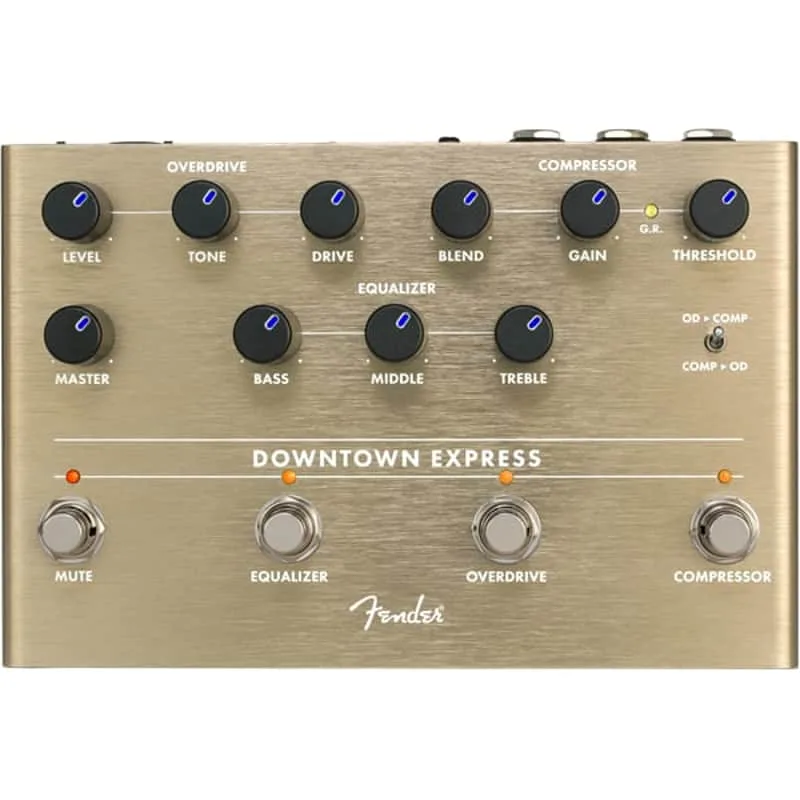
Within Fender's bass effects lineup, the Trapper Bass sits alongside the earlier Downtown Express multi-effect and the later Bassman range of five bass pedals, which includes the Bassman Fuzz and Bassman Driver. Where those pedals offer single drive voices or multi-effect convenience, the Trapper Bass's pitch is two stackable analog distortion circuits in one box13.
Videos
Andertons Music Co
Fender
Nate Navarro
Questions
Is the Fender Trapper Bass Distortion true bypass?
Yes. MusicRadar's review lists the Trapper Bass Distortion as true bypass, so with both channels off your dry bass signal passes through without the pedal's circuitry in the path. That suits players who leave the pedal dormant for long stretches of a set.
Can you use both channels of the Trapper Bass at once?
Yes. The two distortion channels are stackable, each with its own footswitch, so you can run either one alone or engage both together. Premier Guitar notes that stacking gives you more control over the pedal's gain structure and tone, and channel 2 can serve as a solo boost with extra distortion.
Does the Trapper Bass keep the low end at high gain?
Yes, by design. Channel 1 has a crossover blend circuit with frequency and sub-level controls that let you dial in how much low end survives the distortion. Premier Guitar found those controls maintain clarity and depth at higher gain settings, and that even with the gain maxed the tone stayed usable.
What power supply does the Fender Trapper Bass need?
It runs on a 9V DC power supply, which is not included with the pedal. That is the same standard supply most pedalboards already use, so it fits a typical daisy chain or isolated supply setup without any special adapter.
Where is the Fender Trapper Bass Distortion made?
MusicRadar's review lists its origin as China, consistent with the rest of Fender's effects pedal range. Fender's guitar-side Trapper fuzz pedal is also listed as made in China in Guitar World's review.
Sources (8)
- Fender Trapper Bass Distortion review, MusicRadar, 2022-06-10
- Fender announces 4 new guitar and bass effects pedals, MusicRadar, 2020-08-10
- Fender announces four new effects pedals, Guitar.com, 2020-08-10
- Fender targets acoustic and bass players with Acoustic Preverb and Trapper Bass Distortion pedals, Guitar World, 2020-11-23
- Fender Trapper Bass Distortion Review, Premier Guitar, 2021-01-18
- Best distortion pedals for bass: thicken up your low end, Guitar World, 2022-08-17
- Fender Trapper Bass Distortion review, Guitar World, 2022-03-08
- Fender The Trapper Fuzz review, Guitar World, 2020-07-17