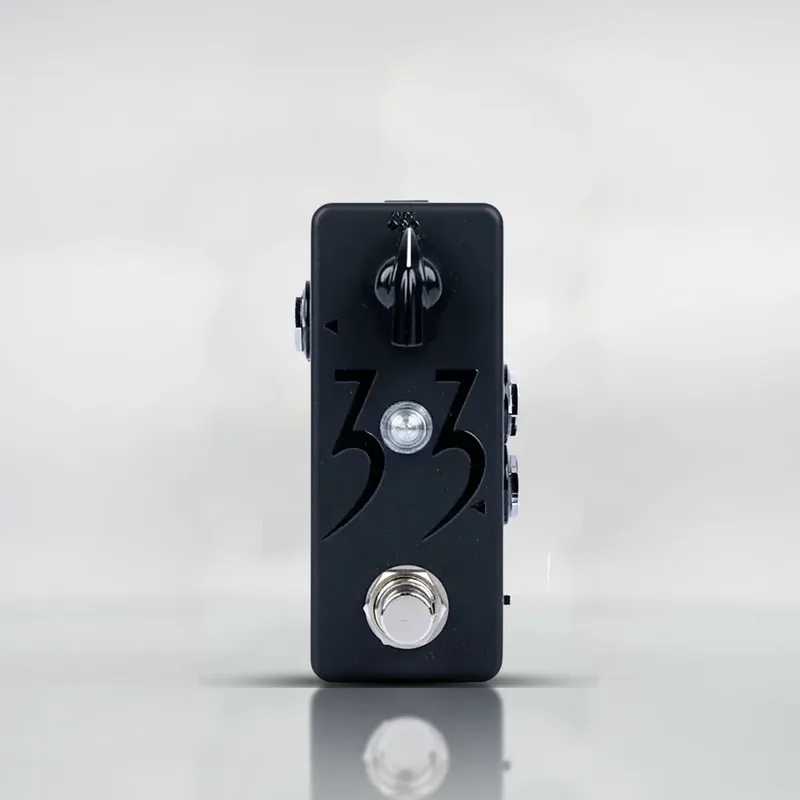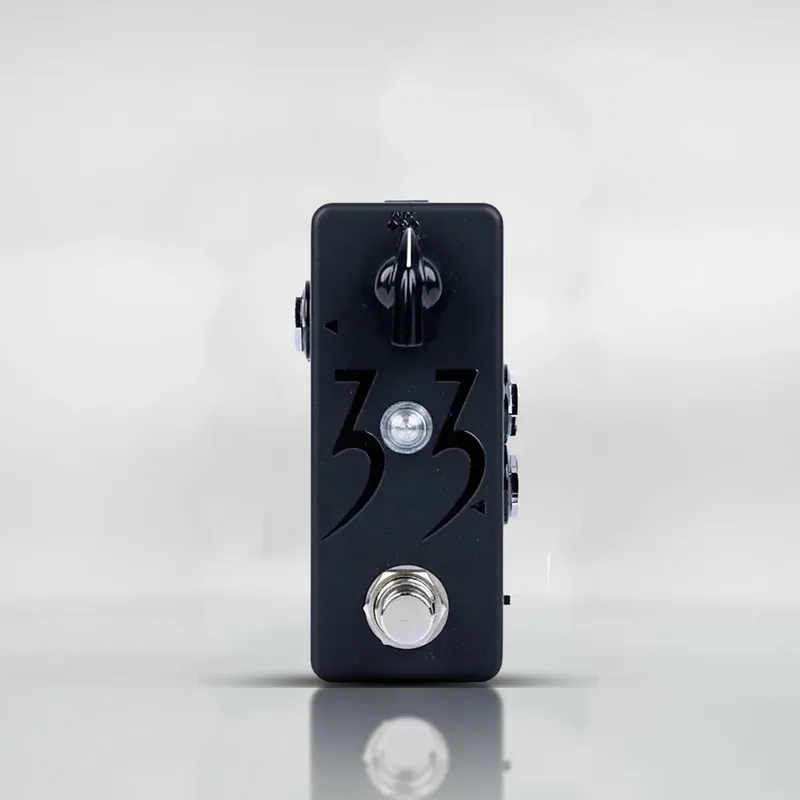


The pedal grew out of a long technical partnership between Thordendal and Mike Fortin of Fortin Amplification, and Fortin says it creates the percussive, "chugging" sound that defines the Meshuggah aesthetic12. Gearnews described the result in 2017 as ultra-clean, pushing an amp into high-gain territory while maintaining the guitar's core tonality3.
What it does to your sound
The 33 is a clean boost, not an overdrive. Fortin's own description is that it "reshapes the frequency curve, firming up low frequencies and focusing the midrange" so that complex rhythms remain articulate under heavy gain, without adding its own clipping1. In practice that means the pedal's job is to hit the front end of your amp harder: Fortin calls it "a 22dB boost that shifts the guitar's signal to hit the front end of an amp harder"2. Gearnews found the sound ultra-clean and noted it maintains the guitar's core tonality even as the amp is driven into high-gain territory3.
Gearnews' 2026 boost pedal buying guide puts the pedal in context: pedals of this kind are especially popular for djent, progressive metal, and tight rhythm guitar sounds4.
"It creates the percussive, 'chugging' sound that defines the Meshuggah aesthetic."
Controls and the side switch
The 33 has a single knob, which Fortin calls the mental control. The maker's instructions are simple: increase it to drive the front end of your amp harder, and the more you increase it, the more your tone will start to jump out of your amp5. Fortin says Mike and Fredrik spent a long time tweaking the internal settings so that one knob is all that is needed5.
| Control | What it does |
|---|---|
| Mental (single knob) | Sets the boost level, driving the front end of your amp harder5 |
| Side switch | Changes the polarity, so you choose which amp channel the 33 selects5 |
The side-mounted 1/4" jack lets the pedal act as a remote channel switcher for your amplifier when the effect is engaged1. The small switch changes the polarity so you can decide which channel you want the 33 to be on5. MusicRadar's announcement noted that a mini slide switch makes the jack either open or closed by default6.
Power, bypass and size
The 33 runs from a 9V DC center-pin-negative fully regulated adapter or power supply, or from a battery, none of which are included5. Current draw is 27mA at 9V5, low enough for a standard pedalboard supply. Switching is industry standard 3DPT mechanical true bypass5, with top-mounted jacks6.
The battery is not included, and Fortin specifies a fully regulated supply. The 27mA draw is modest, so the pedal fits easily on a typical isolated or daisy-chained 9V supply.
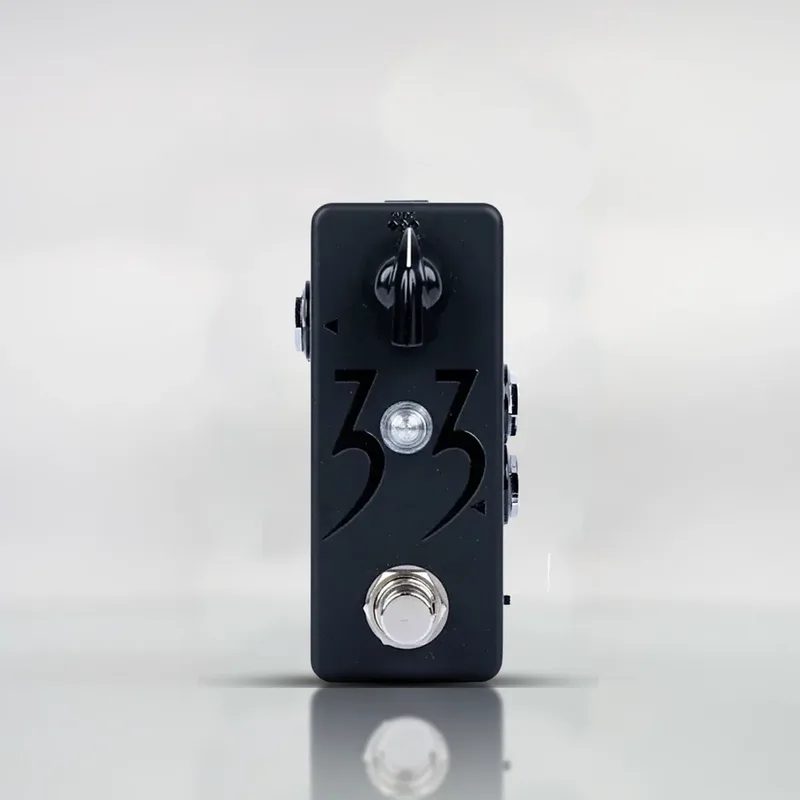
The enclosure measures 4.4" x 2.38" x 1.06" (112mm x 60mm x 27mm) excluding knobs and switches, with a shipping weight of 360g5. The original finish was matte black63. The pedal is built in the U.S.A. and carries Fortin's limited 1-year warranty5.
Where it came from
The Mini 33 and how it differs
The Fortin Mini 33 is the same pedal in a smaller box. Fortin states plainly that the regular 33 and the Mini are the same, and the only difference is the physical size, with the Mini sized for tight pedalboards7. It shares the mental control, the side channel-switching jack and polarity switch, 3DPT true bypass, the 27mA draw at 9V, U.S. construction, and the 1-year warranty5. As of October 2026 Fortin's 33 collection page lists the Mini as sold out8.
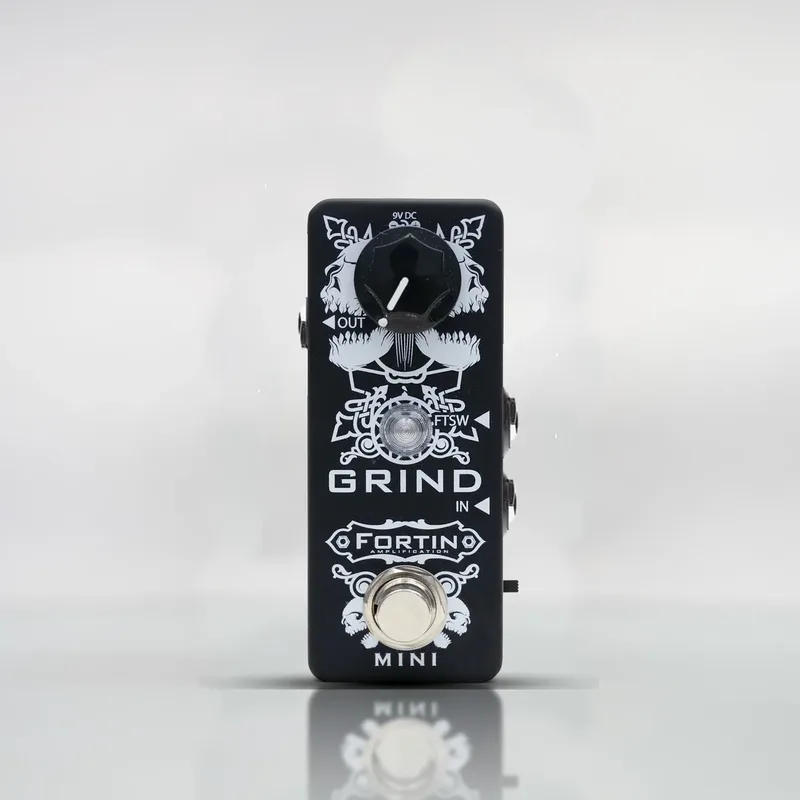
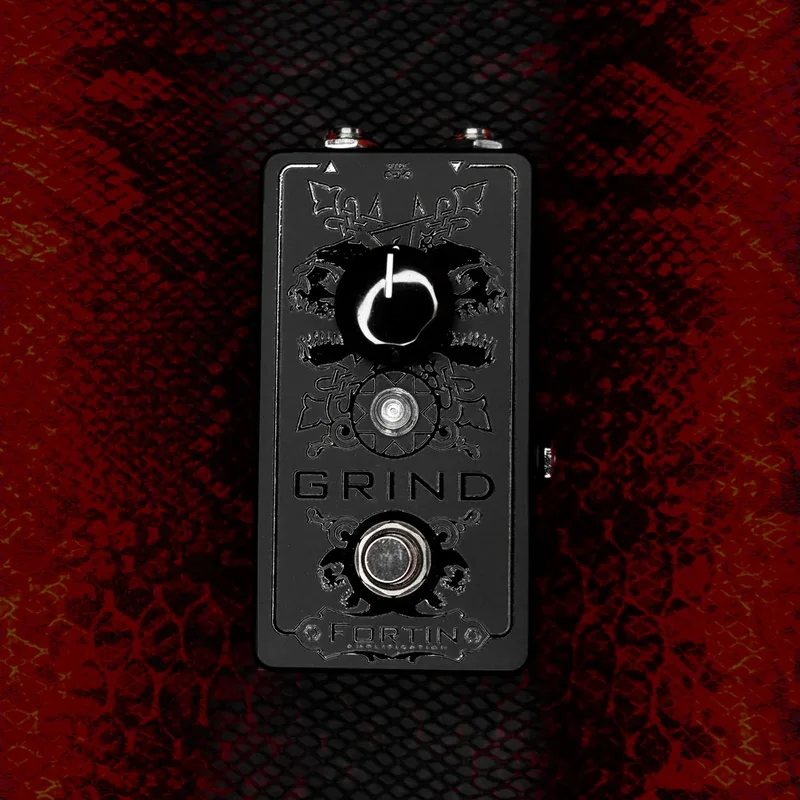
Fortin also makes the Grind, and the maker distinguishes the two: both are exciters, but each excites different frequencies9. Players comparing tighteners can read more in the boost pedals overview.
Inside the circuit
For players interested in what is under the hood, the DIY community has documented the design. The Guitar FX Layouts blog, which published a stripboard layout for building the circuit in March 2020, describes a design that uses a charge pump IC to generate a high voltage rail of around 33V for the opamp, running from a 9V supply10. The layout specifies MAX1044, 7660, 7660s, or LT1054 charge pump ICs, with 1N5817 and 1N4001 diodes10. That internal voltage rail is how a 9V pedal can deliver a large clean boost without running out of headroom.
Videos
FortinAmps
Ola Englund
killertonetexas
Questions
Is the Fortin 33 true bypass?
Yes. Both the Fortin 33 and the Mini 33 use what Fortin calls industry standard 3DPT mechanical true bypass switching, so the pedal passes your signal uncolored when it is off. MusicRadar's 2017 announcement also noted true bypass switching as standard, along with top-mounted jacks.
Can the Fortin 33 run on a battery?
Yes. Fortin's product page lists power as a 9V DC center-pin-negative fully regulated adapter, a power supply, or a battery, none of which are included. Current draw is 27mA at 9V, so a standard 9V battery or a normal pedalboard power supply works.
How much boost does the Fortin 33 give?
Up to +22dB. Fortin describes it as a 22dB boost that shifts the guitar's signal to hit the front end of your amp harder. Gearnews called it +22dB of clean gain, and the pedal adds no clipping of its own, so the character comes from your amp being pushed.
What does the side switch on the Fortin 33 do?
The side-mounted 1/4 inch jack lets the pedal act as a remote channel switcher for your amplifier when the effect is engaged. The small switch changes the polarity, so you can decide which amp channel the 33 selects. MusicRadar noted a mini slide switch sets it open or closed by default.
What is the Fortin Mini 33?
The Mini 33 is the same circuit in a smaller enclosure. Fortin states the regular 33 and the Mini are identical except for physical size, with the Mini sized for tight pedalboards. It shares the same one-knob control, true bypass, 27mA draw, and side channel-switching jack.
Is the Fortin 33 only for metal?
It is closely tied to metal. Gearnews notes it is especially popular for djent, progressive metal, and tight rhythm guitar sounds, and it was designed with Meshuggah's Fredrik Thordendal. But it is a clean boost with no clipping of its own, so any player wanting to push their amp harder can use it.
Sources (10)
- Artist Spotlight, Fortin Amps
- Artist Spotlight, Fortin Amplification (fortinamps.com)
- Fortin Amps and Fredrik Thordendal issue the '33' clean boost pedal, gearnews.com, 2017-08-02
- The 7 Best Boost Pedals of 2026: Make it Louder Better!, www.gearnews.com, 2026-05-11
- 33® - Fredrik Thordendal Signature Boost - Fortin Amps, Fortin Amps
- Fredrik Thordendal's signature 33 boost pedal “transforms any amp into a metal wrecking ball machine”, MusicRadar, 2017-08-01
- Mini 33®, Fortin Amps
- 33 - Fredrik Thordendal signature boost - Fortin Amps, Fortin Amps (fortinamps.com), 2026-10
- Mini GRIND®, Fortin Amps
- Guitar FX Layouts: Fortin 33, Guitar FX Layouts (tagboardeffects.blogspot.com), 2020-03-23