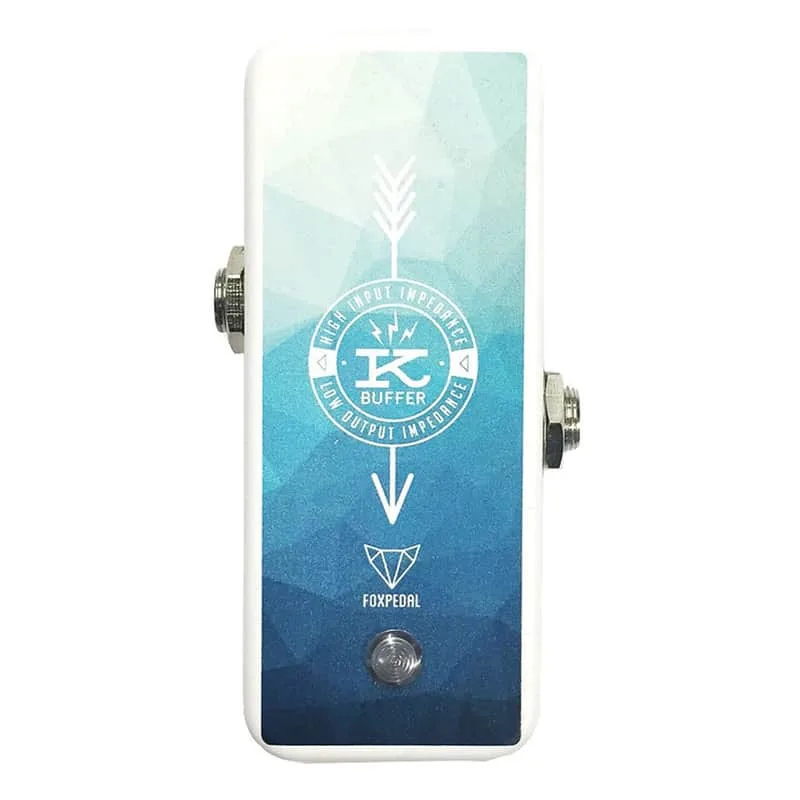
The FoxPedal K-Buffer is a compact guitar effects pedal that does one job: it buffers your guitar signal so it stays strong through long cable runs and chains of pedals. Pedal of the Day describes it as built using a classic buffer design as seen in the famous Klon Centaur, the overdrive pedal whose input stage has long been praised in its own right. The K-Buffer puts that part of the circuit in a small box of its own.1
What it does to your signal
A buffer sits between your guitar and the rest of the chain and keeps the signal from dulling as it passes through cables and effects. Pedal of the Day notes that the K-Buffer's high input impedance helps your signal come through loud and strong, and the reviewer's verdict on the audible result was that the change is real but understated: "The buffer changes everything. Its a subtle effect, but it brings everything to life."1
The Klon Centaur connection
The K-Buffer's pedigree is the part of the Klon Centaur that has nothing to do with overdrive. The Centaur's designer, Bill Finnegan, has described the pedal's buffered output as a defining feature of the original unit,3 and GuitarPCB's technical analysis of the Centaur identifies its input stage as "a simple buffer based on the TL072 op-amp," providing high input impedance and DC isolation.4 The K-Buffer takes that kind of circuit, op-amp based like the original, and offers it on its own.1
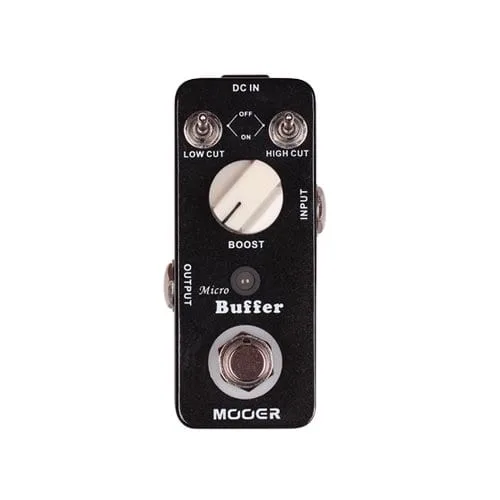
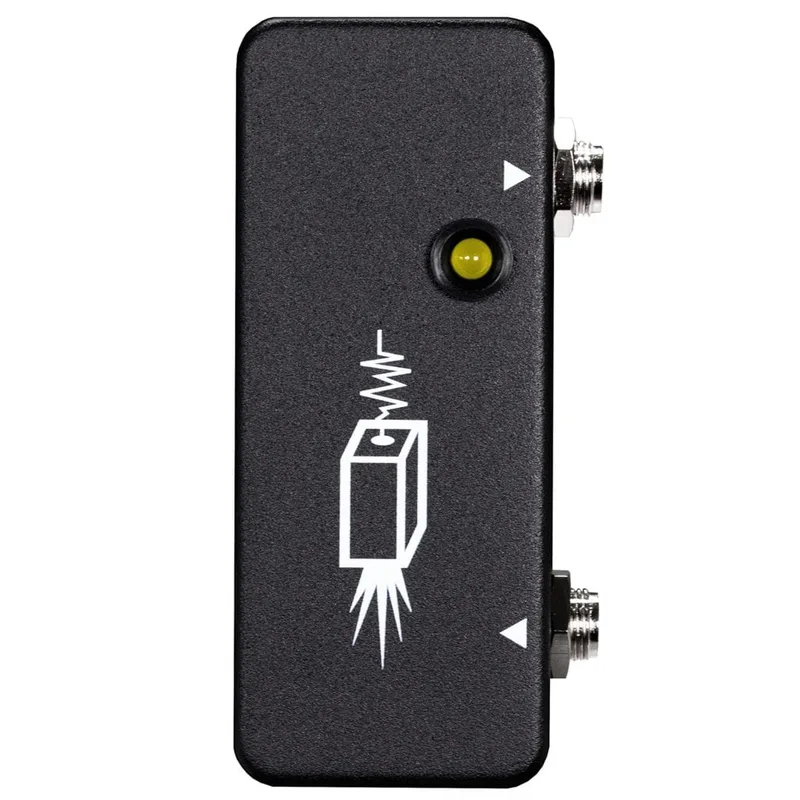
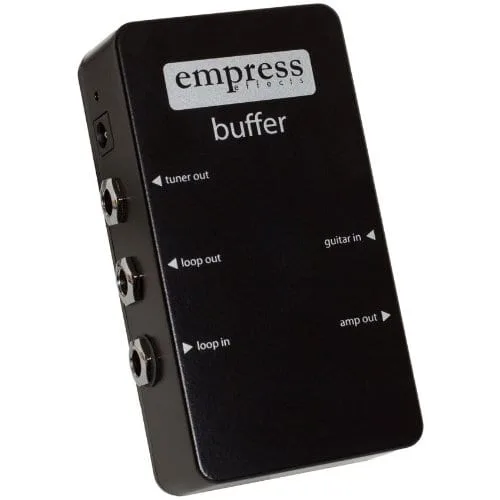
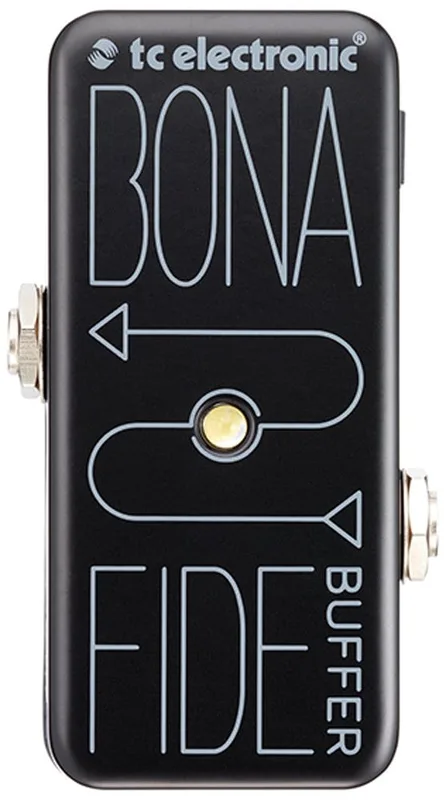
If you are weighing it against other dedicated buffers, the field includes everything from the Mooer Microbuffer and JHS Pedals Little Black Buffer to the Empress Effects Buffer and TC Electronic Bonafide Buffer. See the full Buffer Pedals list for more.
Power and practicalities
The K-Buffer runs on a standard 9 volt DC supply with a negative center pin, the common arrangement for compact pedals.1 There is no battery inside, so a supply is required, not optional.
The K-Buffer has no internal battery option, so it will not run without a 9 volt DC, negative center power supply.1
Questions
Does the FoxPedal K-Buffer take a battery?
No. Pedal of the Day's review lists the K-Buffer with no internal battery option, so it runs only from an external power supply. That is worth knowing if you are used to pedals that can fall back on a 9V battery: with the K-Buffer you will want a standard 9 volt DC, negative center supply on your board from the start.
What power supply does the FoxPedal K-Buffer need?
A standard 9 volt DC supply with a negative center pin, the same arrangement most compact pedals use. Pedal of the Day lists this as the pedal's power requirement in its review. Because there is no battery option, the supply is the only way to power it.
Is the FoxPedal K-Buffer based on the Klon Centaur?
Pedal of the Day describes the K-Buffer as built using a classic buffer design as seen in the famous Klon Centaur. The Centaur's input stage is itself a simple buffer based on the TL072 op-amp, providing high input impedance and DC isolation, which is the kind of circuit the K-Buffer draws from.
Is the FoxPedal K-Buffer an op-amp circuit?
Yes. Pedal of the Day lists the K-Buffer as an op-amp based circuit, which matches the design it is drawn from: the Klon Centaur's input buffer uses a TL072 op-amp, per GuitarPCB's technical analysis of that pedal.
Is the FoxPedal K-Buffer hand-wired?
Pedal of the Day's review lists hand-wired construction among the K-Buffer's features, so the pedal's circuitry is hand-wired rather than assembled on a mass-production line.
Sources (4)
- FoxPedal K-Buffer, Pedal of the Day, 2014-04-20
- FoxPedal K-Buffer, Pedal of the Day, 2014-04-08
- Builder Profile: Klon's Bill Finnegan, Premier Guitar, 2014-01-21
- Klon Centaur Analysis, GuitarPCB