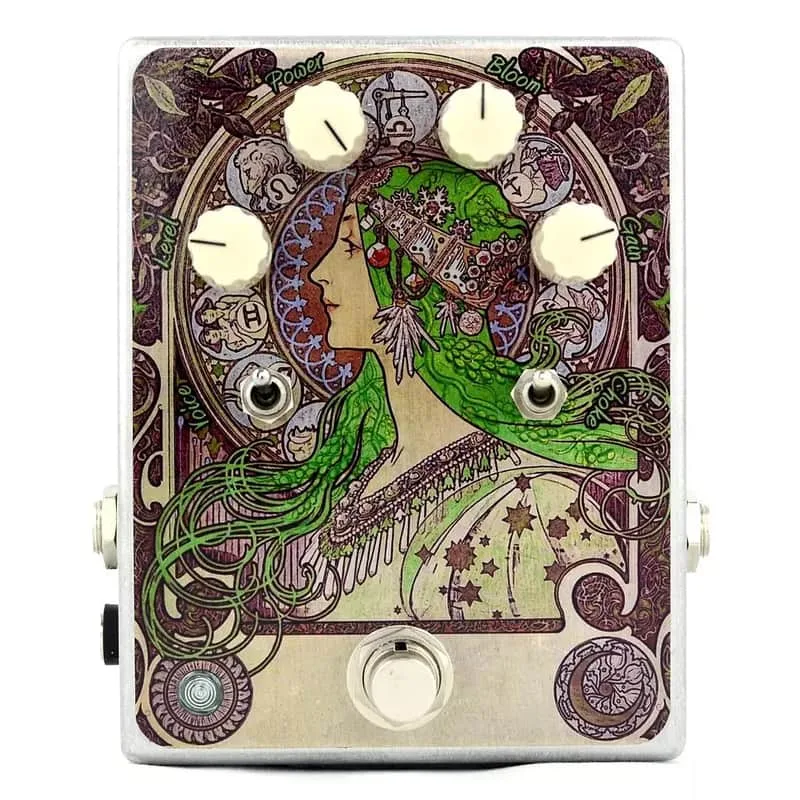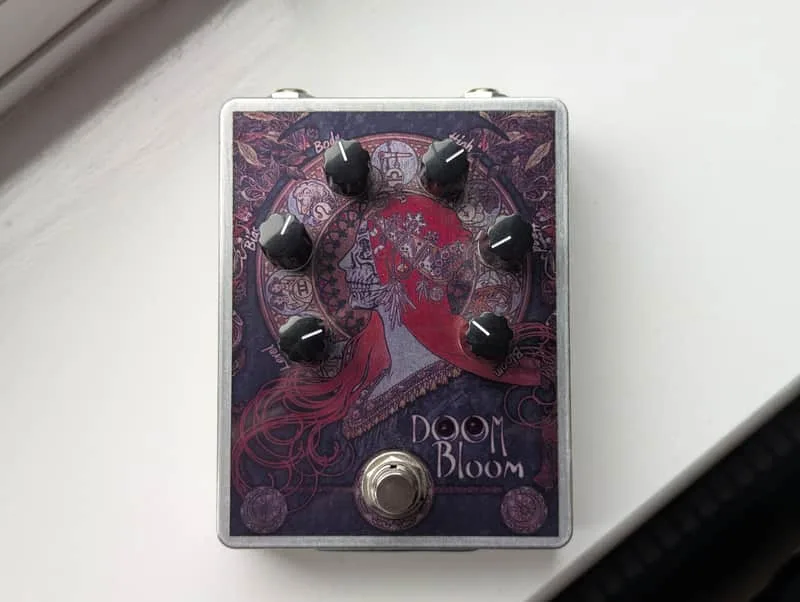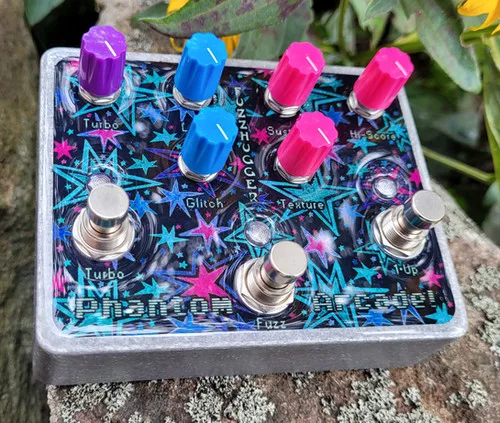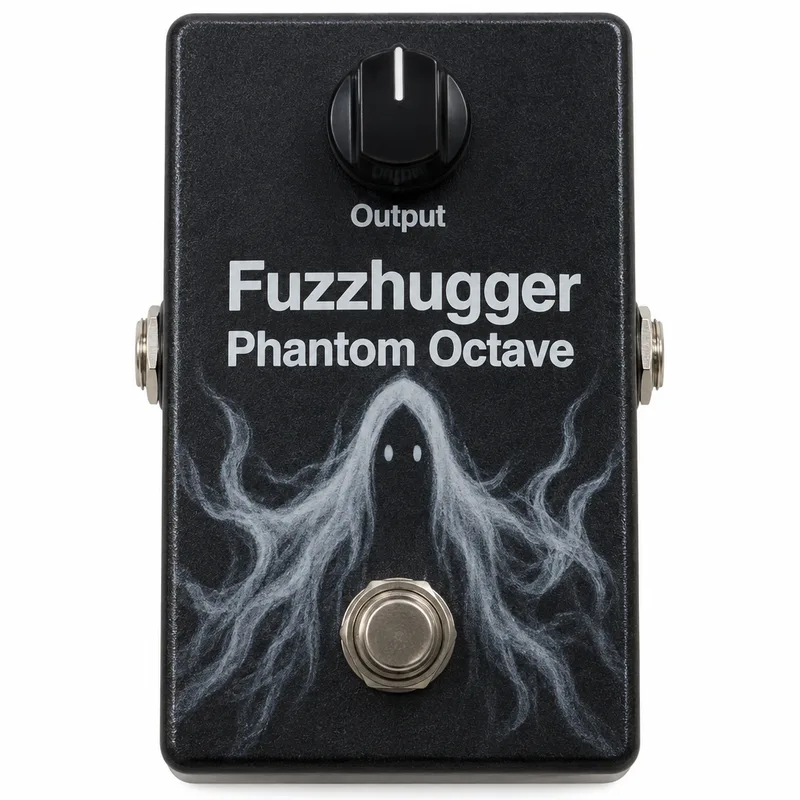


The Fuzzhugger Phantom Octave is an octave fuzz, described by Fuzzhugger(fx) as "Equal parts mysterious and ghastly, the Phantom Octave is a shape-shifting octave fuzz monster!"1 In practice, players who have built the circuit report huge octave-down tones, glitchy ring-mod-style sounds, and even the ability to bang out simple chords1. It sits in the fuzz lane alongside other Fuzzhugger designs like the Algal Bloom and Doom Bloom, but its circuit is a different animal entirely.
How the circuit works
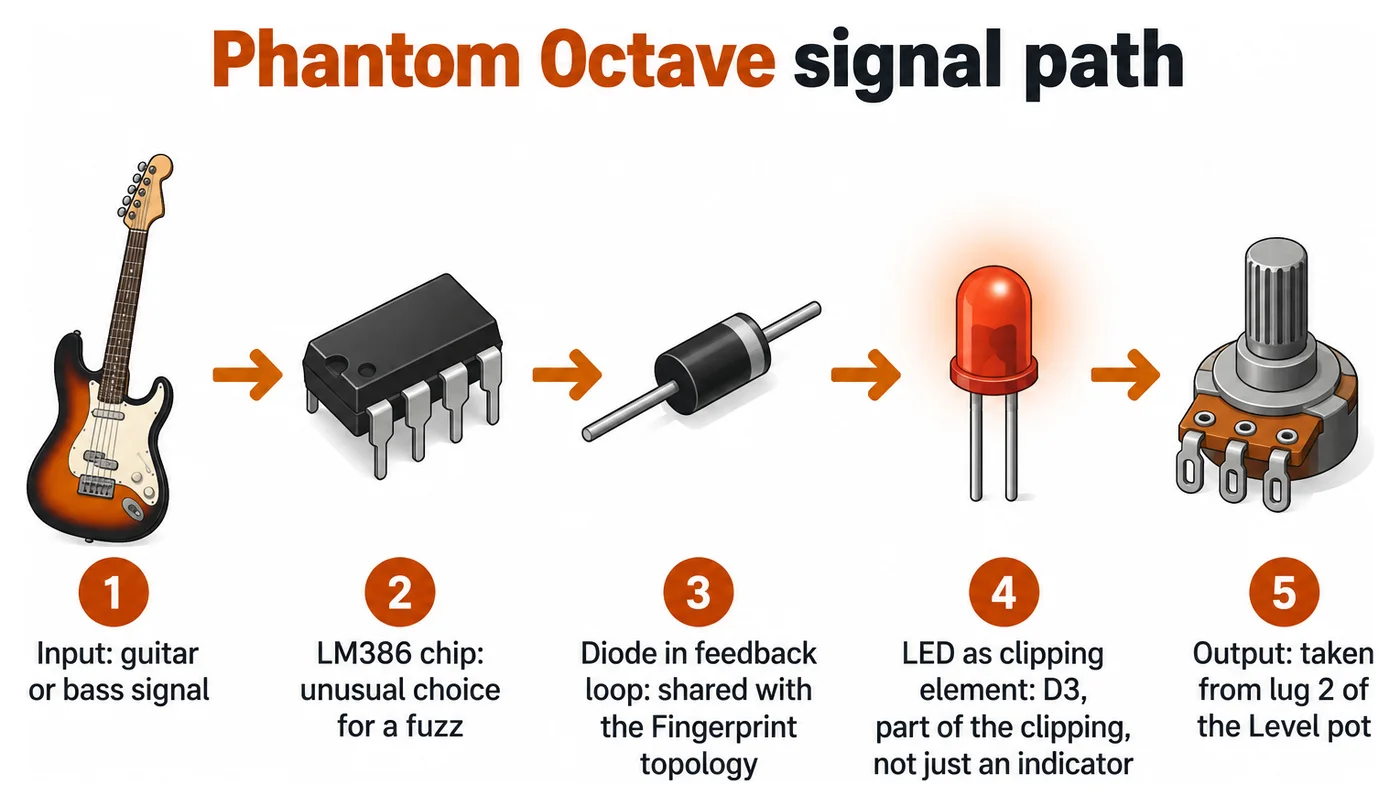
The Phantom Octave is built around the LM386, a small amplifier chip rarely used this way. As the Guitar FX Layouts write-up put it, "I just can't remember seeing those driven by LM386"1. The design places a diode in the feedback loop of the 386, a topology the site could only recall in one other circuit, the Penny Pedals Fingerprint1. mirosol described the Phantom Octave as "Basically a 3 knob version, but the topology is quite similar" to the Fingerprint, and later refined that: "I guess you could call it a stripped-down Fingerprint...more accurately, a variation on Tim Escobedo's Rambler"1.
The clipping arrangement matters to the sound. In the corrected layout, both diodes sit in the same polarity, with the LED's positive leg on the ground row1. Unusually, the onboard LED is part of the clipping in the effect, so a separate indicator LED must be run to a bezel and switch1.
Controls
The pedal keeps things simple, with one knob doing the work:
| Control | Function |
|---|---|
| Output | Controls the output level of the Phantom Octave1 |
On the DIY layout, the output is located on lug 2 of the Level pot1.
What builders report
Because the LED is in the audio path, the type of LED you build with changes the sound. The builder reports on the layout page split clearly1:
- A build with a red LED on a Telecaster came out as "a cool splatty fuzz. However, there is no octave of any kind going on"1.
- A build with an ultra bright green 5mm LED had "very heavy compression, but it sounds raw and glitchy and amazing"1.
- Using an LM386N3 instead of the cheaper N-series chip made "the decay a LOT smoother, but the octave was way stronger. It makes the pedal!"1.
- One builder found that lifting D1 with a switch gives a super smooth warm fuzz with no glitches and slightly increased output1.
Another builder compared the character to a classic oddball fuzz: "Reminds me a LOT of the Shin-ei FY-2 but with tons less soldering!"1
On bass, one builder found the circuit sings with single-coil pickups but gets really squashed with high-output pickups such as actives1.
Availability and price
The Phantom Octave is documented here through the DIY community rather than a current product listing. The only price on record is a $75 special-order figure offered by a commenter who had been building these for others and said "I'm not building these any more, but I'd be happy to by special-order if anyone wants one ($75)"1. That is not a factory price from Fuzzhugger. Players interested in Fuzzhugger's current octave-adjacent designs may also want to look at the Phantom Arcade (II), and at the Octave & Pitch Pedals and Fuzz Pedals pages for context.
Videos
FuzzHugger Effects
FuzzHugger Effects
TheAttackMan
Questions
What chip does the Fuzzhugger Phantom Octave use?
The Phantom Octave is built around the LM386, a small power amplifier chip that is unusual to find driving a fuzz circuit. Builders on Guitar FX Layouts noted they could not recall seeing circuits of this kind driven by an LM386, and one builder reported that using the LM386N3 version instead of the cheaper N-series made the decay a lot smoother and the octave effect noticeably stronger.
Is the Phantom Octave based on the Rambler?
Yes, in a roundabout way. Guitar FX Layouts describes it as basically a three-knob version of the Penny Pedals Fingerprint with similar topology, but more accurately a variation on Tim Escobedo's Rambler. The circuit uses a diode in the feedback loop together with the LM386, a topology the site says it could only otherwise recall in the Fingerprint.
Does the Phantom Octave work on bass?
One builder who tried it on bass reported that with single-coil pickups it sings, but that it gets really squashed with high-output pickups such as actives. So it can work on bass, though the response depends heavily on what pickups are feeding it.
Why is the LED part of the clipping in the Phantom Octave?
In this circuit the onboard LED (D3 on the layout) sits in the clipping path, so it shapes the sound rather than just showing status. That means a separate LED must be wired to a bezel and switch for the on/off indicator. The LED choice also matters to the tone: builders report a red LED giving a splatty fuzz with no octave, while an ultra bright green 5mm LED gave heavy compression with a raw, glitchy sound.
What does the Phantom Octave cost to build?
The layout source does not give a parts cost. The only figure on record is a $75 special-order price offered by a commenter on the Guitar FX Layouts page who had been building the pedal for others, not by Fuzzhugger itself.
Sources (1)
- Guitar FX Layouts: Fuzzhugger Phantom Octave, Guitar FX Layouts (tagboardeffects.blogspot.com), 2013-04-28