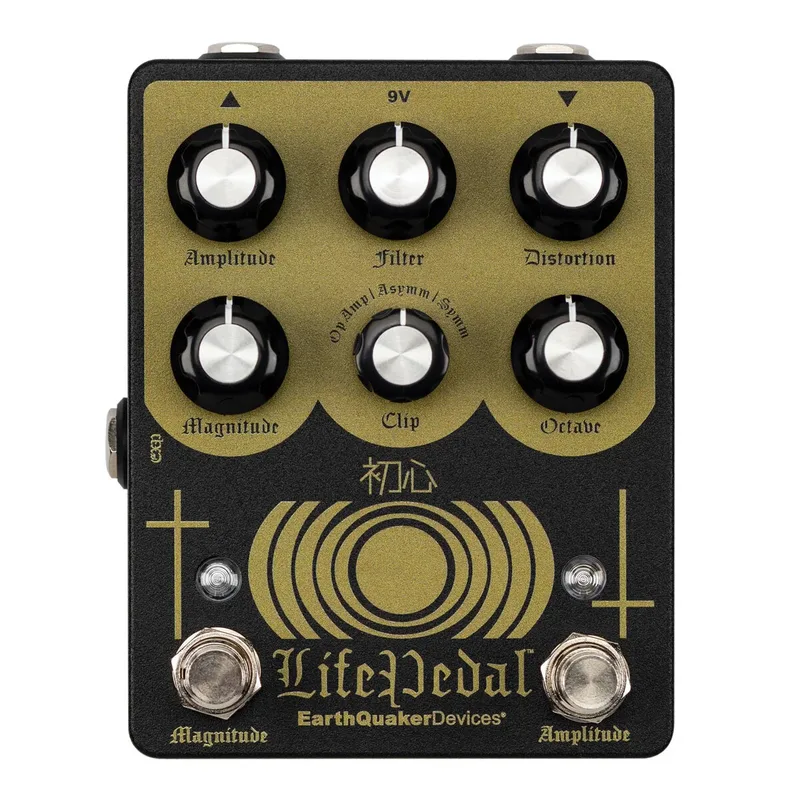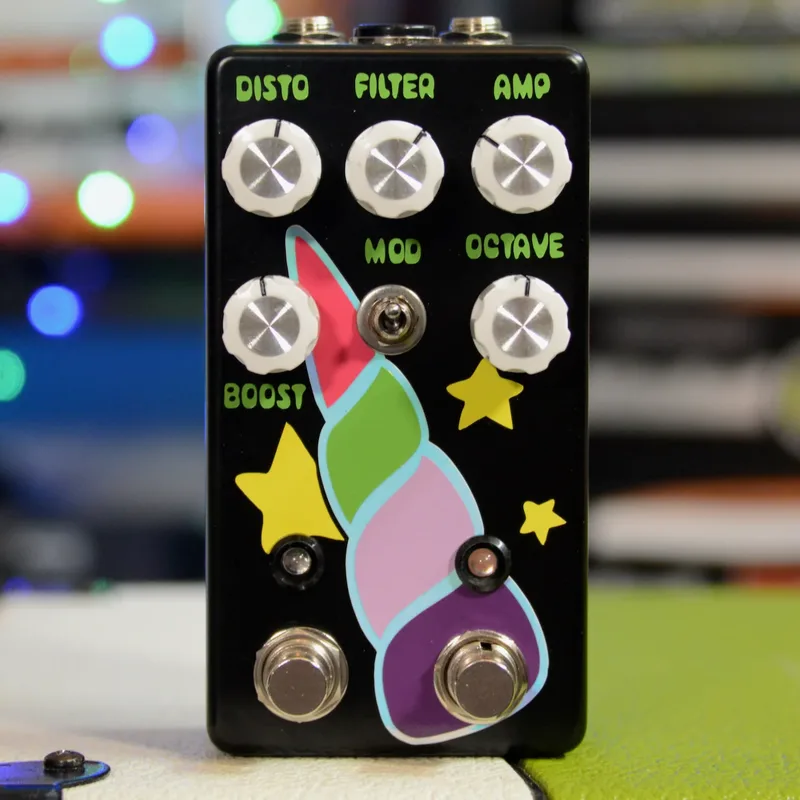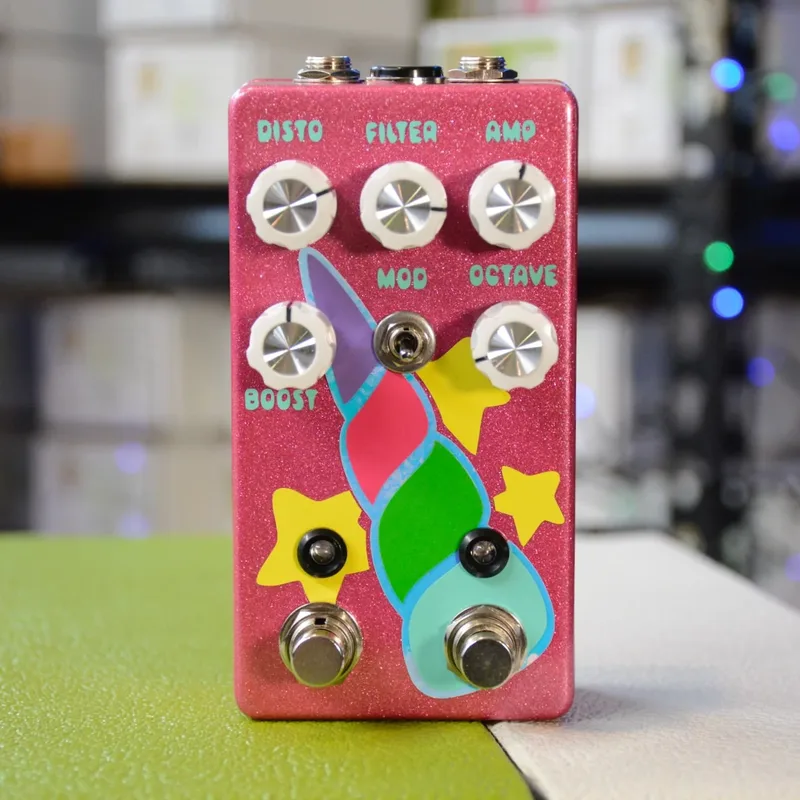
The GUP Tech Mini Corn Douche Edition is a distortion pedal with octave and boost, which the maker describes as "a Hot Rodded RAT Disto-Octa-Boost." GUP Tech calls it a tribute to the EarthQuaker Devices Life Pedal V2, with the same circuit as the company's larger "not mini" version but without the third Octave footswitch. The circuit is described as "like having a RAT, a Green Ringer, and a boost in the same enclosure."1
A Life Pedal V2 tribute without the third footswitch
The Mini Corn takes that formula into a still smaller box. GUP Tech states: "The Death by Unicorn Mini is our tribute to Life Pedal V2. It's exactly the same as its bigger 'not mini' version, but" without the third footswitch. The trade-off is that the octave can no longer be switched off from the floor: "As a result, Octave is always active, just turn it at 0 if you don't want it."1
The octave circuit is always engaged on the Mini Corn. To remove it from your sound, turn the Octave control to 0 rather than looking for a footswitch.1
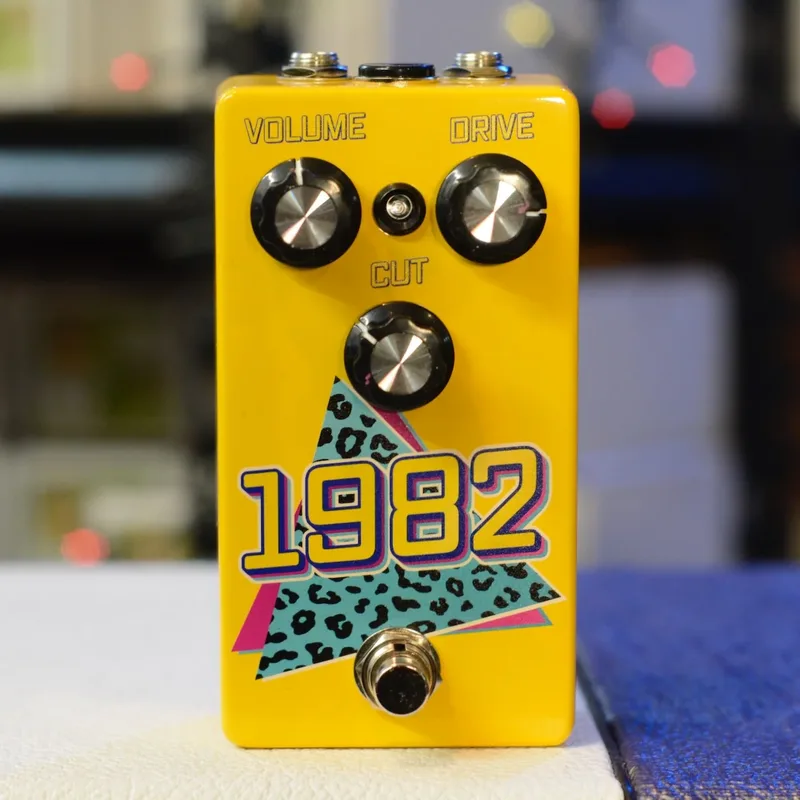
For players who want the footswitch, GUP Tech's larger Death By Unicorn Mini page covers the full three-switch layout, and the company's 1982 RAT Tribute Distortion covers the RAT side of the family tree on its own.1
Clipping modes and footswitches
The pedal carries two footswitches and a three-position clipping toggle:
| Control | What it does |
|---|---|
| Left footswitch | Kicks the Post-circuit Boost in and out |
| Right footswitch | Engages the Distortion |
| Clipping toggle, top | Classic Diodes clipping |
| Clipping toggle, center | No clipping, more volume |
| Clipping toggle, bottom | Asymmetric LED + Diodes clipping |
GUP Tech sums the switching up plainly: "Left footswitch kick the Post-circuit Boost, right footswitch engage the Distortion."1
The center clipping position is the one players may not expect: with no diodes in the signal path, the pedal gets louder and cleaner-edged, which is useful for pushing an amp or stacking into another drive. The top and bottom positions give the two flavors of clipping, symmetric diodes and asymmetric LED plus diodes.1
The Douche Edition comes in two color options, Pink and Silver.1
Power and practicalities
| Specification | Value |
|---|---|
| Voltage | 9Vdc center-negative |
| Power consumption | 5mA |
At 5mA, the Mini Corn sits at the very low end of what pedalboard supplies are asked to deliver, so it will run comfortably alongside anything else on a daisy-chained or isolated supply, as long as the supply is 9Vdc center-negative.1
GUP Tech builds all of its pedals in Saguenay, Quebec, Canada: "All of our pedals are made by us in Saguenay, Québec, Canada."1
Questions
What power supply does the GUP Tech Mini Corn Douche Edition need?
The pedal runs on a 9Vdc center-negative power supply and draws 5mA, according to GUP Tech's product page. That low current draw means almost any standard pedalboard supply can handle it, but like most compact pedals it needs a center-negative supply rather than a battery or a positive-tip adapter.
Can you turn the octave off on the Mini Corn?
Yes. Because the Mini Corn leaves out the third Octave footswitch found on the larger version, the octave circuit is always active. GUP Tech says you simply turn the Octave control to 0 if you do not want it in your sound.
What is the difference between the Mini Corn and the larger Corn version?
GUP Tech describes the Mini Corn as exactly the same circuit as its bigger 'not mini' version, but without the third Octave footswitch. On the mini, the octave is always on and is dialed out with the Octave control rather than switched in and out with a footswitch.
Where is GUP Tech pedal built?
GUP Tech builds all of its pedals by hand in Saguenay, Quebec, Canada, according to the company's product page. The Mini Corn Douche Edition is made there alongside the rest of the GUP Tech range.
What does the center clipping position do?
The center position of the clipping switch takes the clipping diodes out of the circuit entirely. GUP Tech notes that this gives you more volume, since nothing is compressing or flattening the signal peaks, while the top position gives classic diodes clipping and the bottom position gives asymmetric LED plus diodes clipping.
Sources (1)
- Mini Corn, GUP Tech