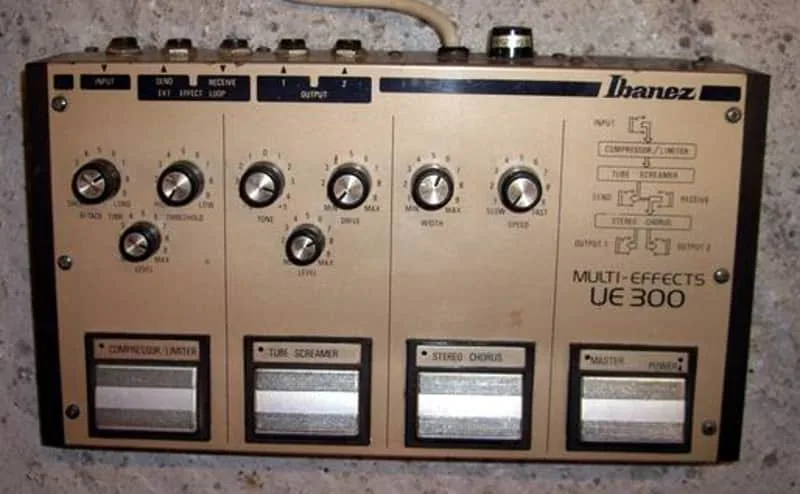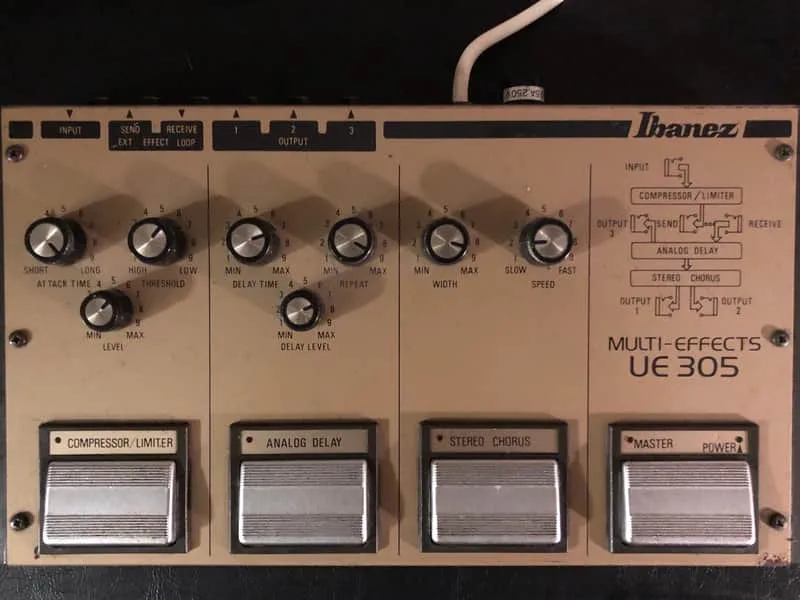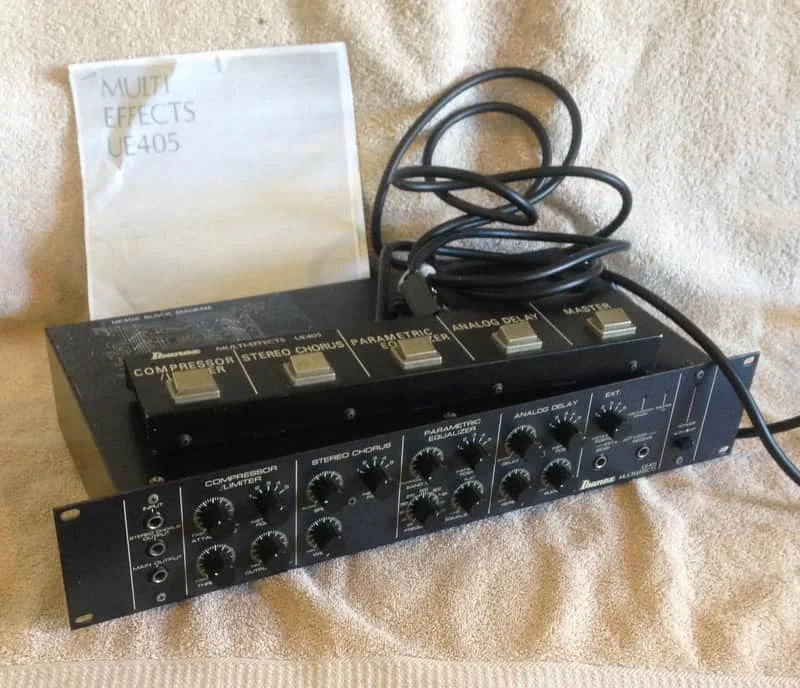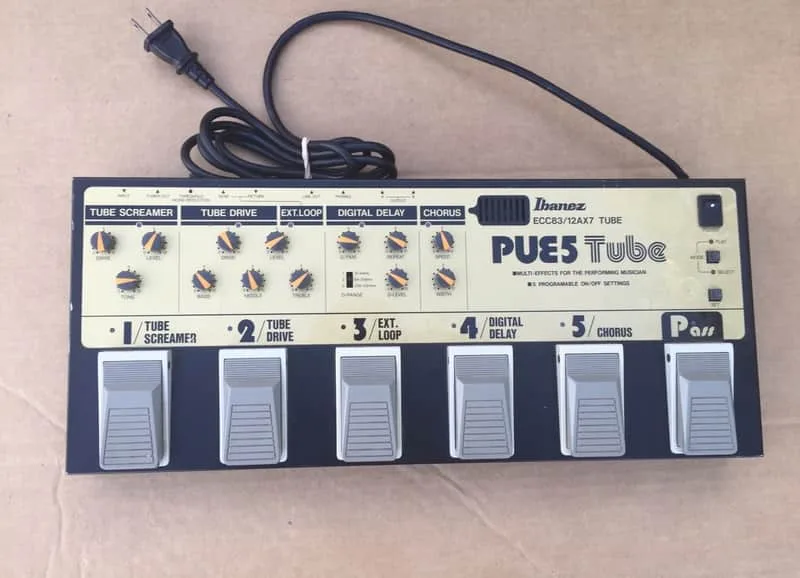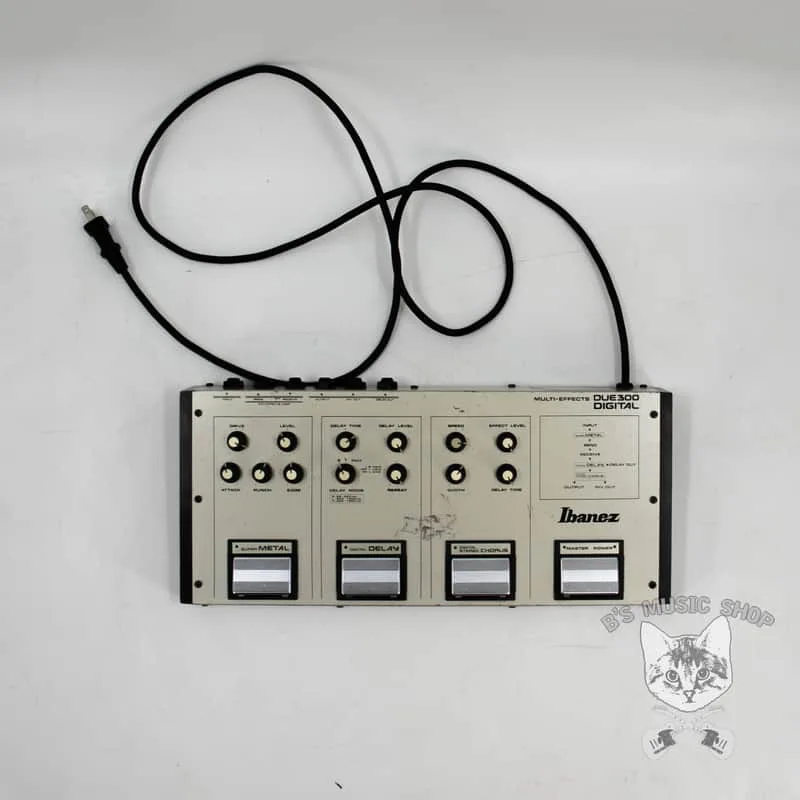

The Ibanez DUE300 Digital is a digital multi-effects unit that Ibanez produced from 1985 to 1986. It belongs to Ibanez's line of multi-effects pedals from the mid-1980s, a period when the company was building combined-effect units alongside its individual 9 Series pedals. TONEHOME, an independent reference for Ibanez products, catalogs the unit from a 1985 catalog page and data sheet that survive as downloads1.
What it does
The DUE300 Digital combines multiple effects in a single digital unit, which was Ibanez's approach to multi-effects in this era. It sat in the company's catalog alongside related combination units such as the Ibanez UE300, the Ibanez UE 305 and the Ibanez UE 405, as well as the later PUE5 Tube series1.
Production and rarity
Ibanez made the DUE300 Digital for only about two years, from 1985 to 1986, and has never reissued it1. TONEHOME rates its current availability as rare, so units surface only occasionally, while its collectibility is rated as average rather than exceptional1. A 1985 catalog page and data sheet for the unit are available as downloads from TONEHOME, which is one of the surviving records of the product1.
The DUE300 Digital was never reissued, so any unit on the used market today is a vintage original from the mid-1980s1.
Where it sits in Ibanez's history
The DUE300 appeared in 1985 and was produced through 1986, in the same era as Ibanez's other multi-effects experiments. It was never re-issued, and the unit is described as rare today, with average collectibility1.
Videos
Pedals and Effects
Questions
Is the Ibanez DUE300 Digital still in production?
No. Ibanez produced the DUE300 Digital from 1985 to 1986 and has never reissued it. TONEHOME lists its availability today as rare, meaning units turn up only occasionally on the used market, and rates its collectibility as average rather than exceptional.
What did the Ibanez DUE300 Digital cost when it was new?
TONEHOME gives a list price of $510 USD in 1986. That was the price when the unit was still in production, in the mid-1980s, and it reflects the original US list price rather than what a used unit sells for today.
Sources (1)
- TONEHOME, TONEHOME, 1986