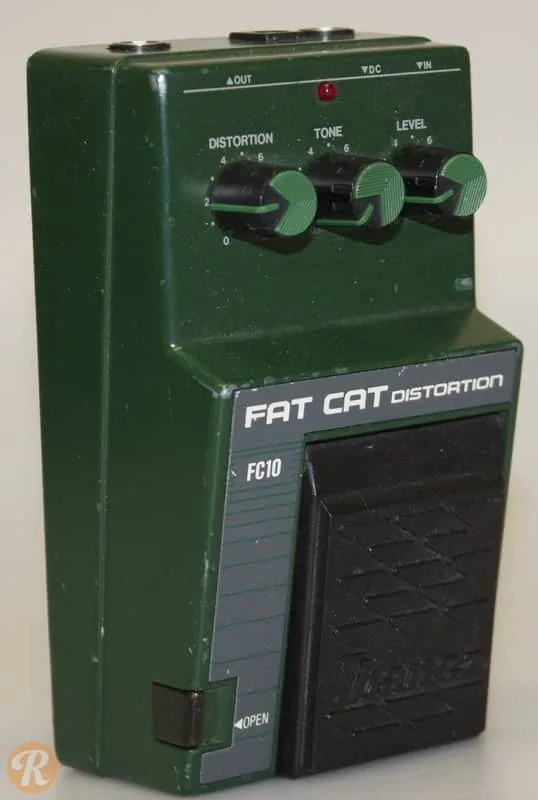


The Ibanez FC10 Fat Cat is a distortion pedal from Ibanez's Power Series 10, made in Japan and produced between 1987 and 19901. TONEHOME describes it as "the Fat-Cat Distortion," and it is one of the harder-to-find pedals in the series: availability is listed as rare, collectibility as high, and it has not been re-issued1. Its list price was 149 DM in 1988, dropping to 114 DM in 1989, as given in West German marks of the period1.
Getting the growl: distortion and level
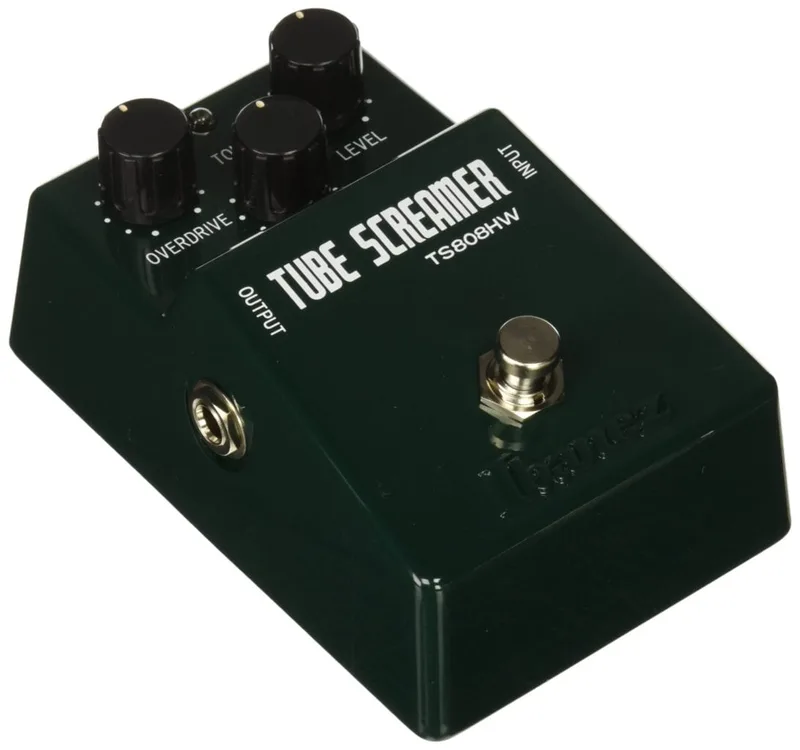
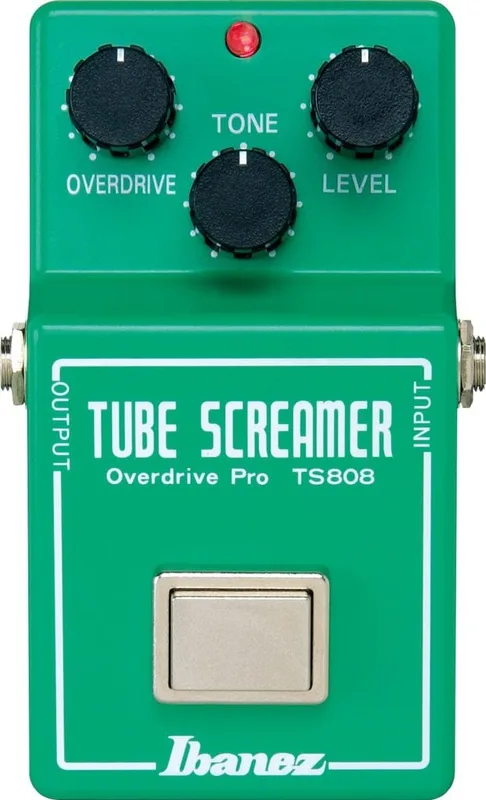
Like its Power Series siblings, the TS10 Tube Screamer Classic and the DS10 Distortion Charger, the FC10 works by giving extreme level boosts to incoming signals, which creates an overdrive distortion effect. TONEHOME notes that enough gain is available to overdrive even weak signals, such as single-coil type guitars and low sustain, fast decay tones1.
The pedal's two main controls work together. TONEHOME's guidance for players: "To get the Fat-Cat 'growling' distortion sound, turn the distortion control up high, while keeping the level control low enough to limit additional overdrive at the input of the amp distortion control"1. In practice, that means the Fat Cat is designed to push the front of an amp, and the level control is your tool for deciding how much extra drive reaches the amp's own distortion stage.
A review on AMZ Guitar Effects (muzique.com), with comments from Donner Rusk and Nathan Condon, adds a use many players may not expect:
"with the distortion turned off it is a good clean boost and as you roll the distortion up a hair it fills out nicely, but it still rolls off a bit of the bass."
So at minimum distortion settings the FC10 can serve as a clean boost, and a small amount of distortion adds body, though the reviewers heard some bass roll-off overall2.
The Rat connection
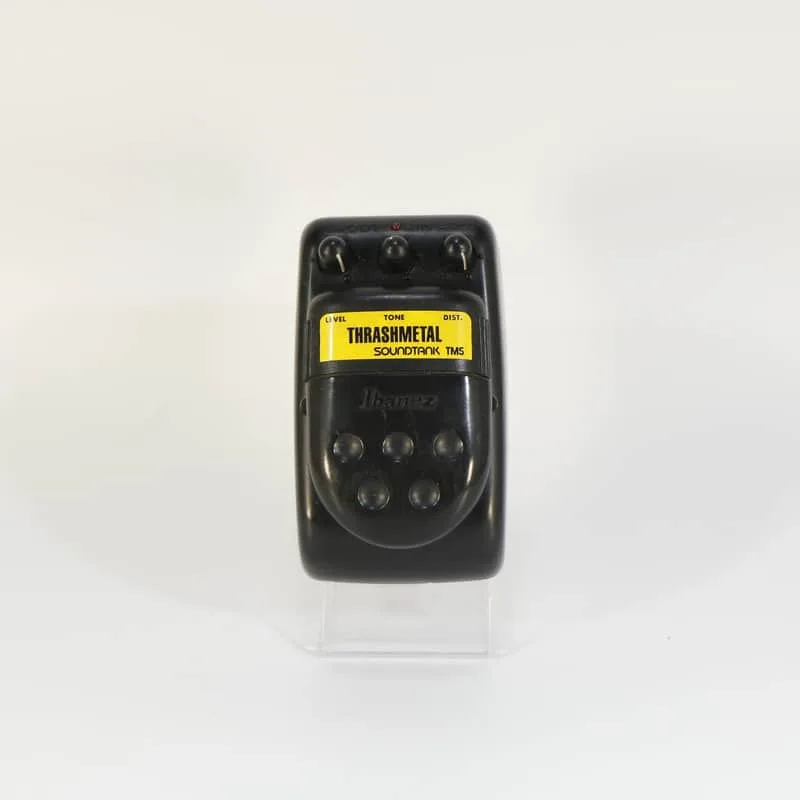
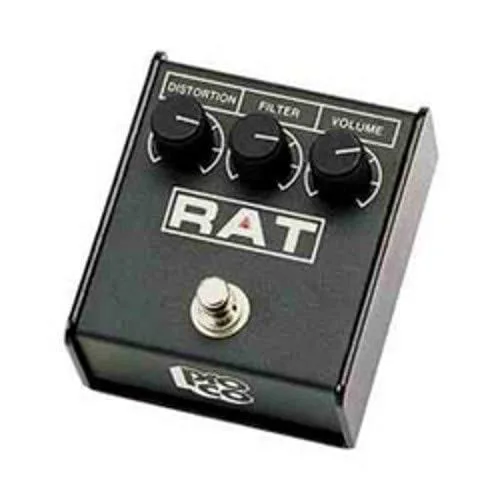
TONEHOME's page on the TM5 Trash Metal states plainly that the TM5 "hasn't got the tonal qualities of the Ibanez FC10 Fat Cat, which was Ibanez first take on the Rat"3. That makes the FC10 the earliest Ibanez expression of the Pro Co RAT circuit idea. For context on what that circuit is built from, GuitarPCB's technical analysis of the Rat notes that "the design is based on the LM308 single op-amp"41.
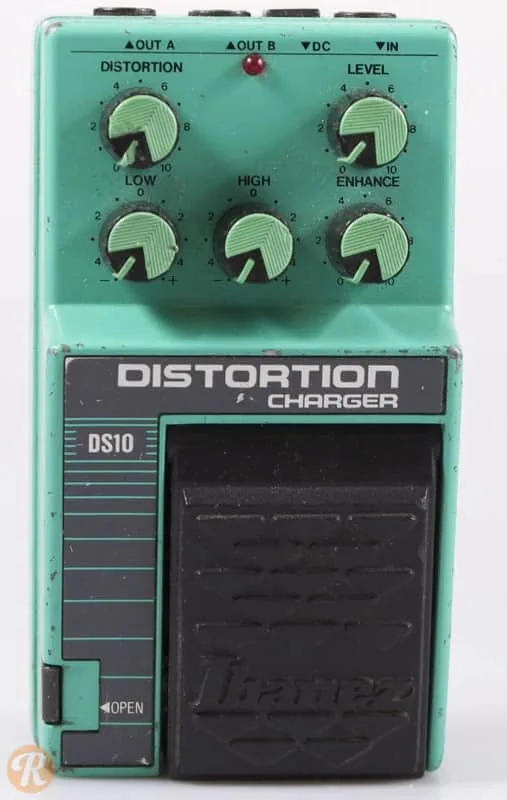
The FC10 also shares its working principle with the rest of the Power Series 10 line: the same level-boost-into-overdrive approach found in the TS10 and DS101. The DS10, also made in Japan, goes further with low and high EQ levels that TONEHOME says can simulate various amp brands, and an Enhance circuit that samples, phase-shifts and remixes high frequency signals into the output5.
FC10 and TM5 side by side
| FC10 Fat Cat | TM5 Trash Metal | |
|---|---|---|
| Series | Power Series 10 | 5 Series Soundtank |
| Type | distortion | distortion |
| Tonal quality | described as the stronger of the two | "hasn't got the tonal qualities" of the FC10 |
| Circuit lineage | Ibanez's first take on the Rat | shares the Trash Metal name and role |
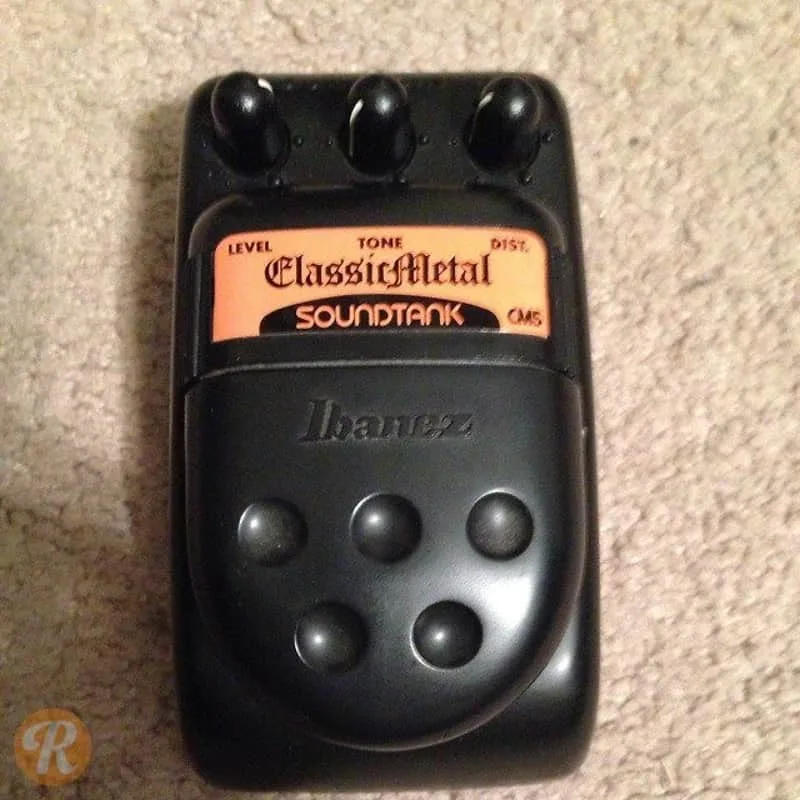
TONEHOME's verdict, quoted from the TM5 page, favors the FC10 on tone3. The TM5 belongs to Ibanez's later, more compact 5 Series Soundtank line, and players comparing the two are effectively choosing between the earlier full-size Power Series design and the later budget-series alternative.
Manual and schematic
For players who service or study their own gear, TONEHOME hosts the Ibanez Pocket Manual for the FC10 Fat Cat as a PDF, along with the FC10 schematics as a separate PDF1. The same site carries the TS10 manual and schematic for the series' most famous member6.
The FC10 has not been re-issued and is listed as rare with high collectibility1. Original units come up on the vintage market rather than in current production, and prices in marks from the era (149 DM in 1988, 114 DM in 1989) reflect the original retail history, not today's used values1.
Videos
noisezone
Cameron Johnson
lilyrosegarden
Questions
Is the Ibanez FC10 Fat Cat based on the Pro Co Rat?
TONEHOME describes the FC10 as Ibanez's first take on the Rat, so the circuit lineage points to the Pro Co Rat. The Rat itself is built around the LM308 single op-amp, according to GuitarPCB's technical analysis. The FC10 shares its basic principle with the other Power Series 10 pedals, the TS10 and DS10, which boost incoming signal levels hard enough to create overdrive distortion.
Where was the Ibanez FC10 Fat Cat made?
The FC10 was made in Japan. TONEHOME lists it as an Ibanez product from the Power Series 10 range, produced between 1987 and 1990, with a 1988 date attached to its listing.
Has the Ibanez FC10 Fat Cat been reissued?
No. TONEHOME lists the FC10 as not re-issued, with rare availability and high collectibility. That makes finding an original unit a matter of watching the used and vintage market rather than walking into a store.
How does the FC10 compare with the TM5 Trash Metal?
TONEHOME's page on the TM5 Trash Metal says the Soundtank-series TM5 'hasn't got the tonal qualities of the Ibanez FC10 Fat Cat.' In other words, the FC10 is held to be the stronger-sounding of the two Ibanez distortion pedals, and the TM5 is the more affordable, later alternative in the 5 Series.
Where can I find the FC10 manual or schematic?
TONEHOME hosts both documents: the Ibanez Pocket Manual for the FC10 Fat Cat as a PDF, and the FC10 schematics as a smaller PDF. Both are linked from the FC10 page on that site, which also carries documents for the related TS10 Tube Screamer Classic.
Sources (6)
- TONEHOME, TONEHOME, 1988
- Reviews of boost pedals, muzique.com (AMZ Guitar Effects)
- TONEHOME, TONEHOME - the World of Vintage Guitar Effects Pedals
- Pro Co Rat Analysis, GuitarPCB
- TONEHOME, TONEHOME, 1987
- TONEHOME, TONEHOME - the World of Vintage Guitar Effects Pedals