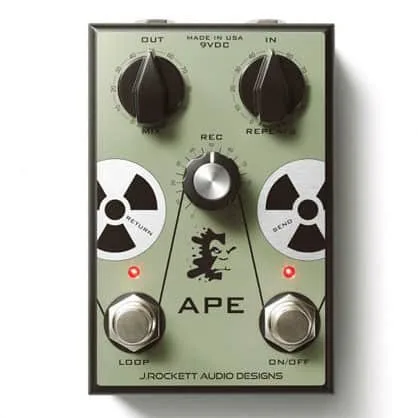

The J. Rockett Audio Designs A.P.E. Echoplex EP3 Preamp is a preamp pedal built to put the front end of a 1970s Echoplex EP-3 tape echo in front of a modern delay. Delicious Audio's Paolo De Gregorio described it as "a preamp circuit whose simple purpose is to feed your delay, by adding the color of the revered Echoplex EP3". A.P.E. stands for Analog Preamp Experiment12.
It does not make echoes itself. Instead, it carries a send and return loop: you plug a digital delay into that loop, and the APE drives it with the EP-3's analog color while its knobs take over the delay's mix, repeats and intensity. gearnews.com put it plainly: "What you're getting here is the preamp inside the old EP3 echo/delay unit"1.
Controls, jacks and footswitches
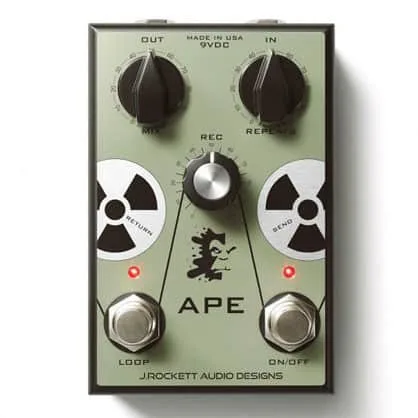
The APE has three knobs and two footswitches. The knobs are aimed at a delay sitting in the loop, per Delicious Audio's product page1.
| Control | What it does |
|---|---|
| MIX | When a digital delay is inserted into the loop, controls the wet/dry mix level |
| REPEATS | When a digital delay is inserted into the loop, controls the repeats |
| REC | When a digital delay is inserted into the loop, controls the gain on the delayed notes and helps with the intensity of the delay |
| Jack or switch | Function |
|---|---|
| SEND | Connect your favorite digital delay's input to the send to start creating your looped delay |
| RETURN | Connect your favorite digital delay's output to the return to complete your looped delay |
| ON/OFF footswitch | Engages the APE |
| LOOP footswitch | Engages whatever may be running through the loop |
Delicious Audio also lists dimensions of 16"x12"x12"1.
Power: 22.5V from a 9V supply
The original EP-3 ran its preamp from a zener regulated supply of about 20 Volts DC, as ClinchFX notes on their EP preamp page3, and Aion FX likewise compares the original's "20V supply"4. The APE goes a step further: it uses an internal DC to DC converter so a simple standard 2.1/5.5mm 9V power supply, the kind most pedals use, is enough, and "It runs at 22.5v just like the original"1.
Because the pedal internally steps a 9V input up to 22.5V, it needs its own regulated 9V supply rather than relying on the original's high internal voltage. Use a standard 2.1/5.5mm 9V DC supply as the maker's product page describes1.
Where it comes from: the Echoplex EP-3
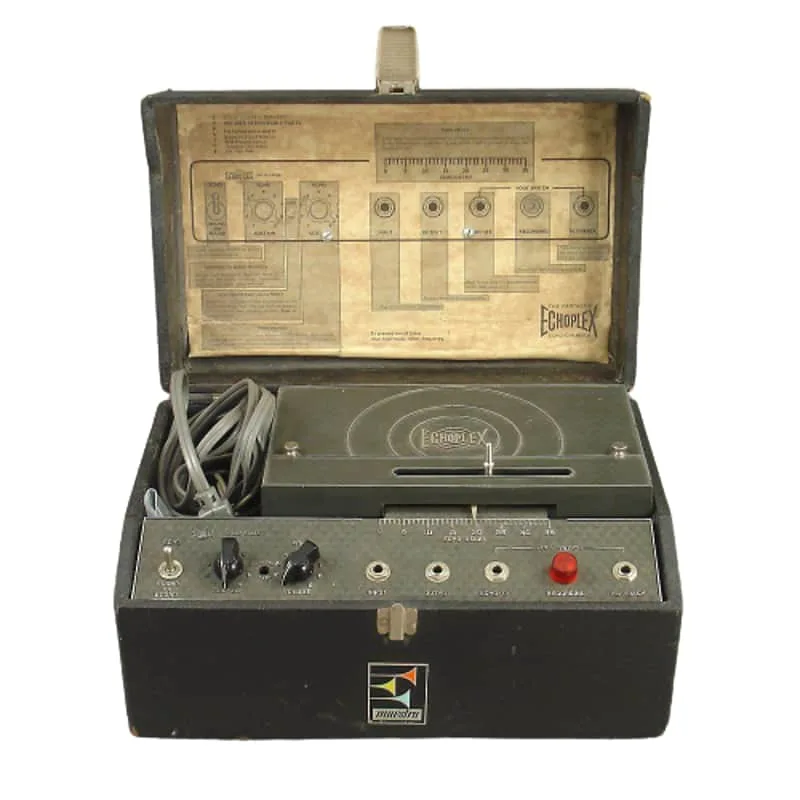
The Maestro Echoplex EP-3 is a tape echo unit from the 1970s, best known for its warm tape-echo effects, and Guitar World's history of the unit notes that beyond input and output jacks it carried footswitch jacks for echo on/off and playback functions52. RockBoard's Pedalpedia entry on the EP-3 says players prized it "as much for its tone conditioning ability as its tape echo effect"6, which is the quality the APE is chasing. Aion FX describes the EP-3 preamp as "an adaptation of the input section of the Echoplex tape echo delay from the 1970s"2.
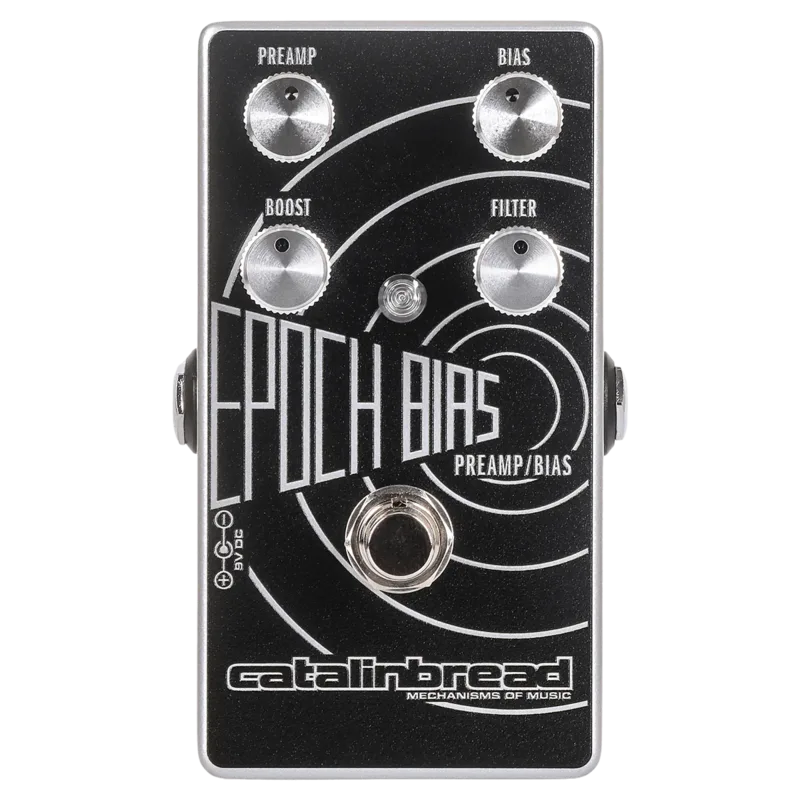
Two details of the original are worth knowing. Catalinbread, whose Epoch Bias also draws on the EP-3, notes that "The first few hundred EP-3 units that came off the assembly line featured a slightly different preamp circuit than the rest", a little brighter than later units7. And the names themselves are property of Dunlop Manufacturing: "Echoplex and EP-3 are registered trademarks of Dunlop Manufacturing", as ClinchFX states8.
Delicious Audio describes the APE as "an accurate re-creation of a famous vintage tape delay's analogue section. This is not just a preamp but rather the entire analogue circuit from input to output including the tape heads"1. In other words, the pedal is not only a boost or tone shaper: it reproduces the EP-3's whole analog path, and the loop lets a modern digital delay ride through it.
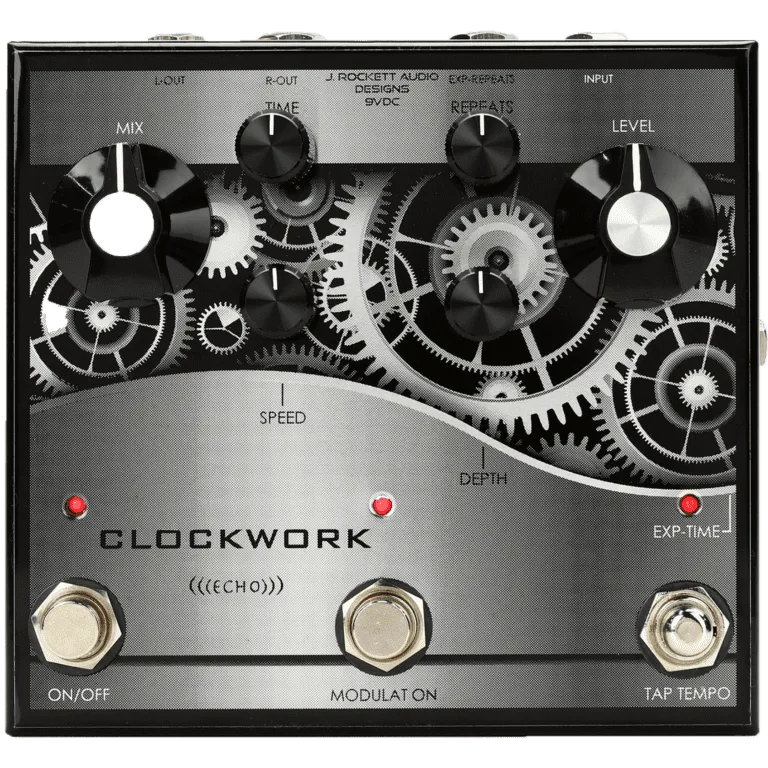
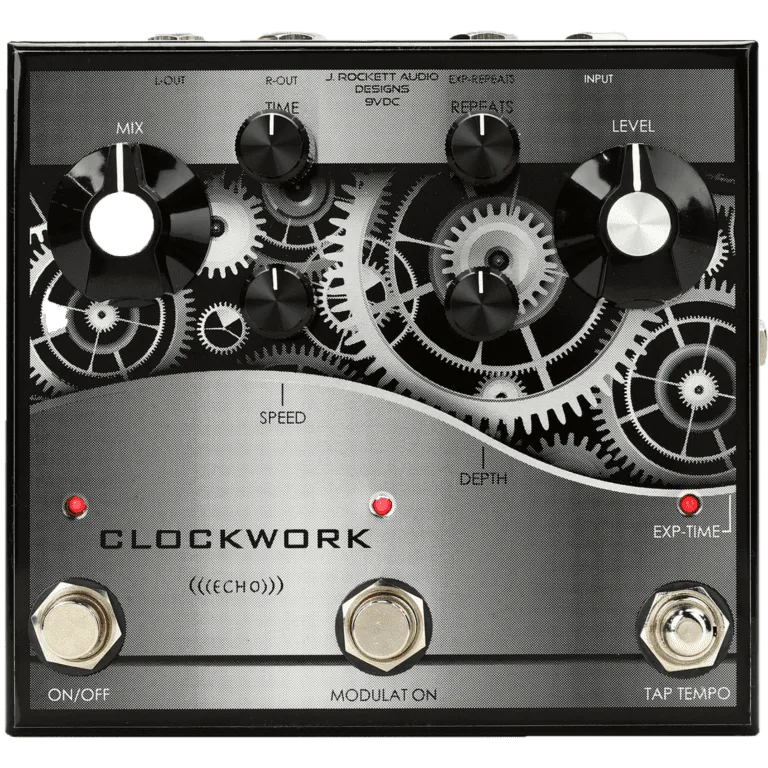
For other takes on the same circuit, see the Preamp Pedals and Delay Pedals pages, or J. Rockett's later Clockwork delays.
Videos
Shawn Tubbs
Questions
What does A.P.E. stand for?
A.P.E. is an acronym for Analog Preamp Experiment. The name was reported by Delicious Audio when the pedal was covered in July 2020, and it points to what the pedal is: an analog preamp circuit rather than a delay effect in its own right.
Does the J. Rockett A.P.E. make a delay sound by itself?
No. Delicious Audio describes the APE as a preamp circuit whose simple purpose is to feed your delay, adding the color of the Echoplex EP3. It does not produce echoes on its own; it shapes the signal going into a delay pedal, or whatever else you run through its loop.
How do you connect a delay pedal to the J. Rockett A.P.E.?
Use the SEND and RETURN jacks. Connect your digital delay's input to the SEND to start creating your looped delay, and connect the delay's output to the RETURN to complete the looped delay. The delay then sits inside the APE's loop, where the MIX, REPEATS and REC knobs act on it.
What power supply does the J. Rockett A.P.E. need?
A standard 2.1/5.5mm 9V DC power supply, the same type most pedals use. Inside, a DC to DC converter raises the operating voltage to 22.5V, matching the internal operating voltage of the original Echoplex EP-3 preamp section.
What do the Mix, Repeats and Rec knobs do?
When a digital delay is inserted into the loop, MIX controls the wet/dry mix level, REPEATS controls the repeats, and REC controls the gain on the delayed notes and helps with the intensity of the delay. Without a delay in the loop, the pedal works as the EP-3 style preamp.
Sources (8)
- J. Rockett Audio Designs A.P.E. Echoplex EP3 Preamp, Delicious Audio, 2020-07-14
- Axion JFET Preamp / Echoplex EP-3 Preamp, Aion FX, 2025-03-28
- EP-PRE < ClinchFX, ClinchFX, 2025-09-29
- Ares Vintage Preamp / Echoplex EP-3 Preamp, Aion FX, 2019-10-18
- Maestro Echoplex EP-3: one of the most iconic guitar effects, Guitar World, 2022-09-20
- EP101 Echoplex Preamp by Dunlop, RockBoard (rockboard.de), 2026
- Epoch Bias, Catalinbread Effects
- EP Plus < ClinchFX, ClinchFX, 2018-07-26