| Type | Tape delay effect unit, the first stand-alone delay effect for guitar1 |
| Designed | 19591 |
| Main versions | EP-1, EP-2, EP-31 |
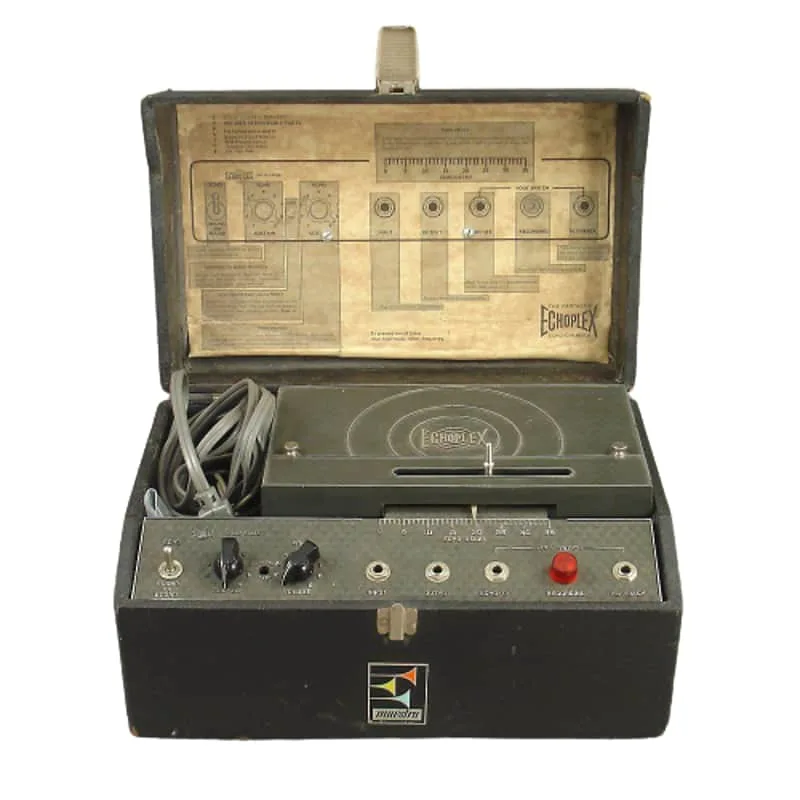
| EP-2 | Tube (valve) based, the last Echoplex to feature tubes, housed in what looks like an old tool box1 |
| EP-3 | Released 1970 as a solid-state update to the previous tube-based versions2 |
| EP-1 | A retroactive name for the first Echoplexes3 |
| EP-2 today | Hard to find, costs a lot, and is not easy to repair, though collectors still seek it1 |
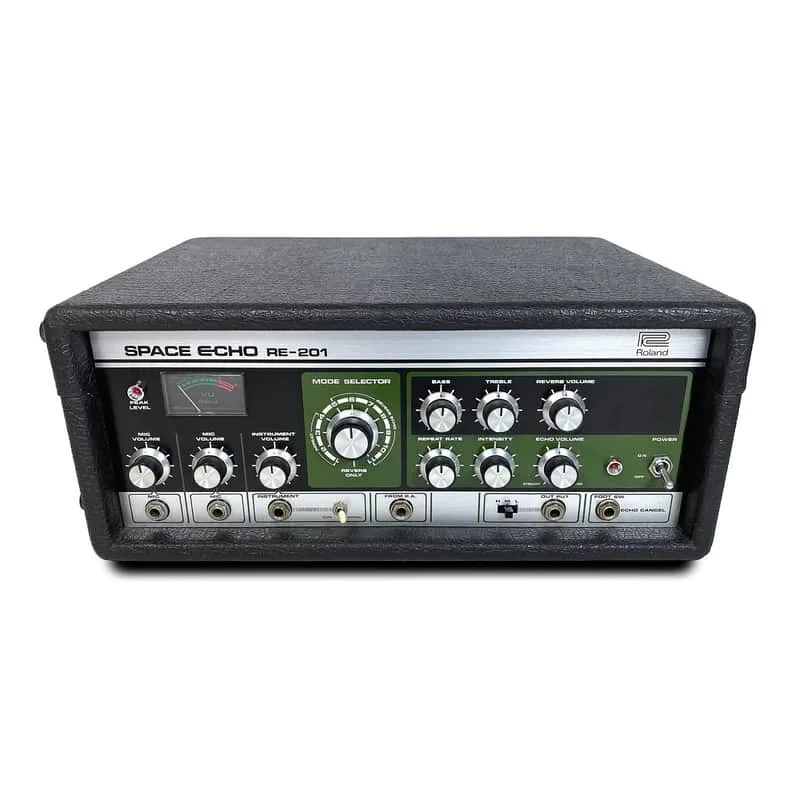
The Echoplex is a tape echo machine: a dedicated delay unit that records your guitar onto a loop of magnetic tape and plays it back moments later. Designed in 1959, it is regarded as the first stand-alone delay effect for guitar, and its descendants, the EP-1, EP-2 and EP-3, defined what tape delay sounds like for a generation of players1. Its contemporaries were the Roland Space Echo and the Binson Echorec, but the Echoplex earned a second life that none of them matched: its solid-state preamp, originally just the stage that conditioned the signal on the way to the tape, became one of the most copied circuits in modern boost pedals1.
Where the Echoplex came from
The Echoplex is the brainchild of Mike Battle1. The classic tape delay was designed in 1959, and the Echoplex EP-1 followed in 1961 from Mike Battle, ahead of the Roland Space Echo of 197441. Writing at Stompbox Book, William Weir calls it the first stand-alone delay effect for guitar, a box that freed players from needing a studio tape machine to get echo1.
The first Echoplexes were retroactively known as the EP-15. The rights to use the Echoplex name and designs were purchased from Harris-Teller by Jim Dunlop a few years before one published account of the unit's history, and at that time replacement tapes could be ordered directly from Dunlop5. The EP-3, originally released in 1970 as a solid-state update to the previous tube-based versions, outlasted the tube models2. The EP-2 preceded the EP-3 variant5, and today the tube EP-2 is hard to find, costs a lot, and is not easy to repair, though that has not stopped collectors from seeking it1.
How the tape echo works
At heart, the Echoplex is essentially a tape machine with two playback heads, one that repeats milliseconds after the first1. Your signal is recorded onto a loop of tape inside a removable cartridge, and the spacing between the record and playback heads sets the delay time. Moving the playback head changes that spacing, which is how you dial in the delay length. Dedicated delay units such as the Echoplex and the Roland Space Echo used magnetic tape for their echoes in this way, as Strymon's Matt Piper explains in the company's history of echo machines6.
Tape echo is a mechanical instrument, and the mechanics wear out. Echo Fix, which supplies service parts for vintage units, lists the failure modes plainly: faulty rubber rollers, drive belts, tension springs and tape can lead to wow and flutter, pitch variations, low echo output signal and tape transport problems7. The tape itself is a consumable, and Echo Fix's service guidance for both the EP-1/EP-2 and EP-3/EP-4 families says the tape should be replaced every 300 hours87. Their service kits include splicing tape tabs for rebuilding cartridges, and they sell a replacement record/erase head that fits the EP-3 and EP-479. For the EP-1 and EP-2, Echo Fix offers an updated red rubber roller that buyers describe as an excellent improvement on the original rubber roller10. Fulltone tape is also sold for DIY cartridge reloading across the EP-1, EP-2, EP-3 and EP-411.
Owning a vintage Echoplex means owning a maintenance schedule. Tape every 300 hours, rollers, belts and tension springs as they age: these are the parts that keep wow and flutter out of your repeats87.
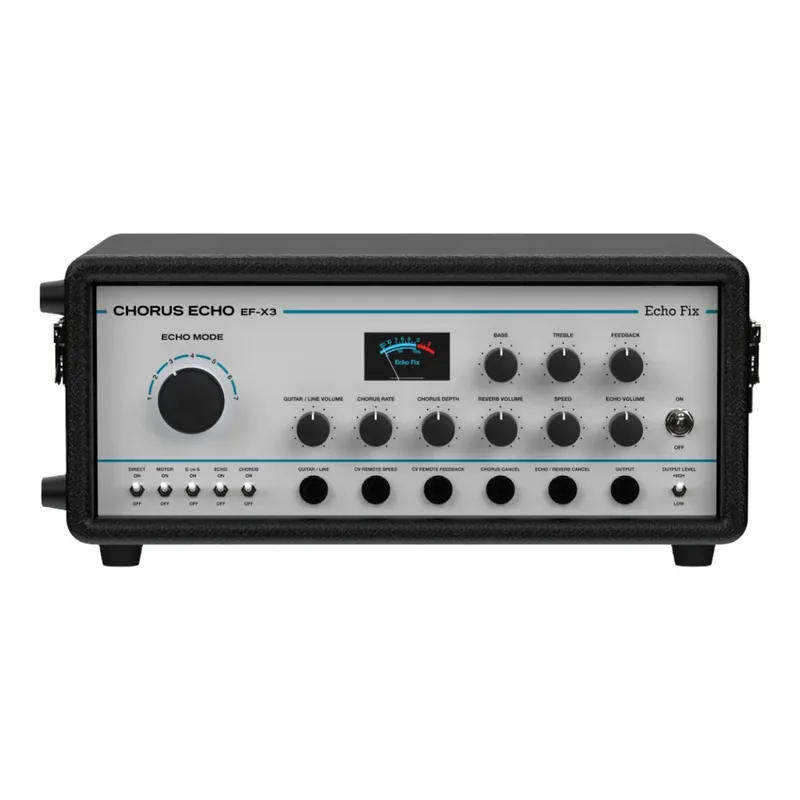
Echo Fix also builds the EF-X3, a modern tape echo of its own, and addressed the wear problem directly: the company implemented a new auto tape stop circuit to extend tape life12. The EF-X3 Tolex version adds CV control for motor speed and feedback level (0 to 5V) via compatible expression pedals, so delay time and repeats can be swept like any pedal control13.
The EP-1, EP-2 and EP-3
The three versions players care about are the EP-1, EP-2 and EP-31.
| Version | Circuit | Notes |
|---|---|---|
| EP-1 | First production model | Released 1961, from Mike Battle4 |
| EP-2 | Tube (valve) based | Last of the Echoplexes to feature tubes; housed in what looks like an old tool box1 |
| EP-3 | Solid state | Distributed 1970 to 1991, the longest-made version3 |
The EP-1 and EP-2 are the two earliest versions, and they are the last of the Echoplexes to feature tubes, housed in what looks like an old tool box1. Today they are hard to find, cost a lot, and are not easy to repair, though that has not stopped collectors from seeking them out1. In the 1960s and 1970s, Echoplex tape echo units evolved from tube-based designs into solid-state designs, and the EP-3 is the notable result14.
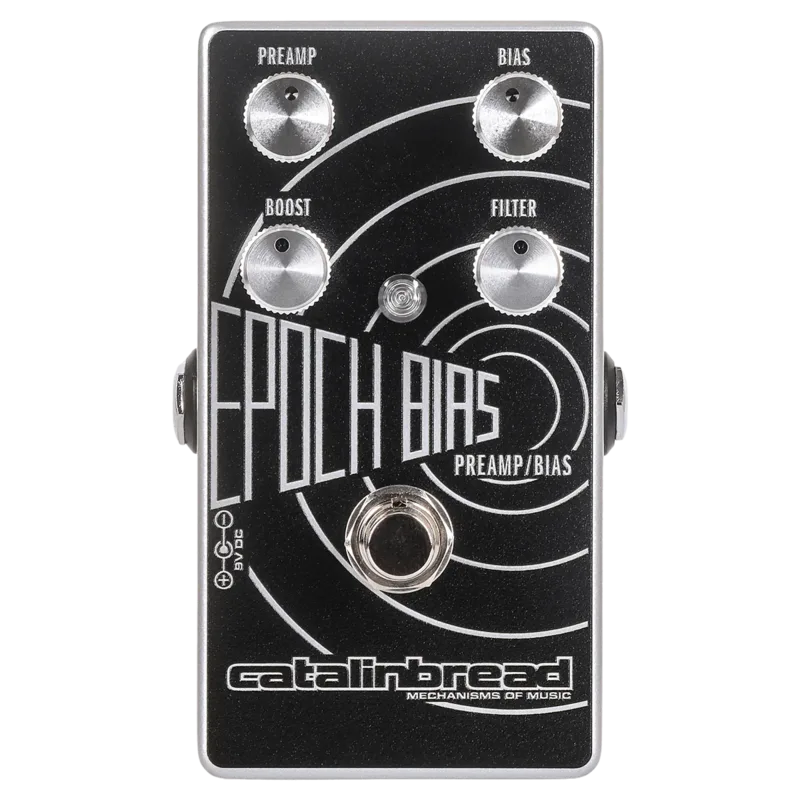
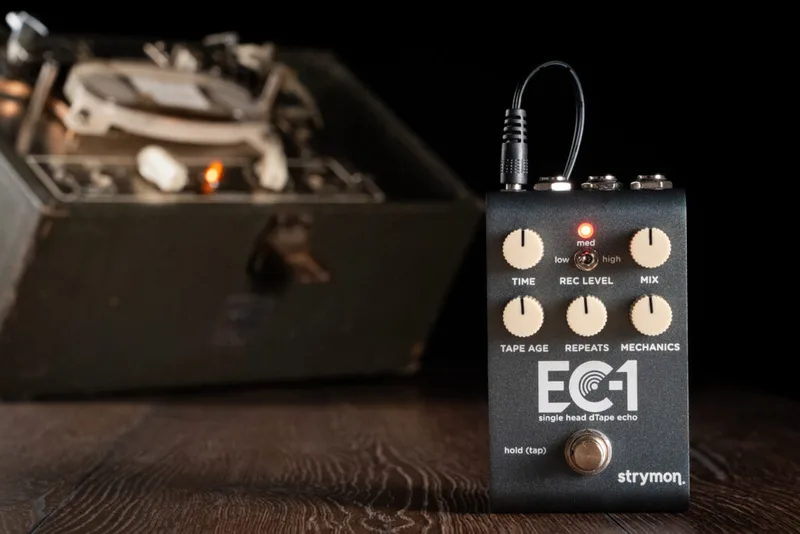
The EP-3 had its own variations and revisions to the circuit14. Catalinbread, whose Epoch Bias pedal is built on this circuit, notes that the first few hundred EP-3 units that came off the assembly line featured a slightly different preamp circuit than the rest, one that is a little brighter15. Strymon studied a very special Echoplex EP-2 for its EC-1 pedal, a unit that had been worked on by technician Cesar Diaz; the modifications included tweaks to the tube preamp for a warmer sound closer in frequency response to an EP-3, seemingly aimed at bringing the best aspects of the various vintage Echoplex models into a single unit1617.
The EP-3 preamp and its sound with the echo off
The EP-3 was prized as much for its tone conditioning ability as for its tape echo effect18. Inside, an internal secret preamp was at work, boosting and fattening the signal, along with a slight phase shift that altered mid and high frequency harmonic content14. That preamp stage of the 1970s EP-3 became legendary on its own, independently of the tape echo it fed, and became a best-seller in the 2000s as the EP Booster pedal19.
The preamp is a JFET circuit. The JFET architecture is found in the preamp section of the Echoplex EP-3 tape delay, as Strymon notes in its circuit documentation20. Not every original unit behaved the same: some EP-3s dropped in signal due to wrong TIS58 JFETs being fitted14. The original preamp also ran from a zener-regulated supply of about 20 Volts DC, higher than a typical 9V pedal supply, which matters to anyone cloning the circuit21.
Players discovered they did not need the echo to benefit. The preamp of this tape echo was used by many musicians as a boost alone, without the echo effect, to add character and boost the signal before the amp22. Anasounds names Eric Johnson among them: many musicians, such as Eric Johnson, used their tape echoes in a different way, using the preamp alone, without the echo, as a dirty boost to overload amps23.
"The preamp of this tape echo was used by many musicians as a boost alone, without the echo effect, to add character and boost their signal before going to the amp."
Pedals based on the Echoplex
The EP-3 preamp and the tape echo sound have both been carried into modern pedals, in two separate lineages.
Preamp clones and boosts:
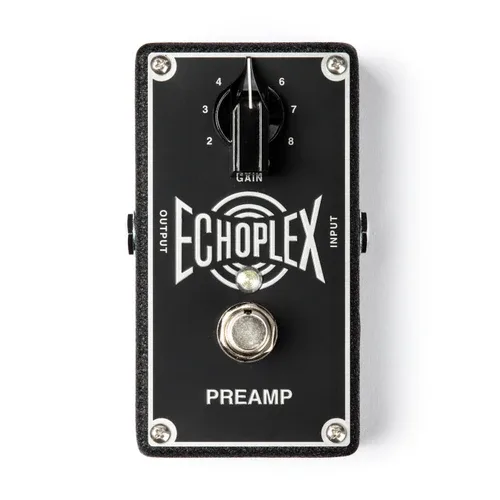
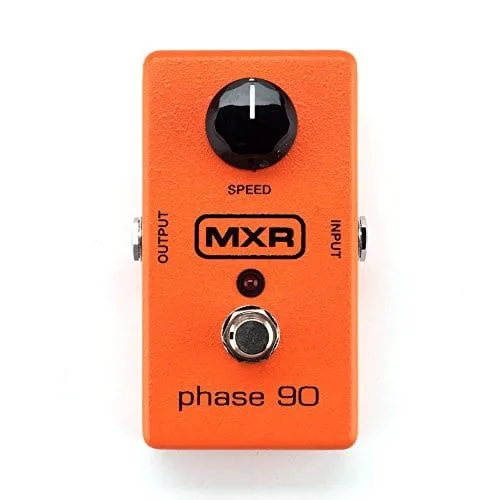
- Dunlop EP101 Echoplex Preamp: Dunlop's EP101 recreates the magic of the EP-3's front end, featuring a Field-effect Transistor (FET) just like the original, following the same signal path1824. Its Gain control allows you to boost your signal by up to +11dB, with light asymmetrical clipping at higher settings for organic grit18. It comes in a heavy-duty Phase 90-sized housing with a replica EP-3 knob, true bypass switching and a status LED24, and is made by Dunlop Manufacturing25. Iron Maiden's Janick Gers uses the Echoplex Preamp26.
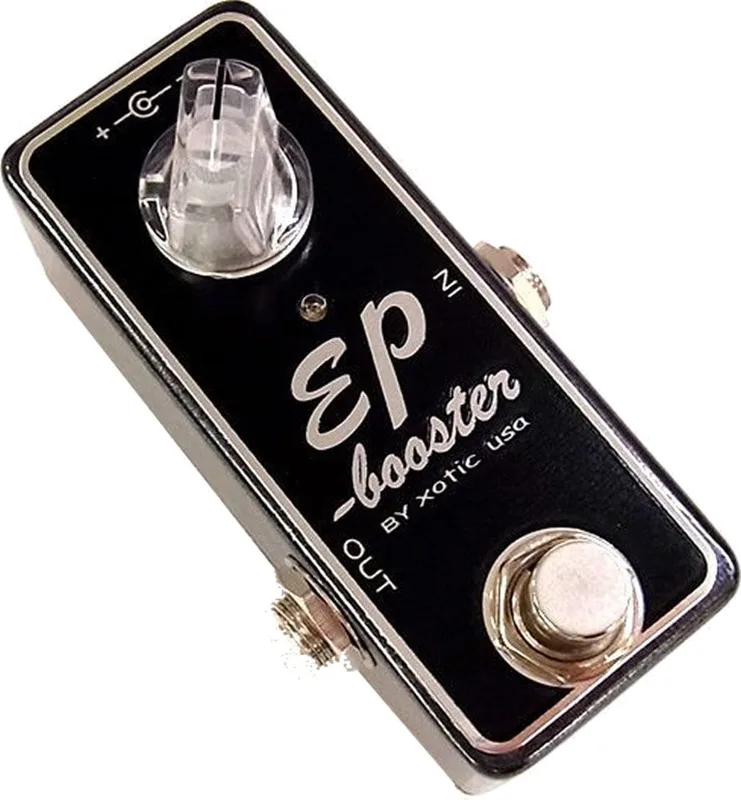
- Xotic EP Booster and EP Pro: Xotic says it captured the magic of the EP-3 echo machine pre-amp in the EP Booster27, and the EP Pro builds on that pedal, which captured the legendary Echoplex preamp sound28.
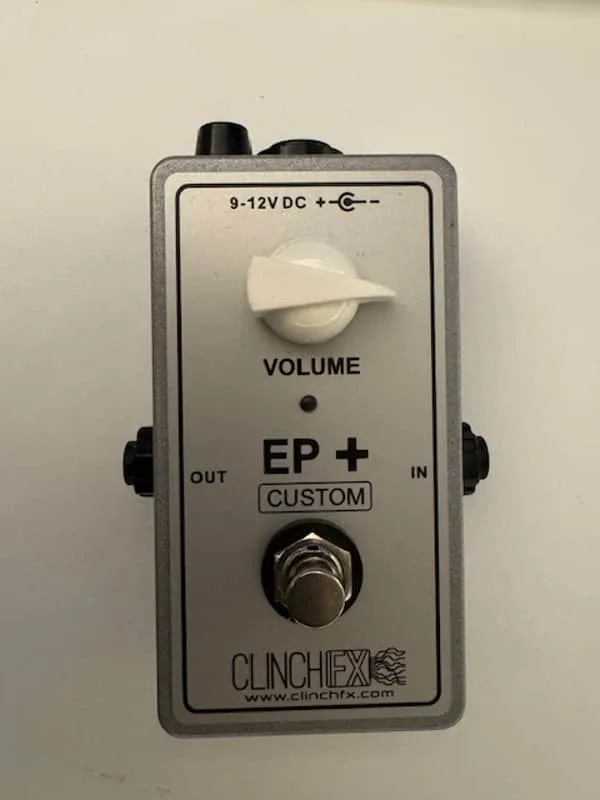
- ClinchFX EP-PRE: a JFET preamplifier based on the preamp section of the Echoplex EP-3 tape echo unit21. Its charge-pump power supply converts 9 Volts to more than 17 Volts, and 12 Volts to just over 23 Volts, recreating the dynamics of the EP-3's original supply21.
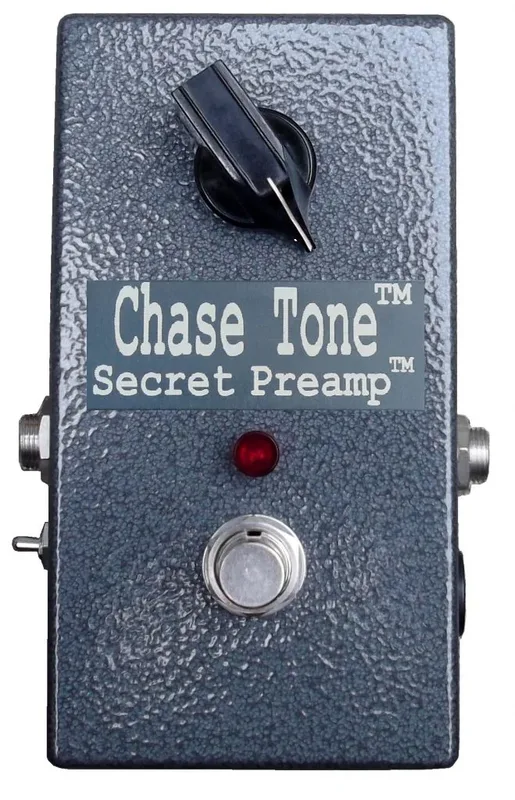
- Chase Tone Secret Preamp: built on the Maestro Echoplex EP-3 preamp, the solid-state design with its internal secret preamp14.
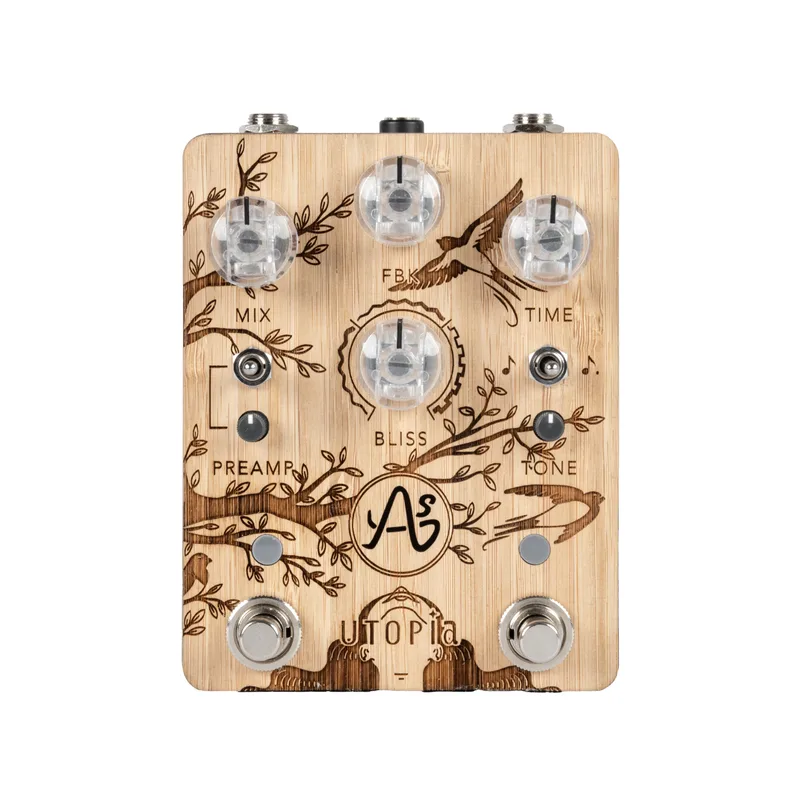
- Anasounds Utopia Deluxe: traces its lineage to the Echoplex EP-3 preamp stage of the 1970s19.
- Goodrich Updated Baby Bloomer: inspired by the early Echoplex units, particularly the Maestro EP-2 and EP-3 circuits29.
Tape echo emulations:
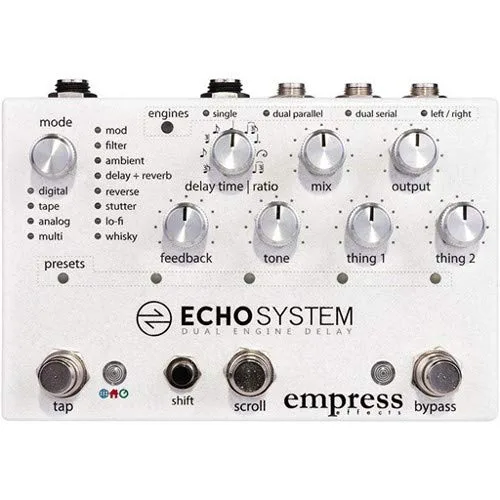
- Empress Echosystem: its Echoplex mode emulates the classic Echoplex EP-330.
- Line 6 Tube Echo: a model based on the EP-1 Tube Echoplex, found in the TonePort KB37's stompbox and studio effects31.
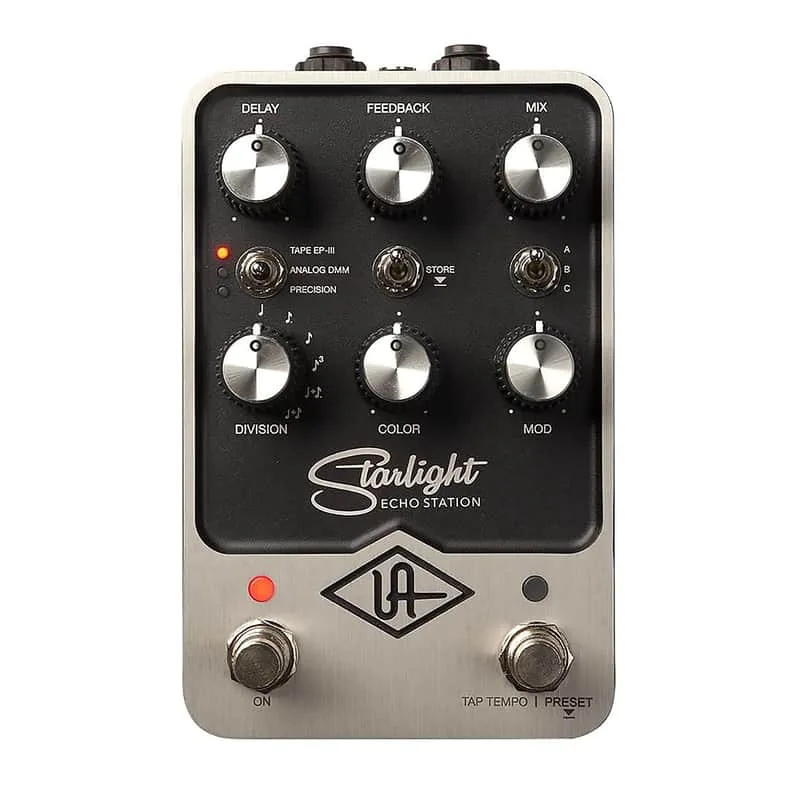
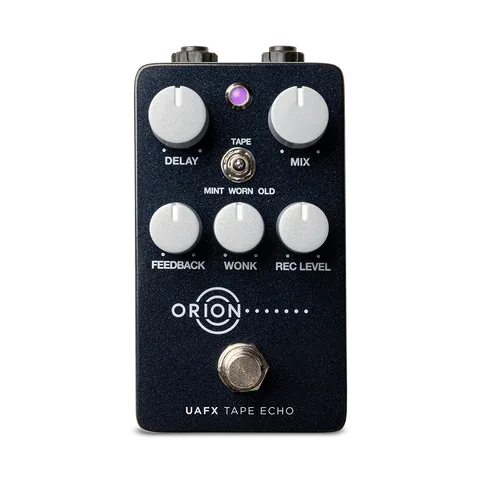
- Universal Audio Starlight Echo Station: its Tape EP-III effect models vintage early-'70s tape echo units32. UA's Orion Tape Echo takes the same approach; UA notes that if you run a stereo rig you might want a delay with stereo outputs, but there has never been a stereo Echoplex33.
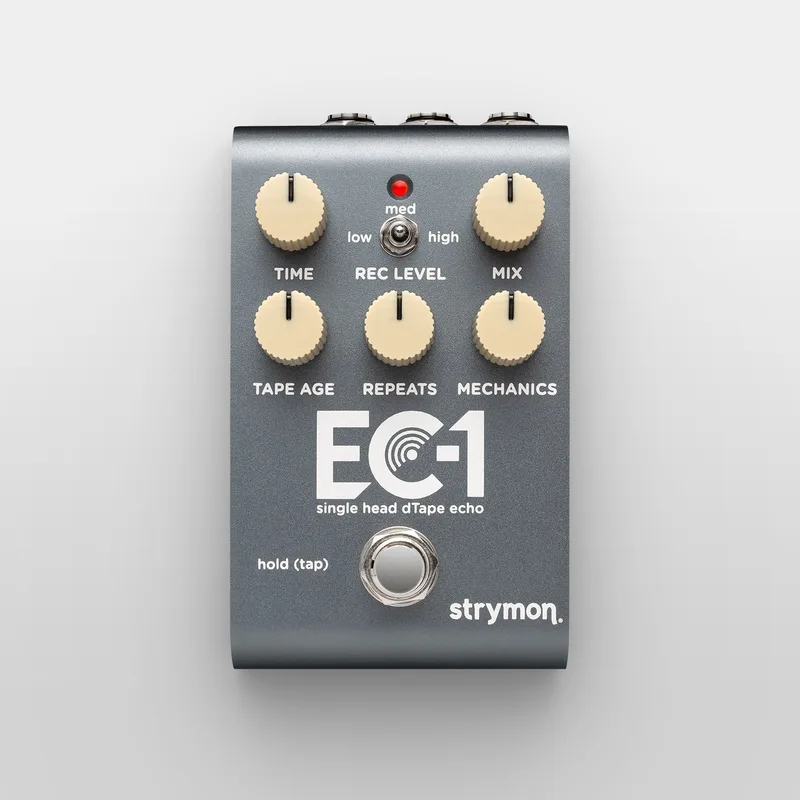
- Strymon EC-1: developed from Strymon's study of a modified EP-21617.
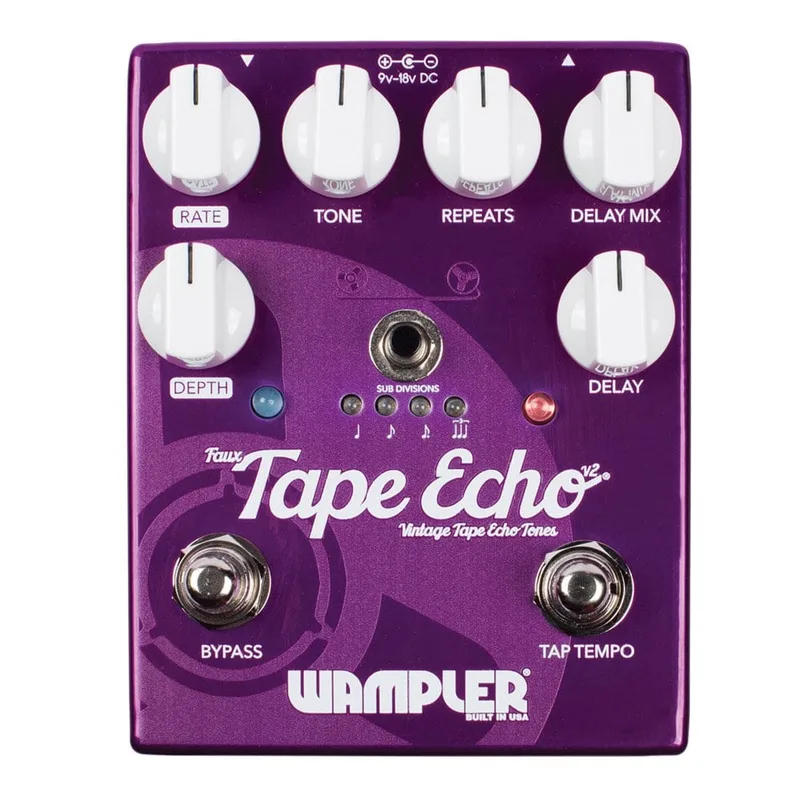
- Wampler Faux Tape Echo: one of a number of digital pedals that emulate the sound of those machines1.
DIY EP-3 preamp builds
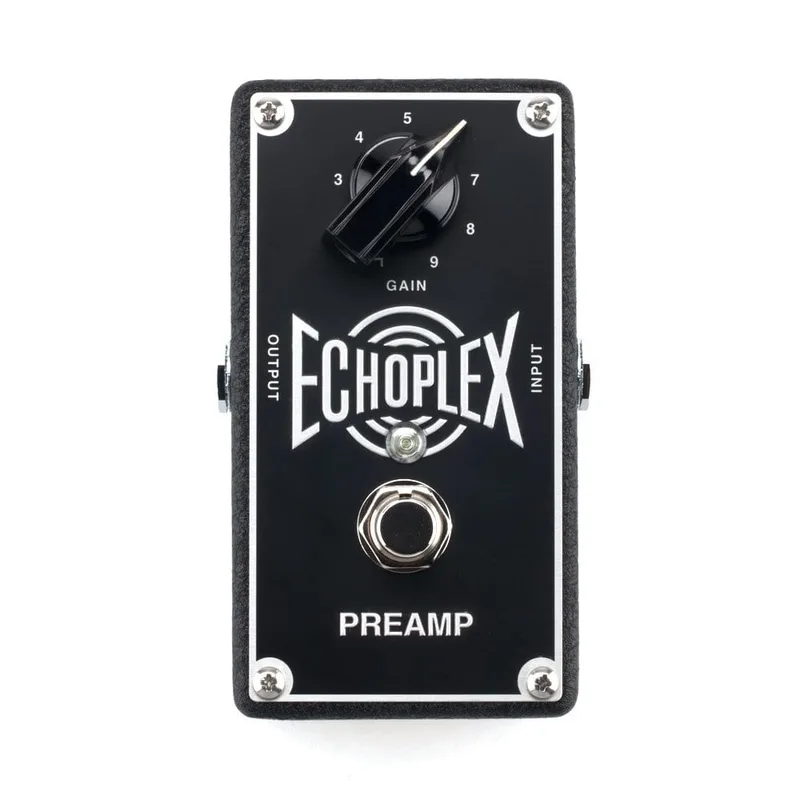
For players who want the EP-3 preamp without a vintage unit, Dunlop Manufacturing makes the EP101 Echoplex Preamp, a standalone preamp pedal18. It comes in a heavy-duty Phase 90-sized housing with a replica EP-3 knob, true bypass switching, and a status LED24. The original EP-3 preamp section was released in 1970 as part of the solid-state update to the previous tube-based versions, and it is this circuit the pedal reproduces2.
The EP-3's preamp has a documented history of its own beyond the stock unit. The EP-2 that preceded it was the second Echoplex design and the last to feature a tube preamp, and one heavily modified EP-2, worked on by Cesar Diaz, became a sought-after build on the vintage market5. Diaz's mods created a single unit combining what reviewers described as the best attributes of both tube and solid-state Echoplexes, making for a warmer sounding unit closer to an EP-35. That modified EP-2 showed up in pristine condition and sounded amazing, according to the review that documented it5.
The zener matters in these builds. The original preamp's roughly 20 Volt zener-regulated supply21 is why some PCBs add a series resistor to protect it, and why charge-pump designs like the ClinchFX EP-PRE aim to recreate that higher supply voltage rather than run the FET at a plain 9 Volts2134.
Pedals on this page
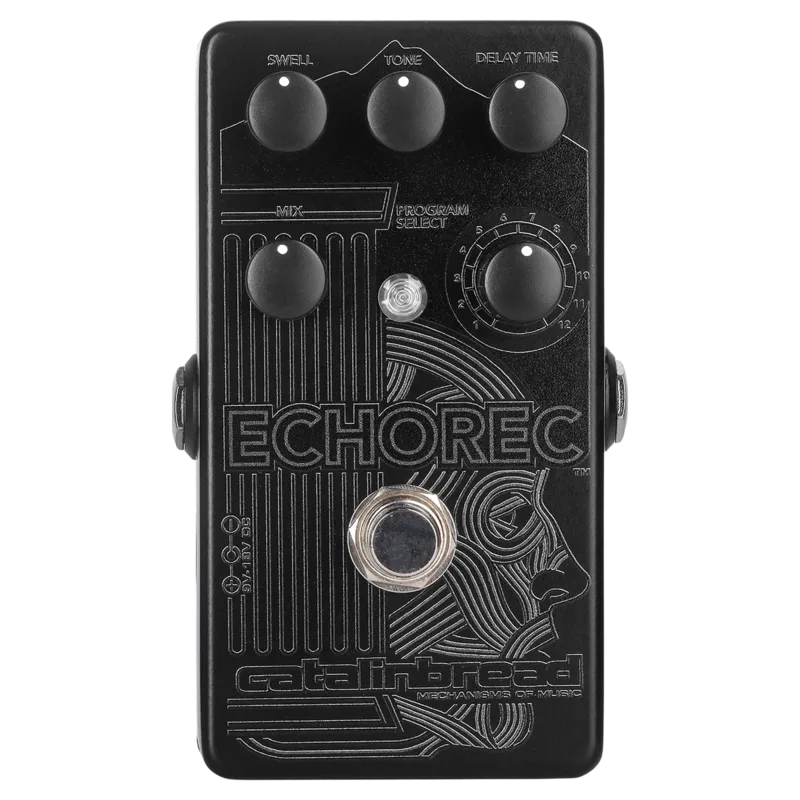
Questions
Who invented the Echoplex?
The Echoplex is the brainchild of Mike Battle. The classic tape delay was designed in 1959, and the first production version, the EP-1, followed in 1961 from Battle's work. It is regarded as the first stand-alone delay effect made for guitar.
What is the difference between the EP-2 and the EP-3?
The EP-2 is a tube-based unit housed in a case that looks like an old tool box, while the EP-3 is a solid-state design with a FET preamp. The EP-3 was distributed from 1970 to 1991, the longest-made version, and its preamp is the section later pedal makers copied.
Why do players use an Echoplex preamp without the echo?
The EP-3's internal preamp boosts and fattens the signal with a slight phase shift that alters mid and high frequency harmonic content. Many musicians, including Eric Johnson, ran the preamp alone as a boost to add character and push an amp, with the tape echo switched off.
Does the EP-3 preamp boost my signal?
Yes. The preamp boosts and fattens the signal, and modern recreations such as the Dunlop EP101 offer up to +11dB of gain, with light asymmetrical clipping at higher settings for some grit. Some original EP-3s dropped in signal because of wrongly specified TIS58 JFETs.
What JFET does the EP-3 preamp use?
The original EP-3 preamp is a JFET circuit, and the TIS58 is the JFET associated with it. Some EP-3 units suffered a drop in signal because the wrong TIS58 JFETs were fitted. Modern clones use Field-effect Transistor circuitry following the same signal path.
Can an EP-3 preamp clone run at 18V?
The original EP-3 preamp ran from a zener-regulated supply of about 20 Volts DC, so higher headroom is part of the design. The ClinchFX EP-PRE uses a charge pump that converts 9 Volts to more than 17 Volts, and 12 Volts to just over 23 Volts, to recreate those supply dynamics.
When did Echoplex stop making tape units?
Production of tape-based Echoplexes ended in 1991, closing out an EP-3 run that started in 1970. The Echoplex name passed through Harris-Teller and Gibson, which sold a digital version, before Dunlop bought the name and began making the digital EP103 Echoplex Delay Pedal in 2016.
Sources (34)
- Echoplex, Stompbox Book (stompboxbook.com), 2019-03-03
- Dunlop Echoplex Delay review, MusicRadar, 2016-10-13
- ULTIMATE HISTORY OF TAPE ECHO, JHS Pedals
- 3 SERIES TAPE DELAY, JHS Pedals
- Echoplex, Vintage Guitar magazine, 2004-12-07
- What is a Drum Echo?, www.strymon.net, 2019-03-13
- Echoplex EP3 EP4 DIY Full Service Kit, Echo Fix
- Echoplex EP1 EP2 DIY Full Service Kit, Echo Fix
- Echoplex EP3 EP4 New Record/Erase Head, Echo Fix
- Updated RED Echoplex EP1 & EP2 New Rubber Roller, Echo Fix
- Reviews - Echo Fix, Echo Fix
- EF-X3 Vintage Voice Blue Desktop PRE-SALE, Echo Fix
- EF-X3 Tolex, Echo Fix
- Secret Preamp, Chase Tone (chasetone.com)
- Epoch Bias, Catalinbread Effects
- EC-1 Single Head dTape Echo, Strymon, 2025-09-30
- Classic Gear: The Roland Space Echo RE-201, gearnews.com, 2024-03-11
- EP101 Echoplex Preamp by Dunlop, RockBoard (rockboard.de), 2026
- Utopia Deluxe, Anasounds, 2023-12-18
- What are some examples of the 6 circuits available in Sunset?, Strymon (www.strymon.net), 2021-07-15
- EP-PRE < ClinchFX, ClinchFX, 2025-09-29
- Assemble your fx teacher tape preamp kit, Anasounds, 2022-11-09
- Tape Preamp, Anasounds, 2023-04-27
- ECHOPLEX® PREAMP, Dunlop (jimdunlop.com)
- EP101.pdf, Dunlop Manufacturing, Inc., 2019
- Artists - Iron Maiden - Dunlop, Jim Dunlop (jimdunlop.com)
- EP Booster, Xotic California (xotic.us)
- Xotic EP-Pro, Xotic California (xotic.us)
- Goodrich Baby Bloomer Tone Enhancer, Goodrich Sound Company
- Echosystem, Empress Effects Inc.
- Line 6 | Legacy Products, Line 6
- Starlight Echo Station Pedal, Universal Audio
- Orion Tape Echo Pedal, Universal Audio
- Tracing Journal: Chase Tone Secret Preamp, Aion FX, 2025-03-28