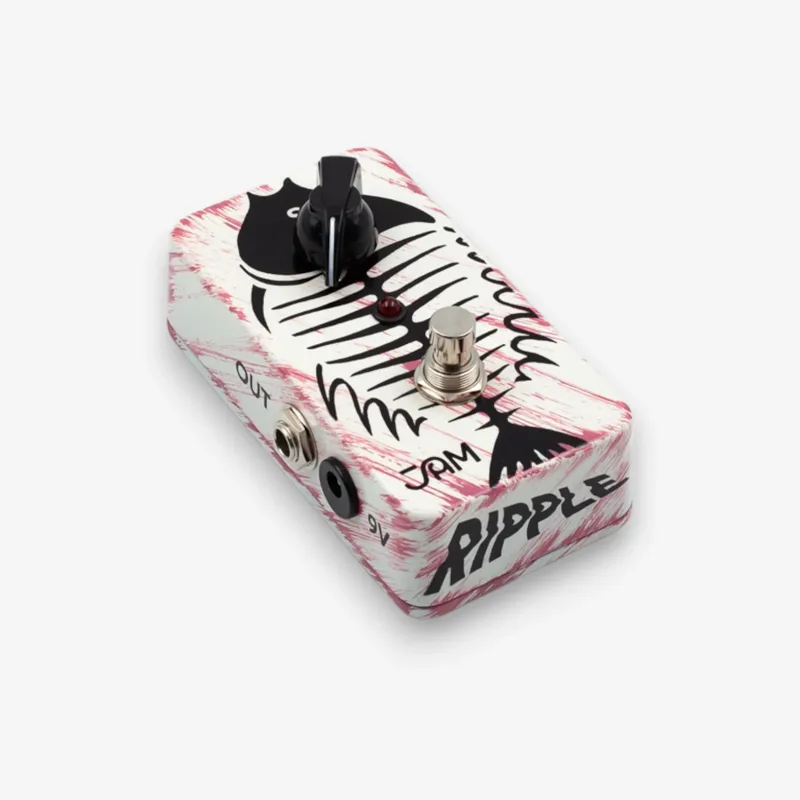


The JAM Pedals Ripple is a compact phaser pedal with a single control. JAM Pedals describes it as "a one-knob, two-stage phaser with a deep, mellow and distinctly vibey voice," one that "adds movement without overwhelming the instrument," bringing funky rhythmic parts, arpeggios and unusual passages to life with a smooth, transparent sweep1. Where a four-stage phaser pushes a strong, obvious notch through your tone, the Ripple's two-stage circuit is built for a subtler kind of movement.
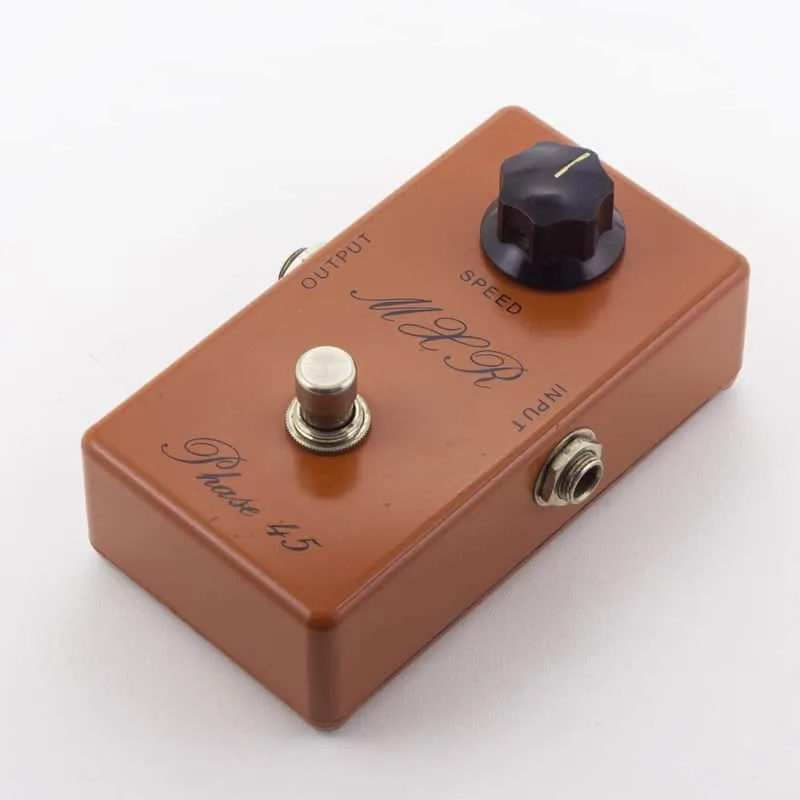
Delicious Audio's phaser buying guide places the design in a specific lineage, calling it "a one-knob homage to 2-stage phasing of the vintage MXR Phase 45"2. In other words, it is a modern take on the small, mellow two-stage phasers of the 1970s rather than a recreation of the more dramatic four-stage boxes that followed.
What it does to your sound
A phaser splits your signal, shifts the phase of one copy across a set of frequency points, and blends the copies back together, producing moving notches in the tone. The number of stages determines how pronounced that effect is. The Ripple uses two stages, and JAM Pedals says the compact circuit "creates a deep, soft-edged phase sound with a strong sense of movement and minimal tonal clu[tter]"1. The maker also notes that the uncommon two-stage circuit gives the pedal "a sincere, characterful sound that stands apart from more familiar phase[rs]"4.
The practical result, in the maker's words, is a pedal that adds movement without overwhelming the instrument. That suits players who want phase as a texture under funk rhythms, arpeggios or unusual passages rather than as a headline effect145.
JAM Pedals also says the Ripple "performs well before or after overdrive pedals, offering different levels of integration and prominence"1. Placed before an overdrive, the sweep gets smoothed and compressed by the drive; placed after, the notches stay clearer and more present. Both placements work, which makes the pedal flexible on a crowded board.
"The Ripple is a one-knob, two-stage phaser with a deep, mellow and distinctly vibey voice."
Controls and power
The Ripple has exactly one control:
That is the whole interface. There is no depth control, no mode switch and no expression input; the depth of the effect is fixed by the circuit, and the Speed knob alone shapes the character, from slow, mellow movement at one end to quicker, quirkier pulses at the other145.
Power comes from a 9V battery or a 9V DC supply with a center-negative plug, and the pedal draws only 9 mA1. The low draw means it is easy to run from a typical pedalboard power supply alongside other compact effects. The true-bypass switching1 leaves your dry signal alone when the pedal is off.
Versions and artwork
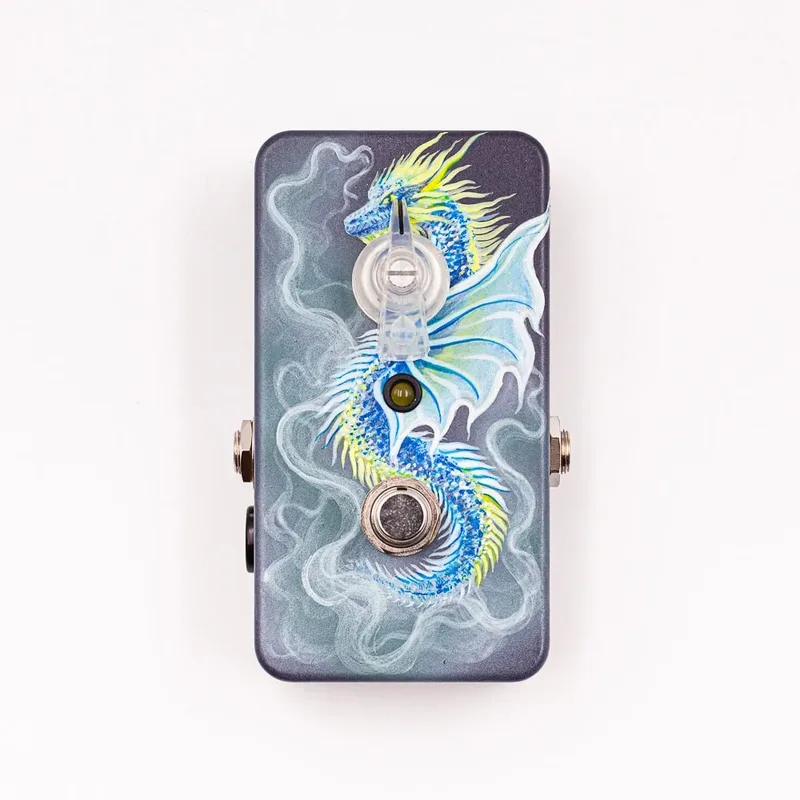
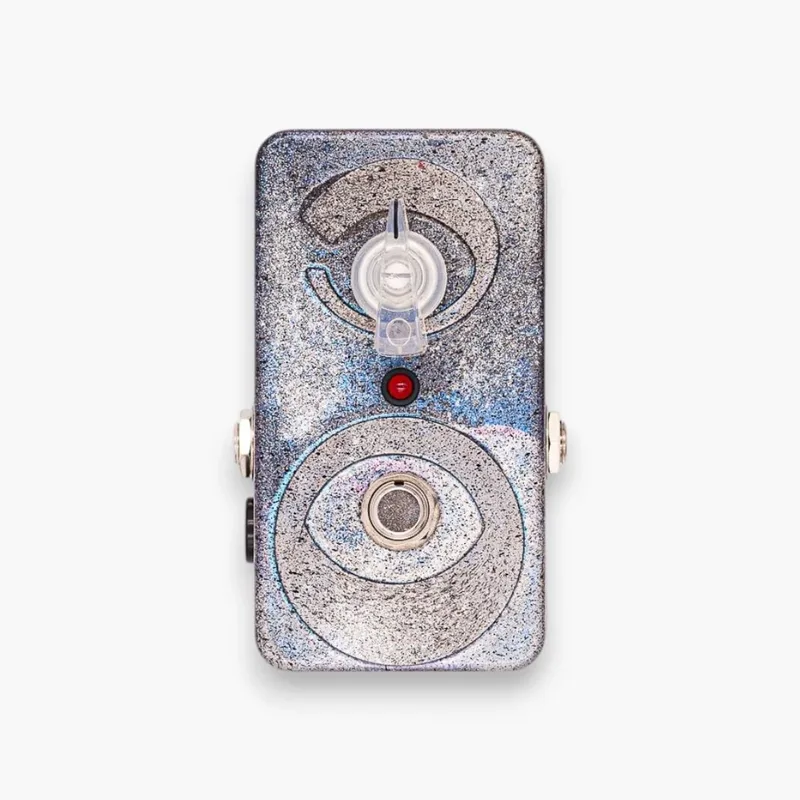
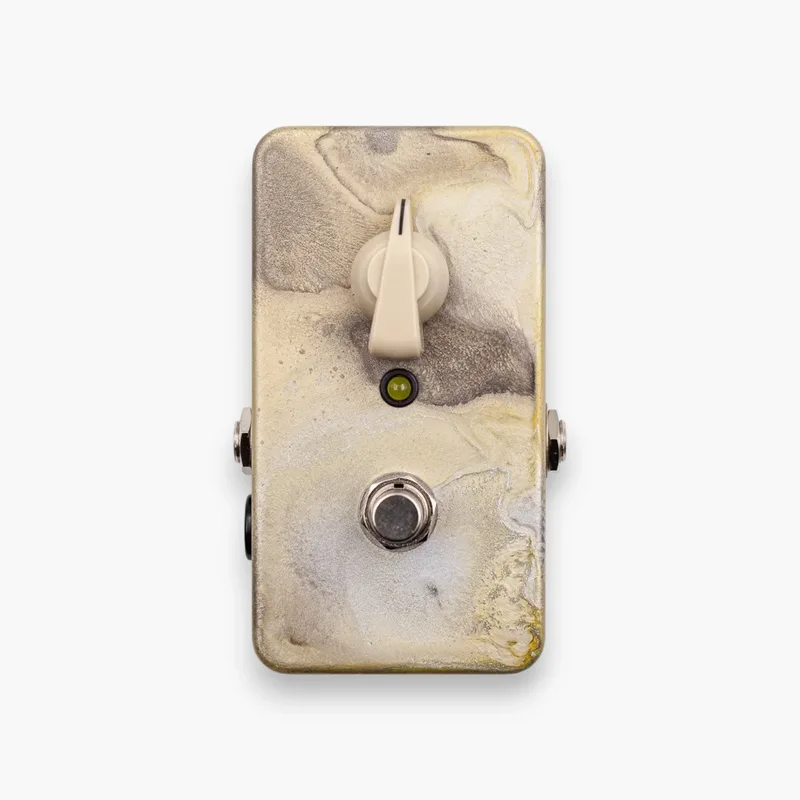
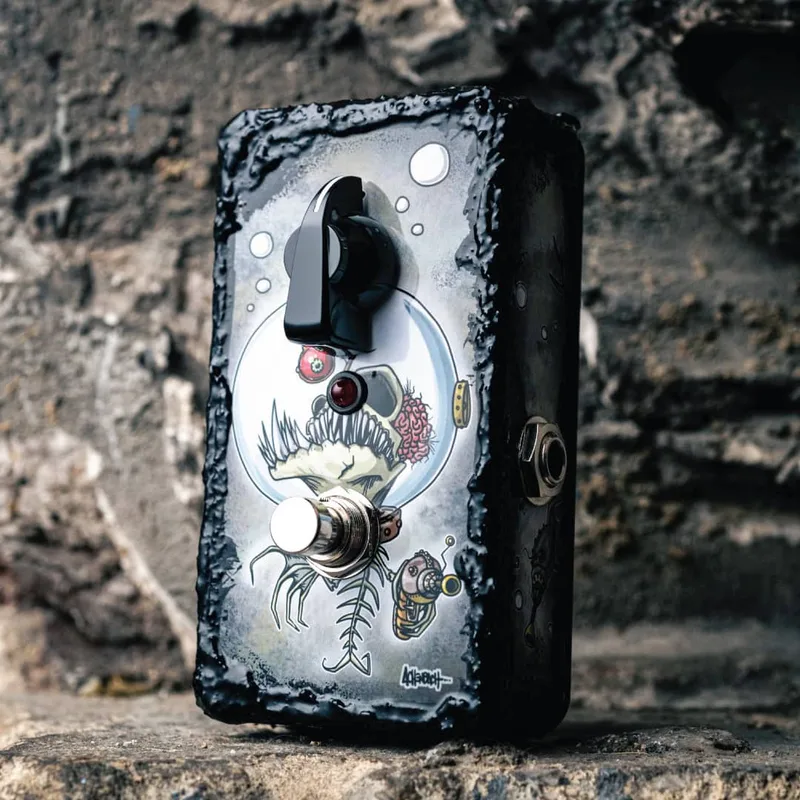
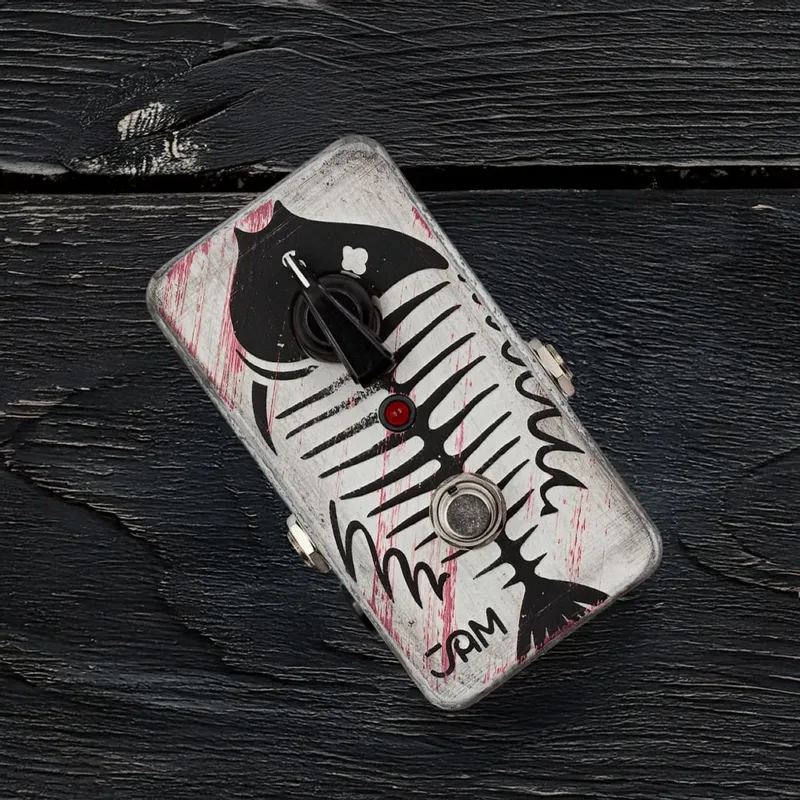
The artwork is where the versions differ. JAM Pedals sells the same circuit under several hand-painted designs, all sharing the same sound1:
Every limited artwork pedal is a one-of-a-kind hand-painted piece. The pedal you receive will differ in detail from the photos shown on the product page1.
There is also a bass version. The Ripple Bass is recalibrated so the modulation's focus suits low frequencies, and JAM Pedals notes that vintage-style two-stage phasers like it are designed to work best with passive pickups and electronics; a hot-output active instrument might clip the pedal's input stage depending on your settings6. The bass line gets its own artwork treatments too, including the "Bat Race" Ripple Bass, a custom-artwork version of the "Relic" Ripple Bass7.
Players and press
JAM Pedals lists Dweezil Zappa among the guitar players using the Ripple1, and Carl Broemel of My Morning Jacket appears on the maker's artist pages for the artwork versions4. On Zappa's JAM Pedals artist page, the Ripple is listed as his phaser1.
Published reviewers have been positive. Delicious Audio's Paolo De Gregorio wrote that "it sounds great and it works well anywhere in your pedal chain, which is due to quality components and top-notch enginee[ring]"2.
Videos
JAM pedals
JAM pedals
intheblues
Questions
Is the JAM Pedals Ripple true bypass?
Yes. JAM Pedals lists the Ripple as true bypass, so when the pedal is switched off your signal passes through without active buffering. That suits players who like to keep the pedal on a board alongside other true-bypass effects and switch it in only when the phase sound is wanted.
What vintage phaser is the Ripple based on?
Delicious Audio's phaser buying guide describes the Ripple as a one-knob homage to the two-stage phasing of the vintage MXR Phase 45. That puts it in the same family as the classic compact two-stage designs rather than the bigger four-stage phasers that came later.
How many stages does the Ripple have?
Two. JAM Pedals calls it a one-knob, two-stage phaser, and says the compact two-stage circuit creates a deep, soft-edged phase sound with a strong sense of movement and minimal tonal coloration. Fewer stages give a subtler sweep than a four-stage phaser.
Does every Ripple have the same artwork?
No. JAM Pedals sells the Ripple in several custom artwork versions, including Blue Dragon, Concentric, Moon Soup, Achenbach and Relic, all with the same sound. Every limited artwork pedal is a one-of-a-kind hand-painted piece, so the pedal you receive will differ in detail from the photos shown.
How much does the JAM Pedals Ripple cost in the US?
Published US figures disagree: Guitar Pedal X listed the Ripple at $209 in September 2024, while Delicious Audio's buying guide from the same month gave $199. JAM Pedals' own product page lists the standard Ripple at a regular price of £199.00, with custom artwork versions at £264.00.
Sources (7)
- Ripple, JAM Pedals (jampedals.com)
- Best Phaser Pedals In 2024, Delicious Audio, 2024-09-16
- Guitar Pedal X, Guitar Pedal X, 2024-09-09
- “Relic” Ripple, JAM Pedals (jampedals.com)
- “Achenbach” Ripple, JAM Pedals (jampedals.com)
- “Achenbach” Ripple Bass, JAM Pedals (www.jampedals.com)
- “Bat Race” Ripple Bass, JAM Pedals (www.jampedals.com)
 Dweezil Zappa