

A 6-band EQ is a graphic equalizer pedal: it splits your guitar signal into six fixed frequency bands and gives each one its own boost and cut control. Instead of adding gain or distortion like an overdrive pedal, it reshapes the balance of frequencies you already have, so you can thicken a thin-sounding amp, pull back harsh upper mids, or carve out room for yourself in a band mix. See the Equalization Pedals type page for how EQ pedals compare with boost pedals and other tone-shapers.
What it does
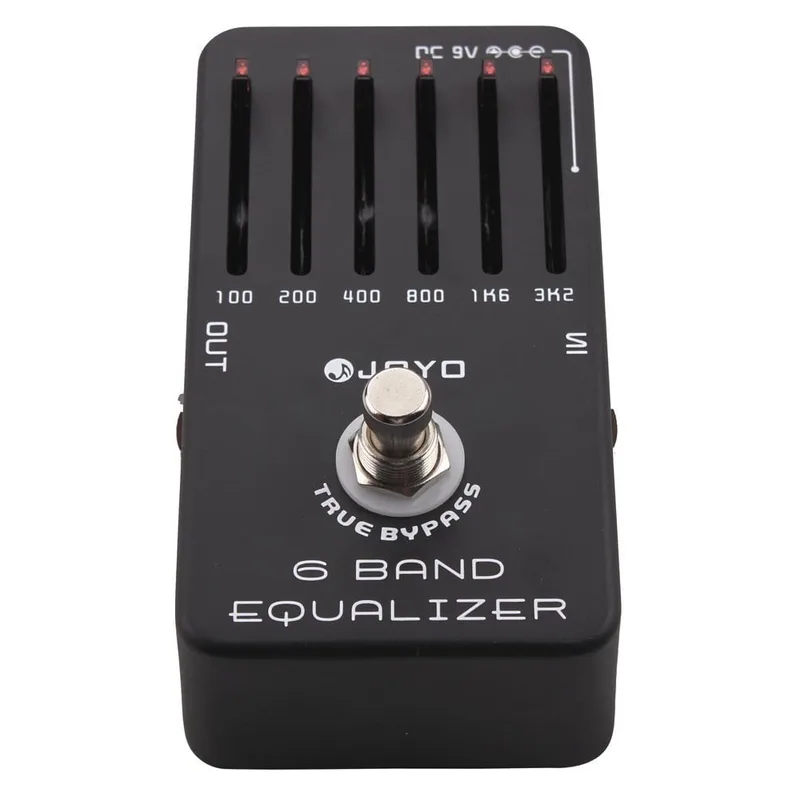
The classic 6-band layout places its bands at 100, 200, 400, 800, 1600 and 3200 Hz, running from the low end of the guitar's range up through the upper mids1. Each band has its own knob, and the center position matters: at 12 o'clock the EQ is completely transparent, letting your pure tone through untouched, so you only change the bands you actually move1.
Because every band sits at 12 o'clock by default, a 6-band EQ works as a set-and-forget tone shaper: dial in your cuts and boosts once, then leave it on.
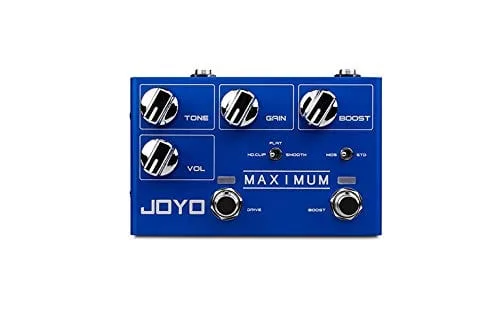
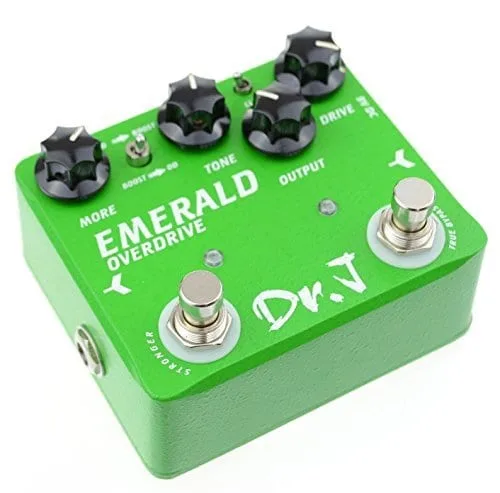
For players building a pedalboard around Joyo effects, an EQ of this kind sits well alongside drive pedals such as the Joyo R-05 Maximum or the Joyo Dr.J Emerald Overdrive, shaping the tone those pedals feed.
How the controls work
| Control | What it does |
|---|---|
| 100 Hz knob | Boosts or cuts the low end |
| 200 Hz knob | Boosts or cuts the low mids |
| 400 Hz knob | Boosts or cuts the mid body of the tone |
| 800 Hz knob | Boosts or cuts the upper mids |
| 1600 Hz knob | Boosts or cuts the presence range |
| 3200 Hz knob | Boosts or cuts the top end |
Each band knob runs from 0 to 10, with 12 o'clock as the transparent center point1. A DIY 6-band graphic EQ project of this kind uses a 1N4005 diode in its circuit2, a common rectifier diode found in many pedal builds.
Videos
Bad Motivator
Dave V
Evil Wizard Productions
Questions
What does a 6-band EQ pedal do?
A 6-band EQ pedal splits your guitar signal into six fixed frequency bands and lets you boost or cut each one independently. This lets you shape your tone, tame harsh frequencies, or add presence without changing your overall gain structure.
What frequencies does a 6-band EQ cover?
A typical 6-band layout places its bands at 100, 200, 400, 800, 1600 and 3200 Hz, covering the low end through the upper mids of the guitar's range. Each band gets its own boost and cut control.
Sources (2)
- Lab #48 - 6-Band EQ, GUP Tech (guptech.ca)
- 6-Band Graphic EQ Pedal: DIY Schematic & Layout, generalguitargadgets.com, 2014-05-14