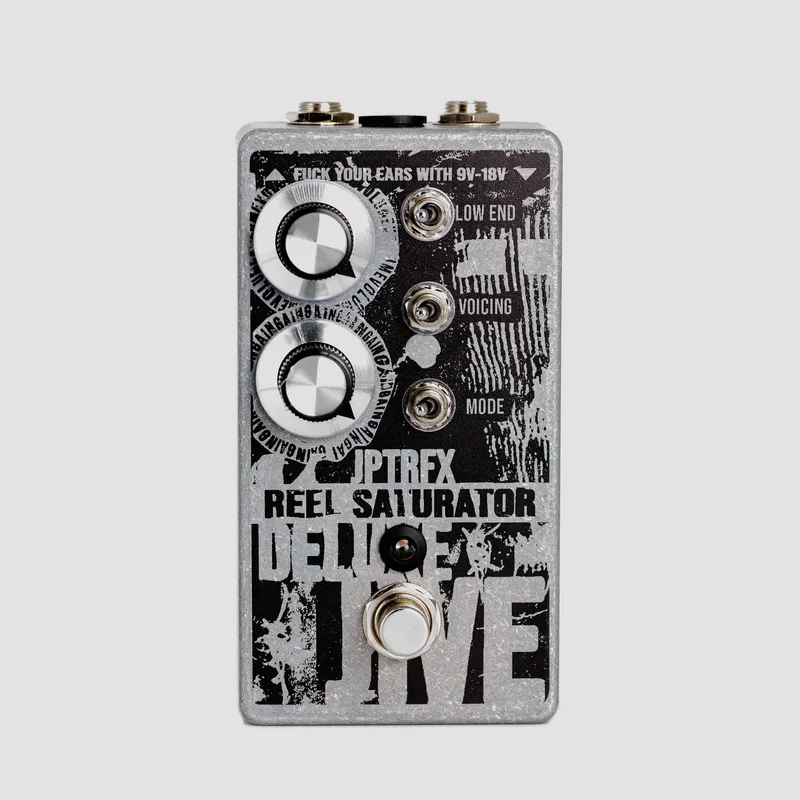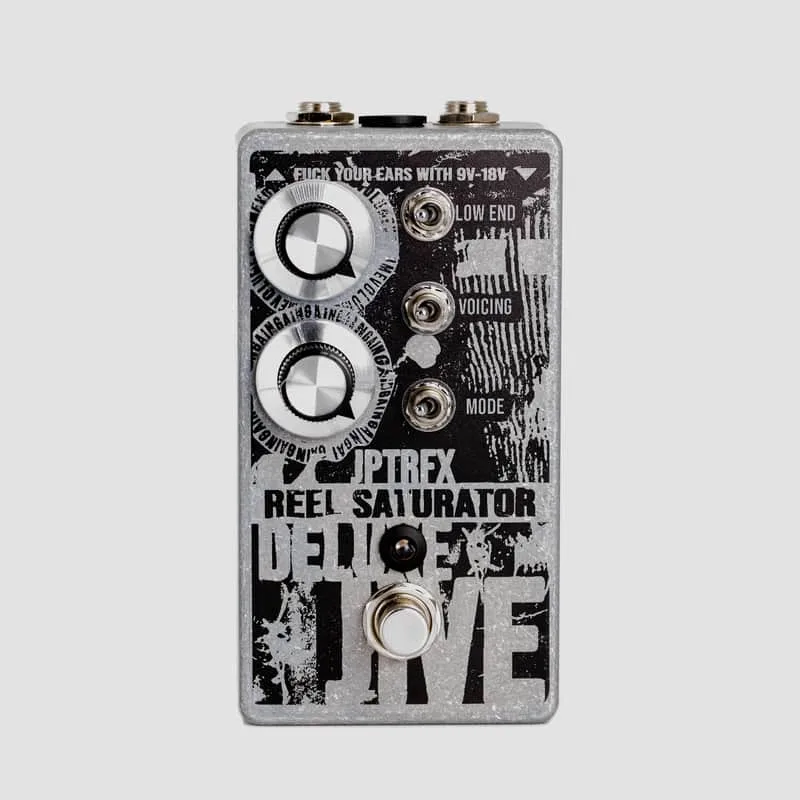


The JPTR FX Jive Reel Saturator is a pedal based on the gain structure of a tape machine. Rather than copying a single effect, it takes the way an old recorder's circuitry breaks up a signal and uses it to add anything from light distortion to fuzz sounds through its various gain stages1. The circuit draws on an Akai GX-210D, one of the old reel-to-reel tape machines the maker came across1. Pedal of the Day, which featured it, said "it can really add an element of sparkle and surprise to your sound"2.
Where it came from
The circuit's starting point is an Akai GX 210d, described by Delicious Audio's Paolo De Gregorio as one of the old tape machines "your grandpa was using when listening to his recordings." The pedal translates that machine's gain structure into a stompbox format1. It sits in the wider JPTR FX family alongside the Deluxe Jive, and players comparing it with more conventional circuits can see how it differs from standard overdrive pedals such as those in the Boss SD-1 vs Ibanez TS9 Tube Screamer comparison.
What it does to your sound
The Jive Reel Saturator covers a wide gain range. Delicious Audio describes its span of uses this way1:
"You can use it as a volume boost, semi transparent overdrive, ennoble your sound with variable distortion or tear some"12
Pedal of the Day put it in similar terms: "It works as a volume boost, semi-transparent overdrive, variable distortion or a dB-enhancing tone machine"2. In practice that means one pedal that can nudge a clean amp louder, add a transparent layer of grit, or push into heavy saturation with lo-fi character. Its reviewer's overall verdict: "it can really add an element of sparkle and surprise to your sound"2.
The controls
The pedal keeps its control set simple: Gain, Volume, and a diode clipping stage1. The diode clipping is the part of the circuit that shapes the breakup, and the Gain control determines how far into the tape-machine-style saturation the pedal drives.
| Control | What it does |
|---|---|
| Gain | Sets how much drive and saturation the pedal produces1 |
| Volume | Sets the output level, which is how the pedal works as a volume boost1 |
| Diode clipping | The clipping stage that shapes the distortion character1 |
Power
The Jive Reel Saturator runs at 9V to 18V1, so it can be powered from a standard pedalboard supply or from an 18V output where the supply offers one.
Videos
JPTR FX
JPTR FX
BassTheWorld.com
Questions
What tape machine is the Jive Reel Saturator based on?
JPTR FX built the pedal around the gain structure of an Akai GX 210d, an old reel-to-reel tape machine. According to Delicious Audio's Paolo De Gregorio, the pedal uses that circuit's character to add anything from light distortion to fuzz-like sounds through its various gain stages.
Can the Jive Reel Saturator run at 18V?
Yes. Delicious Audio lists the pedal as running at 9V to 18V, so it can be powered from a standard 9V supply or an 18V output where more headroom is wanted. Check your power supply's polarity and current rating before connecting any pedal.
Can the Jive Reel be used as a clean boost?
Yes. Both Delicious Audio and Pedal of the Day describe it as usable as a volume boost, alongside its other roles as a semi-transparent overdrive, a variable distortion, or a heavier saturating tone machine.
Sources (2)
- JPTR FX Jive Reel Saturator, Delicious Audio, 2022-02-01
- JPTR FX Jive Reel Saturator Lo-Fi Overdrive Boost, Pedal of the Day, 2019-01-03