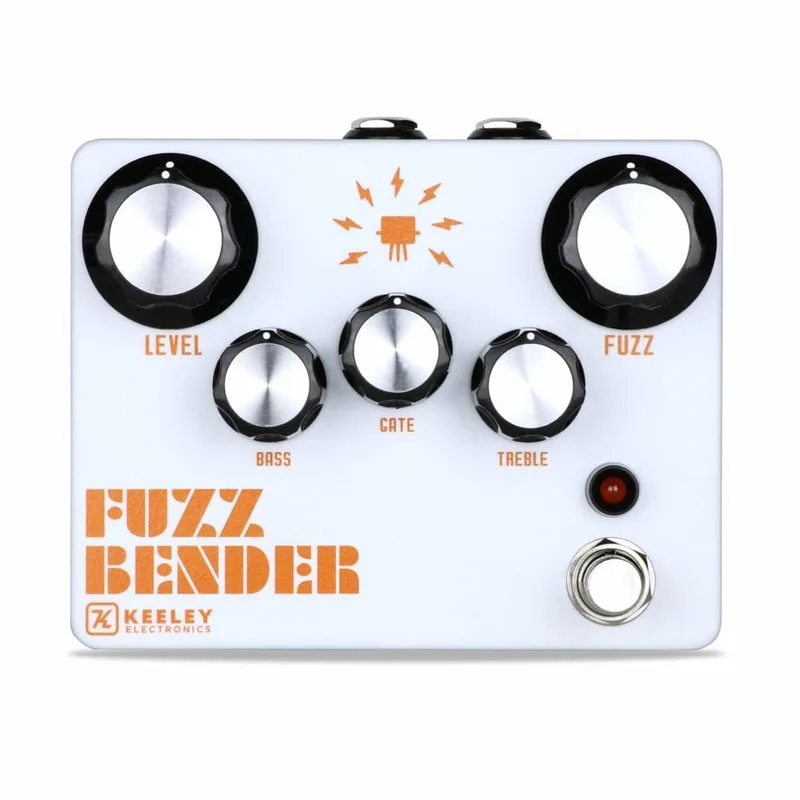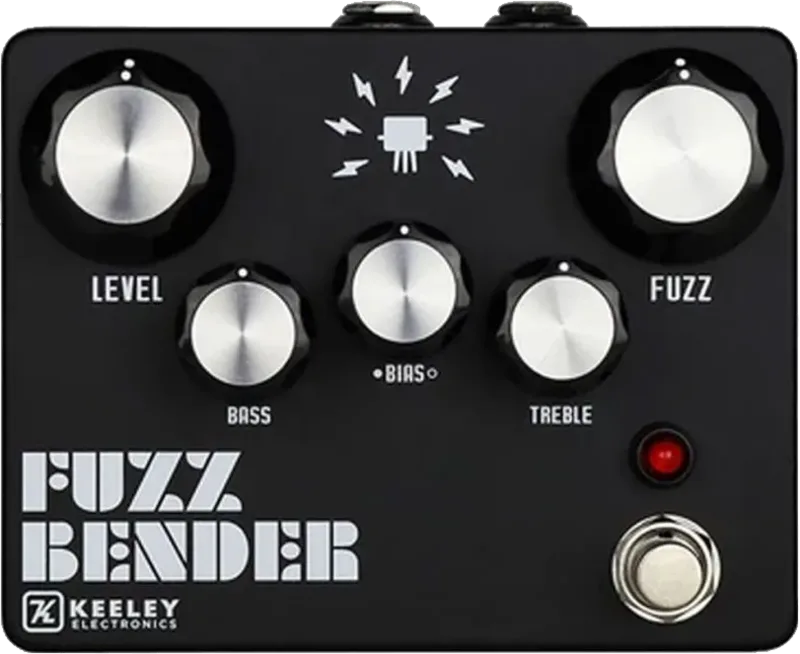
The Keeley Electronics Fuzz Bender Mono Black Limited Edition is an analog fuzz pedal built around vintage Japanese germanium transistors. Keeley describes it as a five-knob, three-transistor modern fuzz that uses a combination of high-gain silicon and silky smooth germanium, and says the circuit creates what the maker calls monumental fuzz tones. It sits in the fuzz family, with a booster function listed alongside, and is a limited-edition version of the Keeley Fuzz Bender.1
Circuit and sound
The Fuzz Bender is built around vintage Japanese germanium, paired with high-gain silicon, across three transistors. The other half of the design is an active EQ built from two gyrators, a filter circuit that RockBoard's PedalPedia says gives you the ability to create massive fuzz tones not possible with typical square-wave fuzz designs.1
"The Fuzz Bender is built around vintage Japanese germanium to create its monumental fuzz tones."
Controls
The pedal carries five knobs over its three-transistor circuit. The control Keeley highlights most is the Bias Control, which shapes the feel of the fuzz rather than just its volume1.
| Control | What it does |
|---|---|
| Bias | Controls the attack and decay of your notes, from Fat Square Waves to Angular Fuzz to glitchy, Velcro-style attacks1 |
"With the all new Bias Control, you control the attack and decay of your notes. Anything from Fat Square Waves to Angular Fuzz to glitchy-Velcro attacks."
Power
The Fuzz Bender runs on 9V DC, center negative, and draws 15mA, which is within reach of a single output on a standard isolated pedalboard power supply.1
Keeley fuzz pedals related to the Fuzz Bender
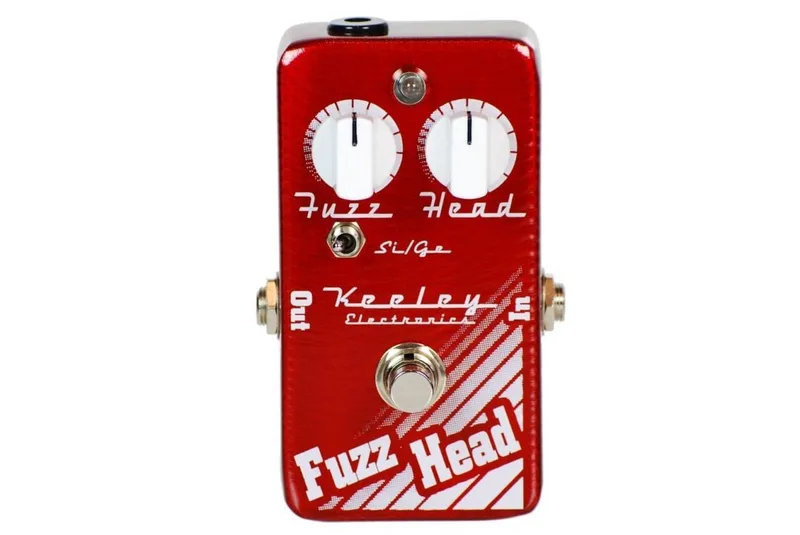
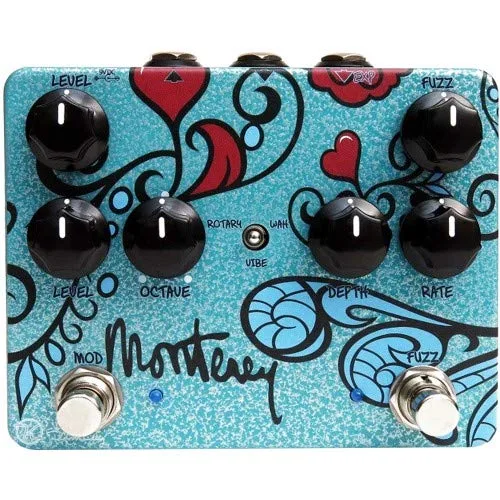
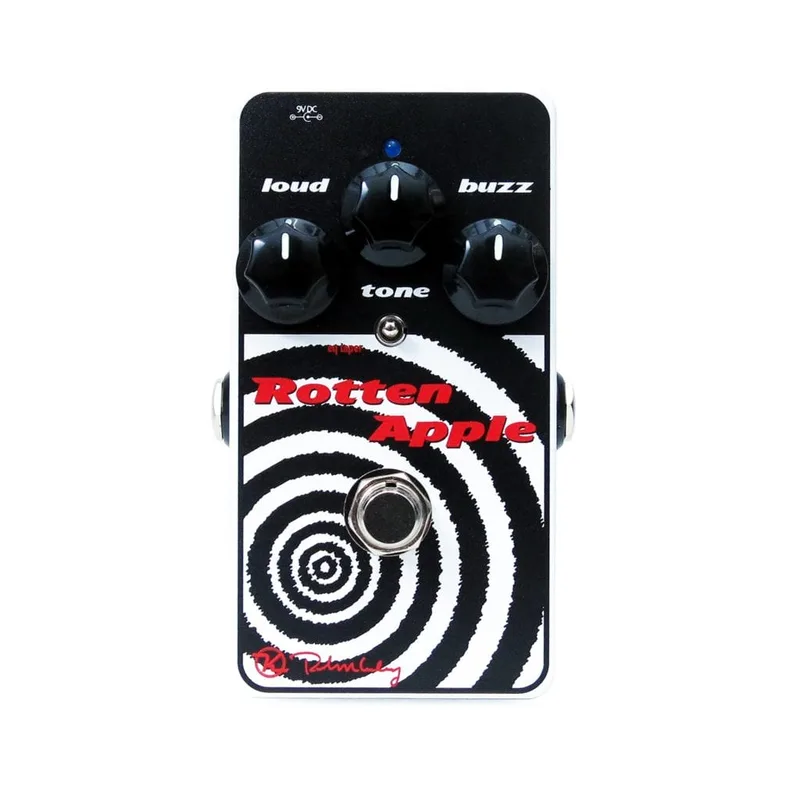
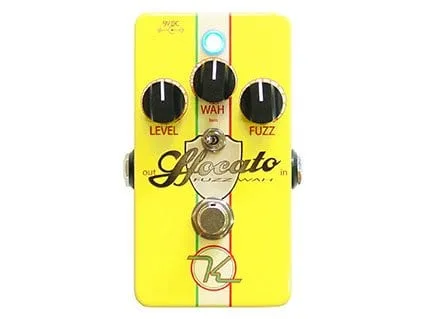
Keeley's fuzz range includes several other designs, among them the Fuzz Head, the Monterey and its Monterey Special Custom Germanium variant, the Rotten Apple, the Sfocato, the Psi Fuzz and the Synth 1.1
Questions
What does the Bias control do on the Keeley Fuzz Bender?
The Bias Control lets you set the attack and decay of your notes. According to Keeley, it covers everything from Fat Square Waves to Angular Fuzz to glitchy, Velcro-style attacks, so it shapes how the fuzz responds and breaks up rather than just how loud or saturated it is.
Is the Keeley Fuzz Bender analog?
Yes. The circuit is analog, built around three transistors: a combination of high-gain silicon and germanium. The active EQ is made from two gyrators, which Keeley says allows massive fuzz tones not possible with typical square-wave fuzz designs.
What power does the Keeley Fuzz Bender need?
It runs on 9V DC, center negative, and draws 15mA. That is standard pedalboard power, so a normal isolated supply output will run it.
Does the Fuzz Bender use germanium or silicon transistors?
Both. Keeley describes the Fuzz Bender as built around vintage Japanese germanium, using a combination of high-gain silicon and silky smooth germanium across its three transistors.
What makes the Mono Black edition different?
The Mono Black Limited Edition is a limited-edition version of the Keeley Fuzz Bender. It carries the same five-knob, three-transistor analog fuzz circuit; the limited edition designation refers to this release's finish and availability.
Sources (1)
- Fuzz Bender Mono Black Limited Edition by Keeley Electronics, RockBoard PedalPedia, 2026