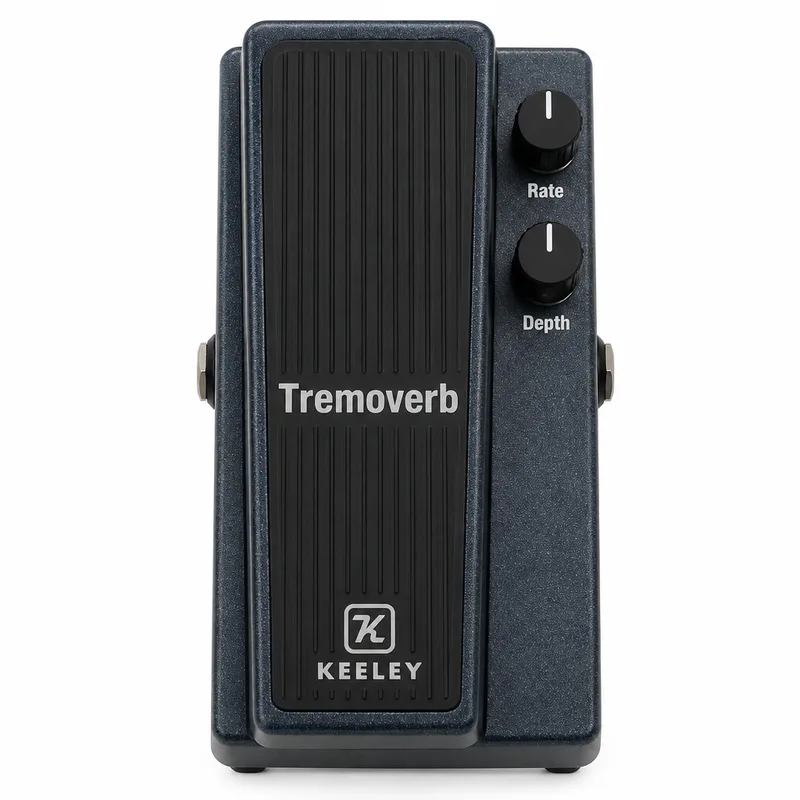
The Keeley Tremoverb is a tremolo and reverb pedal from Keeley Electronics built around a foot-operated treadle, the same rocking control you would find on a wah or volume pedal. Instead of sweeping a filter, the treadle drives the tremolo: rocking it moves both the rate and the depth of the tremolo together, so you can push the effect with your foot while both hands stay on the guitar. Alongside the treadle, the pedal offers reverb and a set of waveform programs that shape how the tremolo moves, including ramp-up, ramp-down, sine, square, harmonic tremolo and rotary-style waves1.
What it does
The Tremoverb pairs a tremolo circuit with reverb in one enclosure, and its defining feature is the treadle. Robert Keeley's own technical write-up of the pedal describes four modes of operation. In the treadle mode, the treadle controls both rate and depth at once: the Rate knob sets the maximum rate the treadle can reach, and the Depth knob sets the maximum depth, so the two knobs act as limits while your foot sweeps between zero and those maxima1.
The waveform programs determine the shape of the tremolo's movement. Keeley lists five waves, with rotary also named among the pedal's waveform programs1:
| Waveform | What it shapes |
|---|---|
| Ramp up | Tremolo movement that rises |
| Ramp down | Tremolo movement that falls |
| Square | Abrupt, on-off style tremolo |
| Sine | Smooth, even tremolo movement |
| Harmonic tremolo | Low and high frequencies moved against each other |
| Rotary | Swirling, rotating-speaker style movement |
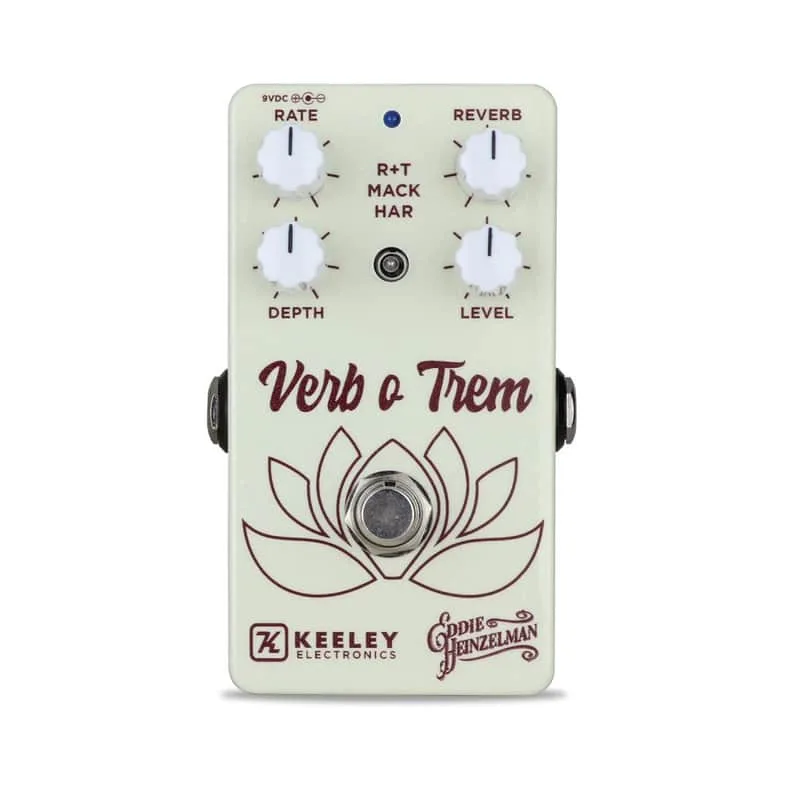
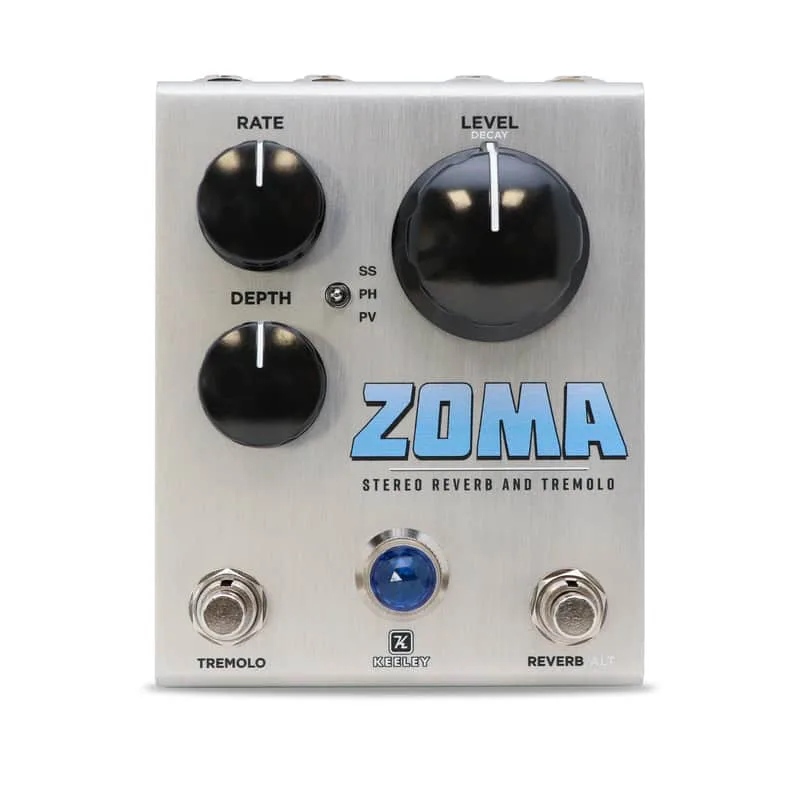
A harmonic tremolo splits the low and high frequencies and pans them against each other rather than simply cutting the whole signal in and out, and a rotary-style wave suggests the swirling movement of a rotating speaker. Players looking for other takes on the tremolo-plus-reverb combination can compare it with the Keeley Verb O Trem or the more recent Keeley Zoma, and with other designs in the site's guides to tremolo pedals and reverb pedals.
How it works under the hood
Keeley published a technical analysis of the pedal's own control code, written by Robert Keeley as an Arduino sketch for an ATMEGA microcontroller, started on 9/20/2016 and last modified on 3/24/20171. The write-up shows the treadle potentiometer reading into the microcontroller on analog input pin A0, which is how the pedal turns the rocking of the treadle into changes in rate and depth1.
One detail from that code matters to players: the pedal's foot gesture control state is stored in internal EEPROM memory, and it is set to off on the very first power up only1.
Because the foot gesture control state lives in EEPROM and is set to off only on the first power up, the pedal remembers its settings between sessions after that initial power-up, and a fresh unit starts with the feature off1.
Sources (1)
- Foot Gesture Control, Keeley Electronics Guitar Effects Pedals (robertkeeley.com), 2017-04-10