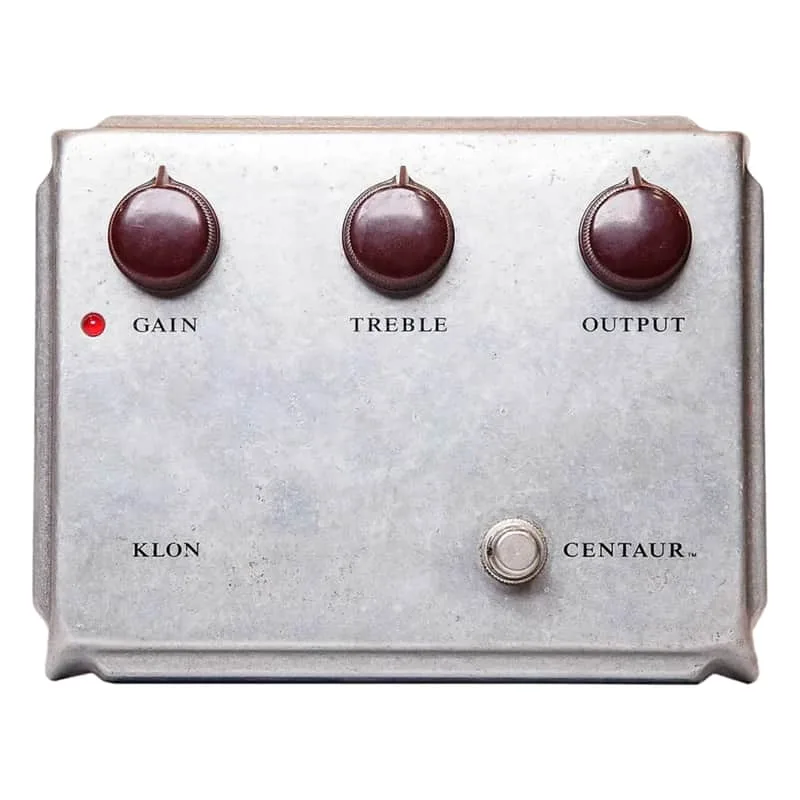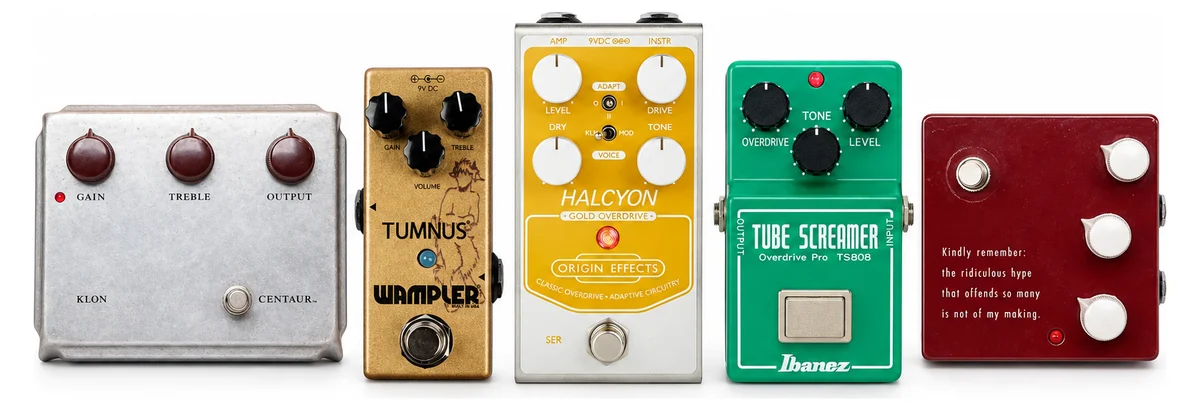


The Klon KTR is an overdrive pedal released by Bill Finnegan in 2014 as the third Klon model, following the original gold KLON Centaur and a second model12. It carries the same circuit as the Centaur in a smaller, cheaper, contract-manufactured build, and it is the pedal Finnegan designed to be attainable where the hand-built Centaur had become a collector's item34.
For a player, the KTR is the practical route to the Centaur sound: the same three controls, the same clipping approach, and a switch that lets you run it buffered like the original or true bypass, something the Centaur never offered56.
The Centaur circuit in a smaller, cheaper build
The KTR is a surface-mount redesign of the Centaur circuit. Finnegan began the ground-up redesign in 2008, and the work took years: he spent almost two years listening to surface-mount capacitors and parts before settling on the final build3. Except for the clipping diodes, everything is surface-mount, which takes less space on the board; there are no hookup wires, the footswitch is a modular assembly, and the whole pedal sits in a standard enclosure considerably smaller than the Centaur3. GuitarPlayer's Dave Hunter describes it as a pedal whose production could be outsourced more affordably and in greater numbers, partly through the use of surface-mount rather than through-hole components2. Coda Effects puts it more bluntly: the KTR is not handmade, but made by robots10.
The payoff is price. The KTR costs significantly less than an original hand-built Centaur on the used market, where Centaurs have sold for as much as $8,0002. It launched at around $300, designed to be attainable at a similar price to the original, and carried a $269 retail price as of Finnegan's 2023 interview83.
The controls and the buffered or true bypass switch
The control set is the same three knobs as the Centaur: gain, treble and output, plus a metal footswitch5. On the front side is a mode switch that alternates between buffered and true bypass5. That switch is the one real circuit difference from the Centaur: it lets the player choose the buffered output of the original Centaur or a true-bypass output3. The original Centaur itself ran buffered bypass through a Carling DPDT switch, not true bypass11.
Which mode to use is up to the player, but the buffered mode is the authentic Centaur configuration, and Aion FX describes the buffered mode as "almost always better"12.
The KTR's switching circuitry was designed by Paul Cochrane, of Tim and Timmy pedal fame, whom Finnegan describes as the good friend who handled that part of the design3.
How it was built: surface-mount parts and contract manufacturing
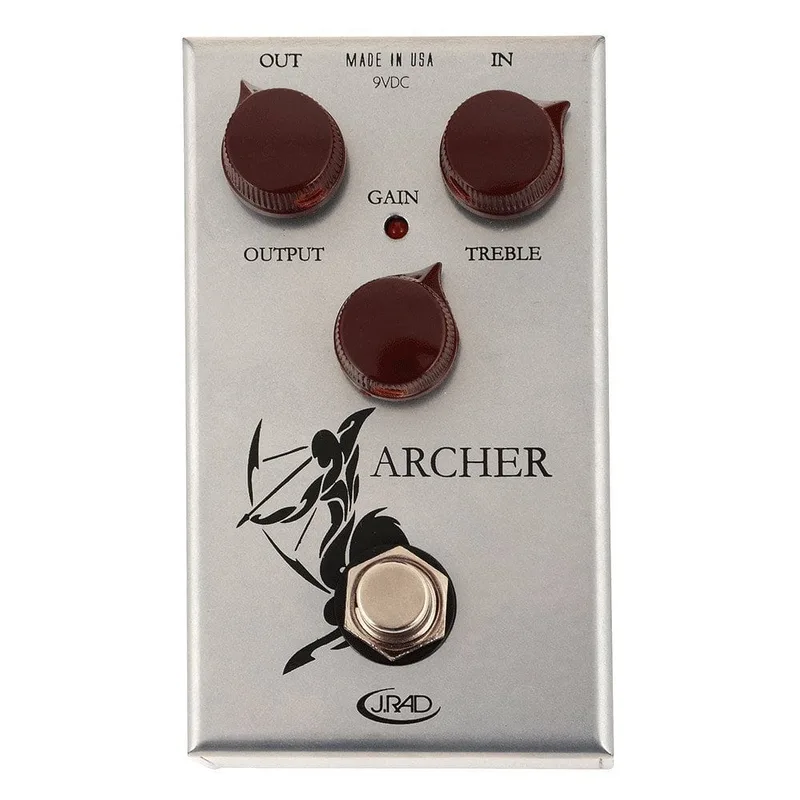
The first production run was contract manufactured by Rocket, as recounted on the JHS Show13. Finnegan was impressed enough with J. Rockett's Archer, a Centaur-inspired pedal, that he consulted with JRAD while developing the KTR14. The design intent, per GuitarPlayer, was a pedal that could be produced in greater numbers than the hand-built Centaur ever was2. By the time of Finnegan's 2023 interview, the unit was expected to be widely available through dealers in the U.S. and various other countries3.
History: the third Klon and the replacement diodes
The KTR originally used the exact same NOS germanium clipping diodes as every Centaur did3. In 2021, that supply of new old stock diodes began to run dry, and Finnegan found a workaround: a substitute diode of a different model, with circuit alterations to compensate1516. As he told Guitar.com, the rework was hard work over the course of maybe three or four months15.
"I had to modify the circuit, so there are some modified values, so that the overall result ends up sounding the same."
The new diode was already in one of the KTR pedals demoed in a September 2021 livestream, in which Matt compared three Klon pedals using a mid '70s Gibson Explorer and a 1970 non-master Silverface Fender Twin, and Finnegan deliberately avoided pointing out which one6. Going forward, KTRs would carry the different clipping diodes17.
Production has since stalled. The company Finnegan contracted to produce the KTRs closed down and returned all the parts, components and enclosures to him, with no timetable for a new producer, per an email relayed on the JHS Show in December 20227. A KTR v2 was announced but never hit the market7.
What reviewers said
MusicRadar, covering the 2021 diode change, reported no detectable difference between the new production run KTR and the others in the livestream demo: "We're certainly impressed, if there's a difference we're not hearing it here"176. Finnegan's own framing was that if you could not hear a difference, that means he had done his work16.
Delicious Audio's Adam Lippman noted there is more than one clone of the Klon on the market, but advised finding and affording an original if possible5. In a later Delicious Audio interview, player Vaughn described the KTR's range: it can be used discreetly on riffs for a classic rock vibe, or cranked for feedback and fuzz-like solos18. Josh Scott of JHS has kept a KTR on his own board for years13.
On price, the picture has moved. The KTR launched at around $300, and by October 2021 some sellers were achieving more than double that8. In December 2022, Scott noted KTRs themselves being cloned and selling for around a thousand dollars7. Even so, gearnews observed that the KTR does not sell for anywhere near as much as original Centaurs19.
The text on the lid
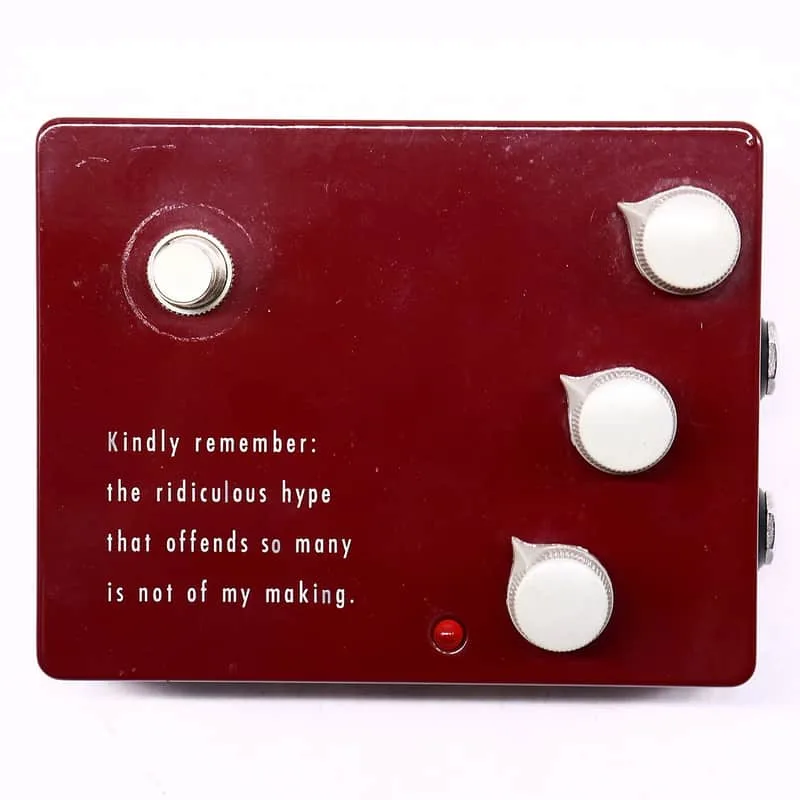
The KTR famously carries an inscription on top: "Kindly remember: The ridiculous hype that offends so many is not of my making."25 Finnegan has said the text has caused controversy with some buyers1. The KTR name is a registered trademark of Klon20.
Videos
Reverb
Gray Bench Electronics
Riley Haynie
News
Questions
Does the Klon KTR sound the same as the Klon Centaur?
According to designer Bill Finnegan, the gold Centaur, silver Centaur and KTR all have the exact same circuit, with differences down to slight component tolerances. The KTR originally used the exact same NOS germanium clipping diodes as every Centaur did. From 2021, replacement diodes of a different model were used, with modified circuit values so the result sounds the same.
What does the text on the Klon KTR say?
The top of the enclosure reads: Kindly remember: The ridiculous hype that offends so many is not of my making. Finnegan has said the text has caused controversy with some buyers, but it has become one of the pedal's best known features.
Is the Klon KTR still being made?
Production has stalled. The company Finnegan contracted to build the KTRs closed down and returned all the parts, components and enclosures to him, and there was no timetable for finding a new producer. A KTR v2 was announced but never reached the market.
Should the Klon KTR be used in buffered or true bypass mode?
The KTR has a switch that lets the player choose the buffered output of the original Centaur or a true bypass output. The original Centaur was buffered, not true bypass, so the buffered mode is the authentic configuration. Aion FX describes the buffered mode as almost always better.
How much is a Klon KTR worth now?
The KTR launched at around $300 and carried a $269 retail price in a 2023 interview. By 2021 some sellers were achieving more than double the launch price, and Josh Scott of JHS noted KTRs being cloned and selling for around a thousand dollars. It still sells for far less than original Centaurs, which have sold for as much as $8,000.
Who designed the KTR's switching circuit?
Paul Cochrane, designer of the Tim and Timmy overdrive pedals, designed the KTR's switching circuitry. Finnegan described him as a good friend who handled that part of the design.
Sources (20)
- The Myth in the Box: Inside the Klon Centaur Phenomenon, gearnews.com, 2026-07-04
- Classic Gear: How the Klon Centaur Overdrive Became a $5,000 Pedal, GuitarPlayer (www.guitarplayer.com), 2021-06-29
- Builder Profile: Klon's Bill Finnegan, Premier Guitar, 2014-01-21
- What makes the Klon Centaur a holy grail guitar pedal?, Guitar World, 2025-05-04
- Review: Klon 3 Aka KTR, Delicious Audio, 2014-08-14
- Klon KTR pedals will be made with new components, Bill Finnegan confirms, MusicRadar, 2021-09-08
- The History And Future Of The JHS Klon Centaur Replica, JHS Pedals (YouTube), 2022-12-05
- Klon KTRs will be available to buy "in about three weeks" according to founder Bill Finnegan, MusicRadar, 2021-10-28
- Best Klon clones 2026: Klon Centaur Klones for every budget, Guitar World, 2022-06-09
- Coda Effects, Coda Effects, 2026
- Maxon OD820 Overdrive Pro versus Klon Centaur, Legendary Tones (republished on maxonfx.com, Godlyke, Inc.), 2004
- Soma Vintage Overdrive / Cornish SS-3, Aion FX, 2019-11-15
- LIVE: Everything Klon Centaur (History, Circuit and Shootouts), JHS Pedals (YouTube), 2020-11-23
- J. Rockett Archer Select, Guitar.com, 2023-06-12
- Klon's supply of legendary NOS diodes dwindles, KTR overdrive to use different diodes, Guitar.com, 2021-09-07
- Klon pedals to use different diodes, as the original NOS supply dwindles, gearnews.com, 2021-09-08
- Bill Finnegan announces future Klon KTRs to be made with new components after NOS diode supply diminishes, Guitar World, 2021-09-08
- Klon KTR Overdrive, Delicious Audio, 2016-05-19
- Bill Finnegan is selling the original Klon Centaur Overdrive again!, gearnews.com, 2019-02-13
- NOTAKLÖN, JHS Pedals