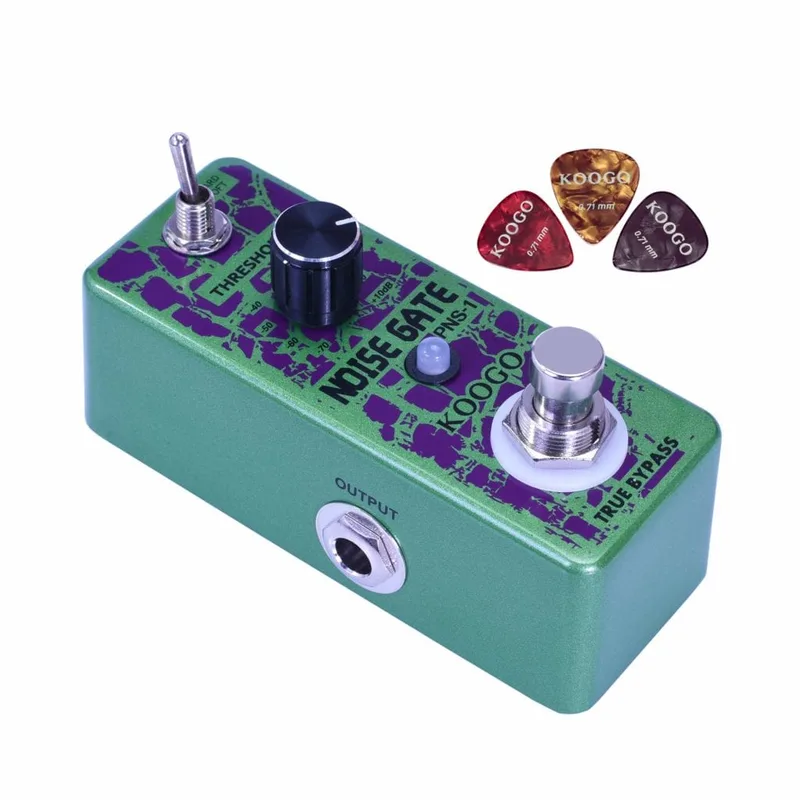
The Koogo Noise Gate is a compact noise gate pedal from Koogo. A noise gate does one job: it clamps down on and eliminates any signal below a certain threshold, so the hum, hiss and buzz of high gain pedals and single coil pickups go silent the moment you stop playing1. That makes it a more harsh, less responsive option than a noise suppressor, which fades noise down instead of cutting it dead1.
How a noise gate works
The gate compares your signal against a threshold level you set. Play a note above that level and the gate opens to let the signal through; let the note die away below it and the gate closes, taking the noise with it. Guitar World's buyer's guide breaks the controls down like this2:
| Control | What it does |
|---|---|
| Threshold | Sets the level at which the gate will "open" and let signal through |
| Attack | How long the gate takes to move from closed to fully open, like a fade in |
| Release | How long the gate takes to go from open to closed; fast stops the sound dead, slow fades it out |
| Range | How much the signal is reduced when the gate is closed; for guitar often hard set to complete attenuation |
| Hold | How long the gate stays open after the signal falls below the threshold; more common on studio or broadcast kit |
Release time matters for players using time effects: Sound On Sound notes it needs to be adjustable so slowly decaying sounds such as reverb tails are not cut off early, and simpler versions may make attack time automatic3.
A gate set too high, or a poor quality one, can make the sound switch on and off abruptly rather than fade smoothly, according to Kit Rae's technical analysis of David Gilmour's Big Muff tone4.
Where to put it
Boss's guidance is that if you are running several gain or EQ pedals, it is best to position the noise gate after all of them, so it reduces the noise of any pedals in front of it1. For amplifiers with an effects loop, the four cable method goes further: you put drive pedals and the guitar preamp in the loop and run the effects send of the amp into the pedal return, so the gate is triggered by the clean input of the guitar and downstream noise can never open it2.
Fast, sensitive gating has also become part of a style of playing in its own right. Boss's Joe Branton writes that "the fast clamping of a sensitive noise gate has become a quintessential part of the complex rhythmic note stabs of djent"1.
Alternatives
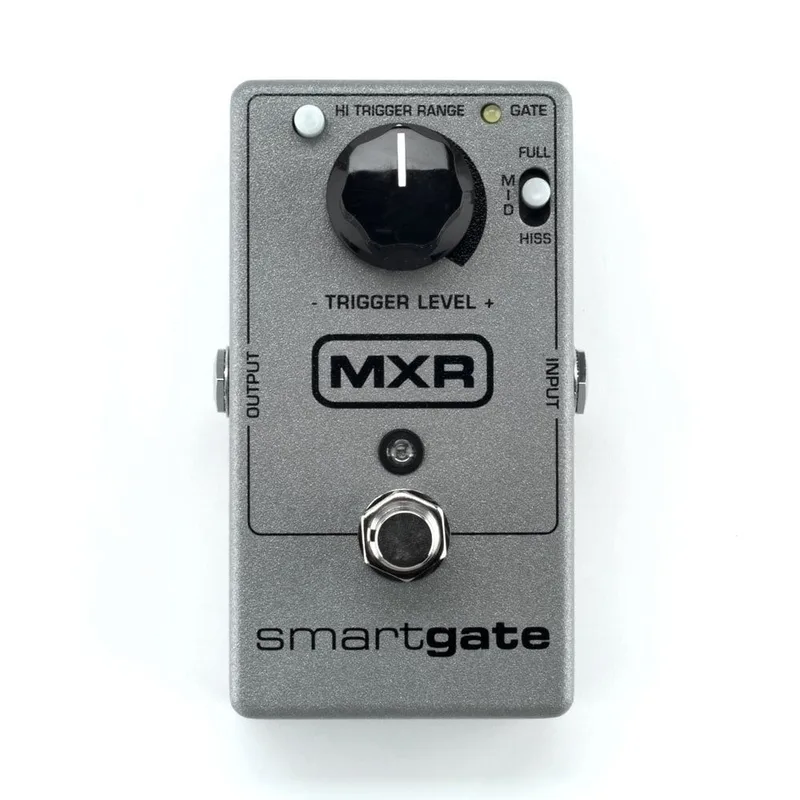
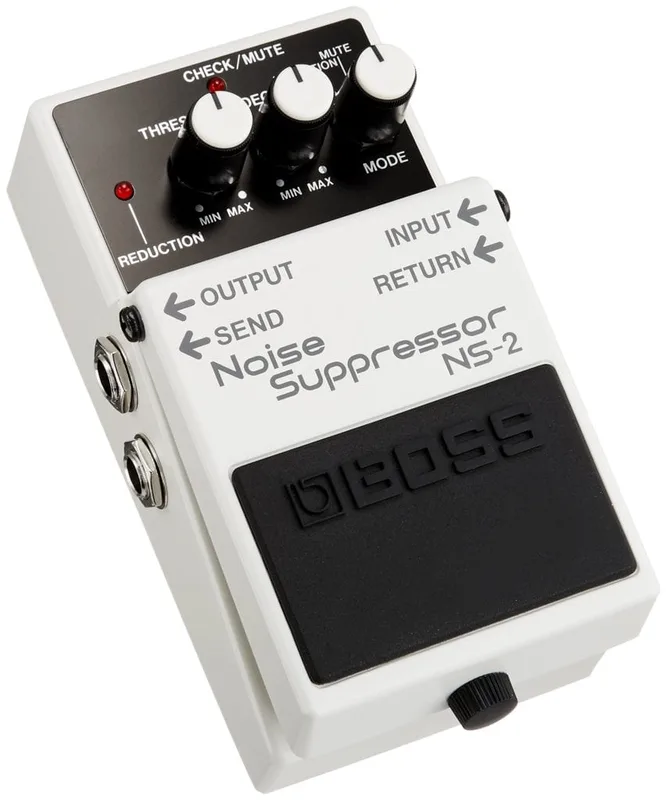
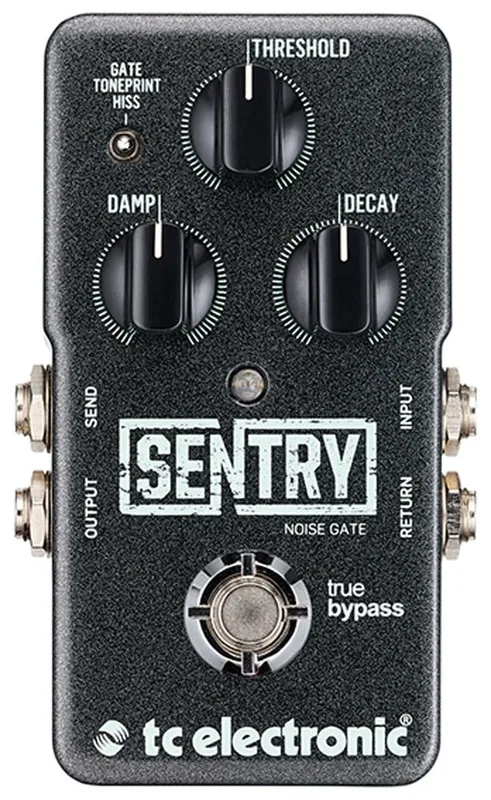
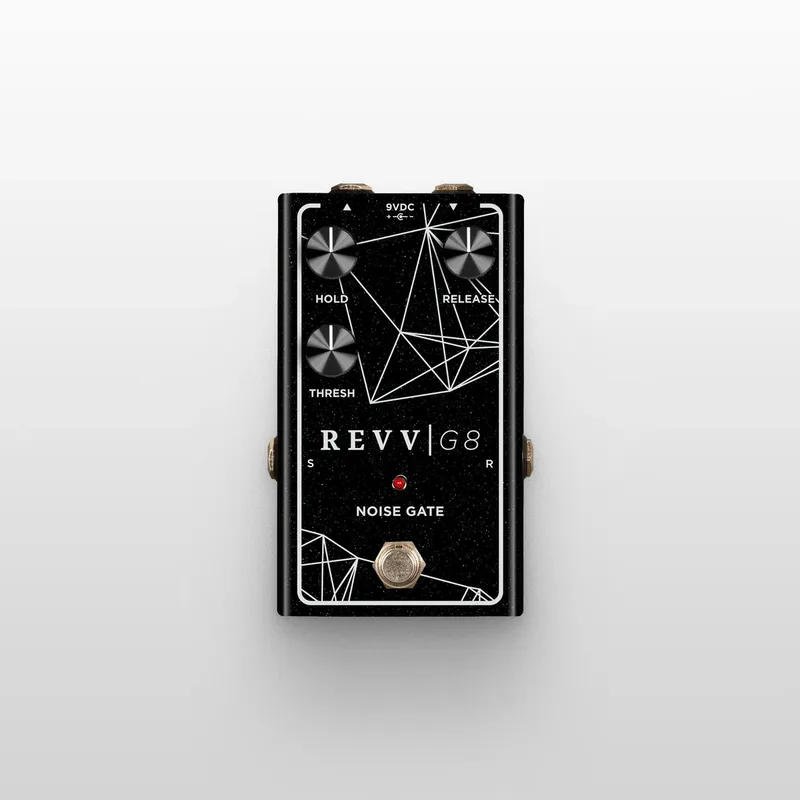
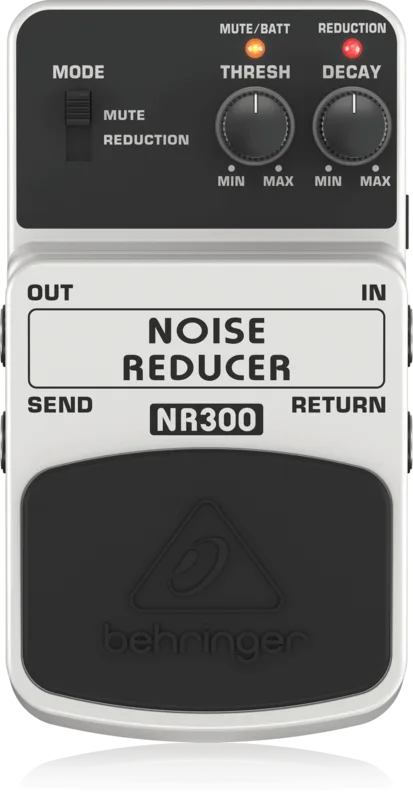
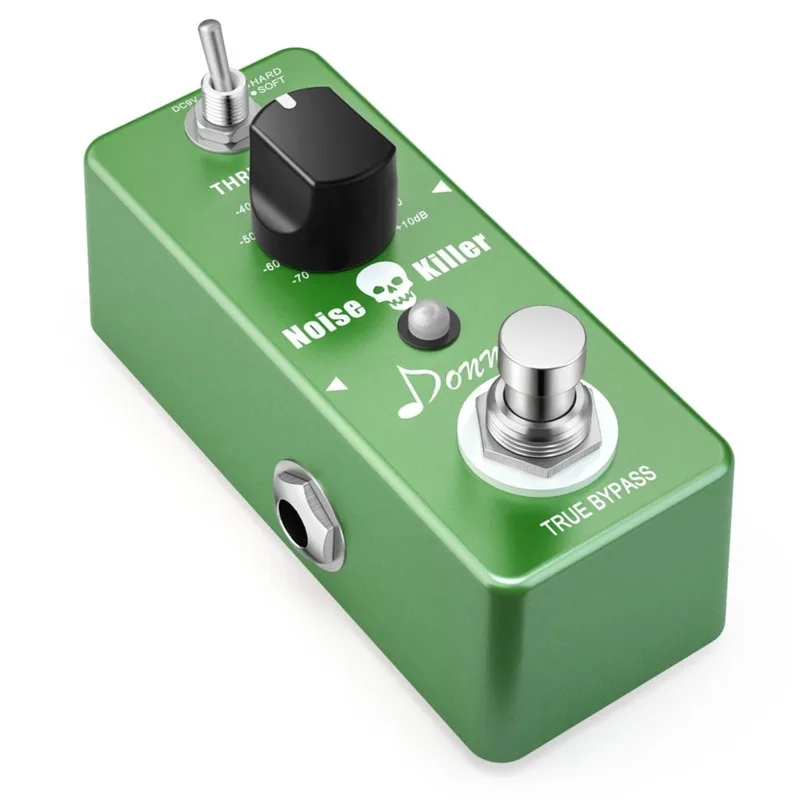
If you are comparing gates, Kit Rae names the MXR Smart Gate, Boss NS-2 and ISP Decimator as good ones on the market4. Pages here cover the MXR Smart Gate, the Boss NS-2 Noise Suppressor, the TC Electronic Sentry, the Revv G8 Noise Gate and many other compact options, including budget gates like the Behringer NR300 and Donner Noise Killer.
Questions
What does a noise gate pedal do?
A noise gate listens to your signal and mutes everything below a set level, so hum, hiss and pedal noise disappear when you stop playing. When you play a note, the gate opens and lets your signal through. It is a harder, less responsive tool than a noise suppressor, which attenuates noise gradually instead of cutting it off.
Where should a noise gate go on my pedalboard?
If you run several gain or EQ pedals, Boss's guidance is to place the noise gate after all of them, so it reduces the noise of every pedal in front of it. Players using an amplifier's effects loop can also use the four cable method, which lets the gate be triggered by the clean guitar signal so downstream noise can never open it.
What controls does a noise gate have?
The common ones are threshold, which sets the level at which the gate opens, attack, which sets how fast it opens, release, which sets how fast it closes, and range, which sets how much the signal is reduced when the gate is shut. Hold, which keeps the gate open briefly after the signal drops, is more common on studio gear.
Sources (4)
- The Complete Guide to Noise Gate and Suppressor Pedals, BOSS (articles.boss.info), 2023-11-30
- Best noise gate pedals 2026: clean up your signal, Guitar World, 2021-03-19
- Multi-effects Explained: Part 2, Sound On Sound, 1997-08
- David Gilmour Tone Building, Kit Rae (Kit's Secret Guitar, Gear, and Music Page), 2019-12