


The LPD Pedals Eighty7 is an overdrive/distortion pedal built to put hot-rodded Marshall tones of the mid to late '80s on a pedalboard. Its circuit is designed with one gain mode dedicated to a Plexi and the other to a JCM800, and the aim of the design was to capture the modified Plexi tones and feel that Los Angeles recording studios were tracking in the '80s1. LPD stands for Lawerence Petross Design, the builder behind the pedal2.
It was priced at $229.99 when MusicRadar covered it in October 2020, and was available direct from LPD Pedals1. Delicious Audio describes it as a flexible overdrive/distortion pedal with a full three band plus presence EQ section and two gain modes, and considers it one of the best boutique Plexi-style pedals3.
What it does: hot-rodded '80s Marshall tones
The Eighty7 sits in the amp-in-a-box family of overdrives, pedals that model the character of a specific amplifier rather than a generic clipping curve. Here the targets are two Marshalls from different eras: the Green mode is voiced after a Plexi and the Red mode after a JCM800, both with the modifications that Los Angeles studio players were applying to those amps in the '80s12.
How the two modes differ, as Delicious Audio describes them:
| Mode | Character |
|---|---|
| Green | Percussive and dynamic with plenty of body to punch through even the most demanding mixes2 |
| Red | More saturated and compressed, for liquid leads and full chugging palm muted rhythms2 |
In other words, Green behaves more like an amp being pushed hard but still breathing, while Red behaves like an amp fully dimed, with the compression that comes with it. A player who wants both a rhythm crunch and a saturated lead sound in one box can switch between them with the toggle on the face of the pedal243.
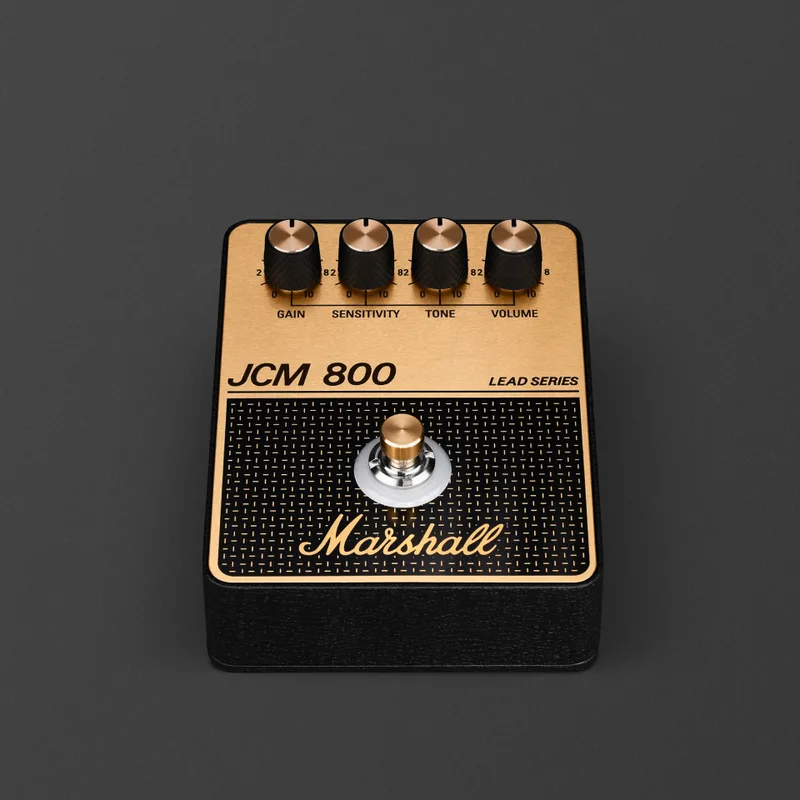
For context, Marshall itself now sells a JCM800 Overdrive Pedal, which the maker describes as covering "everything from rich, saturated distortion to cleaner, driven tones" with simple tone controls5. Guitar World's reviewer found "the chewy, thick distortion you get with a dimed 800, and this is available in spades with Marshall's latest pedal"6. The Eighty7 takes a different route to similar territory: rather than one official JCM800 voicing, it offers two switchable voicings drawn from the modified-amp world of '80s session players.
The controls
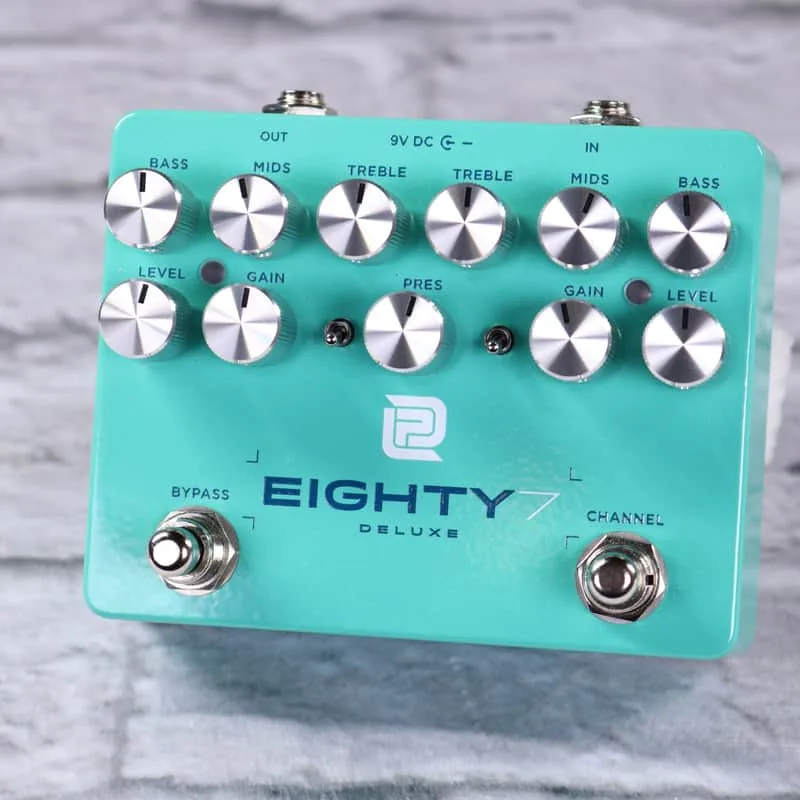
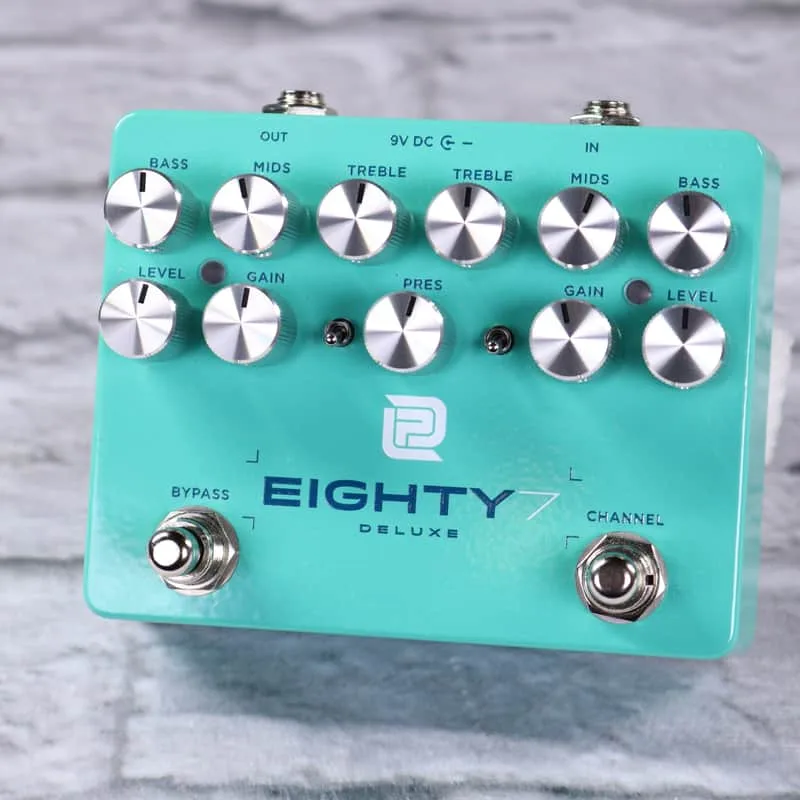
The Eighty7's control layout is arranged in two rows. You get a row of Bass, Middle and Treble knobs, a row of Level, Presence and Gain, and a toggle switch in the middle to select the low or high gain mode1.
| Control | What it does |
|---|---|
| Gain | Sets the amount of drive in the selected mode |
| Level | Sets the output volume |
| Bass, Middle, Treble | Full three band tone stack for control over frequency shaping2 |
| Presence | Adds or cuts sparkle to help cut through the mix or blend better with your chosen amp2 |
| Toggle | Selects the Green (Plexi) or Red (JCM800) gain mode1 |
The full Bass, Mid and Treble tone stack is worth noting for an amp-in-a-box pedal: it allows complete control over the frequency shaping of the tone, rather than the single tone knob many overdrives carry2. The Presence control works like the presence control on the amps being modeled, adding or cutting high end sparkle2.
Power: 24V internal from a 9V supply
The Eighty7 runs from a standard Boss type 9V DC center negative power supply, the same adapter or isolated output most pedalboards already have2. Internally, the circuit operates at 24 volts, which the pedal generates from that 9V input2.
The higher internal voltage is the point of the design: 24 volt internal operation gives the circuit more headroom than a 9V rail, which matters for an amp-style overdrive that needs to stay clear when pushed. No special adapter is required, just a standard 9V DC center negative supply2.
The Eighty7 uses relay true bypass with Switchcraft open frame jacks, so the guitar signal passes straight through when the pedal is off2.
The Eighty7 Deluxe
In 2020, LPD Pedals also released a two channel version, the Eighty7 Deluxe, which Delicious Audio calls a Dual Plexi Drive overdrive/distortion pedal31. It was unveiled to celebrate the success of the original circuit3.
The Deluxe keeps the two voicings but gives each its own channel with independent settings723:
- Level, Gain, Bass, Mids and Treble controls per Eighty7 side, with the Presence control being global7
- Top mounted jacks7
- Soft touch true bypass switching7
- 9V DC center negative power2
Because each channel has its own Level, Gain and tone controls, a player can set up one channel for a lower gain rhythm sound and the other for a saturated lead, then switch between complete presets rather than just two voicings of one setting. Delicious Audio notes the Deluxe can cover a lot of ground, including clean and edge of breakup preamp tones as well as '80s guitar tones3.
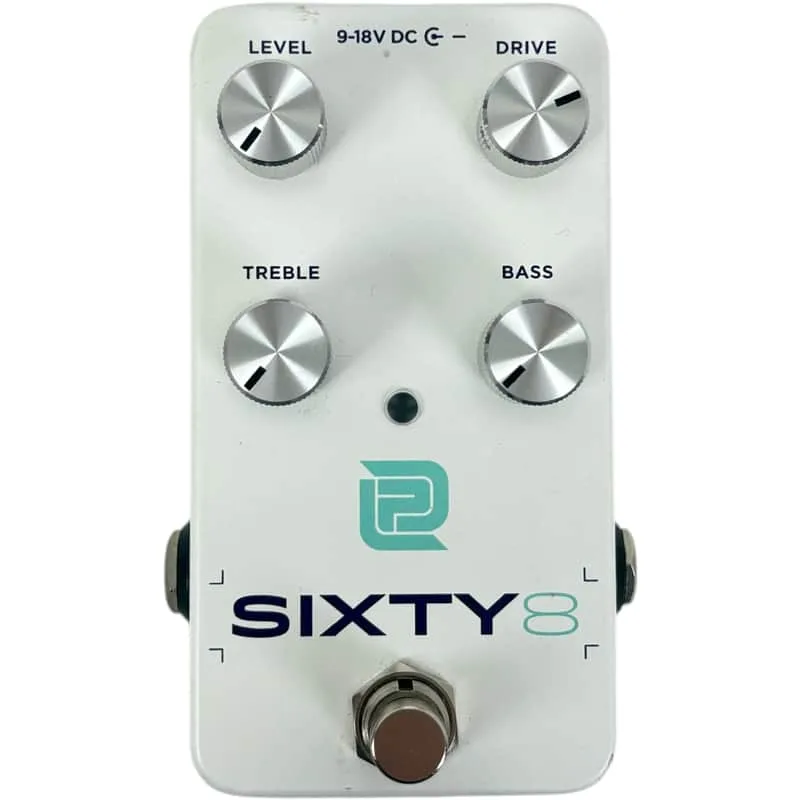
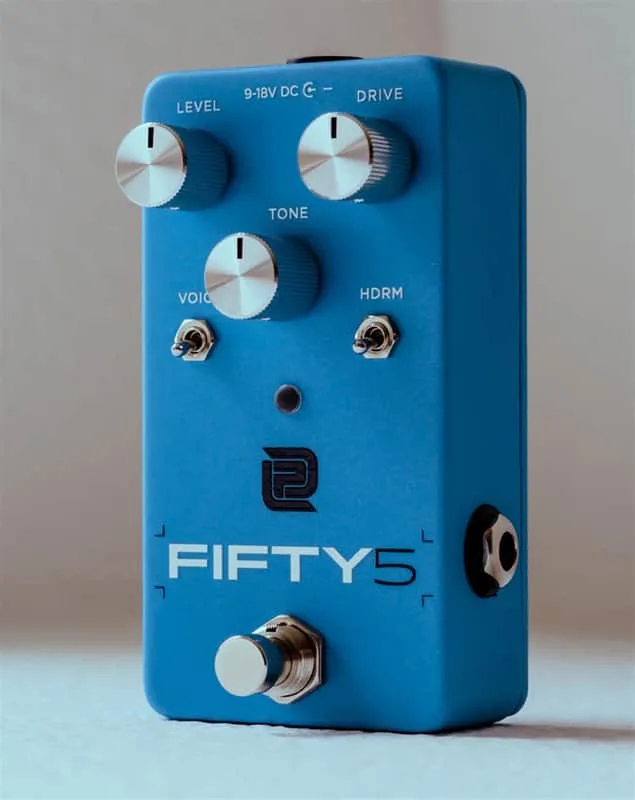
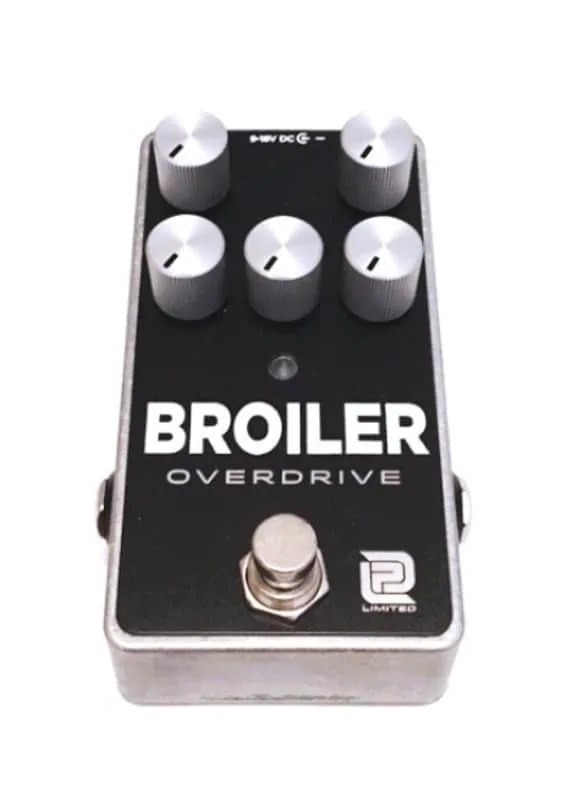
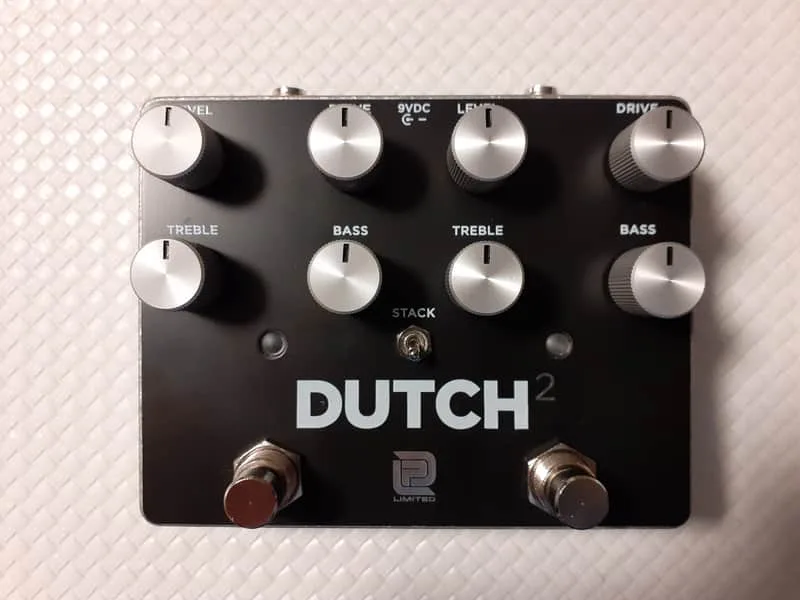
The Eighty7 is part of a wider LPD Pedals range of amp-in-a-box overdrives, including the Sixty8 Overdrive, the Tweed-voiced Fifty5, the Dumble-inspired Broiler and the Dutch² Dual Overdrive, alongside other Plexi-style pedals in the overdrive category23.
Videos
LPD Pedals
LPD Pedals
Mike Hermans
Questions
Is the LPD Eighty7 true bypass?
Yes. The standard Eighty7 uses relay true bypass with Switchcraft open frame jacks, so the signal path is out of the circuit entirely when the pedal is off. The Eighty7 Deluxe uses soft touch true bypass switching, which does the same job with a lighter foot press.
What power supply does the LPD Eighty7 need?
It runs on a standard Boss type 9V DC center negative power supply, the same supply most pedalboards already use. Internally the circuit operates at 24 volts, which the pedal generates from that 9V input, giving the headroom of a higher voltage rail without needing a special adapter.
What does LPD stand for?
LPD stands for Lawerence Petross Design, the builder behind LPD Pedals. The company has built a range of amp-in-a-box overdrives including the Sixty8, Fifty5, Broiler and Dutch pedals alongside the Eighty7.
Does the LPD Eighty7 Deluxe have top-mounted jacks?
Yes. The Eighty7 Deluxe, the two channel version of the Eighty7 released in 2020, has top mounted jacks, which makes it easier to fit on tight pedalboards where side jacks would crowd the patch cables.
Sources (7)
- Get two classic Marshall tones from one pedal with LPD Pedal's Eighty7 preamp/overdrive, MusicRadar, 2020-10-28
- LPD Pedals Eighty7 Distortion/Overdrive, Delicious Audio, 2021-08-23
- LPD Pedals Eighty7 Deluxe Dual Plexi Drive, Delicious Audio, 2021-11-22
- 2024 Best Plexi Pedals & Marshall-Style Distortions: A Buyer's Guide | Delicious Audio, Delicious Audio, 2024-09-16
- JCM800 Overdrive Pedal, Marshall (www.marshall.com)
- Marshall 1959, JCM800, JCM900, DSL, and JVM overdrive pedal review, Guitar World, 2025-01-30
- EIGHTY7 DELUXE by LPD Pedals, RockBoard PedalPedia, 2026