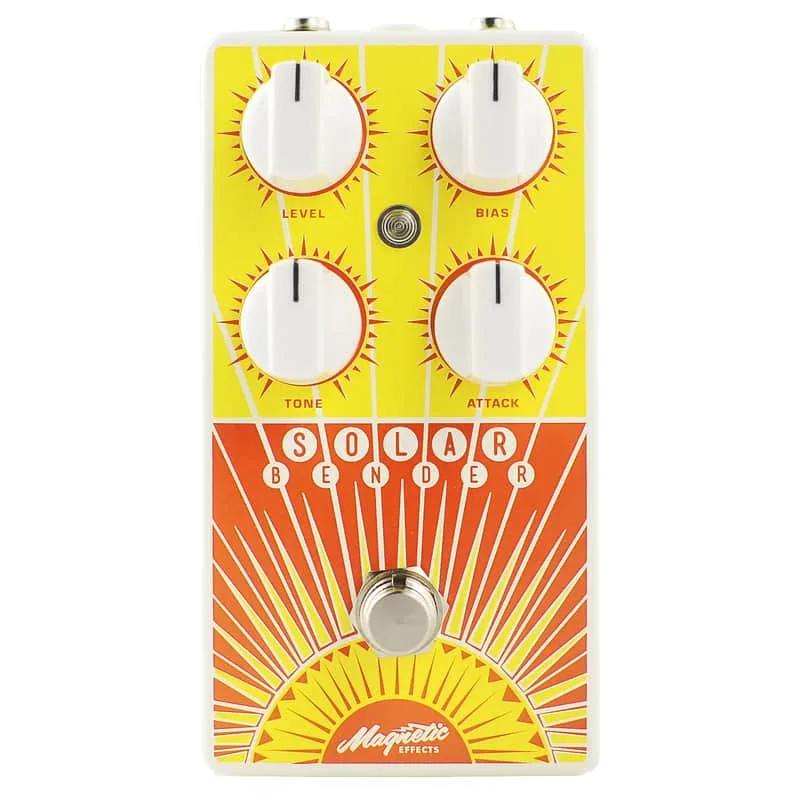


The Magnetic Effects Solar Bender is a fuzz pedal from London, UK, built as a modern take on the classic Sola Sound Tone Bender MKII123. Where the 1960s originals were temperamental boxes that really only worked from a battery, the Solar Bender is designed to slot into a modern pedalboard: true bypass switching, a charge pump so it runs on a standard 9V center negative adapter, and a bias control to counter the temperature drift that affects germanium transistors14.
Guitar Interactive described the original 2013 pedal as "a great sounding AND easy to use fuzz that integrates well into a modern pedal board"1. Delicious Audio says the V3 offers "smooth, saturated fuzz tones with excellent harmonic overtones, sustain and an organic mid range response"3.
What it does: a Tone Bender MKII fuzz for modern pedalboards
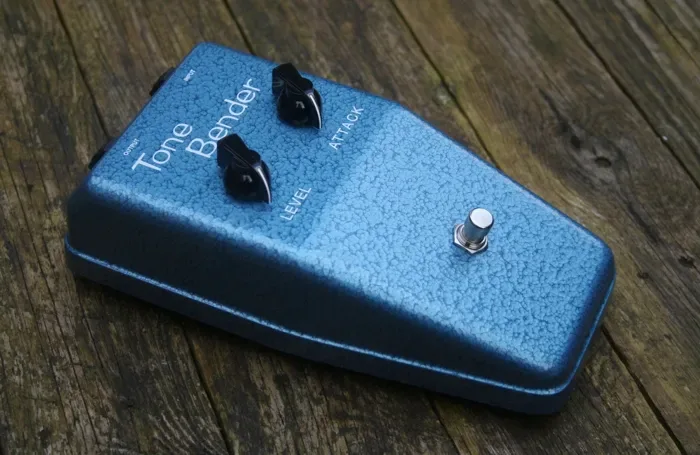
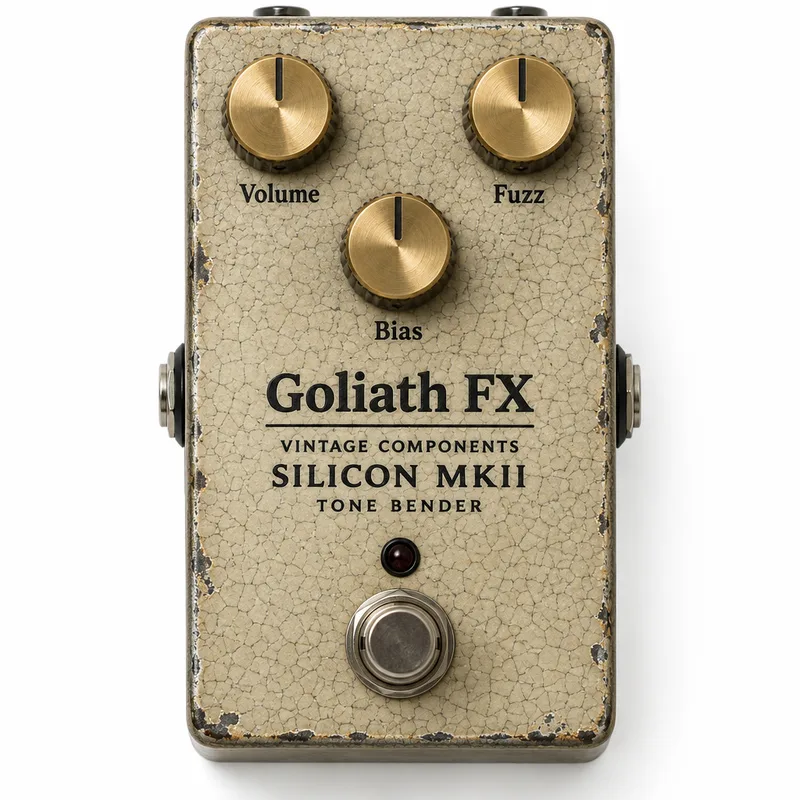
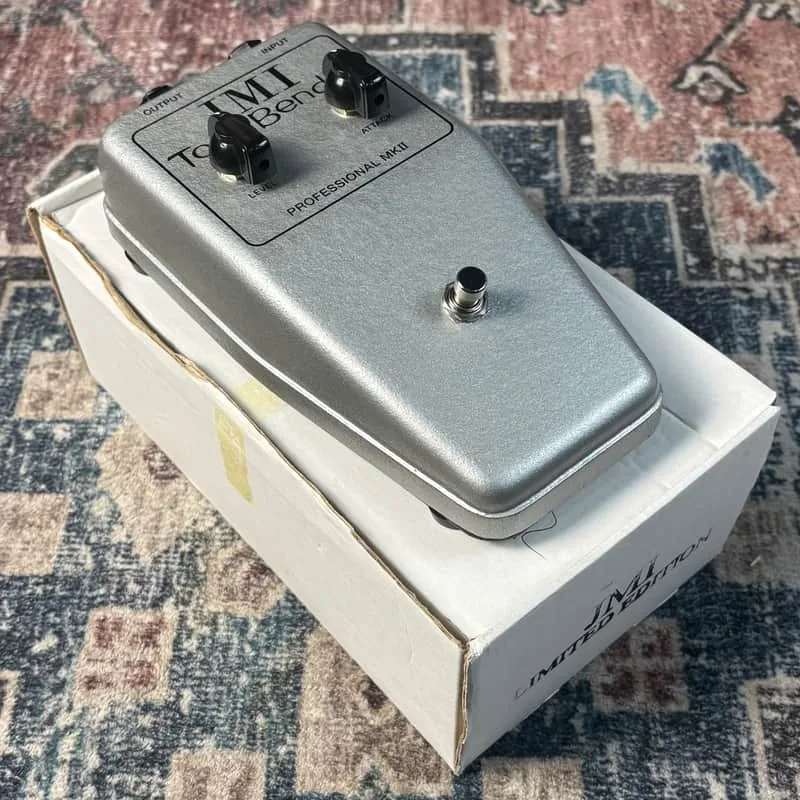
The Solar Bender is an enhanced clone of the Tone Bender MK II, the three-transistor germanium fuzz that Sola Sound built in several versions between 1966 and 196817. The MKII circuit is the same family that other modern builders have revisited, including the D*A*M Tone Bender MKII SCB, the Goliath FX Vintage Components Silicon MKII Tone Bender and the JMI Tone Bender Professional Mk II.
What separates the Solar Bender from a straight reproduction is the set of practical additions. The original pedal came with NOS PNP germanium transistors, a bias control for temperature drift, a Fat switch for extra bass response, true bypass switching, and the charge pump that lets it share a standard power supply with the rest of a board1. Gearnews noted of the V2 that Magnetic Effects "claim to have solved the issue with temperature changes that the old units suffer from"2.
The controls
The control set grew over the pedal's life. The 2013 original had Level, Attack and Bias knobs plus a Fat switch1. The V2 and V3 settled on four knobs, Level, Attack, Bias and Tone, with the V3 adding a three-position bass toggle263.
| Control | What it does |
|---|---|
| Level | Output volume63 |
| Attack | Fuzz intensity63 |
| Tone | Shapes the EQ response63 |
| Bias | Compensates for temperature drift in the germanium transistors1 |
| Bass toggle (V3) | Three positions to tweak the low end63 |
| Fat switch (2013 original and MK 2) | Enhances the bass response for greater tonal possibilities14 |
The Bias knob is the one that matters most to a germanium fuzz owner. Germanium transistors shift their operating point as temperature changes, and the Bias control lets you correct that from the top of the pedal instead of rebiasing the circuit internally1.
Power and connections: 9V center negative with a charge pump
PNP germanium transistors normally want a positive ground, which is why vintage fuzzes conflict with modern center negative power supplies. The Solar Bender solves this with a charge pump acting as a polarity reverse circuit, "enabling powering on a standard 9V centre negative adapter and daisy chaining with other pedals while using PNP germanium transistors"14. The V3 keeps the polarity reverse circuit and runs on a standard 9V DC center negative adapter63.
The pedal is also buffer friendly. Delicious Audio reports that the V3's high input impedance and low output impedance make it, unlike many fuzz pedals, compatible with buffered bypass pedals, pedal switchers and wireless systems3. Gearnews noted the same of the V22. The MK 2 moved the jacks and DC socket to the top of the enclosure4.
The 2013 original could run on a 9V DC adapter or a battery1. Later versions are built around a standard 9V DC center negative adapter, so plan on a power supply rather than a battery for the MK 2, V2 and V3463.
Versions: V2, MK 2 and V3
The Solar Bender went through several revisions between 2013 and 2018.
| Version | When | What changed |
|---|---|---|
| MK 2 | Date not stated | New artwork, top mounted jacks and DC socket; Magnetic Effects says it integrates well into a modern pedal board4 |
| V2 | Released "this week" per the announcement | Designed to run from a regular power supply, where the originals only really worked from a battery; maker claims to have solved the temperature issues the old units suffer from; $155 US plus shipping52 |
| V3 | September 5, 2018 | Three position bass response toggle switch, tweaked EQ response, polarity reverse circuit6 |
The V2 was priced at $155 US plus shipping, or GBP £105 plus shipping RRP in the UK52. Gearnews liked the V2's big white knobs "for dialling in your fuzz tones" and said of the demo that "the demo, to my ears, sounds good"2.
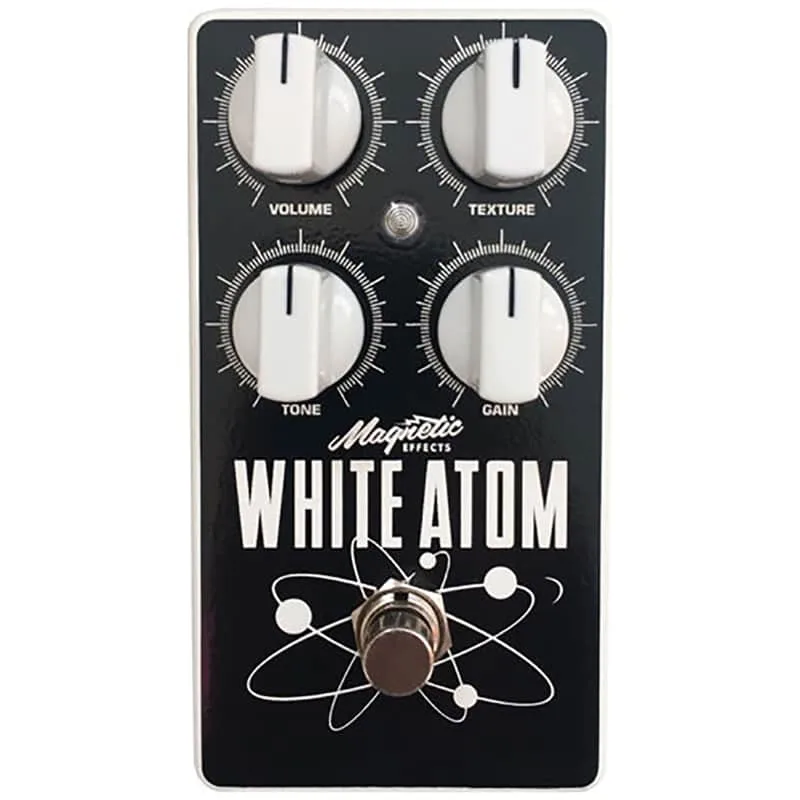
Magnetic Effects has applied the same thinking across its range, including the White Atom hybrid germanium and silicon fuzz, the Buzzer UVB-76 Buzzaround clone, and the limited-edition Black Moon Fuzz Face style fuzz.
Videos
ProGuitarShopDemos
Magnetic Effects
Mike Hermans
Questions
Does the Solar Bender use germanium transistors?
Yes. The original Solar Bender used three NOS PNP germanium transistors, and the MK 2 kept PNP germaniums. The V2 and V3 moved to a mix of tested and selected germanium and silicon transistors, which Magnetic Effects says gives an authentic vintage-style fuzz character.
Can the Solar Bender run on a battery?
The original 2013 Solar Bender could run on a 9V DC adapter or a battery. Later versions were built around a standard 9V DC center negative adapter, with top mounted jacks and a DC socket on the MK 2, so the pedal is designed around a modern power supply rather than a battery.
Does the Solar Bender work after a buffer?
Yes. Magnetic Effects describes the V2 and V3 as buffer friendly, and the V3's high input impedance and low output impedance make it compatible with buffered bypass pedals, pedal switchers and wireless systems, unlike many vintage-style fuzzes.
Is the Magnetic Effects Solar Bender true bypass?
Yes. Every version of the Solar Bender covered here, from the 2013 original through the MK 2, V2 and V3, uses true bypass switching, so the pedal passes your clean signal unchanged when it is off.
What does the Bias knob do on the Solar Bender?
The Bias control compensates for temperature drift, which is a known weakness of germanium transistors. If the pedal's character changes as the stage or room warms up, the Bias knob lets you dial the transistors back to their working point without opening the enclosure.
Can you daisy chain the Solar Bender with other pedals?
Yes. A charge pump inside the pedal acts as a polarity reverse circuit, so it runs on a standard 9V center negative adapter and can be daisy chained with other pedals even though it uses PNP germanium transistors, which normally need reversed power.
Sources (7)
- Magnetic Effects to Release the Solar Bender Pedal, Guitar Interactive Magazine, 2013-07-02
- Magnetic Effects launch Solar Bender V2 fuzz pedal, gearnews.com, 2016-06-22
- Magnetic Effects Solar Bender V3 Fuzz, Delicious Audio, 2018-09-14
- Magnetic Effects Introduce the Updated Solar Bender Effects Pedal, Guitar Interactive Magazine, 2015-05-29
- Summer NAMM 2016: Magnetic Effects introduces the Solar Bender fuzz pedal, Guitar.com, 2016-06-20
- Magnetic Effects Introduces the Solar Bender V3, Premier Guitar, 2018-09-05
- Sola Sound Tone Bender Professional MKII • Fuzzboxes, Fuzzboxes.org, 2021-05-18