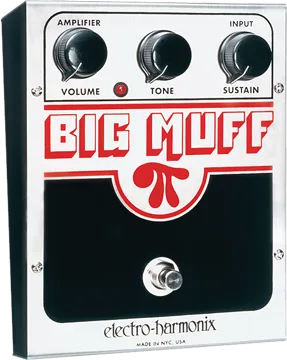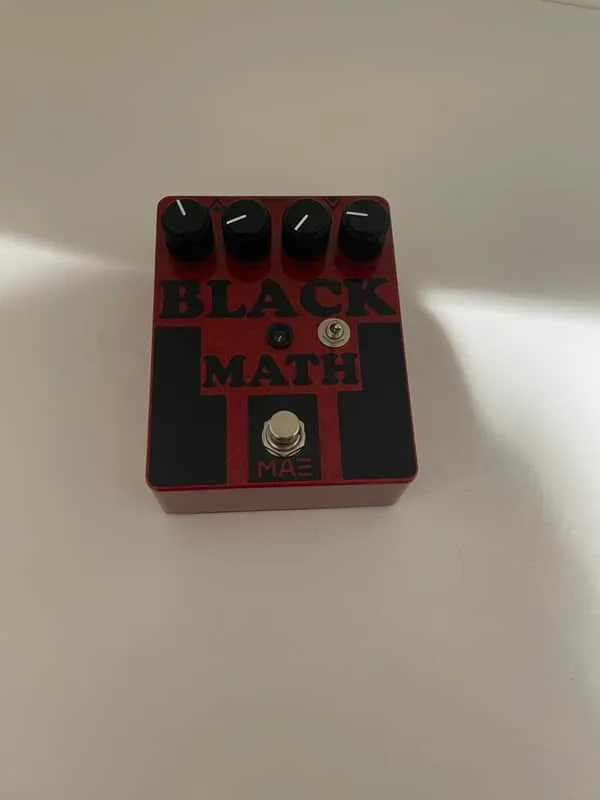


The Black Math is an analog fuzz pedal from Mask Audio Electronics, built around the Big Muff NYC Reissue circuit designed by Fran Blanche. Mask Audio describes that circuit as having "a bit more compressed and scooped sound. When boosted into saturation it gets an even more compressed, blown out sound"1. On top of the Muff core the pedal adds a pre-fuzz op-amp boost and a Blowout switch that removes diodes from the circuit, pushing it further into ragged, high-gain territory than a stock Muff.
The project began as a personal one. Mask Audio's founder has said of the pedal's inspiration: "Black Math originally started as a passion project. I'm a huge fan of the garage rock coming out of Detroit in the early 2000's"2.
A compressed, scooped Muff-style fuzz
The Big Muff family has been a foundation for boutique builders for decades, and the Black Math is one of many takes on it. Delicious Audio notes that "The Muff circuit, in all of its variations, is a source of never-ending inspiration for boutique pedal builders"2. The specific branch the Black Math follows is the New York reissue line: Electro-Harmonix's first NYC reissues appeared in 2000, using the same circuit and design as the earlier Red and Black versions4.
What separates the Black Math from a straight reissue is the added circuitry. The boost stage sits before the fuzz, so it drives the Muff clipping stages harder than the gain knob alone can, and the Blowout switch changes the clipping character itself. Under the hood, trim pots let you set the amount of midrange dip or boost2, which addresses the classic Muff complaint of a scooped midrange getting lost in a band mix.
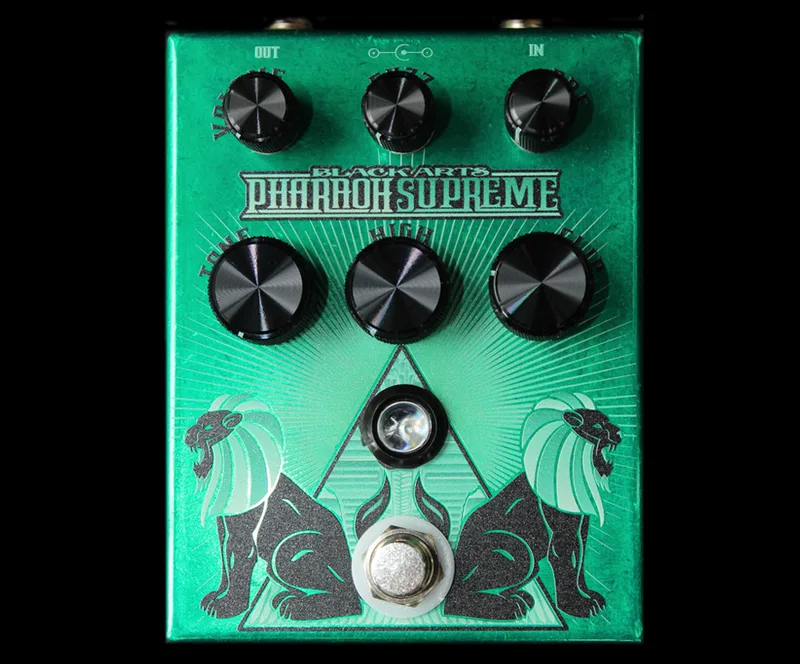
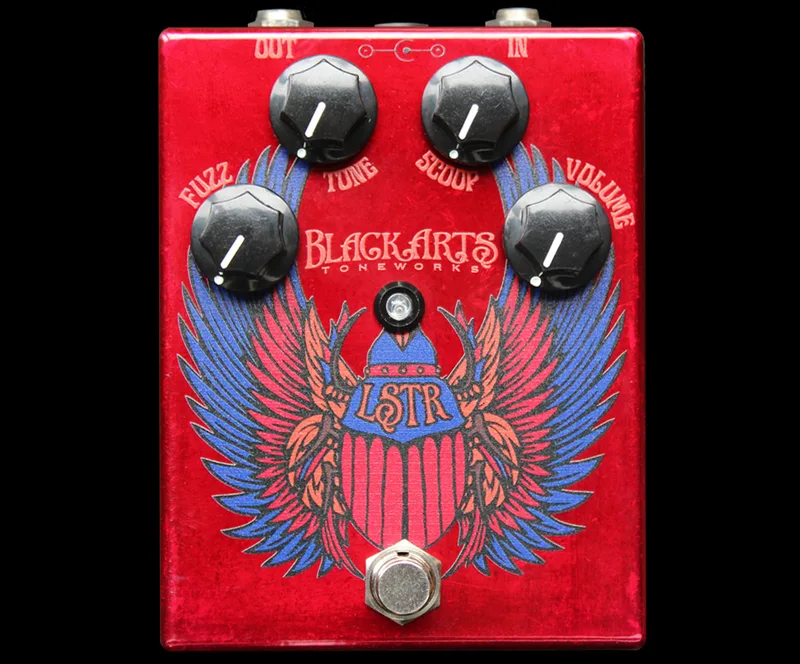
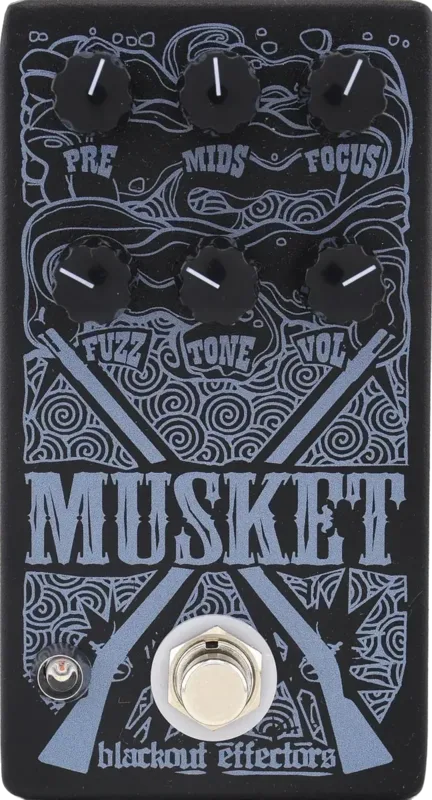
For context on how wide the Muff variant field is, the DIY community at Guitar FX Layouts counts "a lot of muff variants out there like the black arts pharaoh & LSTR, blackout effector musket, frantone sweet" and the Mojo Hand Iron Bell, among others5. The Black Math's distinguishing combination is the boost stage, the diode-removal switch, and the internal midrange control.
The controls
| Control | What it does |
|---|---|
| LOUD | Output volume, "amount of loud"3 |
| GAIN | "Amount of rock. Allows for more treble frequencies to pass at low gain settings."1 |
| TONE | "Typical Muff tone control. Wooly bass to the left and treble to the right."1 |
| BOOST | "Pre Fuzz Op-amp boost to saturate and overwhelm."2 |
| BLOWOUT | Toggle that "removes diodes early on in the circuit for more ragged texture and additional gain"3 |
| MIDS | Internal trimmer that "sets the amount of midrange dip or boost"1 |
The tone control behaves like the tilt-style control on other Muffs, rolling from wooly bass on the left to treble on the right1. The gain knob's treble pass at low settings means the pedal can be dialed back for a lighter, brighter fuzz rather than running full saturation all the time.
The Blowout switch is the pedal's signature feature. Delicious Audio's buying guide called it "a blowout switch, effectively an auto-Jack White mode that makes your pick attack brutally compress and shred every note"6. Technically, the toggle removes diodes early in the circuit, which leaves the signal with a more ragged texture and additional gain compared to the standard clipping arrangement3.
The MIDS trimmer is internal, so setting the midrange dip or boost means opening the enclosure1. A player who wants the traditional scooped Muff voicing can leave it dipped; one who needs to cut through a loud band can trim it toward a midrange boost.
Power and connections
The Black Math uses a standard Boss style power supply: 9V DC through a 2.1mm center negative plug1. Current draw is 50mA3, which is modest by pedalboard standards and well within what a typical isolated supply or even a daisy chain output delivers. Input and output jacks are top-mounted1, which saves horizontal space on a crowded board.
The center negative 9V DC requirement means the pedal runs on the same supply as most modern effects. No battery operation is offered.
History and enclosure
The circuit traces to the Big Muff NYC Reissue designed by Fran Blanche1, the version of the Muff that Delicious Audio says Detroit garage rock players of the early 2000s favored: "It's common knowledge among guitarists that all of of that sound came from big old NYC Reissues"2. The pedal began as a passion project inspired by that Detroit garage rock scene2, and Mask Audio later built it out with the boost, Blowout, and mids trimmer as a production pedal.
The enclosures are hand screen printed by Pinebox Customs2, a finish that gives each unit a hand-made appearance rather than a machine-printed one.
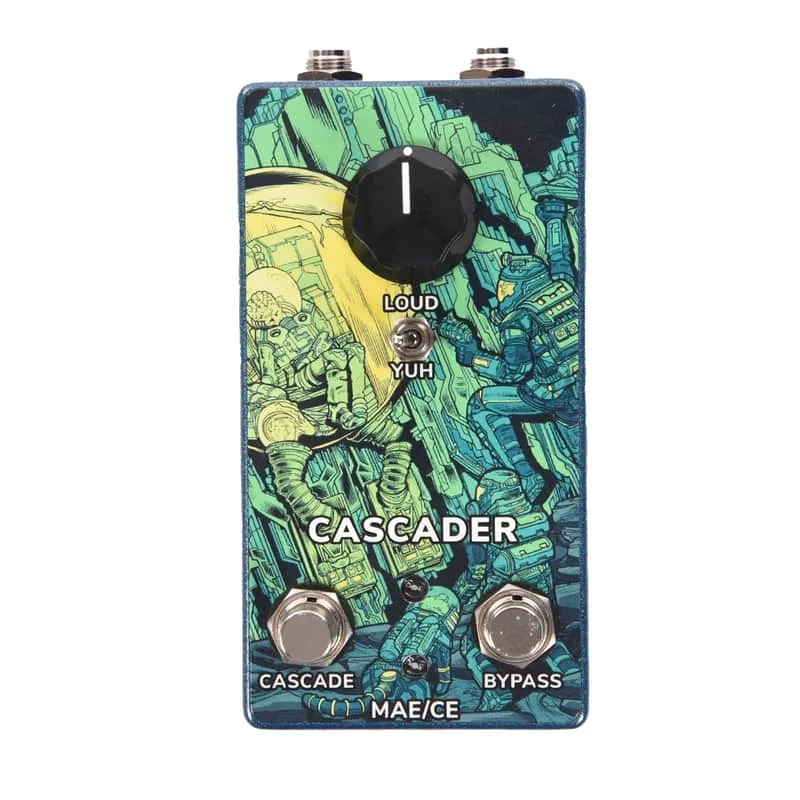
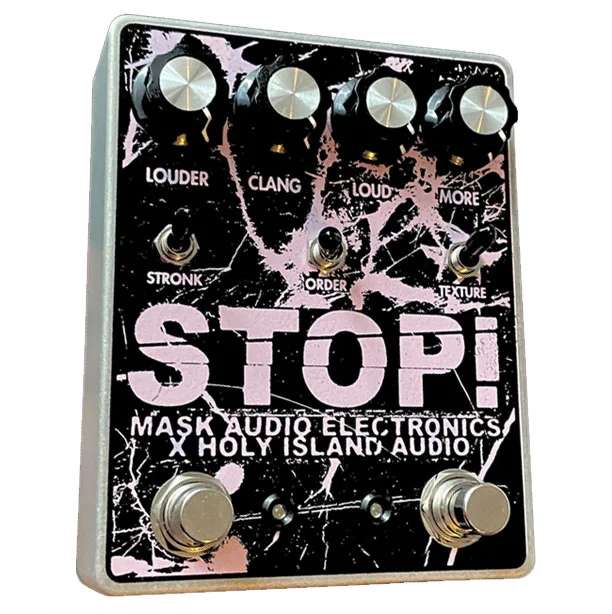
Mask Audio Electronics has since expanded on the Black Math idea across its range, including collaborative fuzzes such as the Cascader with Collector//Emitter and the STOP! Dual Fuzz with Holy Island Audio, plus the budget, Muff-inspired Hot Water.
Videos
collector//emitter
ambienttrash
Noise Generator
Questions
What does the Blowout switch do on the Black Math?
The Blowout toggle removes diodes early in the circuit, which gives a more ragged texture and additional gain. Delicious Audio described it as an auto-Jack White mode that makes the pick attack brutally compress and shred every note. It is the pedal's most aggressive setting.
How do you adjust the mids on the Mask Audio Black Math?
Mids are set by an internal trim pot labeled MIDS, not a knob on the outside. Opening the pedal lets you set the amount of midrange dip or boost, so you can go from a scooped Muff voicing to a more midrange-forward tone that cuts through a mix.
What power supply does the Black Math fuzz need?
It uses a standard Boss style 9V DC supply with a 2.1mm center negative plug, and draws about 50mA. Any common pedalboard power supply with a 9V center negative output will run it.
Who did the artwork on the Black Math enclosure?
The enclosures are hand screen printed by Pinebox Customs, a collaborator Mask Audio Electronics has also worked with on other pedals. Each enclosure is printed by hand rather than machine finished.
Sources (6)
- BLACK MATH, Mask Audio Electronics
- Mask Audio Electronics Black Math Fuzz, Delicious Audio, 2021-12-16
- Black Math by Mask Audio Electronics, RockBoard PedalPedia, 2026
- The history of the big muff over time, anasounds.com, 2022-06-08
- Guitar FX Layouts: Mojo Hand Colossus Fuzz, Guitar FX Layouts (tagboardeffects.blogspot.com), 2015-11-18
- Best Big Muff Pedals In 2025: Reissues, Clones & Evolutions, Delicious Audio, 2025-04-07