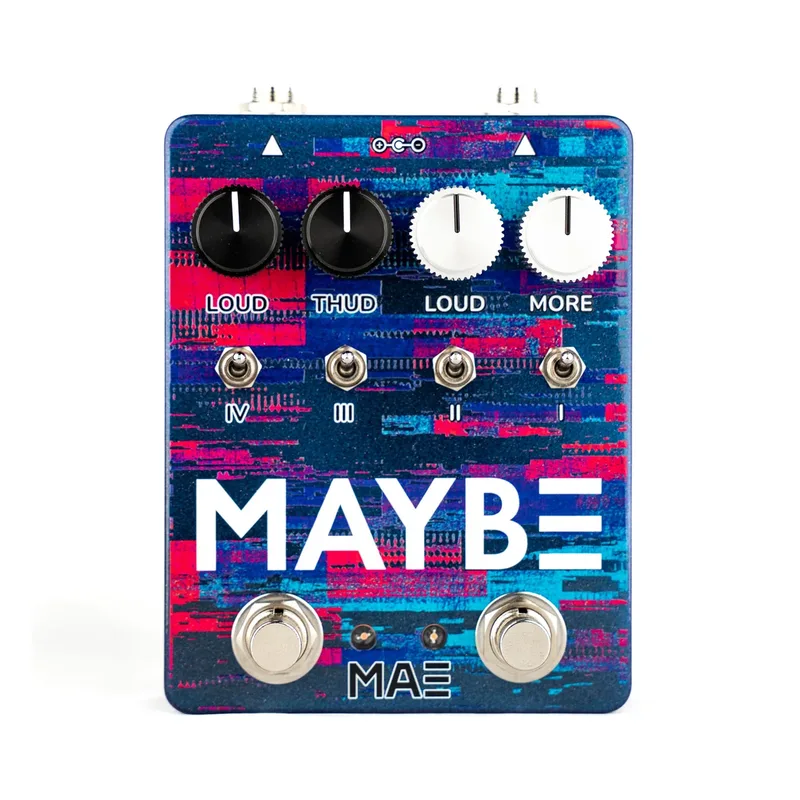


The MAYBE is a dual-sided fuzz and octave effect pedal from Mask Audio Electronics that puts two of the maker's fuzzes, the YES! and the NO., into a single box. The maker describes the pair as "the two Gremlins of the MAE lineup" that "have been wrangled together and trapped in one box"1. Delicious Audio's Paolo De Gregorio calls it "a super-tweakable dual fuzz"2.
The point of the design is flexibility. Each side can be played independently or stacked on top of the other, and the maker suggests setups like filtering one side with the other: "Maybe set up one side for a full-bodied fuzz and filter it with the other?"2. The maker's own pitch for the character of the pedal is blunt: "MAYBE? can provide the amp destroying sounds you never knew you needed"1.
The maker lists the MAYBE at £152.00 GBP, a sale price as of 26 October 20261. That is a UK pound figure, not US dollars.
The two sides
The right half of the pedal is the YES! side and the left half is the NO. side2. Each half carries its own knobs and toggles, so the two circuits are set up separately.
YES! side controls
| Control | What it does |
|---|---|
| MORE | Input gain into the unit. The gate opens up more the further clockwise you go1 |
| LOUD | Master volume. Very loud1 |
| Toggle I | Controls the amount of gating. Allows more high-end through when toggled up1 |
| Toggle II | Switches out transistors in the octave divider. Allows for fake PLL sounds1 |
Delicious Audio's write-up lines up with the maker on this half: "a More knob that controls the input of that half of the circuit," "a Loud knob providing plenty of volume," and "Splat sets the amount of gating on the YES! side, letting more high-end through in the top position"2.
NO. side controls
| Control | What it does |
|---|---|
| More | Sets the amount of bass going into the first octave generator. Acts somewhat like a gain control1 |
| Loud | Volume2 |
| Pain | Controls the octave emphasis of the NO. side2 |
| Toggle IV | Standard toggle for NO. Controls octave emphasis1 |
| Honk | Debiases the NO. side, with broken results at lower levels and a mid-rangey overdrive tone at higher settings2 |
"Honk debiases the NO. side with broken results at lower levels and a mid-rangey overdrive tone at higher settings."
Playing the two sides together
Because each side runs on its own controls, the MAYBE can be used as two separate fuzzes, as a stacked pair, or as a fuzz filtered by its other half2. The octave content lives mostly on the NO. side, where the More knob feeds bass into the first octave generator and the Pain control and toggle IV shape octave emphasis12. On the YES! side, the gating and the transistor-swapping toggle II are the main voice-shaping tools1.
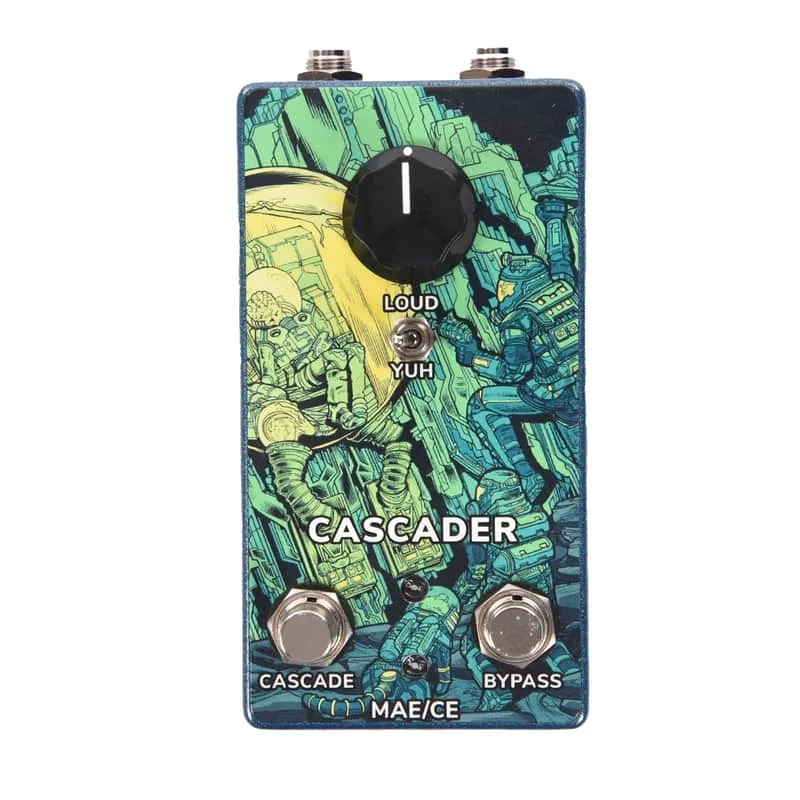
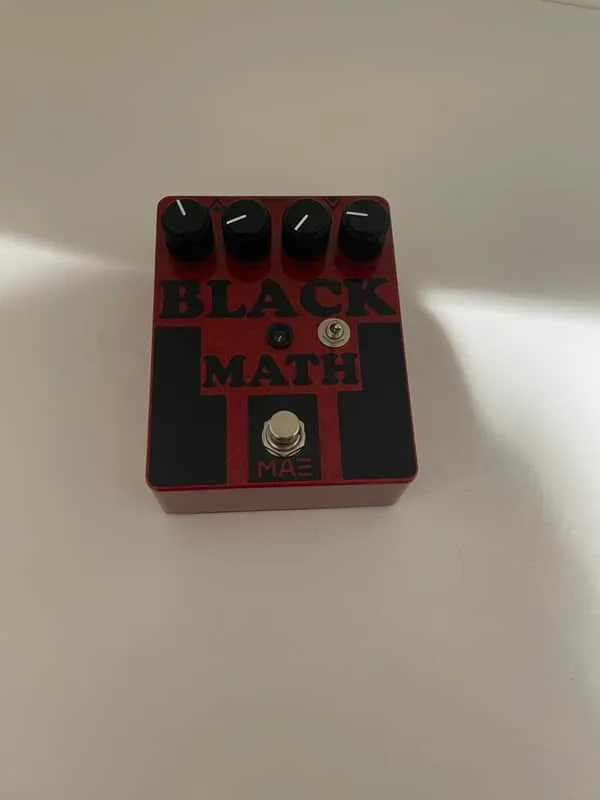
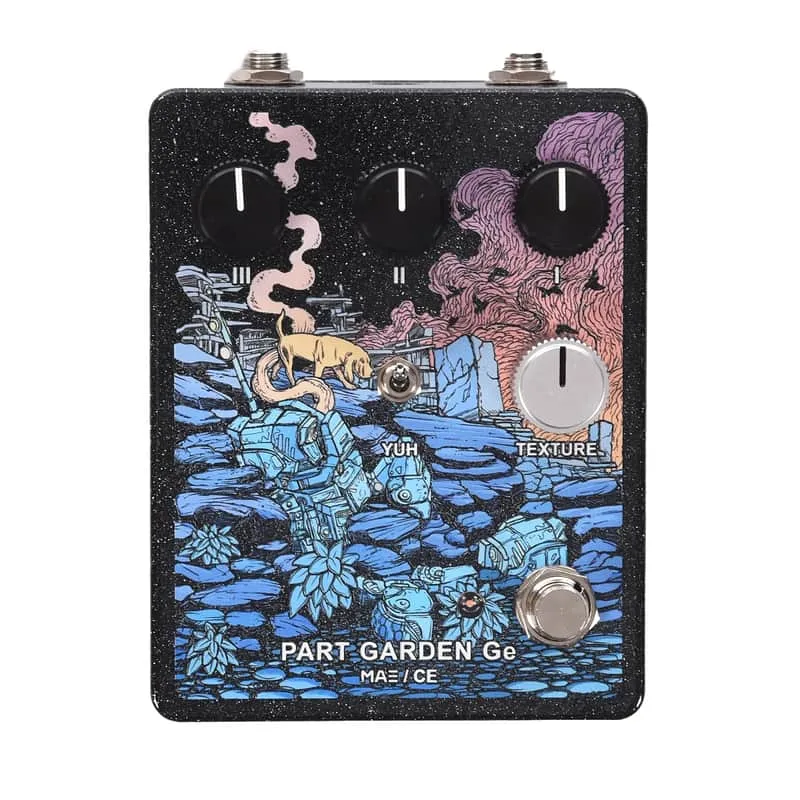
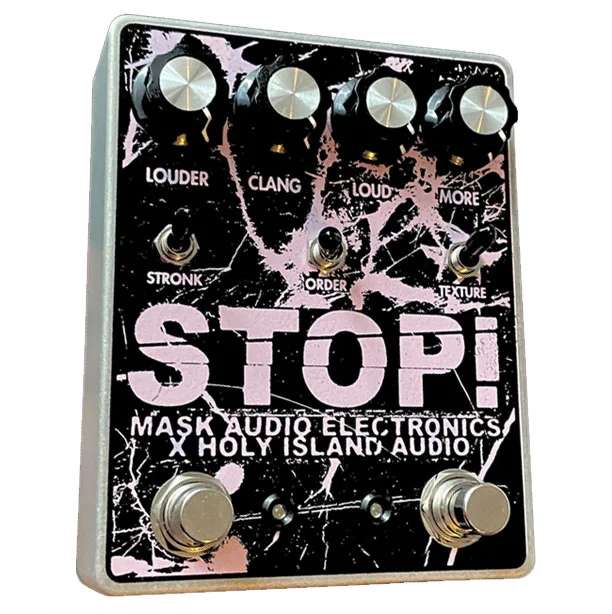
The MAYBE sits in a Mask Audio Electronics lineup with several other fuzzes, including the Cascader, the Black Math, the Part Garden and the STOP! Dual Fuzz made with Holy Island Audio, another two-circuit fuzz design. For the wider category, see Fuzz Pedals and Octave & Pitch Pedals.
Videos
Mask Audio Electronics
collector//emitter
ambienttrash
Questions
What is the difference between the MAYBE, the YES! and the NO.?
The MAYBE combines the two pedals Mask Audio Electronics calls the Gremlins of its lineup, the YES! and the NO., into a single enclosure. The right half of the pedal is the YES! side and the left half is the NO. side, and each side can be played independently or stacked on top of the other, which neither separate pedal can do on its own.
What does the second toggle on the MAYBE do?
Toggle II switches out transistors in the octave divider, which the maker says allows for fake PLL sounds. It sits alongside toggle I on the YES! side, which controls the amount of gating and allows more high-end through when toggled up.
What power supply does the Mask Audio MAYBE need?
The MAYBE uses a standard Boss style power supply: 9VDC with a 2.1mm center negative connector. The maker does not list a battery option or a current draw figure, so a regulated 9V supply with that plug is the safe choice.
What does the third toggle do to the NO. side?
Toggle IV is the standard toggle for the NO. side and controls octave emphasis. It works alongside the More knob, which sets the amount of bass going into the first octave generator and acts somewhat like a gain control, and the Honk toggle, which Delicious Audio's Paolo De Gregorio says debiases the NO. side with broken results at lower levels and a mid-rangey overdrive tone at higher settings.
Are the jacks on the MAYBE on the top or the side?
The jacks are top-mounted, according to the maker's product page. That layout keeps the pedal's footprint narrow on a pedalboard, which matters on a dual-sided pedal like this one.
Sources (2)
- MAYBE - Mask Audio Electronics, Mask Audio Electronics
- Mask Audio Electronics MAYBE? Fuzz, Delicious Audio, 2026-01-07