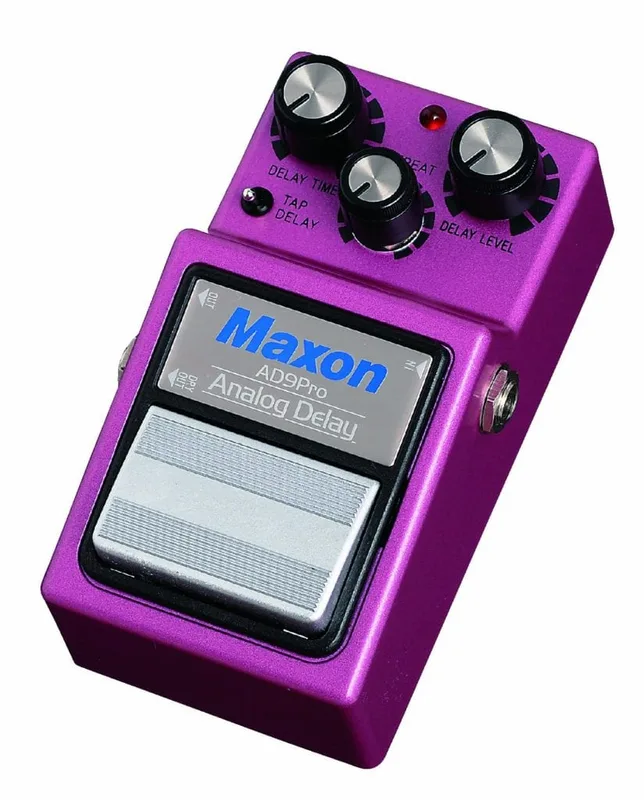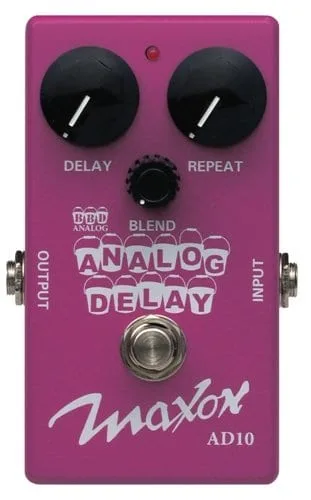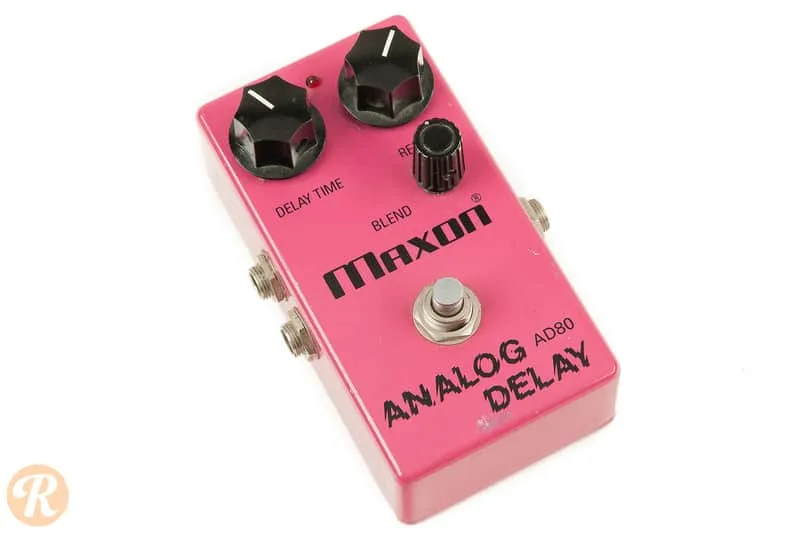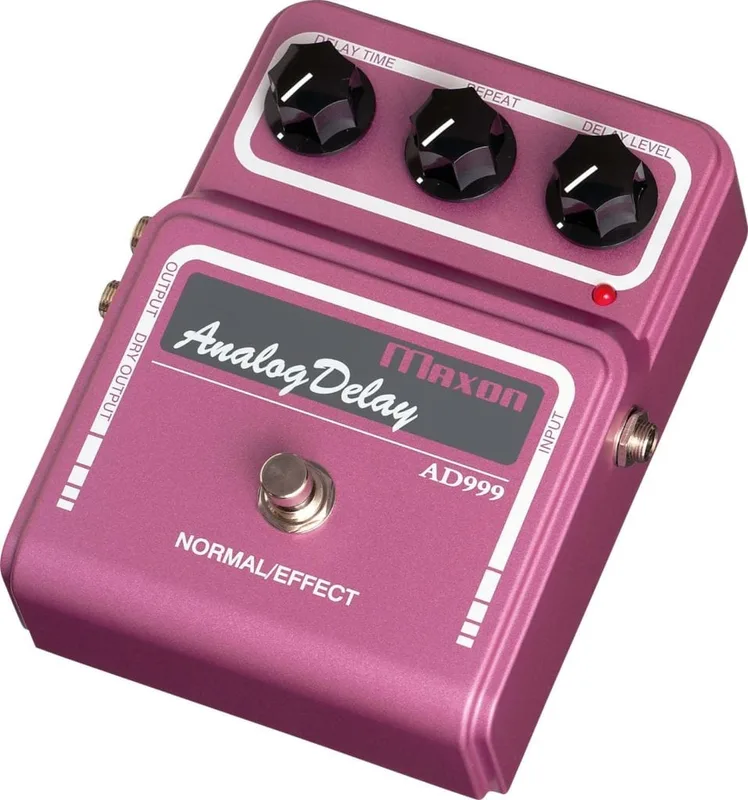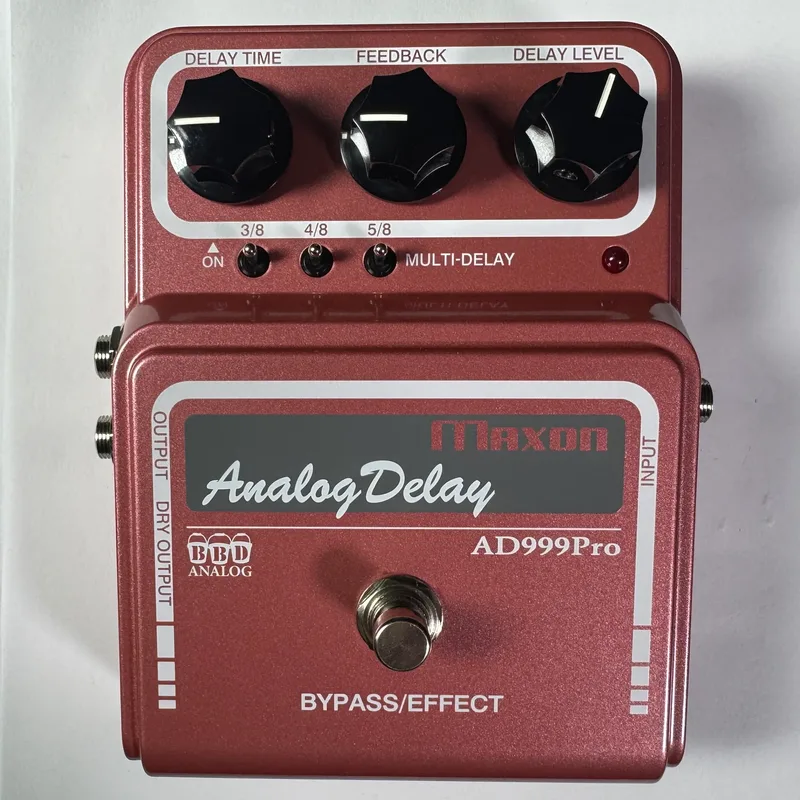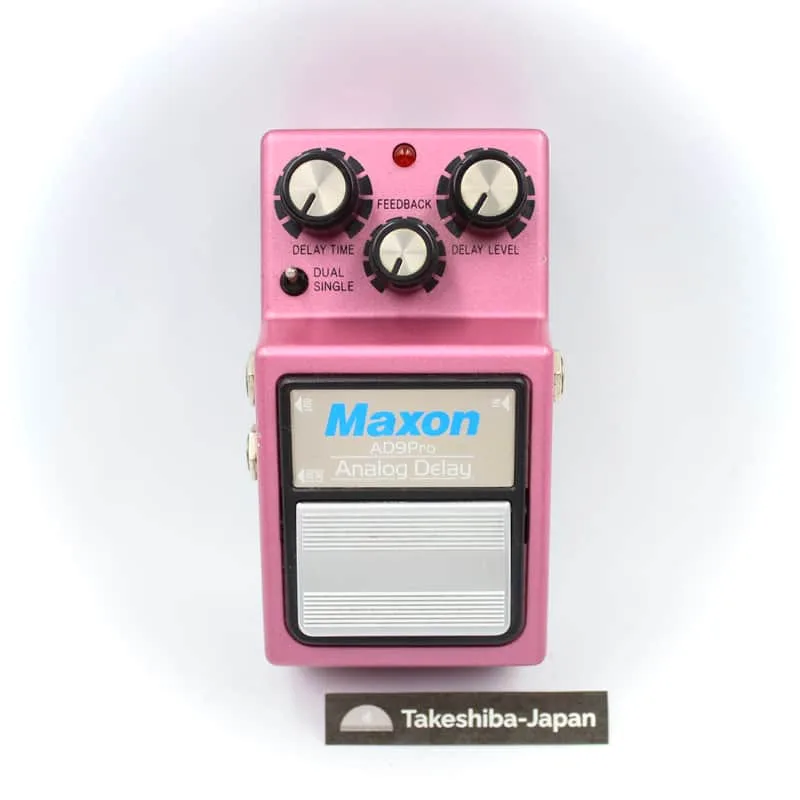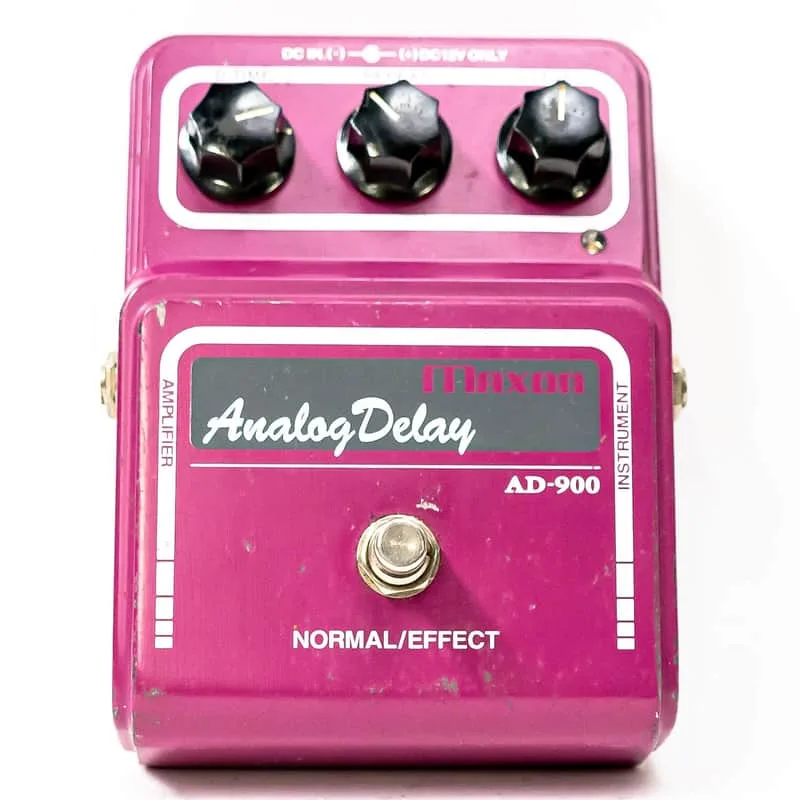


The Maxon AD900 Analog Delay is an analog delay pedal from Maxon's Vintage Series, built around out-of-production Panasonic "bucket brigade" ICs, the same kind of chip that gave vintage delay pedals their character1. Bucket brigade chips pass the audio signal through a chain of capacitors to create the repeats, which is why analog delays darken and soften each repeat instead of repeating it perfectly. Guitar Player listed it at $450 when it was reviewed in November 20011.
What it does and how it is controlled
The delay time knob sets the delay time, but it offers no indication of the actual delay time, so players set repeats by ear rather than by a marked scale2. Joe Gore's Guitar Player review flagged the limited delay time, 600 mS in that case1. That limit shapes what the pedal is for: the shorter slap-back settings are where the AD900's analog character comes through, as the reviewer found2.
The AD900 uses an unorthodox 12-volt power supply, not the 9-volt standard most pedalboard power supplies deliver1.
What reviewers said
Vintage Guitar Magazine's reviewers played the pedal at length and settled on its shorter settings23:
Vintage Guitar Magazine's reviewers found the shorter slap-back delay settings sounded best, a lot like a tape echo, in part because the repeats had a mirky analog tone2.
In other words, the pedal earned its keep at slap-back settings, where the murky analog repeats recalled a tape echo, rather than at long delay times2. The reviewer's verdict was that the shorter slap-back delay sounded best, a lot like a tape echo, because the repeats had a mirky analog character3.
Videos
vela75
showzi666
Justin Goodman
Questions
How much delay time does the Maxon AD900 have?
Guitar Player's Joe Gore, reviewing the pedal in November 2001, noted that the AD900 has limited delay time, 600 mS in that case. That is shorter than later Maxon analog delays such as the AD999, which reviewers praised for its 900 ms of delay time, so players needing long repeats would look elsewhere.
What did reviewers think of the AD900's sound?
Vintage Guitar Magazine's reviewers found the shorter slap-back delay sounded best, describing it as a lot like a tape echo, in part because the repeats had a mirky analog tone. That character comes from the analog bucket brigade circuit rather than digital processing.
What power supply does the Maxon AD900 need?
Joe Gore's Guitar Player review points out that the device uses an unorthodox 12-volt power supply, not the 9-volt standard most pedalboards are wired for. Players should plan for a supply that can feed it correctly.
Sources (3)
- Maxon Vintage Series Review, Guitar Player Magazine (reprinted on maxonfx.com / Godlyke, Inc.), 2001-11
- Maxon VS Effects 70's tones, 21st-century quality, Vintage Guitar Magazine, 2002-02
- Maxon VS Effects, Vintage Guitar magazine, 2005-11-03