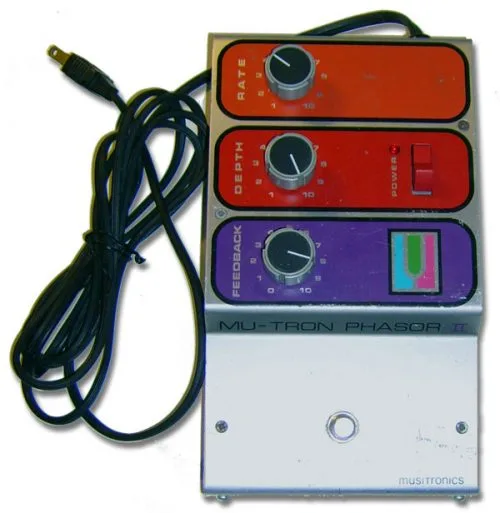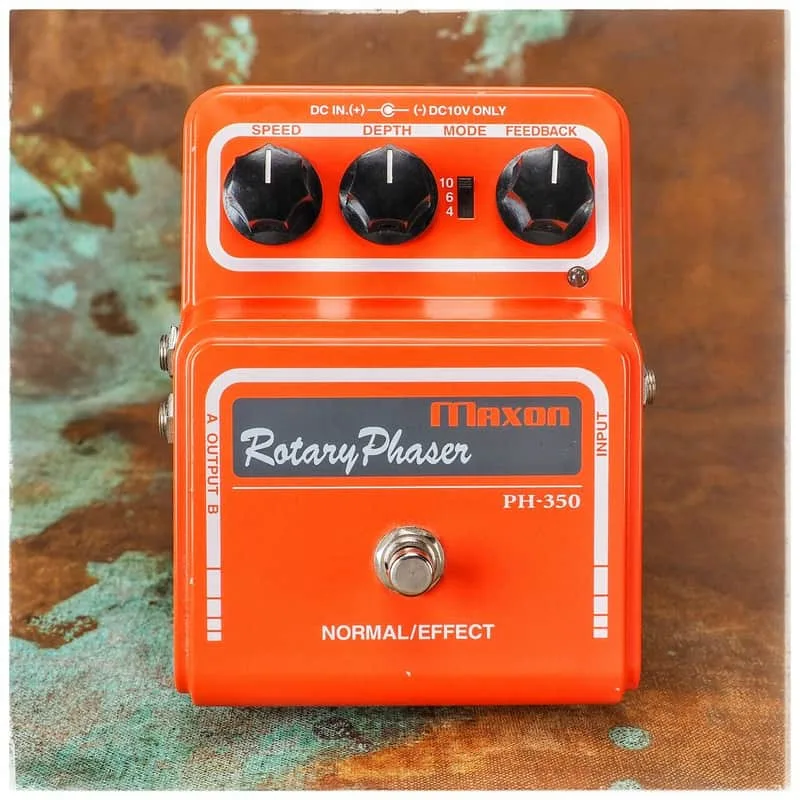

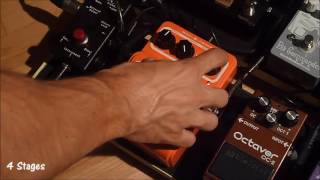

The Maxon PH-350 Rotary Phaser is a phaser pedal from Maxon's Vintage Series, built around a multi-stage photocoupler phasing circuit1. Photocouplers, the light-controlled components that sweep the phasing stages, are well known for their vocal-like audio quality and were used in the original Mu-Tron products and the original Uni-Vibe1. PastFX describes it as "the revered multi-stage Photo Coupler Maxon PH-350 Rotary Phaser"2.
Stereo outputs, bypass and power
The PH-350 is really a stereo effects pedal. It has one input jack and two output jacks, A and B, to achieve a stereo effect when used with two amps: the phaser effect comes out the A jack, and the B jack outputs the dry signal1. With a single amp, the pedal sends a mix of both the dry and effected signals through the A jack, so one-amp players still get a full-sounding phase effect1.
The PH-350 requires an AC adapter to run. There is no option for using it with a battery, so it cannot be powered from a battery clip and needs a spot on your power supply1.
Bypass is mechanical rather than true bypass: the pedal uses a metal effect switch1. The enclosure is solid metal and a little larger than most single effect stompboxes, with an LED effect indicator1.
Controls and the mode settings
The pedal carries controls for speed, depth, feedback, and mode, and according to Vintage Guitar Magazine it "emulates different classic phase patterns"3. The feedback control allows you to select either positive-phase or negative-phase feedback, giving a scooped tone effect or a more pronounced vocal-like effect1.
The mode control selects the stage count of the phasing circuit. In Guitar Player's November 2001 review of Maxon's Vintage Series, Joe Gore wrote4:
"The 4-stage setting suggests early phasers such as the Mu-Tron Bi-Phase, and the 6- and 10-stage settings invoke newer units"
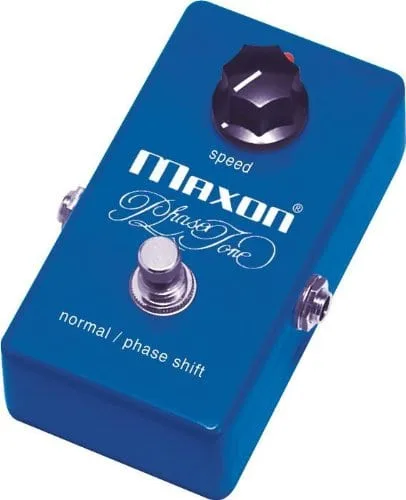
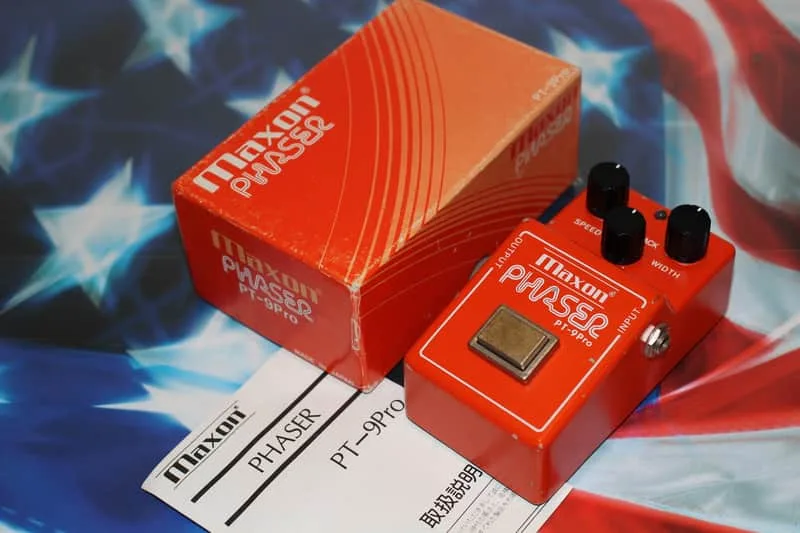
For players comparing phasers, the stage count is the main character control here: fewer stages give the older, sparser sweep of early units, while the 10-stage setting reaches toward the denser sound of later designs4. Maxon's phaser line runs back to the Phase Tone, and the company later brought out the PT-9 Pro; the PH-350 sits apart from both in using photocouplers and offering stereo outputs. For how this pedal compares with other approaches to the effect, see Phaser Pedals.
What it costs and why
The Better Guitar review notes that the PH-350 is somewhat expensive compared to other phasers, and gives the reason: photocouplers are expensive, hard to find, and need matching1. That component cost, not marketing, is what sets the price of this design apart from phasers built with ordinary parts.
Videos
ProGuitarShopDemos
Yianni Kuc
WESTBALL FAMILY
Questions
Is the Maxon PH-350 true bypass?
No. The PH-350 uses a metal effect switch that is mechanical rather than true bypass, according to a Better Guitar review of the pedal. In bypass the signal still passes through the pedal's switching rather than being routed around the circuit entirely, which is worth knowing if you run long cable runs or many pedals on a board.
Can the Maxon PH-350 run on a battery?
No. The Better Guitar review states plainly that the PH-350 requires an AC adapter to run and there is no option for using it with a battery. Plan your pedalboard power accordingly: it needs a dedicated adapter output rather than a battery compartment.
How do I run the Maxon PH-350 with two amps?
The PH-350 has one input and two outputs, A and B. With two amps, the phaser effect comes out of the A jack and the B jack outputs the dry signal, giving a stereo effect across the two rigs. With a single amp, the pedal sends a mix of both the dry and effected signals through the A jack.
What are photocouplers in a phaser?
Photocouplers are light-controlled components used to sweep the phaser's stages. The Better Guitar review notes they are well known for their vocal-like audio quality and were used in the original Mu-Tron products and the original Uni-Vibe. They are expensive, hard to find, and need matching, which is the reason the PH-350 costs more than many other phasers.
What do the 4, 6 and 10 stage settings do on the PH-350?
The mode control selects different phasing stage counts. In Guitar Player, Joe Gore wrote that the 4-stage setting suggests early phasers such as the Mu-Tron Bi-Phase, while the 6- and 10-stage settings invoke newer units. Together with the speed, depth and feedback controls, it emulates different classic phase patterns.
Sources (4)
- Maxon PH350 Rotary Phaser, Better Guitar (republished on maxonfx.com by Godlyke, Inc.), 2004
- Rotary Phaser, pastfx.com, 2026
- Maxon VS Effects 70's tones, 21st-century quality, Vintage Guitar Magazine, 2002-02
- Maxon Vintage Series Review, Guitar Player Magazine (reprinted on maxonfx.com / Godlyke, Inc.), 2001-11