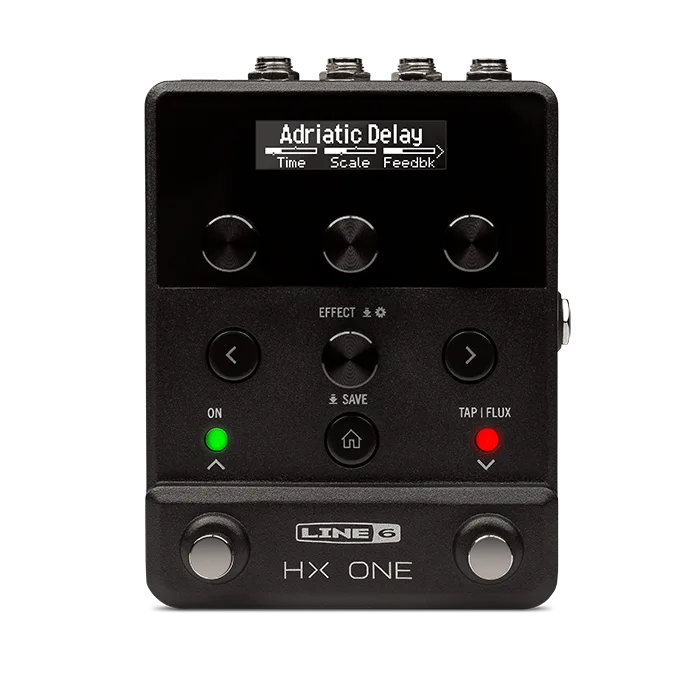
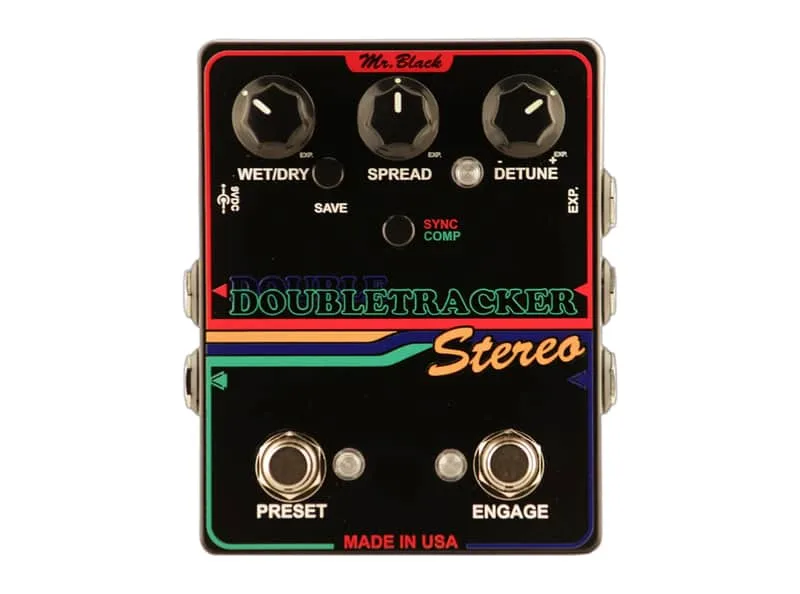
Plenty of modern pedals are built for exactly this. Strymon's Brig dT is a delay pedal with "three distinct delay voicings in one highly addictive stereo pedal"1, and the Cloudburst is "a stereo reverb pedal with full stereo in/out capabilities" through a single TRS input and TRS output jack2. Supro's Flanger is an all-analog, full-stereo modulation pedal3, and Mr. Black's DoubleTracker Stereo recreates the classic studio double-tracking effect on a pedalboard, with a Wet/Dry mix control among its knobs4. Line 6's HX One packs a full stereo effect engine into a single compact pedal5. A stereo rig is simply a pedalboard arranged so these pedals actually get two channels in and two channels out, all the way to whatever reproduces the sound at the end.
How stereo pedals connect
Stereo pedals are not all wired the same way, and the connection method matters before anything else. Strymon's support documentation is unusually clear about its own product lines, and the patterns it describes are common across the industry.
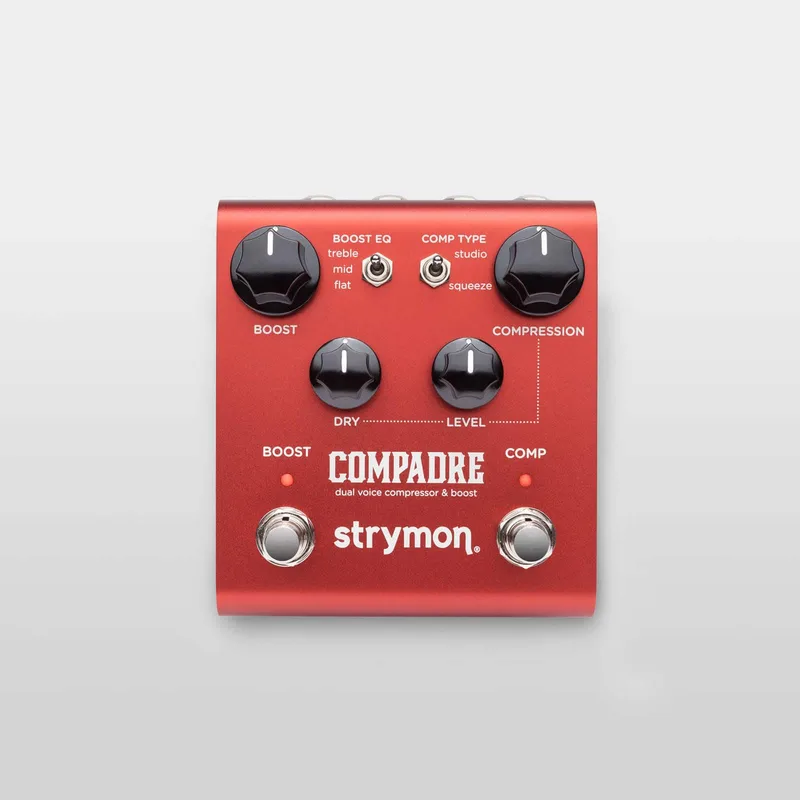
Not every pedal can turn a mono input into a stereo output. Strymon states plainly that mono input to stereo output is not supported on the Compadre, Riverside and Sunset6. Check a pedal's documentation before assuming it will widen a mono signal.
Some pedals go further and handle every configuration. Mr. Black says the DoubleTracker Stereo offers Mono-In/Mono-Out, Mono-In/Stereo-Out, and Discrete True-Stereo-In/True-Stereo-Out configurations7. "Discrete true stereo" means the left and right inputs are processed independently, so a stereo signal at the input stays genuinely two-channel rather than being summed and re-split.
Where mono pedals go
The rule of thumb: mono pedals live at the start of the chain, stereo pedals at the end. Your overdrives, fuzz and compressors do their work on a single mono signal, so they go before the first stereo pedal in the signal chain order. From the first stereo pedal onward, everything downstream needs to pass two channels, or the width collapses back to mono.
That is also why routing utility pedals exist. Cusack Music's Stereo Pedal Tamer is a stomp box for "switching (or taming...) a variety of stereo and mono signal paths all from one handly stomp box"8, which lets you pull stereo sections in and out without rewiring. For more on the underlying trade-offs between bypass types and signal preservation, see true bypass and buffers.
Routing tools: splitters, buffers and blend boxes
A stereo rig usually needs boxes that have nothing to do with effects: things that split, sum, buffer and switch the signal. Makers have filled this space with a wide range of utility products.
| Tool | What it does | Example |
|---|---|---|
| Splitter | Splits one signal to two paths, or a stereo signal to two pairs of outputs | Bright Onion Active Stereo Splitter with Phase Switching9 |
| Summing box | Combines stereo signals into one output | American Loopers Mini Stereo Sum or Mono Split10 |
| Stereo mixer | Combines up to 3 stereo signals into a single stereo output | dpFX Pedals 3-Channel Stereo Mixer11 |
| Loop blender | Fully buffered utility pedal for blending loops | Guptech RDMIX Loop Blender12 |
| A/B box | Switches or splits a stereo signal between destinations | Loop-Master Stereo A/B Box13 |
| Buffer interface | Conditions the signal across a whole pedalboard | Vertex Buffer Interface14 |
| Junction box / patch bay | Central connection point with buffers and isolated jacks | American Loopers 4 Way Junction Box15 |
| Line driver | Sends a balanced stereo signal over long runs | Radial SGI Stereo16 |
A few of these deserve a closer look, because they solve problems specific to stereo boards.
Splitting and summing. Bright Onion's Active Stereo Splitter is a pedal that "splits your stereo input signals to two pairs of outputs" and includes phase switching9, which addresses the phase problems that can appear when two amps reproduce related signals. At the other end, American Loopers' Mini Stereo Sum or Mono Split is a passive box that lets you "sum your Stereo signal from your stereo pedal and have them both summed up or joined together to one amp"10, the simple fix when you want stereo effects on the board but only one amp at the gig.
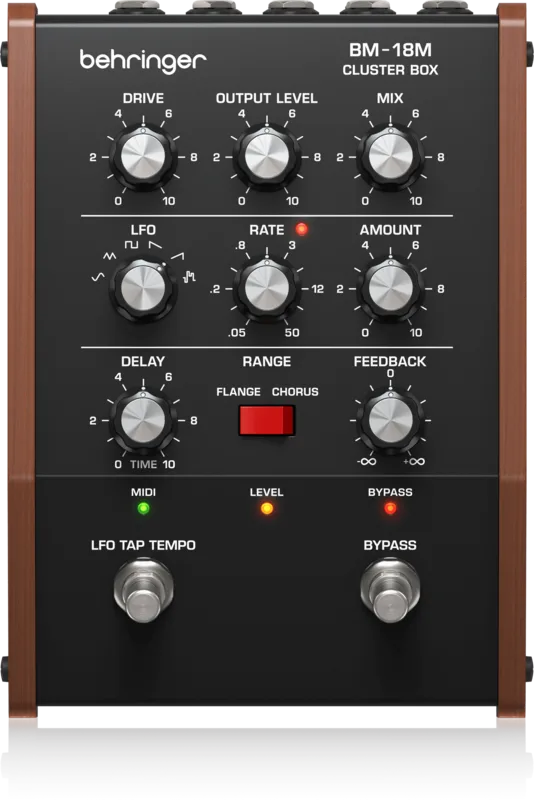
Mixing and blending. The dpFX 3-Channel Stereo Mixer "can be used as a summing box that can take up to 3 stereo signals and combine them into a single stereo output"11, useful when several stereo sources need to meet. Behringer's BM-18M CLUSTER BOX offers "stereo output with DIP switch customization," which the maker says ensures the pedal plays nice with any setup17. GUP Tech's Splitter Buffer Box is a two-output buffered splitter in pedal form18.
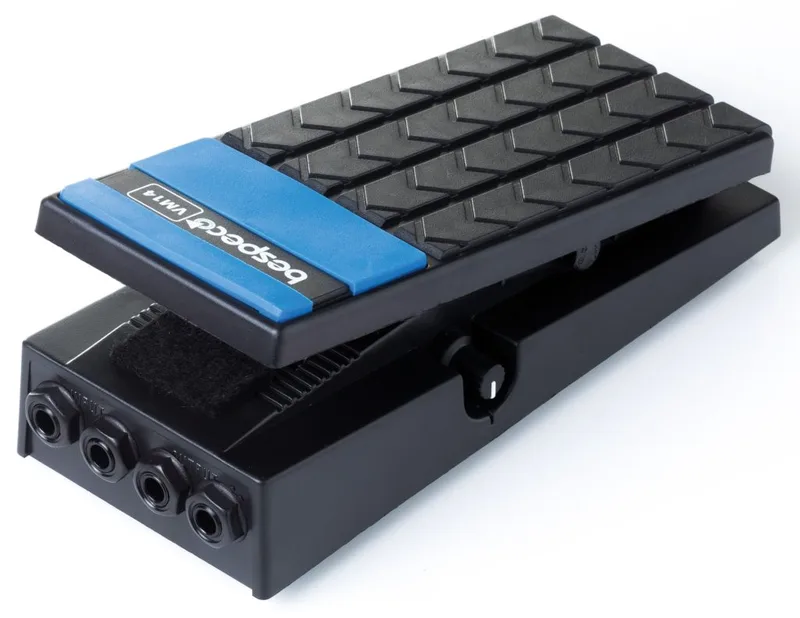
Stereo-friendly versions of everyday pedals. Even simple pedals need stereo versions on a stereo board. Vertex makes a Stereo Volume Pedal19, Bespeco's VM14 is an ABS stereo volume pedal for guitar with a metal shielded base and non-slip feet20, and Bright Onion's Stereo Latching Kill Switch comes "with a single stereo input plug and single stereo output socket" for muting a stereo chain with one footswitch21. These sit alongside the volume and switching pedals you already know in mono form.
Running stereo into amps or direct
If you run separate pedalboards for the left and right rigs, KHE Audio Electronics has a power warning worth heeding: "make sure to use isolated 9V power for each rig (don't use daisy-chain power adapters between the rigs)"22. Ground loops between two amps fed from shared power are a common source of hum in stereo setups, and isolated power per rig is the fix. More generally, see how to power a pedalboard.
Direct and hybrid setups are equally valid. Radial's SGI Stereo is a "balanced stereo line driver for guitar pedals, pedalboards, or amp modellers"16, carrying a stereo pedalboard output over long balanced lines to a mixer or interface. Radial's EXTC-Stereo goes the other way: it is a stereo guitar effects interface and reamper "for connecting stereo pedals to pro audio equipment" such as recording gear23. American Loopers' 2 Way Stereo Audition Junction Box with TRS stereo jacks adds flexibility at the board itself: if your looper has an insert, "you can put pedals in and out of the insert, without having to re-route your pedalboard," and it can auto reroute wet effect pedals through an amp's effects loop or in front of it without rewiring24. Players combining pedals with amp modelers will find more in using pedals with amp modelers.
Wet/dry and wet/dry/wet rigs
A wet/dry rig splits your signal so one path stays clean while effects feed a second, wet path, usually through a second amp. Wet/dry/wet adds a third amp: dry in the center, effects spread left and right. It is the layout most associated with big touring rigs, and it is exactly what several routing products are built around.
TheGigRig's Wet/Dry Machine lists wet/dry and wet/dry/wet rigs among its use cases, along with running multiple amps cleanly, sending signal to an amp plus front-of-house simultaneously, studio routing and re-amping, noise-free signal splitting on stage, and scalable modular rigs25. It offers up to 4 fully configurable outputs, routable to amps, pedalboards, front-of-house and recording interfaces, and is designed to integrate with TheGigRig's Guitar Tech: "Where Guitar Tech manages everything going into your rig, Wet/Dry Machine takes care of everything coming out"25. Goodwood Audio's Wet Dry Wet Custom Junction is a routing junction that lets you "run your pedalboard in Mono, Dual Mono, Stereo, 4CM, 5CM, Wet Dry or Wet Dry Wet. All without re-patching"26.
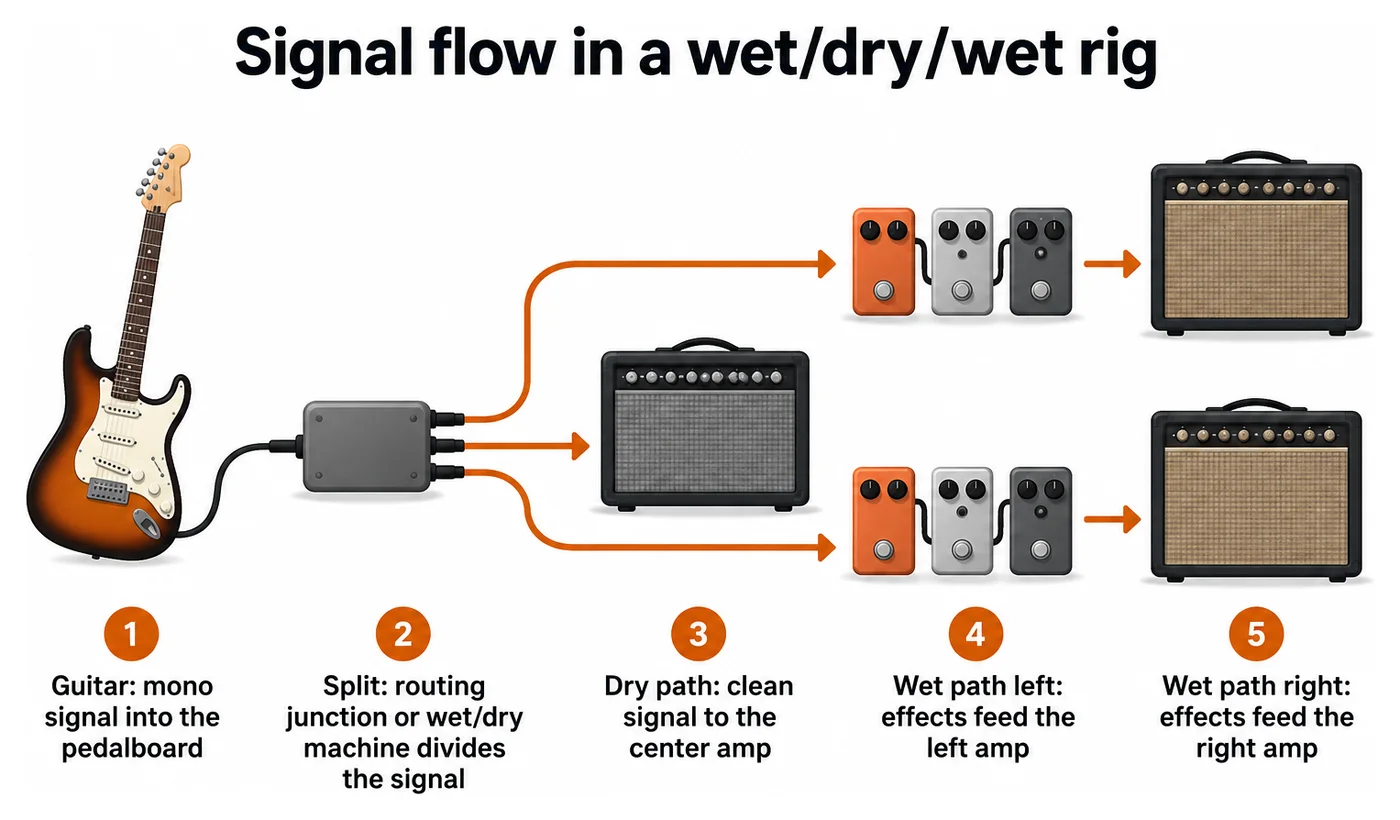
Individual pedals can participate too. Mr. Black says the DoubleTracker Stereo has "full, lossless Wet/Dry mix control (100% wet capable)"7, so a single pedal can supply an all-wet signal for a wet amp. Quilter's Wet Stereo Reverb v1 manual describes a wet-only hack for a mono signal: mono input into Input 2, mono output into Output 1, a dummy plug into Output 2, and the Mix control then functions as effect level27. Quilter notes its stereo pedals "share the same hardware platform and actually have many common features"27, so the approach applies across that line.
Pedals on this page
Questions
Do I need two amps for a stereo pedalboard?
No. Two amps are the traditional way to hear a stereo spread, and a stereo signal can be sent to both with a box such as the LEHLE LITTLE DUAL, which has two inputs and at least two outputs. But you can also run stereo direct into a mixer, recording interface or front-of-house, or into a single amp by summing the stereo output back to mono with a small summing box.
Where do mono pedals go in a stereo rig?
Mono pedals such as overdrives, fuzzes and compressors go before the first stereo pedal in the chain, where the signal is still a single mono path. Once the signal becomes stereo, every pedal after that point needs stereo inputs and outputs. Some pedals, like Strymon's Compadre, Riverside and Sunset, cannot take a mono input and produce a stereo output at all.
Can a mono pedal feed a stereo delay or reverb?
Often yes. Many stereo pedals accept a mono input and produce a stereo output: Strymon's small two-footswitch pedals do it with a mono cable into the input and mono cables to both left and right outputs. A delay pedal can even create stereo from mono by sending the original signal to one amp and the delayed repeats a few milliseconds later to the other.
What does a wet/dry rig mean?
A wet/dry rig keeps one signal path clean and dry while your effects go to a separate wet path, usually a second amp. Wet/dry/wet adds a third amp, with effects spread left and right around a central dry signal. Routing boxes like TheGigRig Wet/Dry Machine and Goodwood Audio's Wet Dry Wet junction exist specifically to switch between these layouts without re-patching cables.
Sources (27)
- Brig dBucket Delay, Strymon, 2026-02-18
- Cloudburst Ambient Reverb, Strymon (www.strymon.net), 2026-07-06
- Flanger - Supro USA, Supro USA, 2024-10-14
- DoubleTracker Stereo by Mr. Black, RockBoard PedalPedia, 2026
- Line 6 | Helix Family | Guitar Multi-Effects Processor, Line 6
- Mono and Stereo Connections, Strymon (www.strymon.net)
- DoubleTracker Stereo, Mr. Black
- Stereo Pedal Tamer Stereo Loop Switcher, Cusack Music
- Active Stereo Splitter with Phase Switching, Bright Onion Pedals
- Mini Stereo Sum or Mono Split (Y Splitter), American Loopers (www.americanloopers.com)
- 3-Channel Stereo Mixer by dpFX Pedals, RockBoard PedalPedia, 2026
- RDMIX Loop Blender by Guptech, RockBoard PedalPedia, 2026
- A/B Pedals & Guitar Signal Splitter Switches, Loop-Master Pedals
- Vertex Buffer Interface, Vertex Effects
- 4 Way Junction Box With Triple Ai1 Buffers And Auto Reroute, American Loopers (www.americanloopers.com)
- SGI Stereo, Radial Engineering, 2026-06-26
- BM-18M-CLUSTER-BOX, Behringer
- Splitter Buffer Box, GUP Tech (guptech.ca)
- Stereo Volume Pedal, www.vertexeffects.com
- VM14 - ABS Stereo Volume Pedal for Guitar - Bespeco, Bespeco, 2026
- Stereo Latching Kill Switch with LED, Bright Onion Pedals
- Stereo Setups, KHE Audio Electronics
- EXTC-SA - Radial Engineering, Radial Engineering, 2025-07-04
- 2 Way Stereo Audition Junction Box Patch Bay With TRS Stereo Jacks, American Loopers
- The GigRig, TheGigRig
- From Mono To Wet Dry Wet Without Repatching!?, Goodwood Audio
- Stereo Effect Pedal (v1) User Guide, Quilter Labs