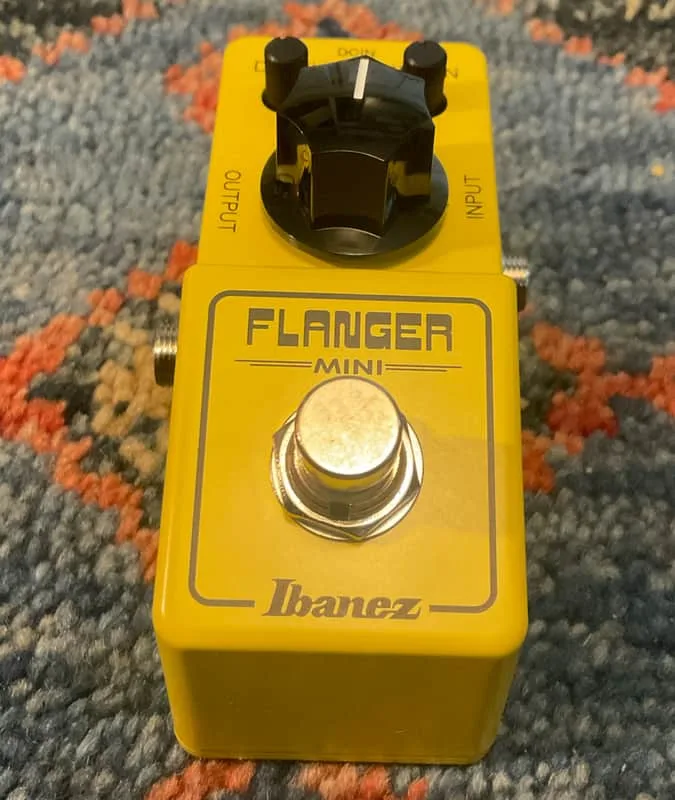
The Monoprice Flanger Mini is a compact flanger pedal: a mini enclosure holding three pots and a two-way toggle that, in the words of Pedal of the Day's reviewer, offers "a wide variety of flange, filter, chorus-like, phase-like and oscillating sounds"1. It is true bypass, and it is built to be played: the reviewer described it as "compact" and "sturdily built"1.
What it does
As a flanger, the pedal sweeps a delayed copy of the guitar's signal against the original, producing the jet-plane sweep, hollow comb filtering and, at extremes, oscillating metallic tones that players associate with the effect. What sets this one apart from many mini flangers is the range its small control set covers. The reviewer found that "for three pots and a two-way toggle, there's more possibilities than you'd imagine"1.
The toggle switches between two distinct characters:
- One position lends itself to thinner "post" sounds
- The other is more buoyant, rubbery and watery1
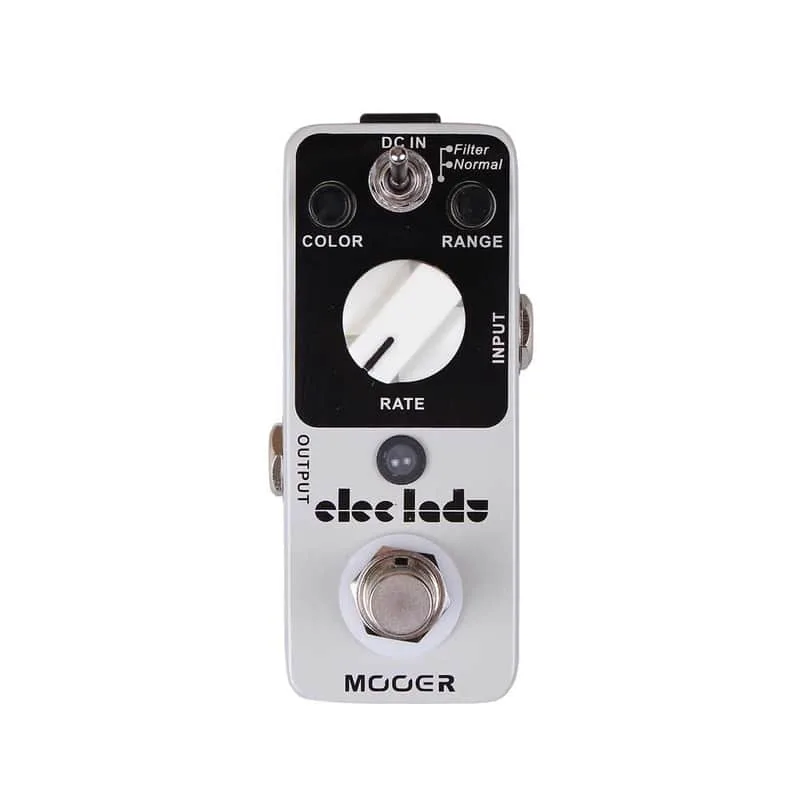
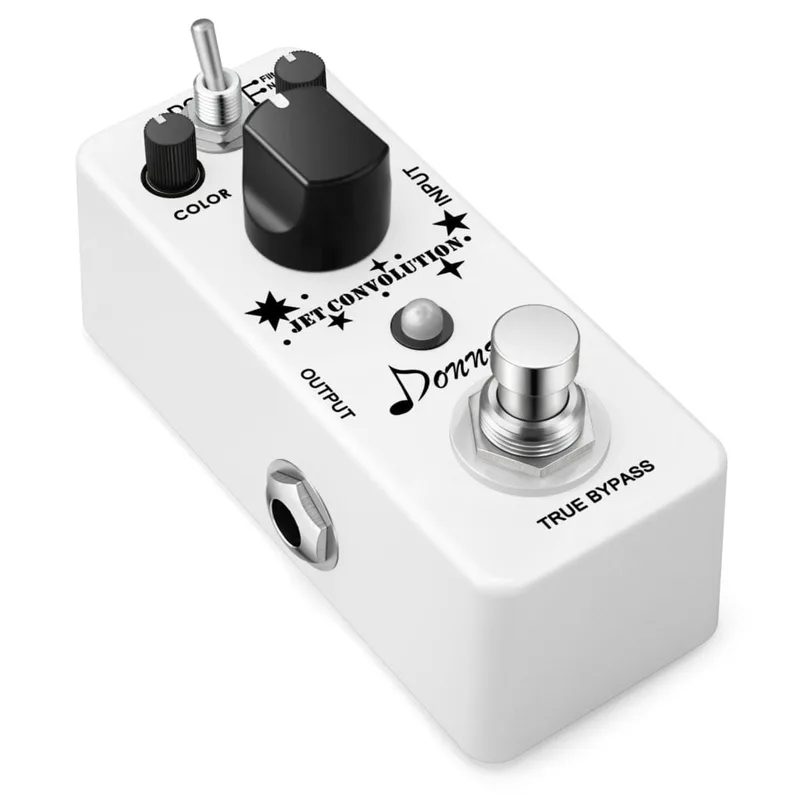
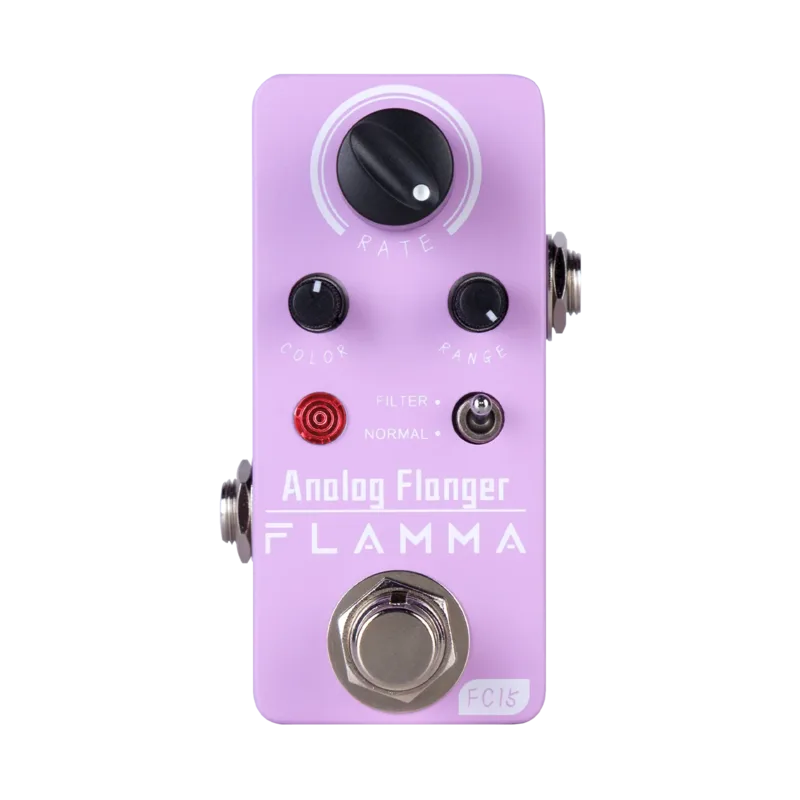
Together with the three pots, those two positions reach from 70s and 80s studio flange sonics to what the reviewer called "glassy, icy, desolate post punk and proto-goth sounds"1. Players looking for that territory in other small packages might compare it with the Mooer Eleclady or the Donner Jet Convolution, which share its circuit family, or with other mini flangers such as the Ibanez Mini Flanger FLMINI and the Flamma FC15.
Circuit lineage
Pedal of the Day's reviewer reported that the Flanger Mini is "most likely, if not definitely, the same exact circuit" as the Donner Jet Convolution and the Mooer Eleclady, both reported clones of vintage Electro-Harmonix Electric Mistress circuits1. That lineage matters to players: the Electric Mistress family is behind a long line of compact flangers, and the Monoprice sits in it as a budget entry rather than a copy of a big-box classic like the MXR Flanger or the A/DA Flanger.
How it differs from the Donner and Mooer versions
If the circuit is shared, the differences are practical, and the reviewer judged them in Monoprice's favor. The key change is visibility: Monoprice put "a simple white indicator line on the micro pots so you can actually see their position"1. On many mini pedals the knob markings are hard to read on a dark stage, so a visible indicator is a genuine gig consideration rather than a cosmetic one.
"tl;DR. Improved VISIBLE mini pots, better than Donner and Mooer."
The reviewer's overall verdict was that the pedal is "better than the Donner and Mooer equivalents, with improved visible mini pots making it gig worthy overall"1, and went as far as calling it "a must-try, no-brainer, sound manipulating AND sound generating secret weapon"1.
What reviewers said
The published review of this pedal is Pedal of the Day's, by Dear Regency Elf, dated 8 February 20151. Its findings, in brief:
- Compact and sturdily built1
- True bypass1
- Wide tonal range from three pots and a toggle, spanning flange, filter, chorus-like, phase-like and oscillating sounds1
- Two toggle characters: thinner "post" sounds versus buoyant, rubbery, watery sounds1
- White indicator lines on the mini pots for stage visibility1
- Judged better than its Donner and Mooer circuit-mates and gig worthy1
Sources (1)
- Monoprice Flanger Mini, Pedal of the Day, 2015-02-08