Mini pedals shrink a full effect into an enclosure roughly the footprint of a matchbox, and for a touring musician that size is the whole argument: more effects on a smaller board, less weight in the flight case, and more room in the van. This page puts six mini pedals side by side, looks at what actually gets cut down when a maker moves a circuit into a mini enclosure, and covers the power and connection questions that come up when a board is built from small boxes.
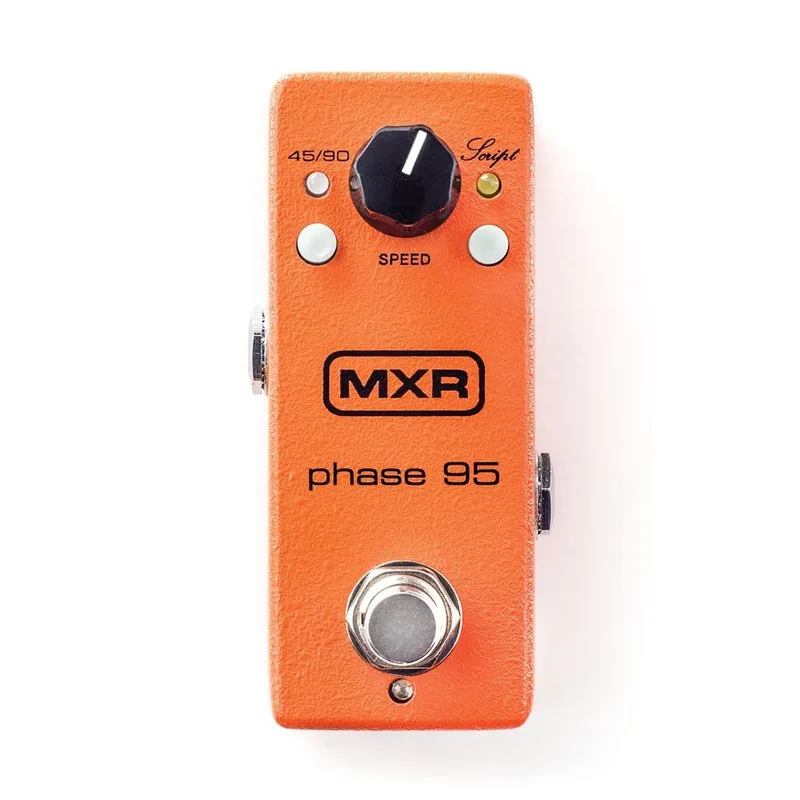
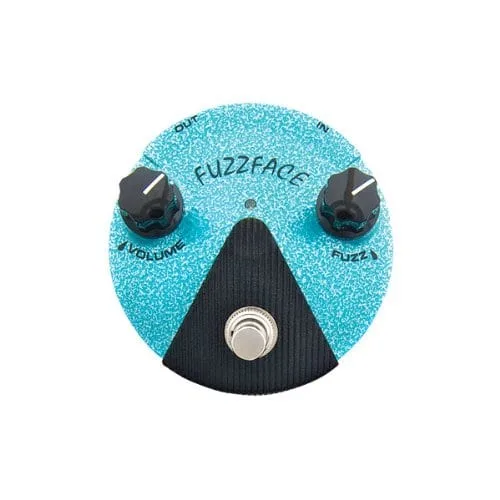
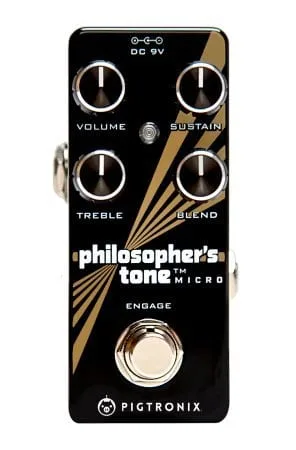
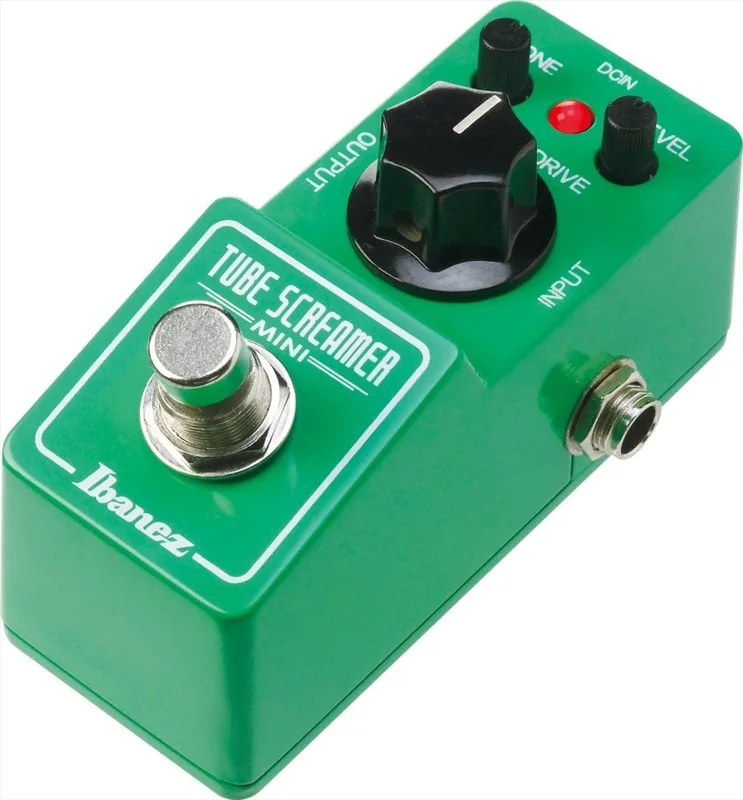
The six pedals here come from across the effect spectrum: the MXR Phase 95 phaser, the Ibanez Tube Screamer Mini overdrive, the Dunlop Jimi Hendrix Fuzz Face Mini fuzz, the TC Electronic Hall Of Fame Mini reverb, the Dunlop Cry Baby Mini wah, and the Pigtronix Philosopher's Tone Micro compressor. Between them they cover most of the core effect types a touring player carries, in the smallest format each maker offers.
The mini pedals side by side
| Pedal | Maker | Effect type |
|---|---|---|
| Phase 95 | MXR | Phaser |
| Tube Screamer Mini | Ibanez | Overdrive |
| Jimi Hendrix Fuzz Face Mini | Dunlop | Fuzz |
| Hall Of Fame Mini | TC Electronic | Reverb |
| Cry Baby Mini | Dunlop | Wah |
| Philosopher's Tone Micro | Pigtronix | Compressor |
What actually differs between them is the effect each one carries and how much of the original pedal's control set survived the shrink. Each of these six pedals takes a known design into a smaller box, and the tradeoffs show up on the front panel rather than in the effect itself. The Tube Screamer Mini and Hall Of Fame Mini are both mini versions of pedals with established reputations, and the Phase 95, Fuzz Face Mini, Cry Baby Mini and Philosopher's Tone Micro follow the same pattern in their own families.
The mini format is not a fringe category. Major buyer's guides now cover it as a class of its own, with Guitar World's best mini pedals guide rounding up small-format pedals across a wide range of effect types1. The pedals on this page sit squarely inside that category, alongside overdrives, fuzzes and other compact takes on familiar effects.
What gets cut down in a mini enclosure
The circuit usually survives; the box and the controls are what shrink. MusicRadar's review of the Hall Of Fame Mini puts the trade-off in physical terms:
"one of the most compact reverb pedals on the market - the enclosure's too small to even display the full pedal name!"
That is the practical reality of the format: front-panel real estate disappears along with the enclosure, so knobs get smaller, fewer, or both. The Hall Of Fame Mini makes the point literally, with an enclosure MusicRadar describes as too small to display the full pedal name2. A touring player choosing a mini pedal is usually choosing a simpler control set, which on stage can be a feature rather than a loss.
Shrinking the box does not always mean redesigning what is inside it. MusicRadar describes the Hall of Fame 2 Mini as one of the most popular reverb pedals getting a mini-enclosure3, the same effect players know at full size in a box that takes a fraction of the board space. Whether a mini version keeps the original circuit or changes it is down to the individual maker and pedal.
The mini format has also become a way for makers to bring established designs to the small size rather than only shrinking old ones. MusicRadar's description of the Hall of Fame 2 Mini as a popular reverb pedal getting a mini-enclosure3 captures the pattern: the mini box is treated as a normal home for a proven effect, not a novelty format, and players comparing circuits will find the same designs offered at both sizes.
A mini enclosure is not always a downgrade in what comes with the pedal. DigiTech's full-size Jimi Hendrix Experience Pedal "comes with a custom artist pedal gig bag, pick and pedal power supply"4, a reminder that accessories and power arrangements vary widely between compact and full-size products, and between makers.
Power and connections
For a touring musician, the power question matters more with mini pedals than with full-size ones, because a board full of small boxes is a board that needs a planned supply rather than a battery in each unit. The smaller the enclosure, the less room for a battery compartment, so mini designs generally rely on a DC input and a pedalboard power supply. Players comparing supply options can weigh the alternatives on the site's comparison of pedal power supplies and battery alternatives.
Connections are the other place where the mini format asks for planning. Small pedals pack tighter on a board than full-size ones, which means patch cables and jack placement get crowded, and power needs vary from pedal to pedal. Some units ship with their own accessories: the DigiTech Jimi Hendrix Experience Pedal comes with a custom artist pedal gig bag, pick and pedal power supply4, so what arrives in the box can differ quite a bit from one product to the next.
For players who want to see the downsized trend across a wider range, the site's comparison of ten compact versions of classic effects covers more ground, and the reverb, overdrive, fuzz, wah, compressor and phaser type pages cover the full-size alternatives these minis are measured against.
Questions
Do mini pedals sound the same as full-size versions?
In several cases the mini pedal is the same circuit in a smaller box. Electro-Harmonix reissued its most sought-after Big Muff variants in mini enclosures, and TC Electronic's Hall of Fame 2 Mini is the mini-enclosure version of a popular reverb pedal. What usually changes is the control set and the enclosure, not the circuit itself.
How many mini pedals fit on a small pedalboard?
More than full-size equivalents, which is the point of the format. MusicRadar called the TC Electronic Hall of Fame Mini one of the most compact reverb pedals on the market, an enclosure too small to even display the full pedal name. Exact counts depend on the board and the pedals chosen.
Do mini pedals take a battery?
The smaller the enclosure, the less room for a battery compartment, and most mini designs drop the battery in favor of a DC input. Players running several mini pedals generally power them from a supply rather than batteries.
Sources (4)
- Best mini-pedals for guitarists: top space-saving stomps, guitarworld.com, 2020-09-25
- TC Electronic Hall Of Fame Mini Reverb review, MusicRadar, 2013-12-06
- Best mini pedals: Small-scale stompboxes, MusicRadar, 2023-02-23
- DigiTech Jimi Hendrix Experience Pedal, Barry Rudolph (Gear Lust / Music Connection "New Toys"), 2024