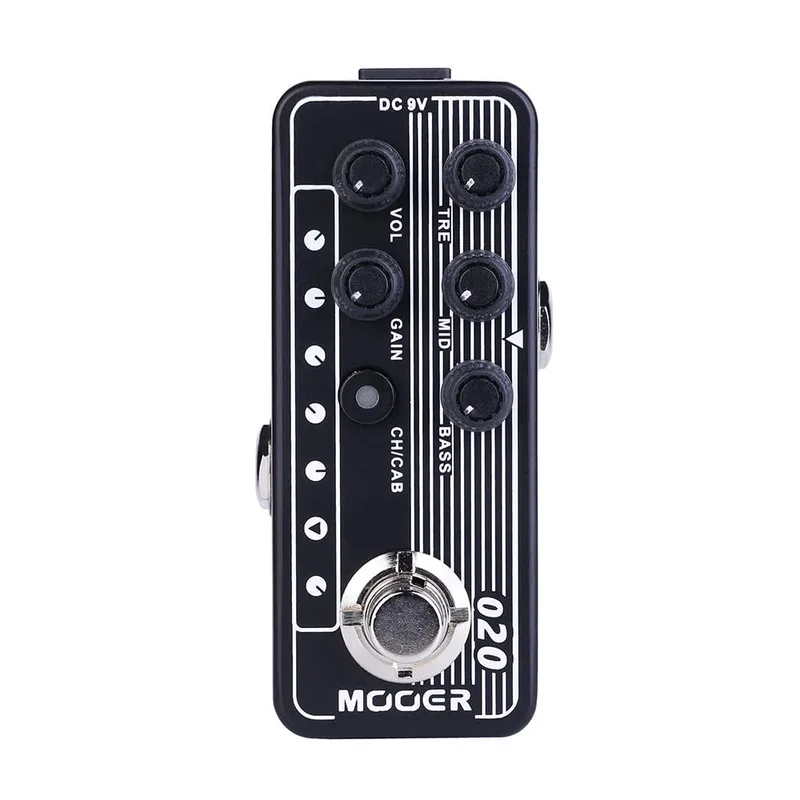

The MOOER 020 Blueno is a digital preamp pedal from Mooer Audio, part of the company's Micro Preamps range of "sonically accurate digital recreations of the preamp sections of popular tube amplifiers"1. It carries two channels sampled directly from a hand-built, 36W Class A amplifier, each with independent gain, volume and a three-band EQ12. When it launched in 2018 it retailed for $992.
The two channels and what they do
Mooer describes the Blueno as containing "2 channels that have been directly sampled from a hand-built, 36W Class A masterpiece"1. Guitar World reported the same origin at launch: "The Blueno boasts two channels that have been directly sampled from a hand-built, 36W Class A amp"2. The original amplifier is not named by either source.
Each channel has its own gain, volume and three-band EQ controls2, so the two voicings can be set up independently and switched between from the pedal's single footswitch.
Mooer's own descriptions of the two channels:
| Channel | Maker's description |
|---|---|
| Blue | "The blue channel has a silky chime that is deep, spacious and sensuous."1 |
| Red | "The red channel supplies a cranked ballsy tone with exquisite upper-end sparkle, rich harmonics and singing sustain."1 |
In plain terms, the blue channel is the cleaner, chiming side of the Class A design, while the red channel is the pushed, cranked side of the same amp12.
Footswitch modes
The footswitch can be set to one of two operating modes1:
- On/Off: the switch bypasses the pedal like a normal stompbox.
- Channel A/B: the switch flips between the blue and red channels, moving from clean to cranked sounds with one press.
Connections and power
The Blueno is designed to sit at the end of your gain pedals and drive a power stage rather than the front of a clean amp. Mooer's guidance for the two jacks1:
- Input: connect your instrument directly, or the output of pre-amp effects such as overdrive or distortion.
- Output: connect to a power amp or your amplifier's effects return. Mooer adds that it "Highly recommend[s] using a tube amplifier"1.
The Blueno draws 300mA at 9V DC, center negative1. That is a heavy draw for a pedal this size, so it needs a dedicated 9V adapter with enough current, and Mooer recommends its own Micro Power supply1.
Where it sits in the Mooer Micro Preamps range
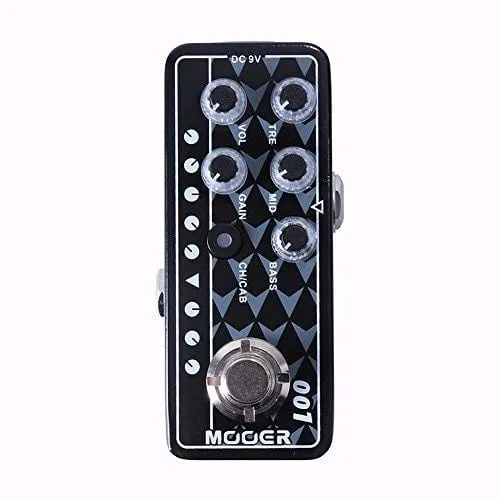
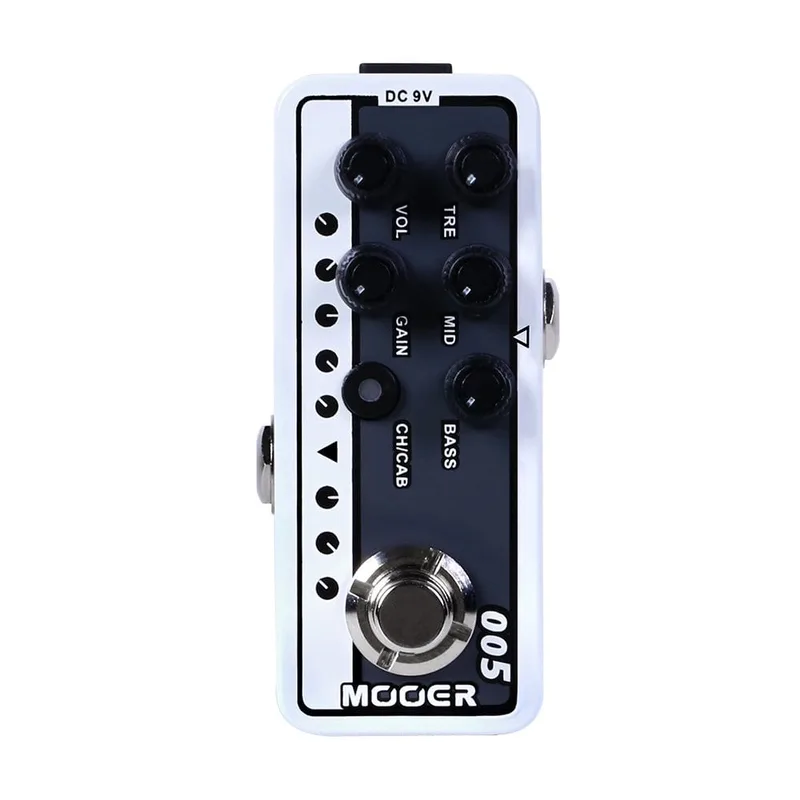
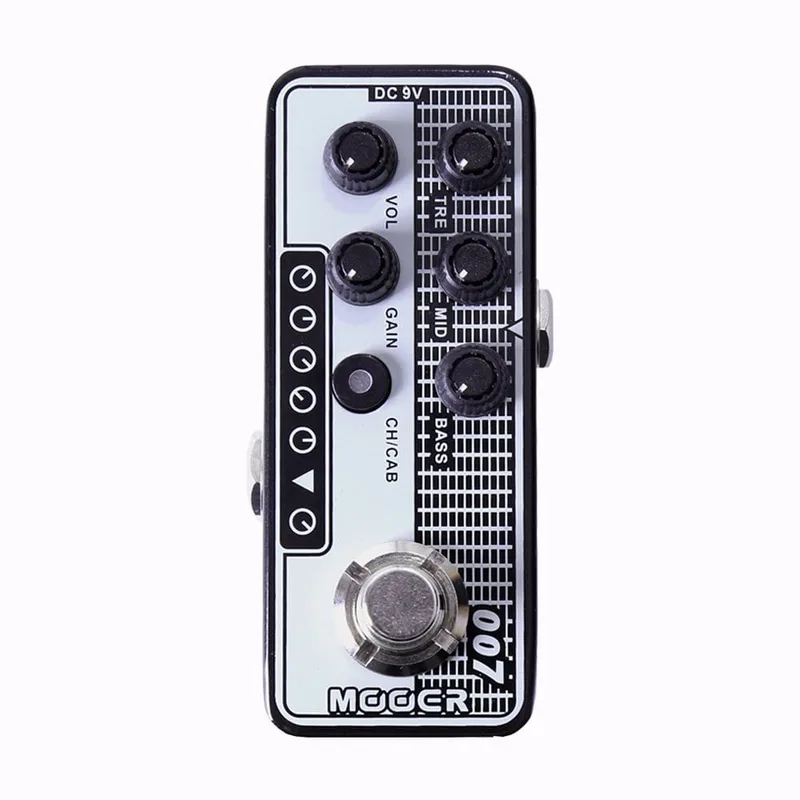
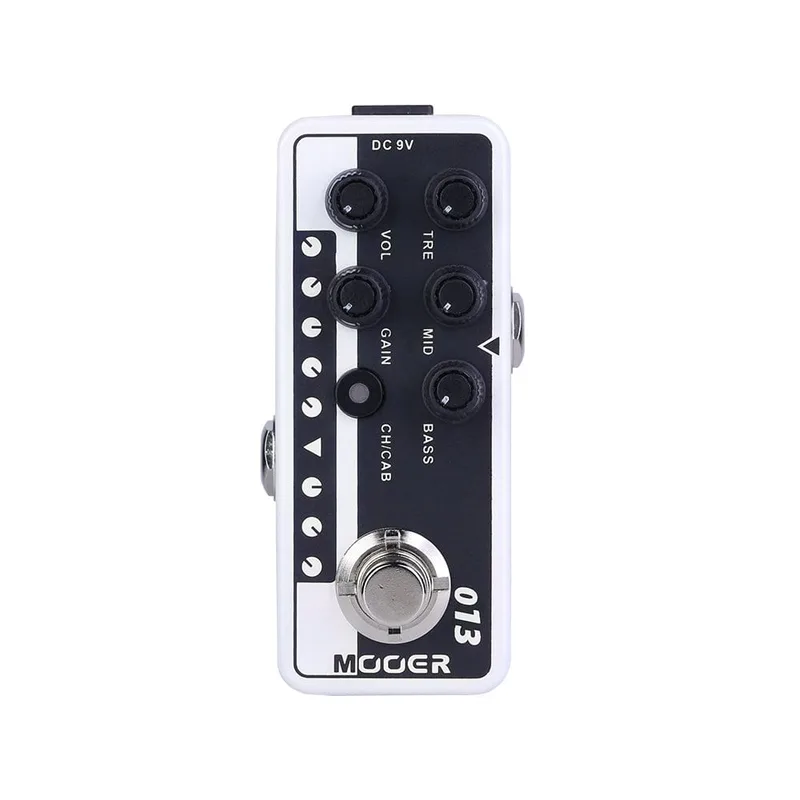
The Blueno is one of Mooer's numbered Micro Preamps, a line of small digital preamp pedals that also includes models such as the MOOER 001 Gas Station, MOOER 005 Brown Sound 3, MOOER 007 Regal Tone and MOOER 013 Matchbox. Each pedal in the range recreates the preamp section of a different tube amplifier in the same compact format1. The Blueno's distinguishing feature within the range is its two-channel design, where most Micro Preamps offer a single sampled preamp voice.
Videos
MOOER Audio
Questions
What amp is the Mooer Blueno based on?
Mooer says the Blueno's two channels were directly sampled from a hand-built, 36W Class A amplifier. The company does not name the original amp, describing it only as a hand-built Class A design. The blue channel is voiced for clean chime and the red channel for a cranked, higher-gain tone.
How much current does the Mooer 020 Blueno need?
The Blueno runs on a 9V DC center-negative power supply and draws 300mA. That is a fairly heavy draw for a micro pedal, so it needs a proper 9V adapter rather than a battery, and Mooer recommends its own Micro Power supply.
Can the Blueno go into an amp's effects return?
Yes. Mooer says to connect the output to a power amp or your amplifier's effects return, and the company highly recommends using a tube amplifier for this. The input accepts your guitar directly or the output of pre-gain effects such as overdrive or distortion.
How does the Blueno footswitch change channels?
The footswitch has two selectable modes. In On/Off mode it simply bypasses the pedal. In channel A/B mode it switches between the blue and red channels, letting you move from clean to cranked sounds with one press.
Sources (2)
- 020 - BLUENO_MOOER Audio, MOOER Audio
- Mooer Audio Announces Two New Micro Preamp Models, Guitar World, 2018-11-13