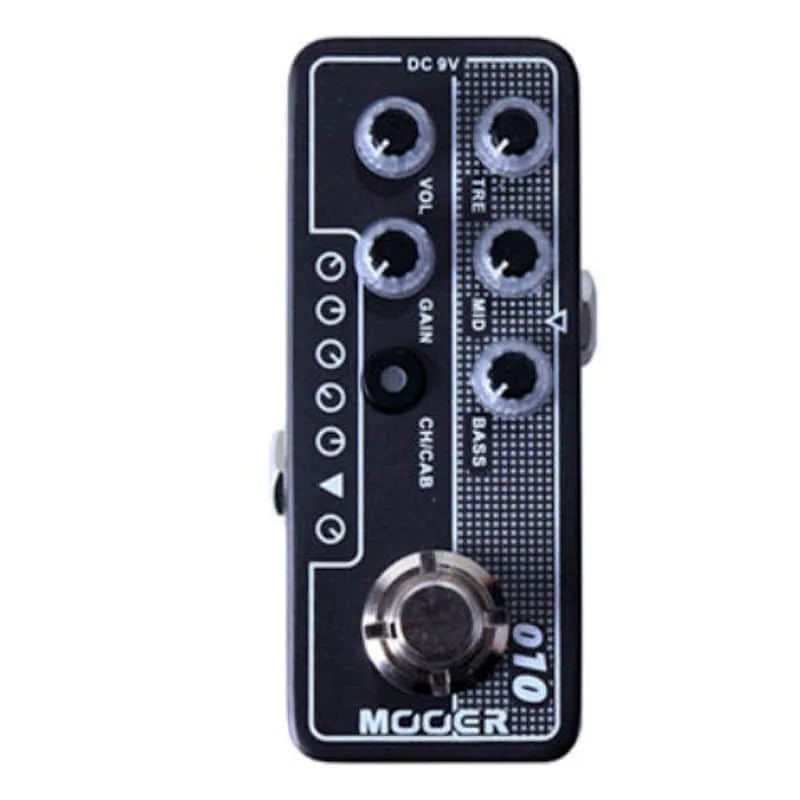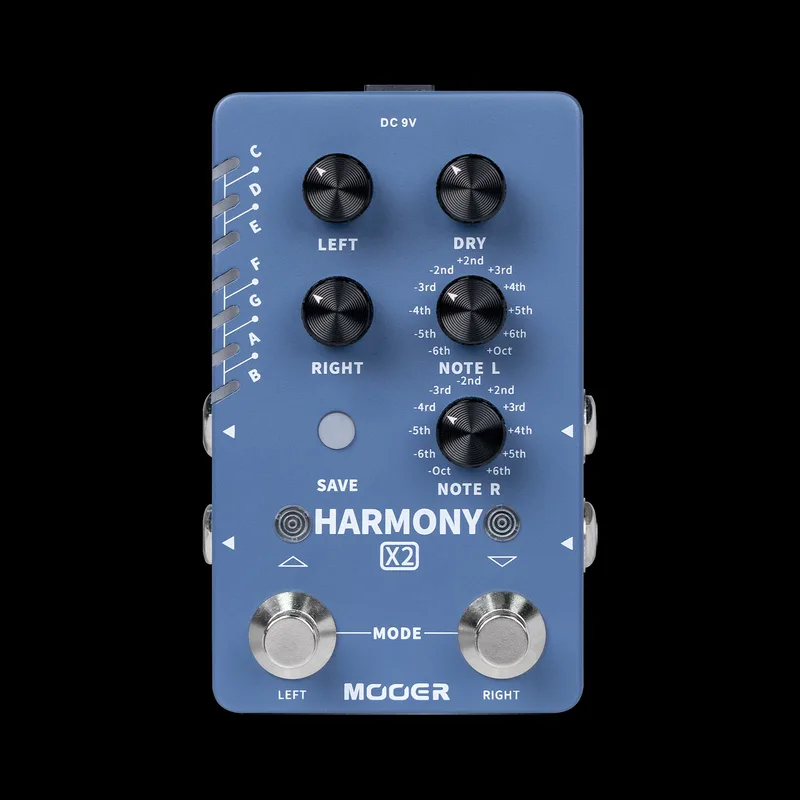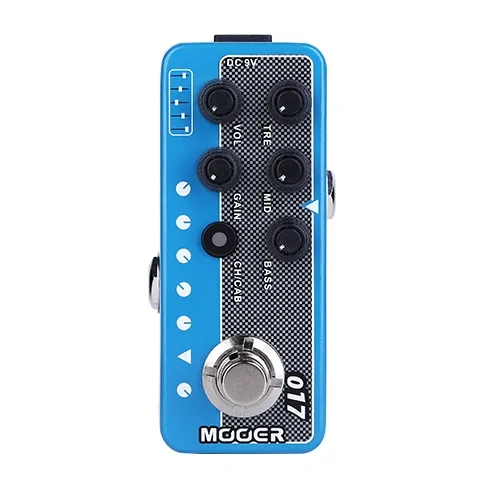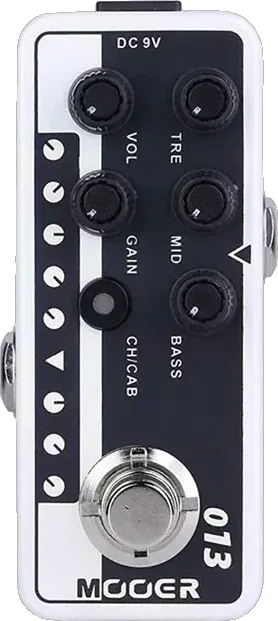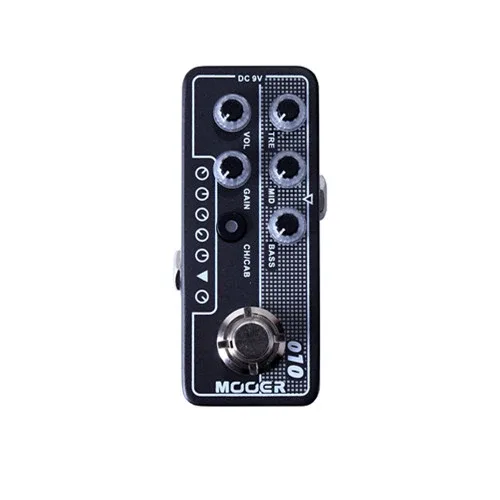


The MOOER Two Stone is a compact dual-channel digital preamp pedal from MOOER Audio. It gives a player two distinct preamp voices in one small box: MOOER describes the blue channel as delivering "pristine clean tones that have rich bass and lush highs" and the red channel as providing "searing, superb leads"1. Each channel carries its own 3 band EQ, Gain and Volume controls, so the clean and lead sides can be set up independently rather than sharing one set of knobs1. It sits in the preamp pedal family alongside units like the Mooer Preamp Model X2 and the Mooer 017 Cali MK IV.
Channels and controls
The Two Stone's design is built around two channels with separate control sets1:
- Blue channel: the clean side, described by MOOER as pristine cleans with rich bass and lush highs1
- Red channel: the lead side, described as searing, superb leads1
- Per-channel controls: an independent 3 band EQ, plus Gain and Volume, for each channel1
Because the EQ, Gain and Volume are independent, a player can dial in a rhythm sound and a lead sound separately and move between them, rather than compromising one set of settings for both1.
Footswitch modes
The footswitch can be set to work in either of two modes1:
- On/Off: the switch turns the pedal on and off like a conventional effect pedal.
- Channel A/B: the switch jumps between the two channels, which is the mode to use when the Two Stone is carrying both the clean and lead voices of a rig.
Power, inputs and outputs
The Two Stone runs on an AC adapter at 9V DC, center negative, and draws 300mA1. That is a substantial draw for a pedal this size, so it needs a power supply outlet rated to deliver it; a battery is not part of the design, and a low-output daisy-chain outlet may not keep up.
With a 300mA current draw at 9V DC center negative1, the Two Stone needs more current than many single pedals. Check the rating of the supply outlet you plan to use it with.
Connections are simple: a 1/4" mono audio jack input with an impedance of 1 meg Ohms, and a 1/4" mono audio jack output with an impedance of 100 Ohms1.
Size and weight
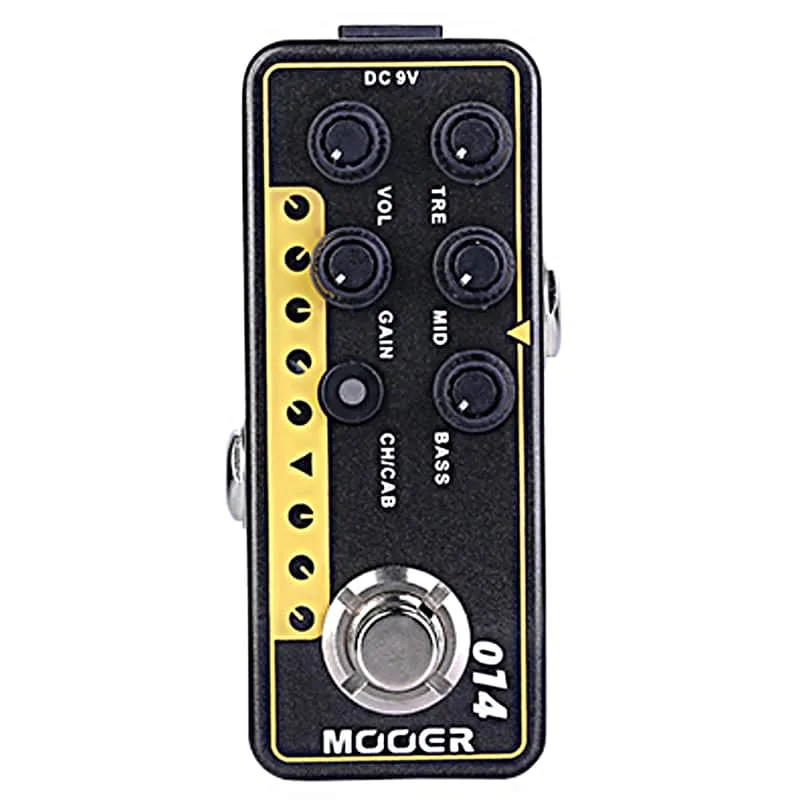
The pedal measures 93.5mm deep by 42mm wide by 52mm high and weighs 160g1. The narrow width is in line with MOOER's compact preamp line, which includes the MOOER Micro PreAMP 010 Two Stones, the MOOER Micro PreAMP 013 Match Box and the Mooer Micro Preamp 014 Taxidea Taxus, and it leaves room on a pedalboard for other units.
Videos
MOOER Audio
Brett Kingman
뮤즈텍 Muztek Music Supply
Questions
Does the MOOER Two Stone take a battery?
No. MOOER specifies an AC adapter as the power source, 9V DC with a center-negative plug, drawing 300mA. That current draw is higher than many pedals, so a battery is not an option and a shared daisy-chain supply may not have enough headroom for it alongside other pedals.
Is the Two Stone analog or digital?
It is a digital preamp. MOOER lists it as a Digital Preamp on its product page, and it carries the two-channel design with independent EQ, Gain and Volume controls that the company describes for the unit.
What polarity does the Two Stone power supply use?
Center negative. MOOER's power requirements are an AC adapter at 9V DC, center negative, with a current draw of 300mA. This is the standard polarity used by most pedal power supplies, but the 300mA draw means it needs a supply outlet rated for that much current.
Can the Two Stone switch between channels with the footswitch?
Yes. MOOER gives the footswitch two operating modes: On/Off, which turns the effect on and off, or channel A/B, which switches between the two channels. You choose which mode the footswitch uses.
How big is the MOOER Two Stone?
MOOER lists the dimensions as 93.5mm deep by 42mm wide by 52mm high, with a weight of 160g. That is a compact footprint that fits a crowded pedalboard, in line with the company's small preamp pedals.
Does the Two Stone have a separate EQ for each channel?
Yes. MOOER describes the Two Stone as a dual channel preamp with an independent 3 band EQ, plus Gain and Volume controls, for each channel. The clean and lead channels are therefore voiced and adjusted separately rather than sharing one set of controls.
Sources (1)
- 010 - Two Stone_MOOER Audio, MOOER Audio