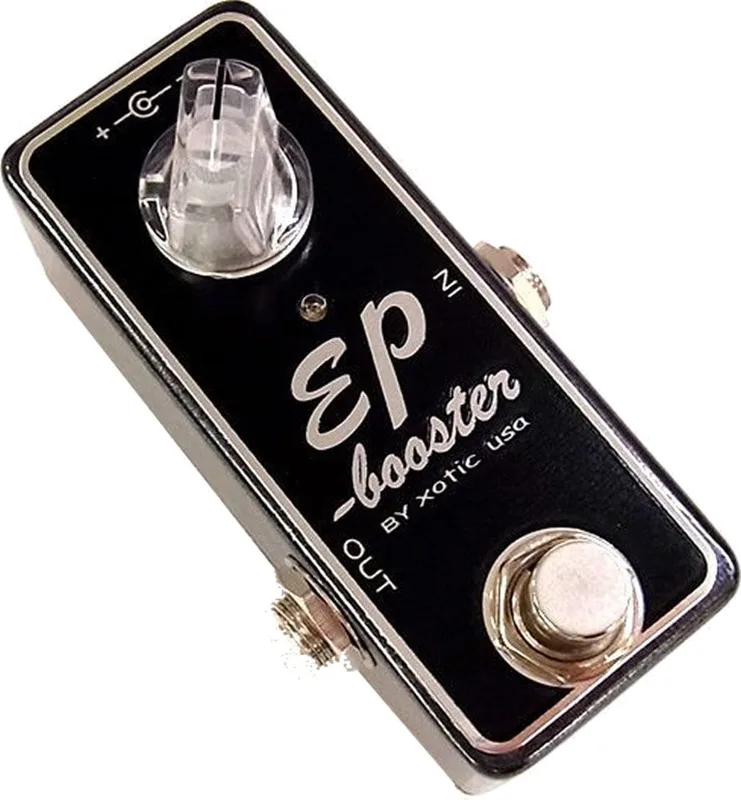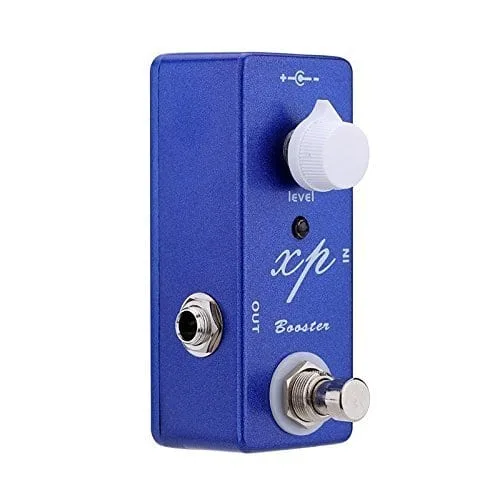


The Mosky XP Booster is a compact analog clean boost pedal from Mosky Audio, model MP-01, built around the preamp sound of the Maestro Echoplex EP-3 tape delay. Mosky's product page states it is based on the Xotic EP Booster, the small-box pedal that put that preamp on pedalboards, and it provides up to +20dB of boost from a single knob12. Inside, DIP switches let you shape which frequencies get boosted1.
It is a straightforward pedal for a player who wants to push an amp or an overdrive harder, or to lift a solo, without adding a new voice to the signal. Mosky describes the result as having "multi-dimensional, shimmering highs and lows, and no ear fatigue"1.
An Echoplex EP-3 style preamp boost
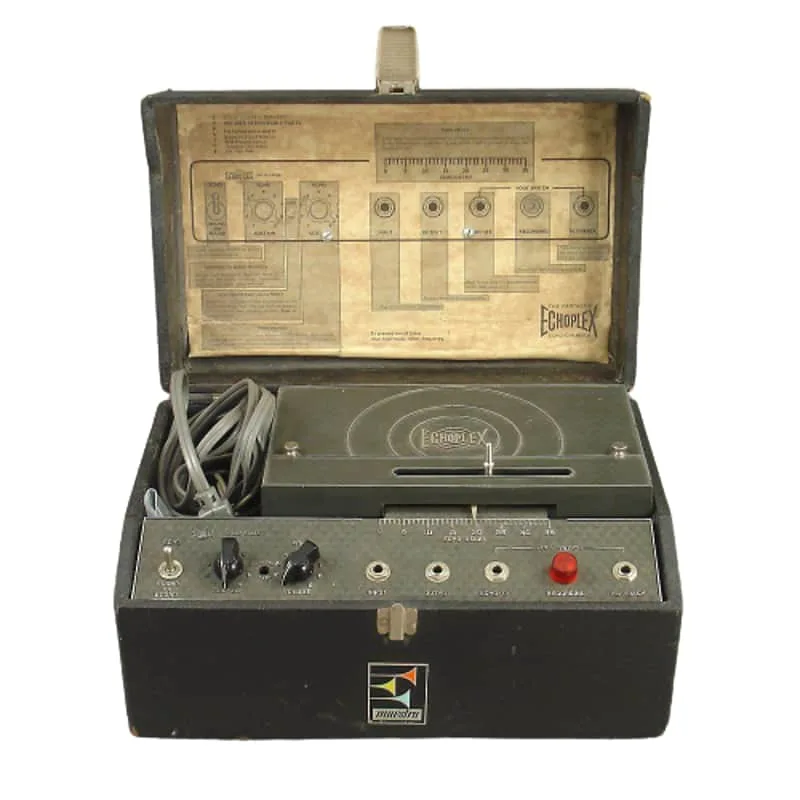
The XP Booster belongs to a family of pedals that trace back to the preamp section of the Maestro Echoplex EP-3, a tape delay whose signal path colored guitar tone even with the echo turned down. RockBoard's PedalPedia entry for the XP Booster notes it "was inspired by the legendary preamp section of the Maestro Echoplex EP-3 tape delay"2. Players ran their signal through the EP-3 just for that color, and pedal builders have been reproducing it in small boxes ever since.
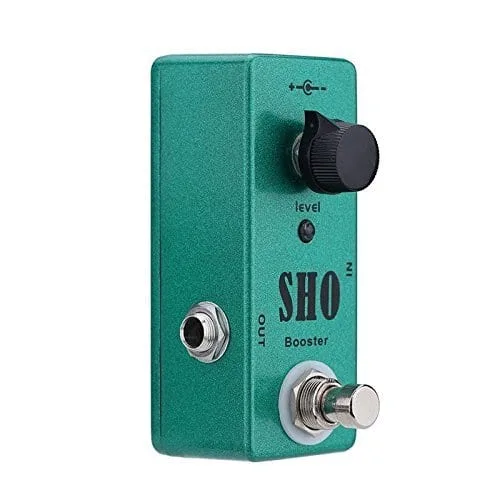
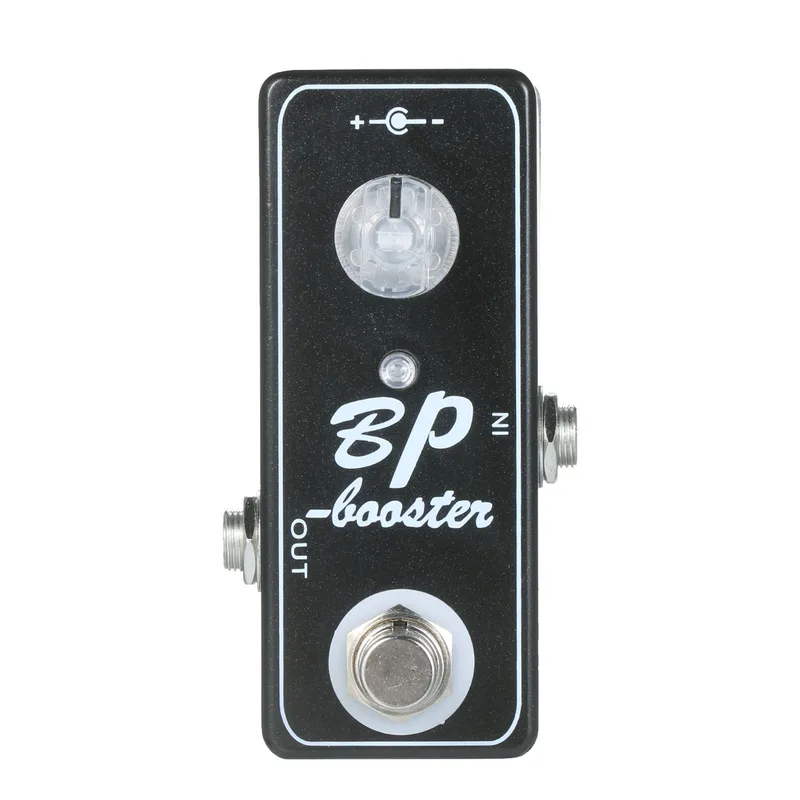
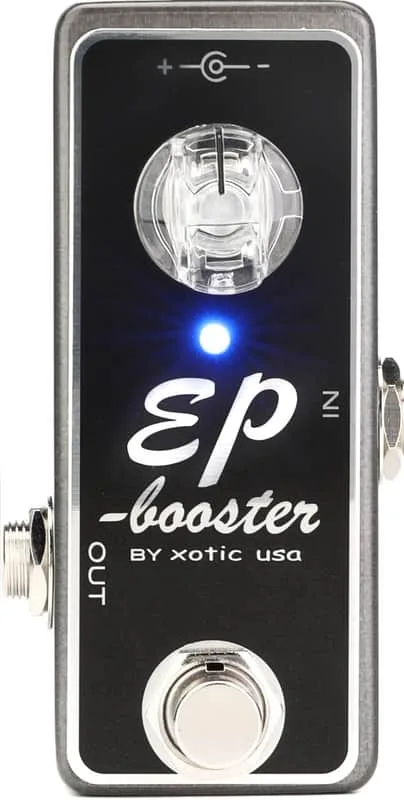
The best known of those is the Xotic EP Booster. On That Pedal Show, Dan and Mick described it as "that preamp in a small box format"3, and Guitar.com's buying guide credits it with "the magical, EQ-sweetening shimmer of a vintage Echoplex EP-3 tape echo"4. Mosky's own page says the XP Booster is based on that pedal1, which makes it a budget entry in the same lineage, alongside Mosky's other mini pedals like the SHO BOOSTER and BP Booster.
It is worth knowing what "based on the Echoplex preamp" means in practice. Aion FX, which traced the Xotic EP Booster V2 circuit, calls it "a fairly simple JFET booster modeled after the preamp of the Echoplex tape delay pedal," but found that "the JFET stage is similar, but the gain structure is completely different, as well as the resulting EQ"5. So even the pedal the XP Booster is based on is an interpretation rather than a copy, and the same caution applies down the line.
The original EP-3 preamp itself came in two flavors. Aion FX notes "there were two versions of the EP-3: the early version which was brighter and the late version which was a little darker," the difference being a single capacitor added to the first JFET stage in the later unit6. The original also ran on a 20V supply6, which is why boosters in this family often accept higher voltages than the standard 9V.
Controls and configuration
The XP Booster keeps the outside simple and puts the shaping inside:
| Control | What it does |
|---|---|
| Boost knob (single control) | Sets the amount of boost, up to +20dB1 |
| Internal DIP switches | Choose the boost frequencies and EQ settings1 |
The DIP switches mean two XP Boosters can sound noticeably different from each other once opened up, and the same pedal can be re-voiced for a bright amp versus a dark one. Mosky says the pedal uses "a discrete FET design and low impedance output"1, and the 1M ohm input with 1k ohm output impedance1 means it presents a healthy load to the guitar and drives long cable runs well.
Power and connections
Mosky specifies a power consumption of 9VDC or 18V, negative tip, with a regulated adapter recommended1. RockBoard lists the current draw at 100mA2. There is no battery option mentioned, so this is a power-supply pedal.
The 18V option is the modern echo of the original EP-3's 20V supply6. Running at 18V gives the FET stages more headroom before clipping, which suits a clean boost role. Check that your power supply can deliver 18V on a single output; most daisy-chain supplies only offer 9V per tap.
The pedal is housed in a zinc-aluminum alloy mini-enclosure2, blue in color1, at 92mm x 38mm x 36mm and 125g1, so it fits in a small gap on a crowded board.
How it compares
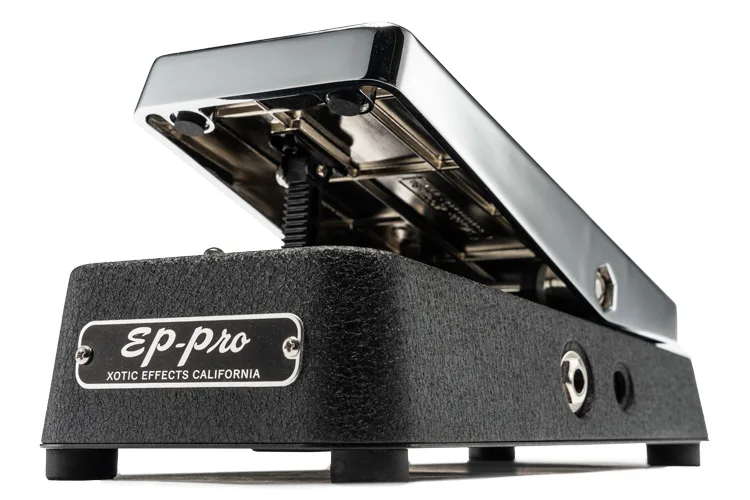
Within the Echoplex-preamp family, the XP Booster sits at the budget end. The Xotic EP Booster is the pedal it is based on1, and Xotic also makes the larger EP-Pro, which the company says "builds on the iconic EP Booster, which captured the legendary Echoplex preamp sound"7. Guitar World has also pointed readers toward the Echoplex-flavored Xotic EP-3 and the Catalinbread Epoch Boost for classic tape echo preamp tones8. The XP Booster covers the same basic ground, an EP-3-style preamp boost in a mini box, at a lower price point, with the DIP switches as its own twist.
For more on the category generally, see Boost Pedals.
Videos
ChoptonesOfficial
Common Gear
northtownsound
Questions
Is the Mosky XP Booster a clone of the Xotic EP Booster?
Mosky's own product page states the XP Booster is based on the Xotic EP Booster pedal. The Xotic EP Booster is itself a JFET booster modeled after the preamp of the Echoplex tape delay, though circuit analysis by Aion FX found its gain structure and EQ differ from the original EP-3 preamp. The XP Booster is a budget take on that design.
Is the Mosky XP Booster true bypass?
Yes. Mosky lists true bypass switching among the pedal's features on its product page, so the signal passes around the circuit when the pedal is off.
Can the Mosky XP Booster run at 18V?
Yes. Mosky specifies a power consumption of 9VDC or 18V, with a negative tip and a regulated supply recommended. Running it at 18V gives the internal circuit more headroom than a 9V supply.
How much boost does the Mosky XP Booster give?
Mosky states the XP Booster provides up to +20dB of boost, controlled by a single knob. Internal DIP switches let you choose the boost frequencies and EQ settings.
Sources (8)
- XP Booster_Mini Guitar Pedals_Effect Pedals_Products_mosky pedal, moskyaudio.com
- XP Booster by Mosky, RockBoard (rockboard.de PedalPedia), 2026
- That Pedal Show, That Pedal Show (YouTube), 2016-02-05
- The 10 best boost pedals for guitarists 2026, from budget to boutique, Guitar.com
- Tracing Journal: Xotic EP Booster V2, Aion FX, 2023-11-24
- Ares Vintage Preamp / Echoplex EP-3 Preamp, Aion FX, 2019-10-18
- Xotic EP-Pro, Xotic California (xotic.us)
- Boost pedals: the history of the stompbox that supercharged the sound of rock 'n' roll, Guitar World, 2023-07-26