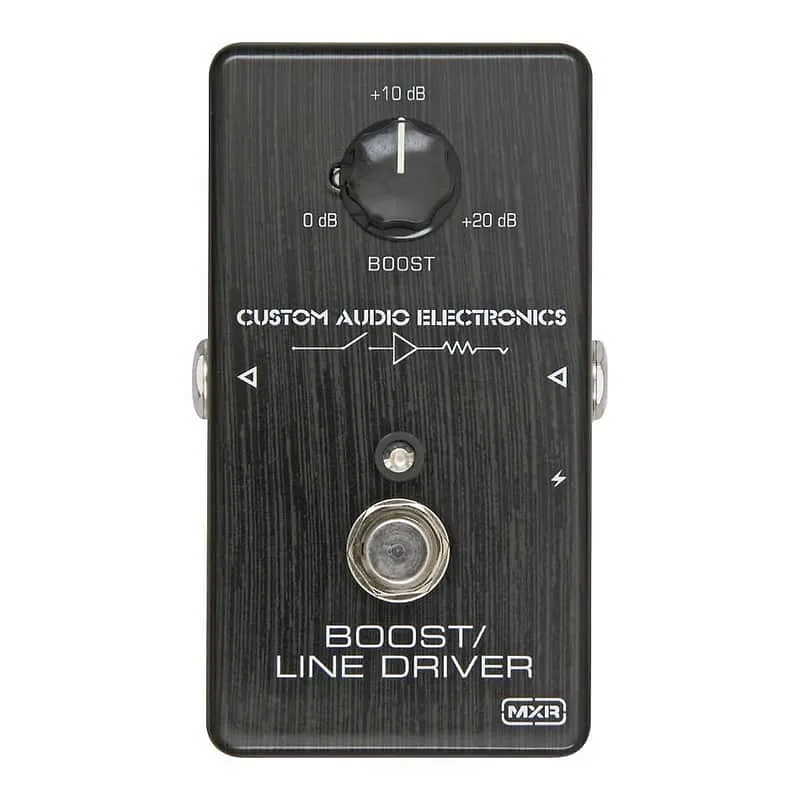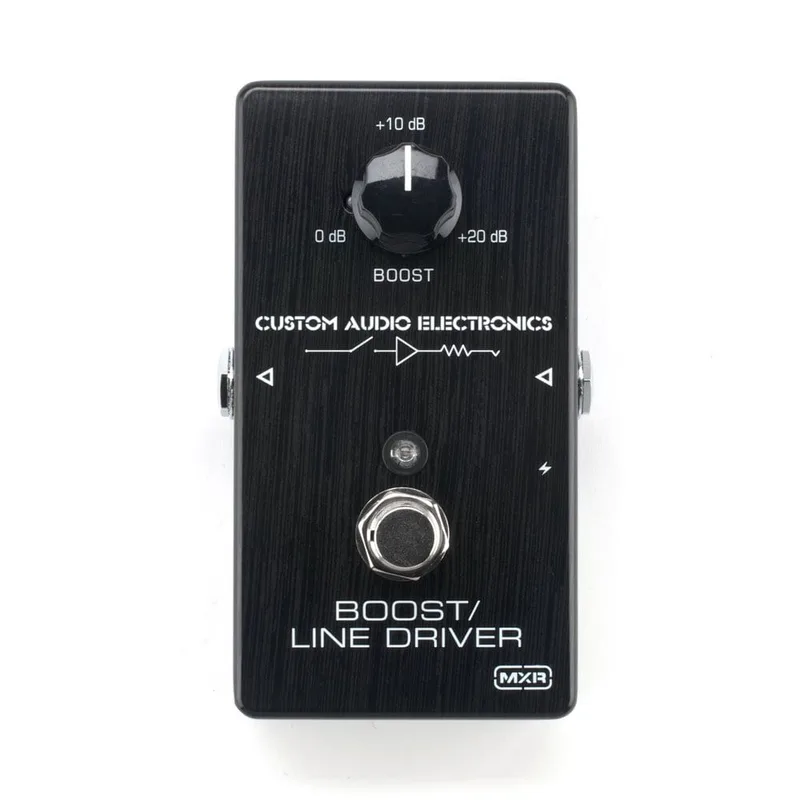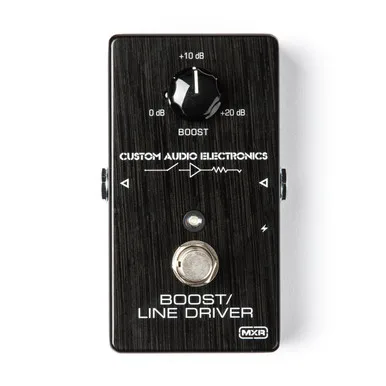


The MXR CAE Boost/Line Driver is a clean boost pedal that provides up to +20dB of what Dunlop calls ultra-clean boost, intended to rejuvenate the sparkle, punch and brilliance of a player's sound1. Beyond boosting a guitar signal, it is designed to solve mismatched line levels, acting as a line driver between a pedalboard and an amplifier1. The circuit design, according to Dunlop, was used for years by CAE in professional guitarists' rigs for exactly these problems1.
Controls
The pedal keeps things simple: one knob and a footswitch.
| Control | What it does |
|---|---|
| BOOST knob | Controls the overall boost, adjustable from 0 to +20dB; inactive in bypass mode2 |
The manual lists the boost gain range as 20 dB, with a nominal input level of -22 dBV, an output level of -22 dBV, and a noise floor greater than 95 dB (A-weighted, Vref=1Vrms)2. In other words, the pedal is specified to add gain without adding much noise of its own, which is what a clean boost is for.
Power
The Boost/Line Driver runs on 9 volts DC and can be powered two ways21:
- A 9-volt battery, installed by removing the pedal's bottom plate12
- A 9-volt adapter, such as the Dunlop ECB003 or ECB003EU, or a power supply such as the Dunlop DC Brick12
Dunlop's product page also lists the DC Brick, Iso-Brick and Mini Iso-Brick power supplies as compatible, though none of them are included with the pedal1.
Where it came from
The "CAE" in the name is Custom Audio Electronics, and the pedal carries the model number MC401. Dunlop states that the MC401's circuit design was used for years by CAE in professional guitarists' rigs to remedy mismatched line level and signal problems, and the pedal is described as simple in design but effective at solving those mismatches1. The manual is published by Dunlop Manufacturing, Inc., which builds MXR pedals2.
Related MXR boosts
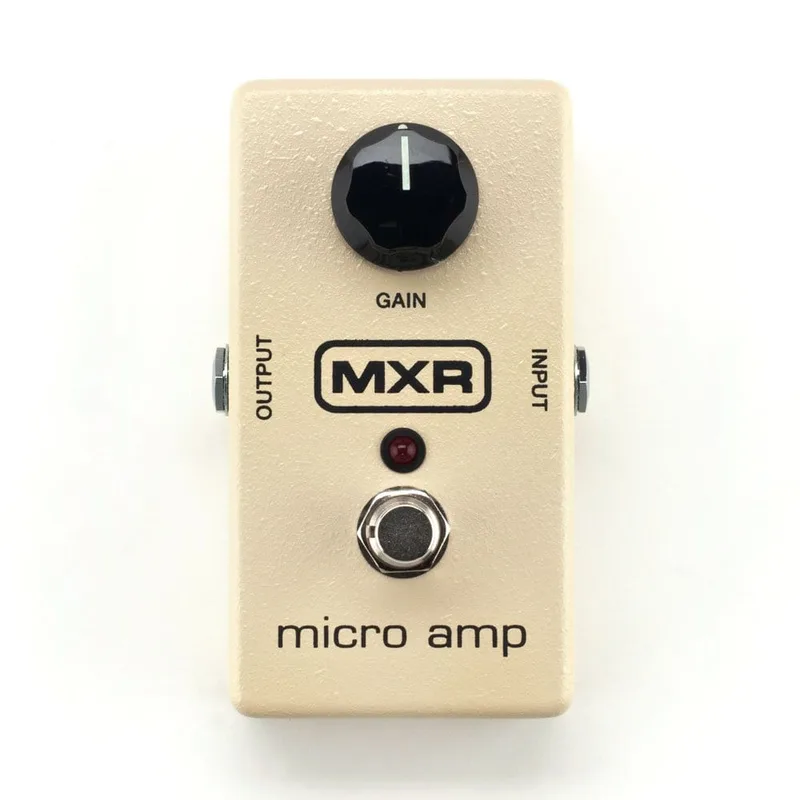
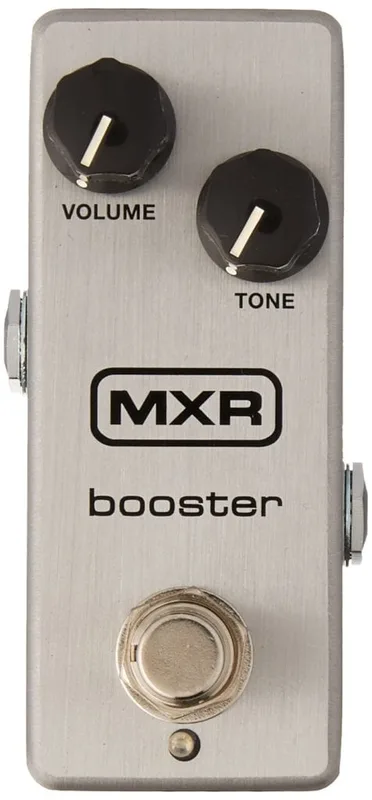
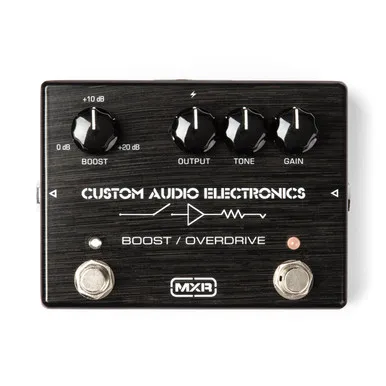
MXR's boost range includes several other pedals a player might compare it with, including the MXR Micro Amp, the MXR Boost/Line Driver, the MXR Booster Mini and the MXR Buffer Boost. Dunlop also lists an MXR CAE Boost/Overdrive, a related CAE-branded pedal that adds overdrive to the boost formula3. For more on the category, see the site's page on boost pedals.
Videos
ProGuitarShopDemos
shnobel
Music Bliss Malaysia
Questions
Does the MXR CAE Boost/Line Driver run on a battery?
Yes. The pedal is powered by one 9-volt battery, and the manual says to remove the bottom plate to install it. It can also run from a 9-volt adapter such as the Dunlop ECB003, or from a power supply such as the Dunlop DC Brick, Iso-Brick or Mini Iso-Brick, which are not included with the pedal.
What power supply does the MXR CAE Boost/Line Driver use?
The manual specifies a 9 volts DC power supply, such as the Dunlop ECB003 or ECB003EU adapter, or a multi-output supply such as the DC Brick. Dunlop's product page also lists the Iso-Brick and Mini Iso-Brick power supplies as compatible, though none of these are included with the pedal.
How much boost does the MXR CAE Boost/Line Driver give?
The BOOST knob adjusts from 0 to +20dB of clean, uncolored boost, and the manual lists the boost gain range as 20 dB. Dunlop describes the boost as ultra-clean, intended to restore sparkle, punch and brilliance to a signal. The knob is inactive in bypass mode.
Who is CAE and what is their connection to this pedal?
CAE stands for Custom Audio Electronics. According to Dunlop, the MC401's circuit design was used for years by CAE in professional guitarists' rigs to remedy mismatched line levels and signals. MXR partnered with CAE to put that design into this pedal.
Sources (3)
- MXR® CAE BOOST/LINE DRIVER, Dunlop (jimdunlop.com)
- MC401.pdf, Dunlop Manufacturing, Inc., 2023
- MXR® CAE BOOST/OVERDRIVE, Dunlop (jimdunlop.com)