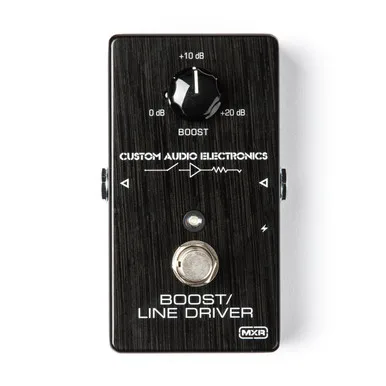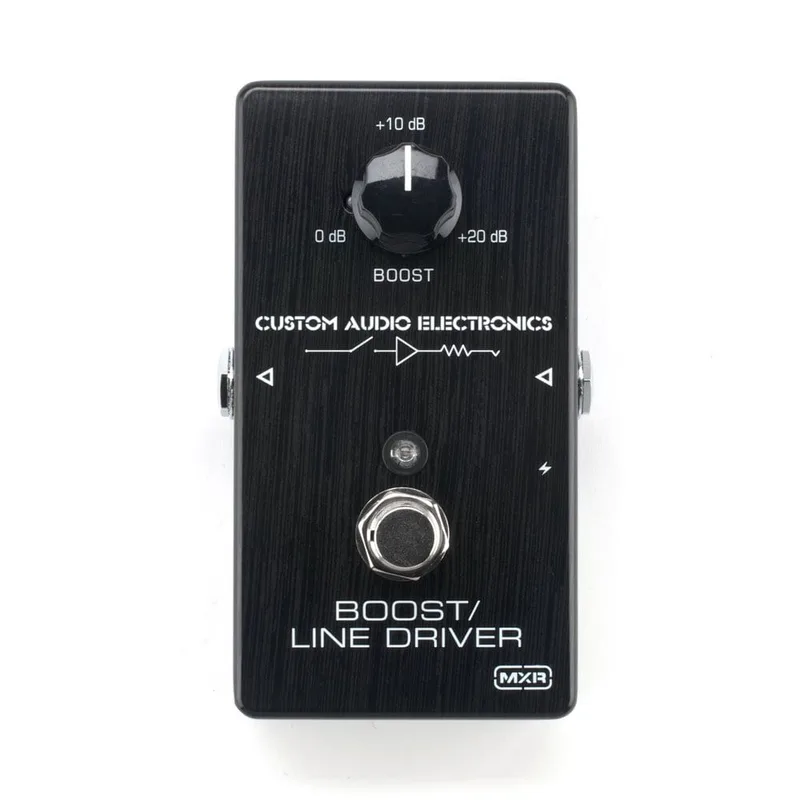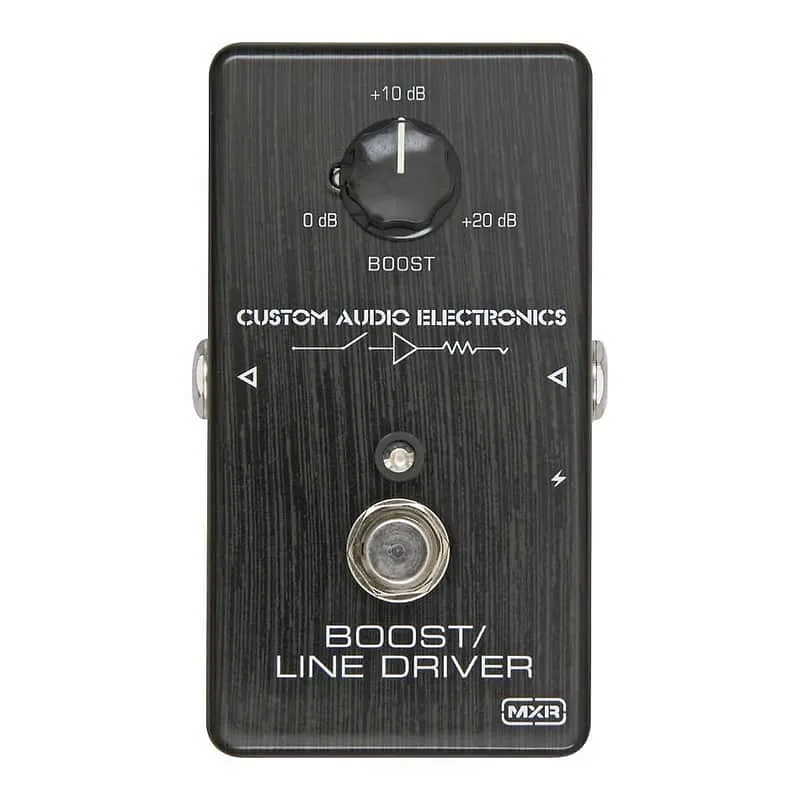


The MXR/CAE MC401 Boost/Line Driver is a clean boost pedal made by Dunlop Manufacturing, Inc., developed with Custom Audio Electronics designer Bob Bradshaw. It provides 0 to +20dB of clean, uncolored boost with a single knob, and it can also serve as a line driver for long cable runs. The same boost circuit is built into the MC404 CAE Wah as well123.
What it does
The MC401's BOOST knob controls the overall boost, adjustable from 0 to +20dB. Dunlop's manual describes the boost as clean and uncolored, and the pedal's noise floor is rated at greater than 95 dB (A-weighted, Vref=1Vrms)1. A footswitch toggles the effect on and off, and an ice blue LED indicates when it is on1.
The BOOST knob is inactive in bypass mode, so the boost only applies while the pedal is engaged1.
Controls
| Control | What it does |
|---|---|
| BOOST knob | Controls overall boost, 0 to +20dB; inactive in bypass mode1 |
| Footswitch | Toggles effect on/bypass; ice blue LED indicates on1 |
Power and connections
The pedal runs on 9 volts DC at a current draw of 1.5 mA, and it can also be powered by one 9 volt battery, installed by removing the bottom plate. Dunlop specifies a 9 volt AC adapter such as the ECB003/ECB003EU, or a power supply such as the DC Brick1. A cable runs from the guitar to the Input jack, and another from the Output jack to the amplifier1.
Specifications
| Specification | Value |
|---|---|
| Boost gain range | 20 dB1 |
| Input impedance | 1 MΩ1 |
| Output impedance | 150 Ω1 |
| Nominal input level | -22 dBV1 |
| Output level | -22 dBV1 |
| Noise floor | >95 dB (A-weighted, Vref=1Vrms)1 |
| Bypass | True Hardwire1 |
Background and the MC404 connection
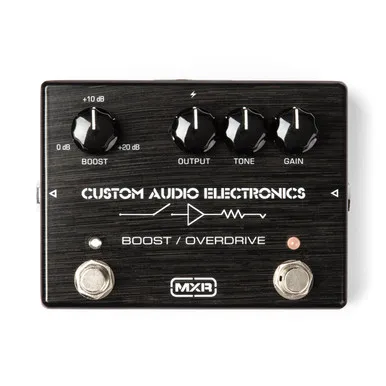
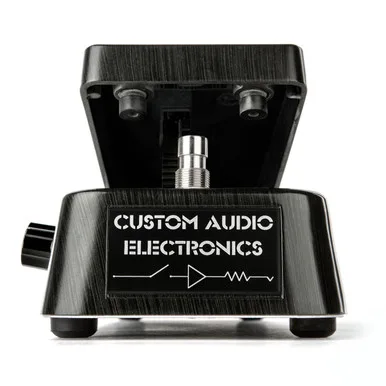
The MC401 came out of Dunlop's collaboration with Custom Audio Electronics: JHS Pedals notes Bob Bradshaw partnering with MXR to release the MC401 CAE Boost/Line Driver alongside the MC402 CAE Boost/Overdrive and the MC403 CAE Power2. The circuit also lives inside another pedal: Dunlop's product page for the MC404 CAE Wah says "a built-in MXR MC401 Boost/LineDriver adds even more flexibility"3, and Premier Guitar's review of the MC404 agreed, writing that "A built-in MXR MC-401 Boost/LineDriver gives you an extra kick in your tone if you need one."43
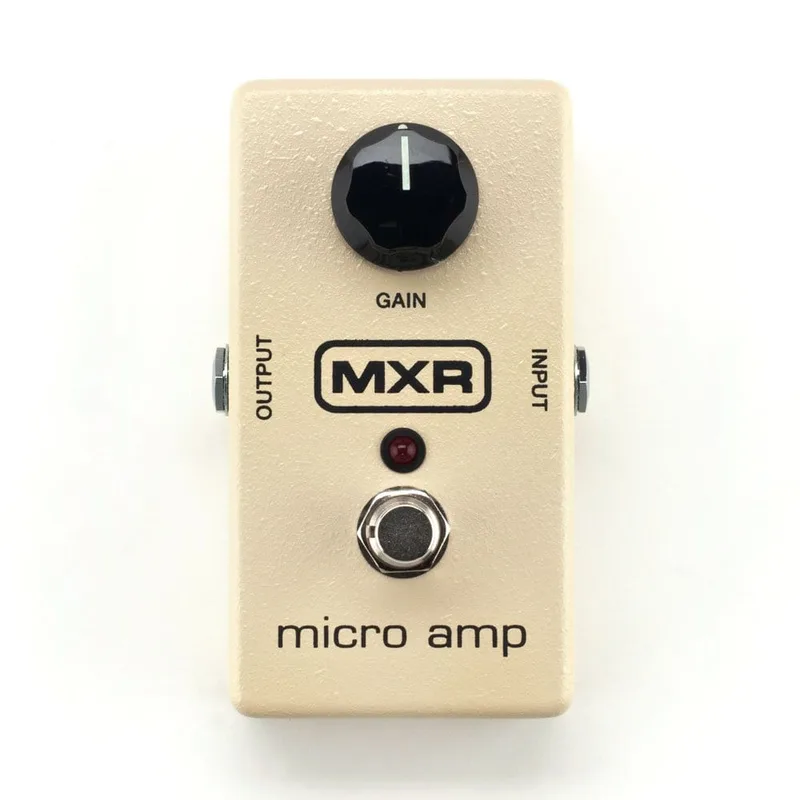
Players comparing clean boosts may also want to look at the MXR Micro Amp, the MXR Boost/Line Driver, or the wider range of Boost Pedals.
Videos
ProGuitarShopDemos
tunnelvisionmusic
Music Bliss Malaysia
Questions
Does the MXR MC401 take a 9V battery?
Yes. According to Dunlop's manual, the MC401 is powered by one 9 volt battery, installed by removing the bottom plate. It can also run on a 9 volt DC adapter, such as the Dunlop ECB003/ECB003EU, or a multi-pedal power supply such as the DC Brick.
Is the MC401 true bypass?
Yes. The manual lists the bypass type as True Hardwire, so when the pedal is off, your guitar's signal passes to the amplifier without passing through the boost circuit.
How much current does the MC401 draw?
Dunlop's manual gives a current draw of 1.5 mA, which is very low by pedal standards and easy on any 9 volt power supply.
What is the MC401's input impedance?
The manual specifies an input impedance of 1 MΩ, with an output impedance of 150 Ω and a nominal input level of -22 dBV.
Is the MC401 the same circuit as the one in the MC404 CAE Wah?
Dunlop's product page for the MC404 CAE Wah describes it as having a built-in MXR MC401 Boost/Line Driver, and Premier Guitar's review of the MC404 likewise notes that a built-in MC401 Boost/Line Driver gives you an extra kick in your tone if you need one.
Does the boost work when the pedal is bypassed?
No. The manual states that the BOOST knob is inactive in bypass mode, so the boost only applies while the effect is switched on.
Sources (4)
- MC401.pdf, Dunlop Manufacturing, Inc., 2023
- ARE MASS PRODUCED PEDALS GOOD?, JHS Pedals
- CAE WAH - Dunlop, Dunlop (jimdunlop.com)
- Dunlop MC-404 CAE Wah Pedal Review, Premier Guitar, 2009-04-09