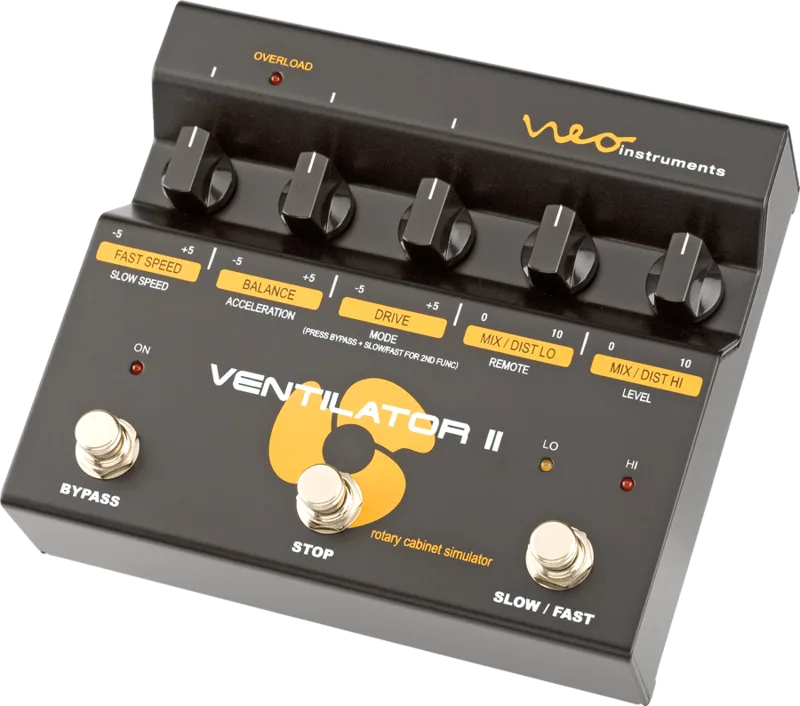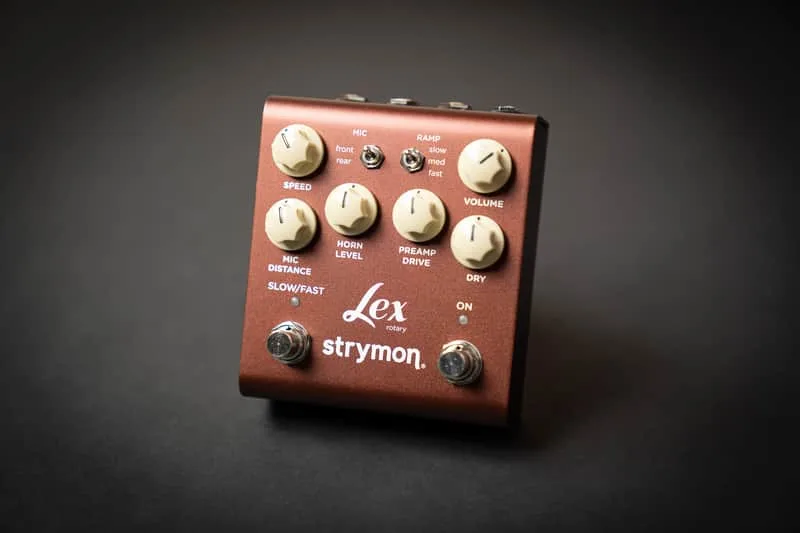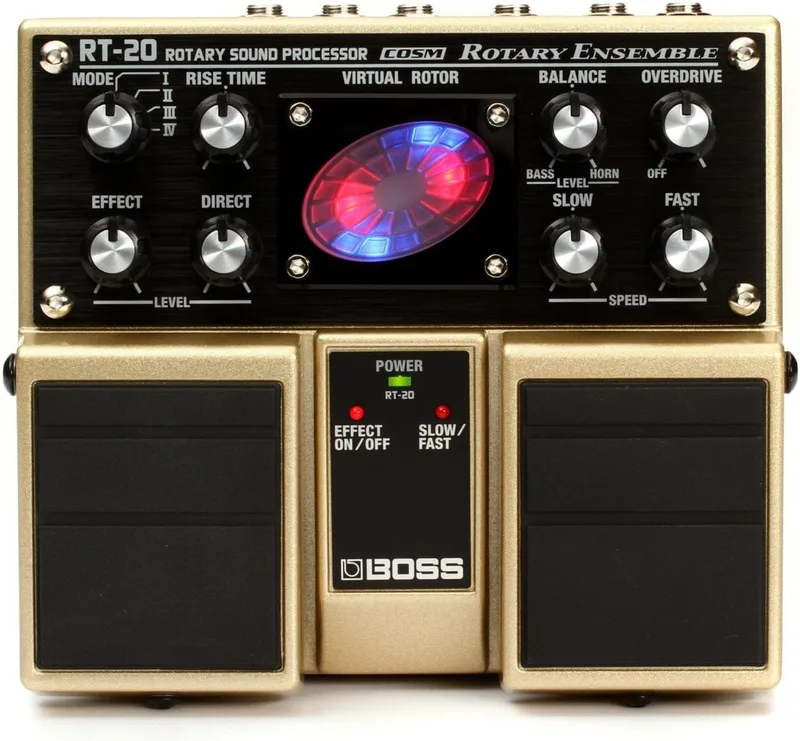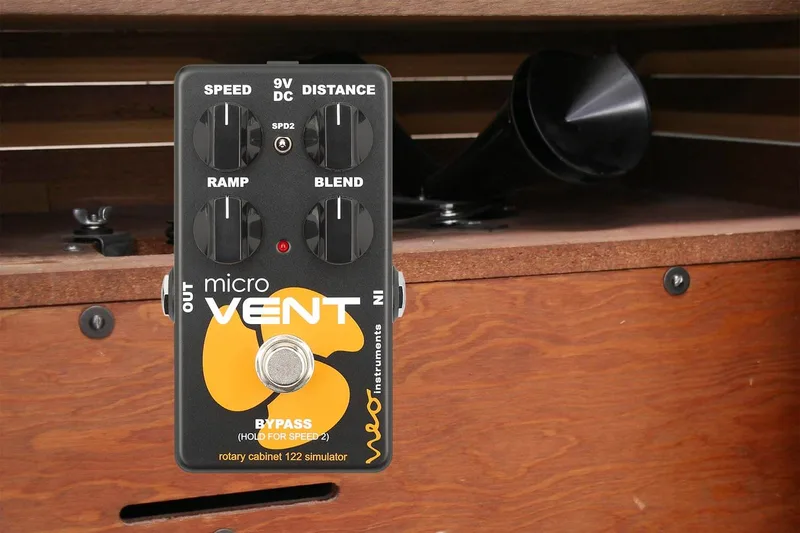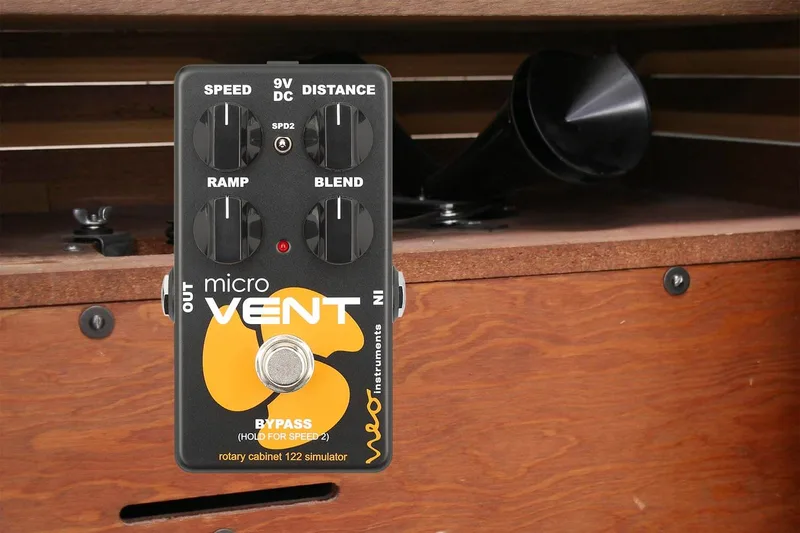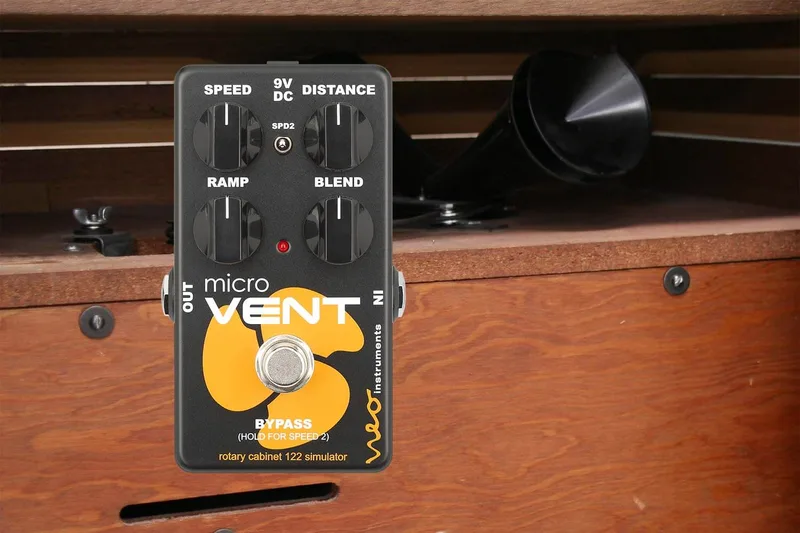


The micro Vent 16 is a rotary speaker simulator pedal from Neo Instruments, the German maker behind the Ventilator. Where the company's other pedals model a full Leslie 122 organ speaker, the micro Vent 16 offers a newly designed simulation of a Vibratone guitar Leslie: the classic guitar leslie with a 10 inch speaker feeding a single drum rotor1. It sits on a page of speaker simulation pedals alongside rotary units like the Strymon Lex and the Boss RT-20 Rotary Ensemble.
What it does
The pedal runs its simulation on a 32 Bit SHARC DSP, the same processing platform Neo Instruments uses across the micro Vent range1. The algorithm simulates capturing the Vibratone with one microphone, and the distance from the cabinet is variable, so the player can set how close the simulated mic sits to the spinning drum1.
That single-mic, single-drum approach is what separates the 16 from its sibling, the micro Vent 122. The 122 simulates a Leslie 122, deriving its algorithm from the Ventilator II, and models the classic micing technique with one mic for the horn and one mic for the drum rotor, with a variable mic distance via its DISTANCE pot1. The Vibratone has no horn, only the drum, so the 16's simulation is built around one mic instead.
How it compares to the micro Vent 122
Neo Instruments describes the difference in character directly: compared to the micro Vent 122, the micro Vent 16 sounds less complex and dominant. The maker positions it as perfect for rhythm work and for giving lead tones the final touch1. In practice that makes the 16 the choice for players who want the swirl and motion of a rotating speaker behind their sound rather than a full organ-style Leslie presentation in front of it.
"Compared to the micro Vent 122, the micro Vent 16 sounds less complex and dominant. It is perfect for rhythm work and for giving lead tones the final touch."
Videos
gilmourish
Mike Hermans
Alberto Barrero
Sources (1)
- micro Vent, neo-instruments.com