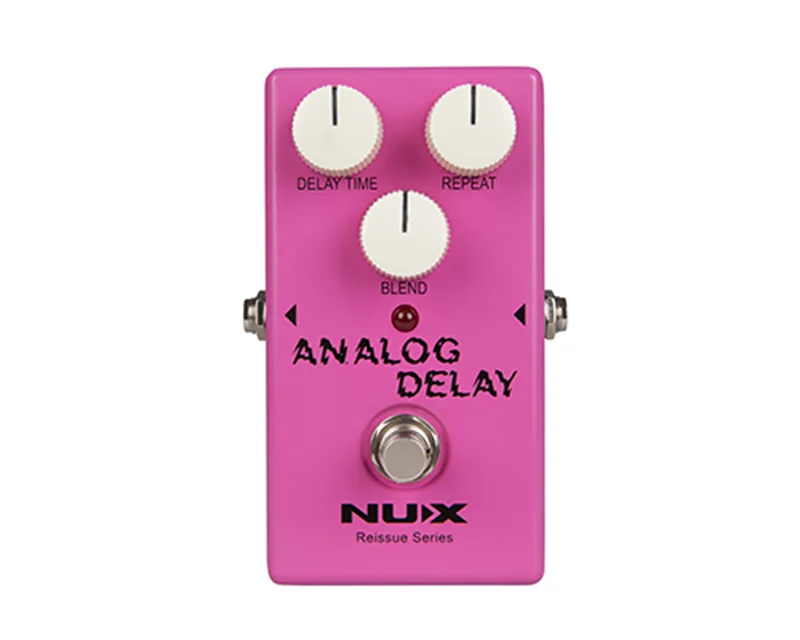


The NUX Analog Delay is a compact delay pedal from NUX's Reissue Series, a line in which the maker builds its own versions of well-known classic stompboxes. NUX describes it as a pure analog bucket-brigade circuit that delivers "Warm Analog Delay Sound from the 80's"1. Where a digital delay samples your guitar and replays the samples, a bucket-brigade device (BBD) passes your signal along a chain of tiny capacitors, one step at a time, and that process is what gives analog delays their character: repeats that get progressively darker and softer each time they come around.
The pedal is built on 3205 and 3102 BBD chips, which NUX says make up a 100% analog circuit1. It is small and light, with dimensions of 121(L) by 77(W) by 48(D) mm and a weight of 230 g1. Gearnews listed it at $48.002, while RockBoard puts it at just under $603, so the street price depends on the retailer.
A bucket-brigade delay with a warm, dark repeat
The core of the pedal is its bucket-brigade circuit. NUX's own description is short and to the point: "It gives you the warm sounding analog delay effect from the 80's"1. In practice, that means the repeats roll off high frequencies as they cycle, so each echo is a bit duller and a bit quieter than the one before it. Many players like this for rhythm work because the repeats sit behind the dry signal instead of competing with it.
Guitar World's budget delay roundup, which included the pedal in 2024, described it in similar terms: "It allows you to get the classic, lush '80s-style bucket brigade device analog delay sound"4. The same roundup confirmed what NUX claims about the circuit, calling it "fully analog circuitry" at "an extremely attractive price tag"4.
The repeats come from 3205 and 3102 BBD chips, the bucket-brigade devices at the heart of the circuit, and NUX launched the pedal at just under $6013. One writer included it in a list of analog delays despite it being the most expensive pedal there, saying "I felt obliged to include it"2.
The controls: three knobs
The control layout is the classic three-knob arrangement. Guitar World lists the knobs as Delay Time, Blend, and Repeat4, and NUX's product page describes tweaking the DELAY TIME knob and "turning up the repeat" to experiment with the effect1.
| Knob | What it does |
|---|---|
| Delay Time | Sets the spacing between repeats, from short slapback to longer echoes14 |
| Blend | Sets how loud the repeats are relative to your dry signal4 |
| Repeat | Sets the feedback, from a single echo up toward runaway self-oscillation14 |
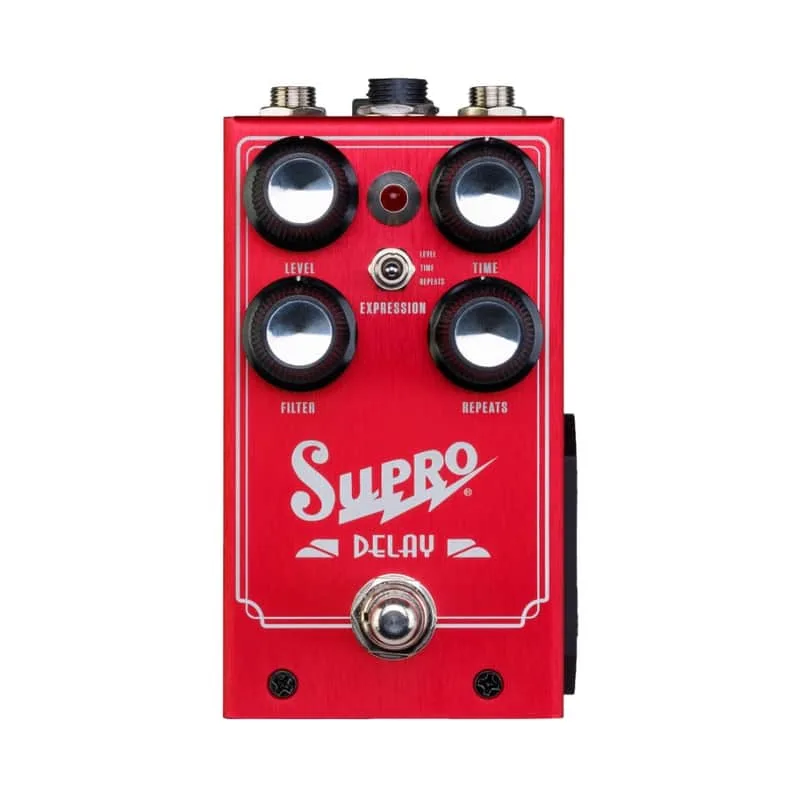
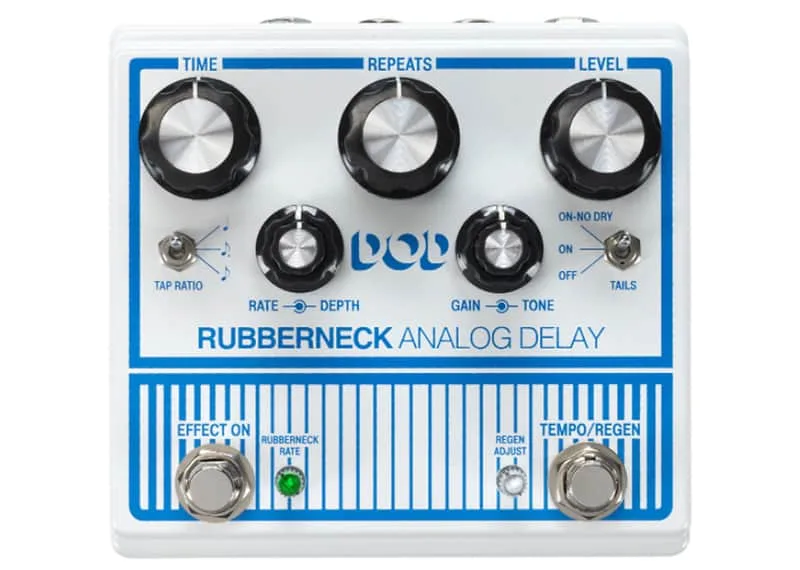
That is the whole interface. There is no tap tempo, no modulation section, no presets, and no tone control for the repeats. Guitar World's reviewer summed up the trade-off: the pedal is a "simple analog delay" that is affordable, but "doesn't look great" and is "not especially versatile"4. Players who want more control over the character of the repeats might look at something like the Supro 1313 Analog Delay, which adds a Filter knob for shaping the echoes, or the DOD Rubberneck Analog Delay with its feedback loop send/return.
Power and battery
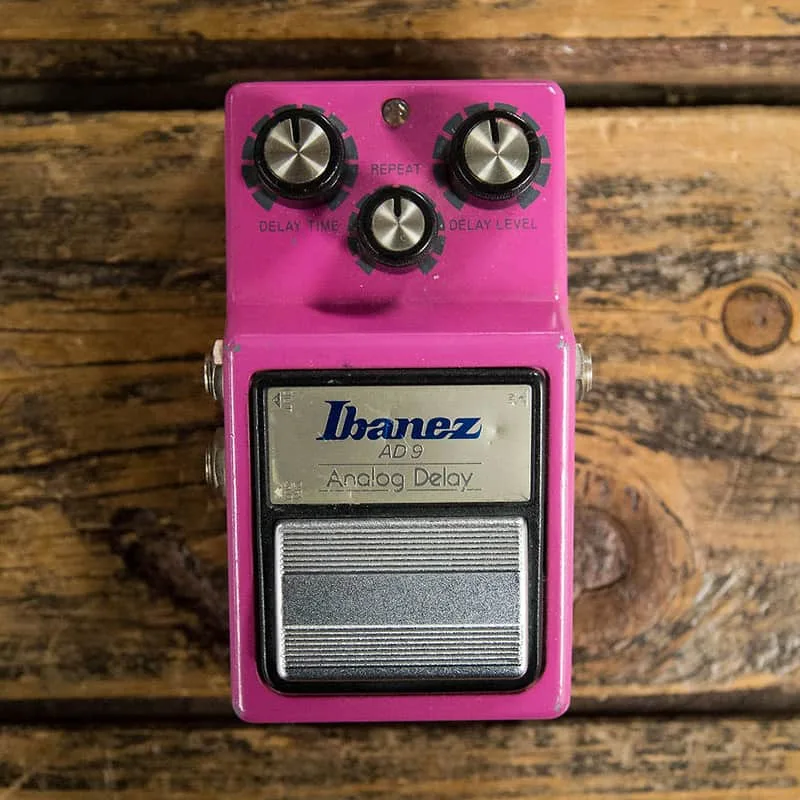
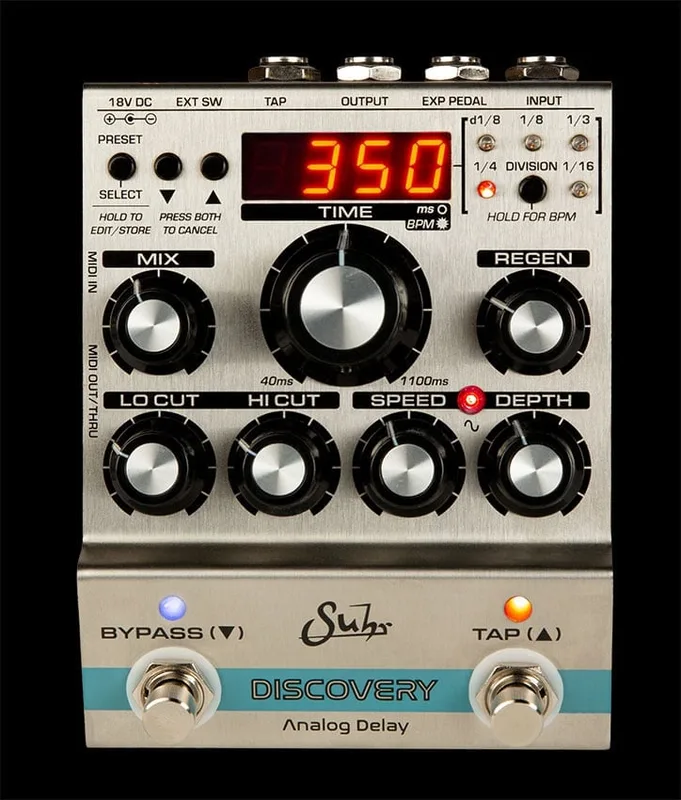
The pedal runs on 9 Volt DC or a 9V battery1, so it works on a standard pedalboard supply without any special requirements. Current draw is under 20 mA1, which is light. For comparison, the vintage-style Ibanez AD9 Analog Delay draws about 15 mA, while the Suhr Discovery Analog Delay, a much larger BBD design, draws up to 220 mA56. At under 20 mA, the NUX is easy on a daisy-chain supply and a battery is a realistic option.
Bypass is true-bypass hardware switching1, so with the pedal off, the signal passes from input to output without going through the circuit. The same switching design appears on the NUX Analog Chorus from the same series7.
Ibanez and Maxon lineage in the Reissue Series
The pedal belongs to NUX's Reissue Series, a line RockBoard characterizes as "clones of several best-selling classic stompboxes under the rather misleadingly named 'Reissue Series'"3. The specific ancestors here are the three-knob analog delays of the early 1980s. As Delicious Audio's Paolo De Gregorio put it:
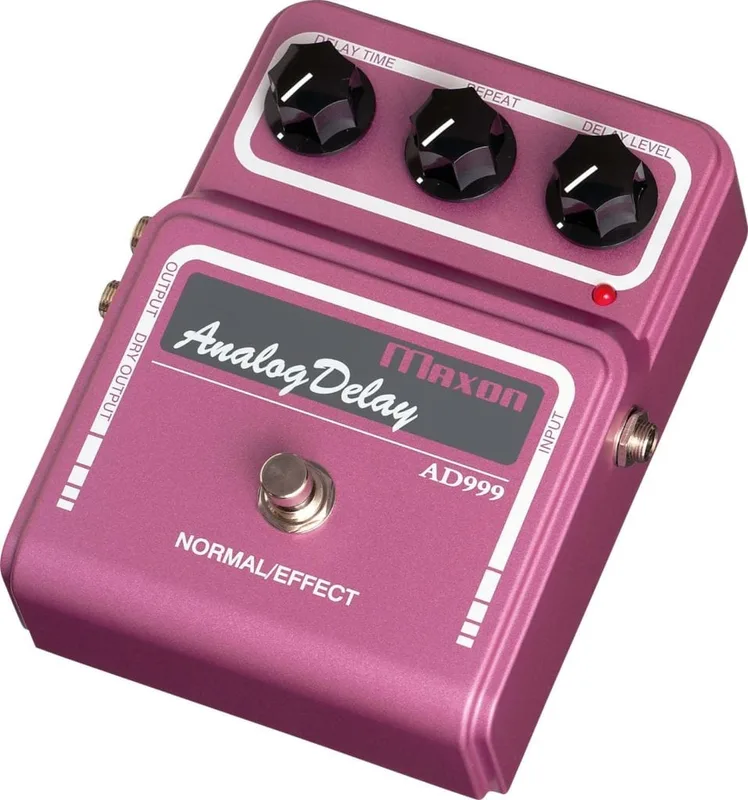
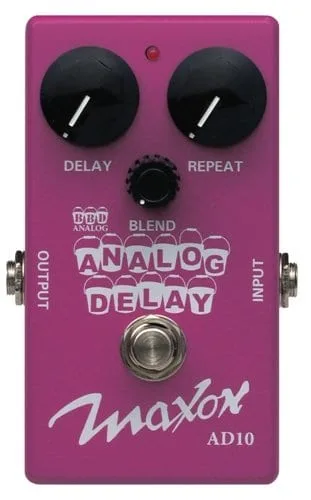
The lineage shows on the ancestor side as well. NUX's Reissue Series takes its influence from classic Ibanez and Maxon three-knob Bucket Brigade Device delays from the '80s, something the pedal's color alone betrays3. Maxon's Reissue Series effects were practically identical to the mid-70s Ibanez models that Nisshin manufactured8. Later Maxon designs carried the same BBD approach forward: the Maxon AD999 has the vintage analog tone of the Maxon and Ibanez AD-9 with two improvements, and the Maxon AD10 Analog Delay picks up on concepts from the AD-9 and AD999 and pushes them further.
What the NUX offers is that circuit architecture, drawing on the classic Ibanez / Maxon three-knob Bucket Brigade Device delays from the '80s, with the same three-knob control set, at a price of just under $6039.
What reviewers said
Published opinions on the pedal are consistent: it is a straightforward, inexpensive way to get an analog delay sound321.
- Guitar World (2024): a "simple analog delay" that gets the job done, with fully analog circuitry and an attractive price, though the reviewer found it not much to look at and limited in versatility4.
- Gearnews (March 2026): writer George Loveridge included it in a budget roundup despite it being the priciest pedal in the list, saying "Despite being the most expensive pedal in this list, I felt obliged to include it"2.
- Delicious Audio (2023): added to the site's best analog delay pedals list9.
The consensus among reviewers is that it delivers the basic analog delay experience at a low price2.
Videos
Andertons Music Co
NUX
intheblues
Questions
Is the NUX Analog Delay true bypass?
Yes. NUX lists true-bypass hardware switching among the pedal's specifications, so when the effect is off the input is wired straight to the output and the circuit is out of the signal path. The same true-bypass hardware switching appears on the NUX Analog Chorus from the same series.
Does the NUX Analog Delay run on a battery?
Yes. NUX specifies power as 9 Volt DC or a 9V battery, so it can run either from a standard center-supply pedal power unit or from an internal battery. Current draw is listed as under 20 mA, which is light enough that a battery is a practical option.
What BBD chips does the NUX Analog Delay use?
NUX states the pedal has a 100% analogue circuit with 3205 and 3102 BBD (bucket brigade device) chips. These are the delay chips at the heart of the circuit, the part responsible for the repeats. RockBoard's listing repeats the same 3205 and 3102 chip specification.
How much current does the NUX Analog Delay draw?
NUX lists the current draw as under 20 mA. That is low by delay pedal standards, comparable to vintage-style analog delays like the Ibanez AD-9 at 15 mA, and far below something like the Suhr Discovery Analog Delay at 220 mA max.
Is the NUX Analog Delay really analog?
Yes, according to its maker. NUX describes it as a pure analog bucket-brigade circuit with 100% analogue circuitry using 3205 and 3102 BBD chips, and Guitar World's budget delay roundup calls it fully analog circuitry. There is no digital processing in the delay path.
What pedals is the NUX Analog Delay based on?
It belongs to NUX's Reissue Series, and both RockBoard and Delicious Audio note that its look and three-knob layout follow classic Ibanez and Maxon three-knob bucket brigade delays from the 1980s, such as the Ibanez AD-9 and its Maxon counterpart.
Sources (9)
- Analog Delay, NUX Audio, 2026-04-14
- Best Budget Effects Pedals Under €50: Big Sounds, Small Prices, gearnews.com, 2026-03-13
- Analog Delay by NUX, RockBoard PedalPedia, 2026
- Best budget delay pedals: echo and slapback for not much greenback, Guitar World, 2024-03-27
- AD-9 Analog Delay by Ibanez, RockBoard (www.rockboard.de), 2026
- Discovery-Delay-User-Guide-Rev.1.5.pdf, Suhr (media.suhr.com), 2021-08-03
- Analog Chorus, NUX Audio, 2026-04-14
- Maxon Reissue Series Effects Review, Guitar Player Magazine, 2000-05
- NUX Analog Delay, Delicious Audio, 2023-02-07