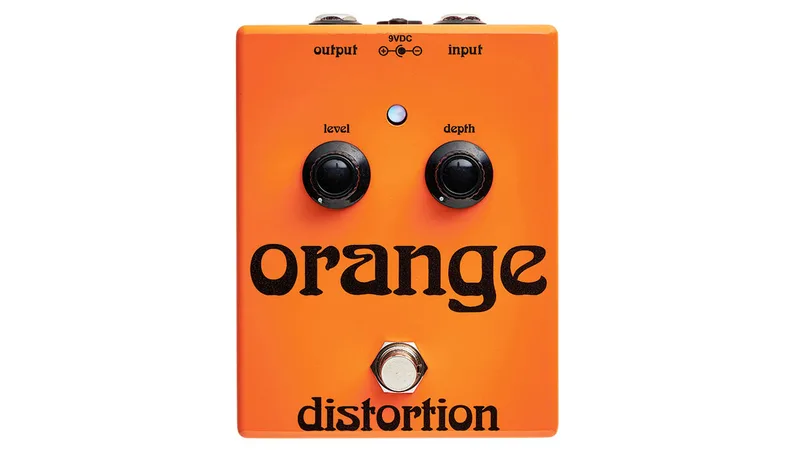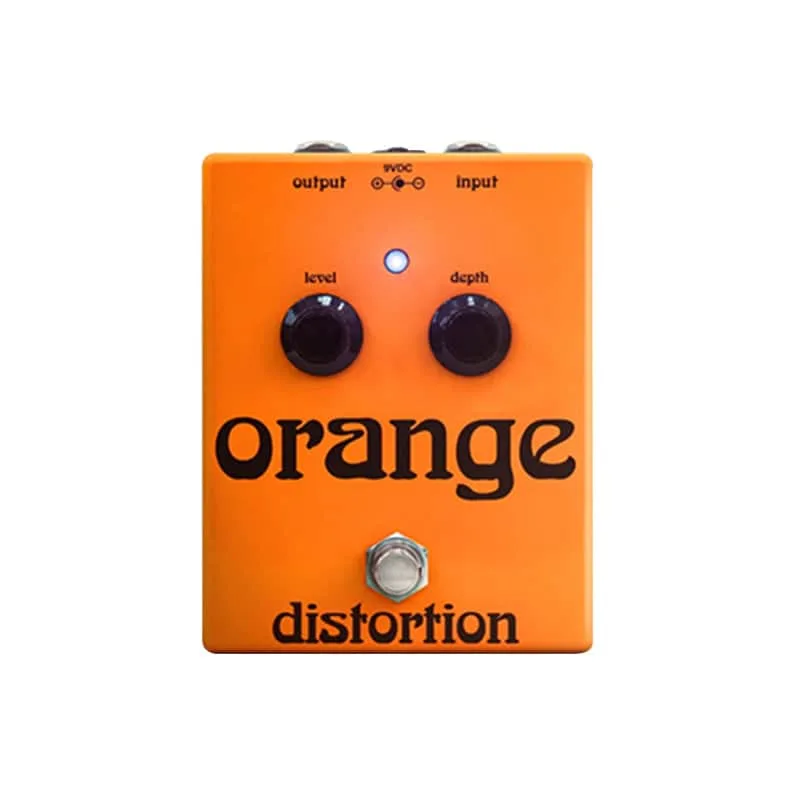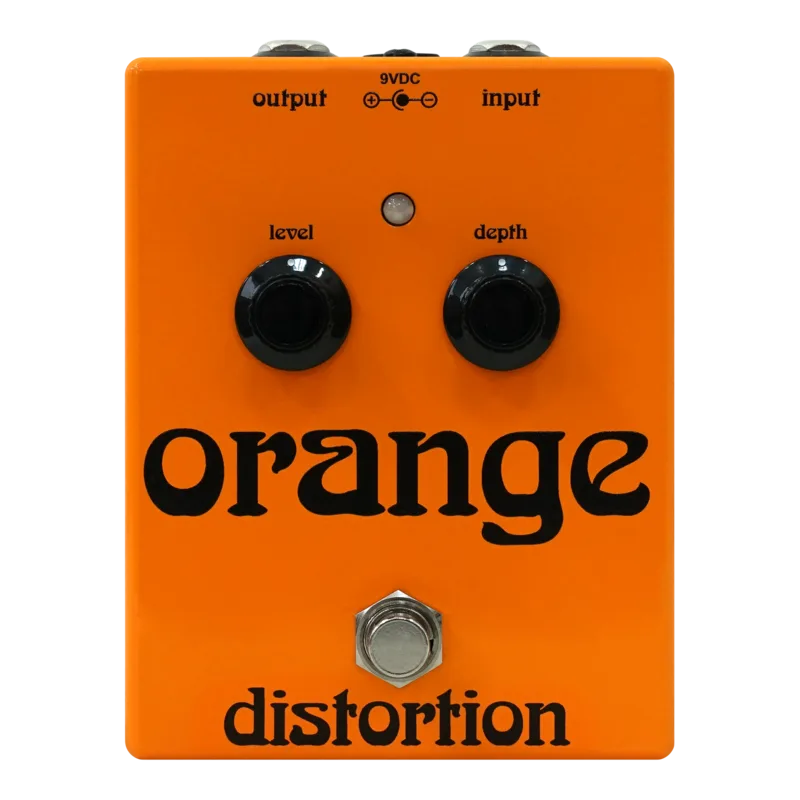


The Orange Vintage Distortion is a distortion pedal from Orange, a reissue of the company's 1970s Distortion pedal with a few modern updates. Orange describes it as delivering "that classic 70s amp-like distortion," ranging from vintage crunch to full saturation, and from a clean boost to "warm and fat gravelly textures" and "red-hot trebly screamers" at maximum settings1.
The big change from the 1970s original is inside. Orange ditched the original's back-to-back diode clipping design and replaced it with an amp circuit that includes a tone stack, which is the same basic tone-shaping network found in guitar amplifiers1. That is what gives the pedal its amp-style character rather than the harder, more compressed edge typical of simple diode-clipped boxes.
Amp-style distortion from the 1970s
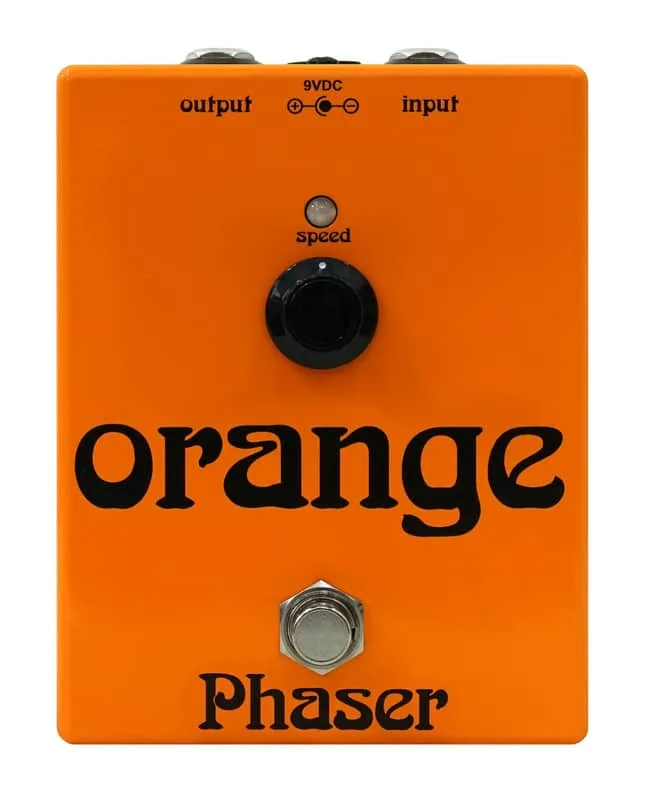
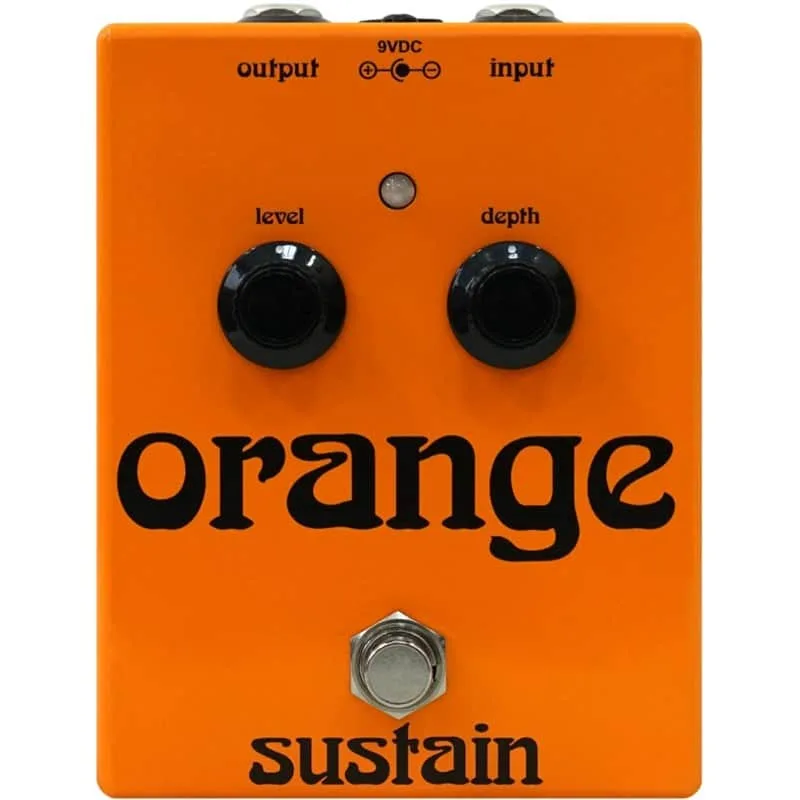
The pedal is a straight-up reboot of the 1970s Orange Distortion, one of three original Vintage Pedals (distortion, Phaser and sustain) that Orange reissued in September 202212. As Gearnews reported at the time, "Each pedal is based on the original '70s orange-coloured, oversized stompboxes, just with a few added modern-day tweaks"2. Those tweaks are an added LED and a 9V DC input, neither of which the battery-powered 1970s originals had12.
The look follows the original too: simple type stencilled onto a chunky aluminum shell1. At 9.2 × 7.9 × 12 cm and 388 g, it is a genuinely oversized box next to a modern compact pedal, so it will eat real estate on a small board1.
Inside, the serviceability is a practical touch. Orange fitted a hardwired footswitch that is separate from the PCB, which the company says makes it "super-easy to service" if the switch ever wears out1.
What the reviewers said
Guitar World reviewed the Vintage Distortion as part of its coverage of vintage-style pedals, listing it as a distortion and boost pedal with a standard input and standard output3. Premier Guitar also reviewed the Orange Vintage series, covering the reissued Sustain, Distortion and Phaser pedals together4.
One point of disagreement is the bypass. Orange's own product page specifies a buffered bypass1, while Guitar World's review lists the pedal as true bypass3. Both values are given here; the maker's specification is the one to trust for planning a signal chain, but the discrepancy is worth knowing about if bypass switching matters to your board.
Power and connections
The control layout is minimal: two knobs, Level and Depth, set left to right1. Level sets the output volume and Depth sets the amount of distortion, and the maker also lists adjustable treble among the pedal's features1. Connections are a standard input and a standard output3.
Power comes from a 9 or 12V DC adapter with a center negative plug, which is not supplied13. There is no battery option, unlike the 1970s original, which ran on battery power alone2.
The 3 mA current draw at 9V is low enough that this pedal will run happily from almost any power supply output, including a shared daisy chain, provided every plug is center negative1.
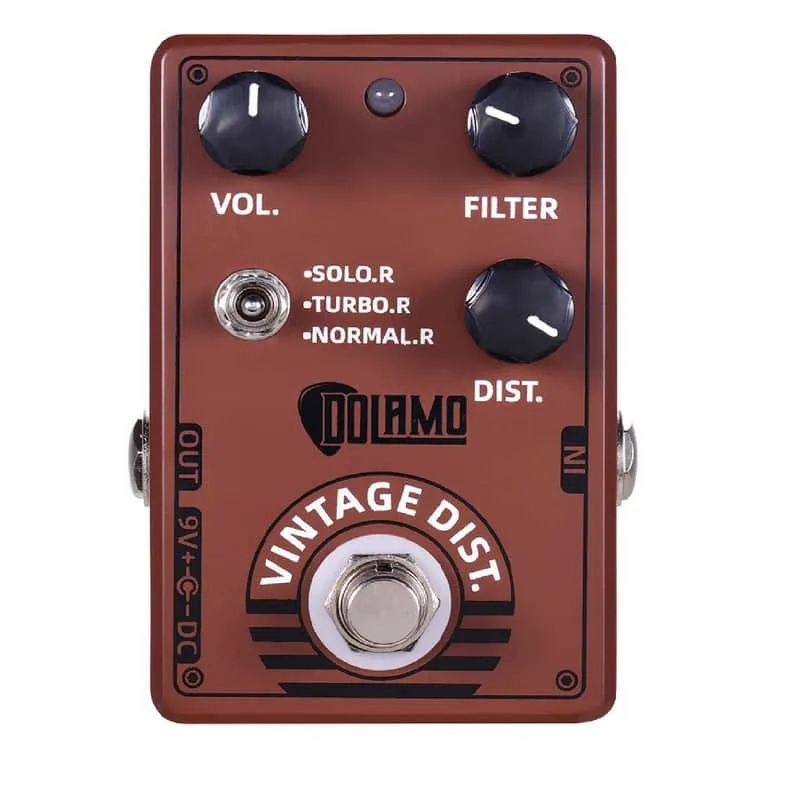
For comparison, other vintage-style distortions draw more: the Dolamo D-11 Vintage Distortion at 20 mA, the Boss DS-1 at 10 mA, and the Monoprice DS-6 Analog Vintage Distortion at 5.4 mA567. The Orange is the lightest of these on power.
| Spec | Orange Vintage Distortion |
|---|---|
| Power | 9/12V DC adapter, center negative1 |
| Current draw | 3 mA @ 9V1 |
| Battery | None2 |
| Bypass | Buffered bypass (maker); true bypass (Guitar World)13 |
| Controls | Level, Depth1 |
| Connections | Standard input, standard output3 |
| Dimensions (W × H × D) | 9.2 × 7.9 × 12 cm (3.62 × 3.11 × 4.72 in)1 |
| Weight | 388 g (13.7 oz)1 |
Videos
Pete Thorn
Orange Amps
guitarguitar
Questions
Does the Orange Vintage Distortion use a battery?
No. The reissue drops the battery power of the 1970s original and runs from a 9 or 12V DC adapter with a center negative plug, which is not supplied with the pedal. The adapter input is one of the modern tweaks Orange added alongside an LED.
Is the Orange Vintage Distortion true bypass?
Orange's own product page specifies a buffered bypass, while Guitar World's review of the Vintage series lists it as true bypass, so the two sources disagree. Players who care about bypass switching should weigh both claims, since the maker's specification is usually the more reliable one.
What polarity does the Orange Vintage Distortion power supply need?
It needs a center negative 9 or 12V DC adapter. That is the same polarity as most modern pedal power supplies, so a standard daisy chain or isolated supply with center negative plugs will work. The adapter is not included.
How much current does the Orange Vintage Distortion draw?
It draws 3 mA at 9V, which is very low even by distortion pedal standards. A single typical isolated power supply output can run it with plenty of headroom, and it leaves most of a power supply's capacity for hungrier pedals.
How big is the Orange Vintage Distortion pedal?
It measures 9.2 by 7.9 by 12 cm, or 3.62 by 3.11 by 4.72 inches, width by height by depth, and weighs 388 g (13.7 oz) unboxed. That makes it an oversized stompbox in the style of the 1970s originals, larger than a standard compact pedal.
Does the Orange Vintage Distortion have an LED?
Yes. An LED is one of the two modern tweaks Orange added to the reissue, along with the 9V DC input. The 1970s original had neither, so the light tells you at a glance whether the effect is engaged.
Sources (7)
- Vintage Pedal, Orange Music Electronic Co Ltd
- Orange Vintage Pedals reissued with modern tweaks, www.gearnews.com, 2022-09-16
- “A variety of tonal options for not much outlay”: Vintage Distortion, Chorus, Delay and Reverb pedals review, Guitar World, 2026-01-16
- Orange Phaser, Sustain, and Distortion Guitar Pedal Review, Premier Guitar, 2022-09-16
- D-11 Vintage Distortion by Dolamo, RockBoard PedalPedia, 2026
- DS-1 Distortion (Vintage) by BOSS, RockBoard PedalPedia, 2026
- DS-6 Analog Vintage Distortion by Monoprice, RockBoard PedalPedia, 2026